
Review · BOLIVIA
Cholet Tour – Andean Architecture and Culture – El Alto
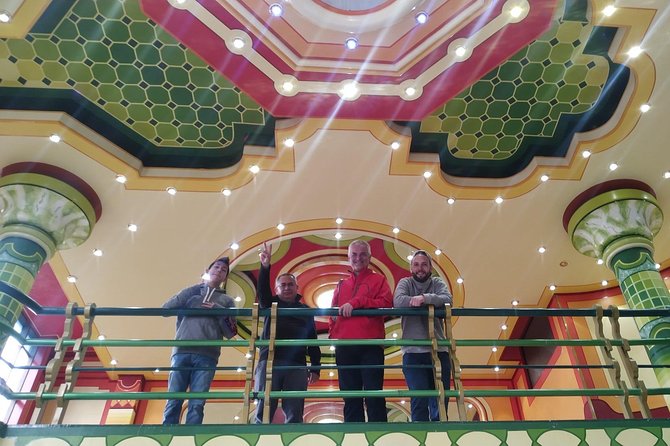
El Alto’s cholets are more than eye-catching buildings. Their bold colors, geometric shapes, and grand interiors reflect the success, identity, and ambitions of Aymara families. This three-hour outing gives you a practical way to see them, using La Paz’s cable cars and local transport instead of trying to find the buildings alone.
I like two things right away: the included Mi Teleférico ride turns the journey into part of the sightseeing, and the small group, limited to 12 people, gives you a better chance to ask questions. Guides such as Denise, Max, and Dani have received especially strong praise for explaining the meaning behind the architecture and local customs.
The main caution is pace. One poor experience described a rushed route with too much walking and hopping on and off buses, while another raised concerns about organization on a related outing. Your experience may depend heavily on the guide you receive, so ask questions and speak up if you need more time at a building.
Key points to know before you book
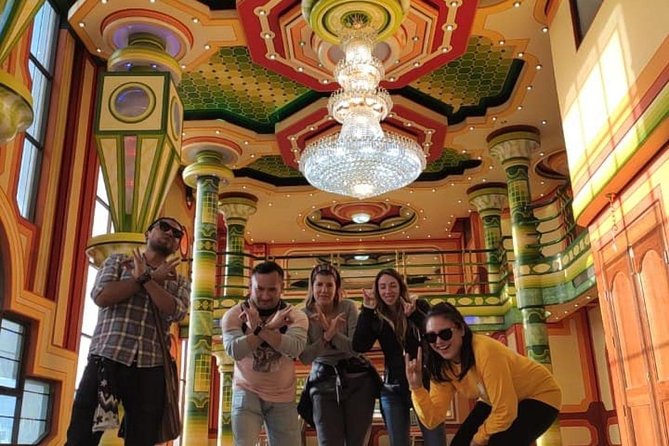
- Cholets are the main attraction: Learn why these colorful buildings matter to Aymara families and how different styles appear around El Alto.
- The cable car is part of the experience: Ride Mi Teleférico from the Obelisco station, with tickets included.
- You may see inside a traditional cholet: Interior access gives the architecture more meaning than a quick street view.
- The tour uses local transport: This helps you cover more ground, but it can also make the outing feel hurried.
- Small groups keep it personal: The maximum is 12 people, a useful size for questions and conversation.
- The price is modest: At $25.65 per person, the tour offers transport, guiding, snacks, and local context in one short outing.
Why El Alto’s cholets deserve your attention
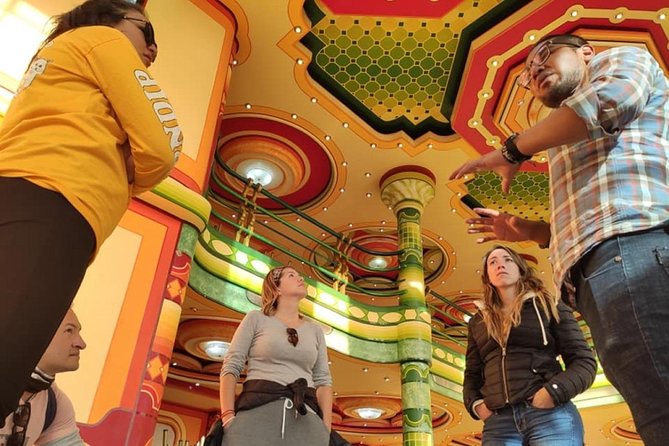
El Alto is often treated as a place to pass through on the way to somewhere else. That misses the point. The city offers a direct look at modern Aymara identity, and cholets are its most visible expression.
These buildings combine commercial space, family homes, event halls, and elaborate decoration. Their bright facades can look playful at first, but the style carries social meaning. It shows prosperity in a city where business, family, tradition, and public display meet in one place.
A guide helps you read details you could easily miss. You might notice repeated shapes, bold color choices, or unusual upper floors without understanding why they were built that way. The tour puts those details into a cultural setting rather than leaving you with a collection of striking photographs.
This is also why a guided visit makes more sense than an independent wander. El Alto is large, and the cholets are spread across different areas. A local guide can help you connect the buildings with the city around them instead of treating them as isolated sights.
More Architecture Tours around the world:
- Chicago Architecture River Cruise
★ 5.0 · 15,756 reviews - Chicago River 90-Minute Architecture Tour
★ 4.5 · 9,629 reviews - Chicago River: 1.5-Hour Guided Architecture Cruise
★ 4.8 · 8,046 reviews
Starting at Mi Teleférico Línea Morada
The tour begins at Mi Teleférico Línea Morada, Estación Obelisco, in La Paz, at 10:00 a.m. Confirm your meeting point carefully before setting out. The activity returns to this same meeting point at the end.
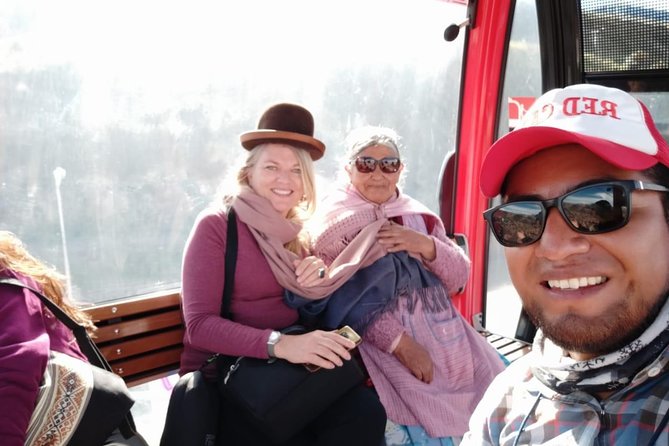
The first section lasts about 30 minutes and includes cable car tickets. This is not just a transfer. The cable car gives you an efficient way to gain height and move toward El Alto while seeing La Paz from above. You get a useful sense of how the two cities connect physically, something that is harder to understand from street level.
I like that the transport is built into the tour rather than left for you to arrange. You do not need to work out the ticket system or decide which line to use for this part. The ride also gives the group a natural starting point while the guide introduces the day.
Still, remember that the cable car is public transport, not a private sightseeing cabin. You should expect a working city transit system, with other passengers and a fixed route. The appeal is seeing how local people move between La Paz and El Alto, not having a quiet private ride.
Two hours among El Alto’s colorful streets
The main portion lasts about two hours. With your guide, you walk through El Alto and use local transport to reach different cholets and other points of interest.
This part is where the tour earns its price. A street view alone can show you color and shape, but it cannot explain the building’s purpose. Your guide can describe the different kinds of cholets and help you understand why they appear in this part of Bolivia.
The route may include plenty of walking. One particularly positive account praised the way the tour covered a lot of ground, including local public transportation to reach more cholets. That approach makes the experience feel more like a city visit than a single photo stop.
The trade-off is time. Three hours is enough for an introduction, but not enough for a slow architectural study of every building. If you want to stop for photographs, ask your guide how much time is available at each location. Do not assume the group will wait indefinitely.
The tour is best for someone who enjoys seeing a city in motion. You may move between sites, board buses, and walk through ordinary streets rather than follow a polished tourist route. That can be rewarding, but it requires comfortable shoes, flexibility, and a willingness to keep up.
The chance to enter a traditional cholet
The opportunity to see inside a traditional cholet is one of the strongest reasons to book. Exterior photos are easy to take, but the interior can show how the building works and why the style matters.
The supplied information does not promise a specific building every time, so think of interior access as a chance rather than a guaranteed private visit to one particular cholet. Even so, this possibility adds an important layer to the outing. You get to consider how a cholet functions as a real place, not simply as colorful architecture.
Guides have explained that different types of cholets can be found around El Alto. That comparison matters. It helps you notice that the style is not one fixed design, but a broader architectural idea with variations in color, scale, and use.
If architecture interests you, this is likely the most valuable part of the tour. If you mainly want dramatic views from the cable car, the El Alto walking section may feel more demanding. The tour is built around cultural explanation, not a quick collection of scenic stops.
Same streets, read through a different style:
- Barcelona: Park Güell and Gaudí House Museum Entry Ticket
★ 4.5 · 6,326 reviews - Chicago Architecture Center River Cruise aboard First Lady
★ 5.0 · 5,536 reviews - Barcelona: Gaudi’s Casa Vicens Skip-the-Line Entrance Ticket
★ 4.7 · 4,541 reviews - Barcelona: Gaudí’s Park Güell Tour with Fast-Track Ticket
★ 4.8 · 4,512 reviews
What the guide can add to the experience
The guide is central here. Denise has been praised for organizing the route and explaining the history of cholets. Max has been described as good company for someone seeking local insight into traditions and culture. Dani has also received strong praise for explaining the history of El Alto.
Those names are useful, but you should not assume you will receive a specific guide. The quality of the explanation can shape the entire outing. One unsatisfactory experience raised concerns about limited understanding of Indigenous and Aymara culture, along with a rushed schedule.
That contrast gives you a practical lesson: participate actively. Ask what a building is used for, why certain colors appear, and how a cholet differs from another nearby example. A good guide should welcome those questions, and your questions can also help slow the pace when the group is moving too quickly.
The tour works best as a conversation, not a lecture. You are seeing a living city, so the most useful explanations will connect architecture with family life, commerce, transport, and local customs.
Is $25.65 a fair price?
At $25.65 per person, the tour is reasonably priced for a three-hour guided outing that includes cable car tickets and snacks. You are paying for more than transport. The real value comes from having someone explain how to interpret El Alto and find buildings that would be difficult to locate on your own.
The cable car tickets are a small but useful inclusion. Snacks also make the short outing easier, though this is not a full meal experience. The group limit of 12 gives the price extra appeal because you are less likely to be part of a large crowd moving through the streets.
I would not book it expecting a private tour or a slow, carefully staged photography session. The price reflects a short group experience using public transportation. It offers access and context, not luxury.
The tour has earned a 4.8 rating, and 97 percent of participants recommend it. Those numbers suggest a strong overall experience, but the less positive account is worth taking seriously. Guide quality and pacing matter here more than they would on a simple ticketed attraction.
Who will enjoy this tour most?
I would recommend it to you if you want to understand the cultural meaning behind El Alto’s architecture rather than simply photograph colorful facades. It is also a good fit if you like public transport, city walks, and small-group activities with room for questions.
It suits first-time visitors to El Alto especially well. One person who had already visited the Sunday market still found a guide necessary for finding the cholets and understanding what they represented. That is a useful distinction: seeing the market does not automatically give you a clear picture of the city’s architecture.
The tour may be less suitable if you need a slow pace or dislike changing transport during a short outing. The group may walk quickly between stops, and local buses can make the schedule feel less predictable. Ask for clarification if you have concerns about the route or need more time at a stop.
Most people can participate, and the meeting point is near public transportation. The activity is limited to 12 people, which keeps it smaller than a standard city excursion.
Practical details that matter on the day
The start time is 10:00 a.m., and the activity ends back at the Obelisco meeting point after roughly three hours. Plan around the stated meeting point rather than assuming hotel pickup is included. A separate account from a related experience found a mismatch between a displayed hotel pickup point and the actual arrangements, so it is sensible to confirm the location before the morning of the tour.
Wear shoes suited to walking. The route covers a lot of ground and may include local buses, so comfort matters more than dressing for a formal excursion. Keep your belongings secure and easy to manage while changing between transport and walking sections.
You should also leave room for the day to feel a little improvised. That is part of the value of using local transport, but it can frustrate anyone expecting a perfectly timed itinerary. The more open you are to seeing ordinary parts of El Alto, the more rewarding the outing is likely to be.
Free cancellation is available if you cancel at least 24 hours before the start time. Cancellations made less than 24 hours ahead are not refunded, and changes are not accepted inside that same window.
My take on the cable car and walking combination
The transport design is clever. The cable car gives you a clear connection between La Paz and El Alto, while the walking and bus sections let you see the destination at street level.
If the tour only showed you cholets from a vehicle, you would miss the feel of the city. If it only involved walking, you would lose the chance to experience one of La Paz’s most useful forms of public transport. Combining both gives the outing a stronger sense of place.
The drawback is that transport takes time. With only three hours, every boarding, transfer, and walk affects how long you can spend looking at the buildings. The tour is therefore best understood as an introduction, not a complete study of El Alto.
I like this balance for a first visit. You see the city from above, move through it with local systems, and learn why the buildings matter. Just keep your expectations in line with the short schedule.
Should you book the Cholet Tour?
Book this tour if you want cultural context, a cable car ride, and an organized first look at El Alto without arranging the route yourself. The included tickets, snacks, small group, and chance to enter a cholet make $25.65 a fair deal.
I would be more cautious if your main goal is unhurried photography or a tightly controlled schedule. Ask your guide for time to take in the architecture, and be prepared for walking and local transport.
Overall, this is a worthwhile short introduction to an important side of La Paz. The best guides, including Denise, Max, and Dani, appear to make the buildings and traditions much easier to understand. Book it for insight and access, not for a polished sightseeing circuit.
FAQ
Where does the tour start?
It starts at Mi Teleférico Línea Morada, Estación Obelisco, in La Paz, Bolivia.
What time does the tour begin?
The tour starts at 10:00 a.m.
How long does the experience last?
It lasts approximately three hours.
Is the cable car ticket included?
Yes. Cable car admission is included during the Mi Teleférico portion of the tour.
Does the tour visit a cholet interior?
The experience includes a chance to visit a traditional cholet and see inside, although a specific building is not named.
How many people can join the tour?
The maximum group size is 12 people.
Where does the tour end?
The activity ends back at the original meeting point at Mi Teleférico Línea Morada, Estación Obelisco.
New to the itinerary around the world
- Washington, DC: Georgetown Architecture Walking Tour★ 5.0 · 8 reviews
- Wilmington History and Architecture Tour★ 4.8 · 18 reviews
- Washington DC: Dupont Circle & Embassy Row Architecture Tour★ 5.0 · 6 reviews
- New Orleans : Garden District Architecture Walking tour★ 4.8 · 5 reviews
- Walk & Discover KL’s Architectural and Heritage Gems★ 5.0 · 7 reviews
- Unveiling Brno: History, Culture & Architectural Delights★ 5.0 · 2 reviews
- Vicenza: Palladian Architecture Private Walking Tour★ 3.3 · 3 reviews
- Private Colonial Williamsburg Architectural Tour★ 5.0 · 5 reviews