
Review · CHICAGO
Chicago: Architecture Center Cruise on Chicago’s First Lady
Chicago’s architecture makes the most sense from the water. On this 90-minute cruise, you glide through the city’s famous urban canyon while a Chicago Architecture Center docent explains how its buildings, bridges, architects, and river shaped one another. You’ll see all three branches of the Chicago River, not just the central stretch.
I especially like the live narration, which turns a skyline view into a lesson in Art Deco, neoclassicism, mid-century modernism, and postmodernism. I also like the guaranteed open-air seating, plus the option to retreat inside for air conditioning, snacks, or a drink. The main consideration is access: there is no elevator to the dock, and motorized scooters and electric wheelchairs cannot board.
Key points to know before boarding
- All three river branches: This route gives you a wider view of Chicago than a cruise that stays only on the main channel.
- More than 50 buildings: The docent connects design details with the people and events behind them.
- Thirteen bascule bridges: You’ll learn why Chicago’s movable bridges are part of the city’s working river.
- A real teaching cruise: Chicago Architecture Center volunteer docents, including guides such as Tim, Amy, Patricia, and Russel, lead the commentary.
- Open-air seats with an indoor fallback: You get wide views outside, with climate-controlled salons available when the sun or weather turns unpleasant.
- A useful museum add-on: Add Chicago Architecture Center admission for $5 instead of the regular $14 price.
Why Chicago’s First Lady is more than a sightseeing boat
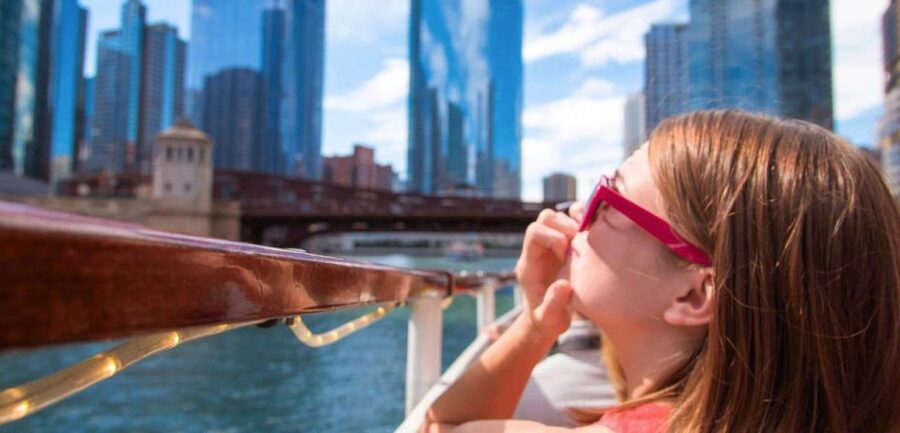
Many Chicago river cruises give you a fine skyline view. This one gives you a way to read the skyline. From street level, you often see only the front of a building. From the river, you can take in its full height, side walls, setbacks, materials, and relationship to its neighbors.
That river-level view matters. Chicago’s towers rise close to the water, creating the famous canyon effect. The changing angle also helps you notice how the city moved from older classical forms to modern glass, concrete, and steel. The river becomes a moving classroom, but it never feels like you are trapped in one.
The boat covers all three branches of the Chicago River, a feature that deserves attention when you compare cruises. One route may focus on the central river corridor and the busiest cluster of towers. This trip gives you a broader look at how the river cuts through the city and how different building periods appear along its banks.
The ride lasts 90 minutes, which I find about right for this subject. You have enough time to see a great deal without spending half a day on a boat. The schedule also makes it easy to fit the cruise between other downtown sights.
More Architecture Cruises and Boat Tours in Chicago:
- Chicago Architecture River Cruise
★ 5.0 · 15,756 reviews - Chicago River: 1.5-Hour Guided Architecture Cruise
★ 4.8 · 8,046 reviews - Chicago Architecture Center River Cruise aboard First Lady
★ 5.0 · 5,536 reviews
Finding the boat at Michigan Avenue
Check in beneath the black awning for Chicago’s First Lady on the Riverwalk level, at the southeast corner of the Michigan Avenue bridge where Michigan Avenue and Wacker Drive meet. Give yourself time to find the correct river access point. Downtown bridges, ramps, stairs, and multiple street levels can make the final approach less obvious than the address suggests.
There is no elevator access to the boat dock. That is important for anyone with limited mobility. Some people can use a ramp from farther away, but reaching it may involve a longer walk. A manual wheelchair may be available from the operator, depending on supply, for passengers who can transfer.
Motorized scooters and electric wheelchairs cannot be accommodated aboard for safety reasons. If this affects someone in your group, contact the provider before booking rather than relying on the general wheelchair-accessible label.
Leave large luggage and big bags behind. Pets are not allowed, except for assistance dogs. Late arrivals cannot receive a refund, so plan for the check-in point and the walk down to the river.
Getting settled on the open-air upper deck
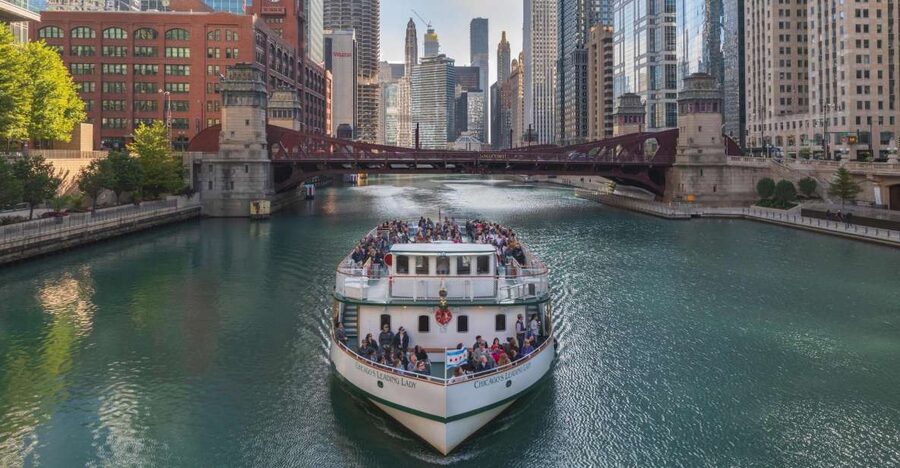
Your ticket includes guaranteed seating on the open-air upper decks. That solves one common problem with sightseeing boats: you do not need to stand for 90 minutes or fight for a decent view.
The upper deck is the place to be for photographs and full sightlines. You can look ahead, behind, and to both sides as the boat moves along the river. Bring sunglasses and a sun hat, and consider a light layer even on a warm day. Sun reflecting off the water can make the deck feel hotter than the street.
The boat also has climate-controlled interior salons with full-service cocktail and snack bars. You can buy water, soda, wine, beer, chips, cookies, and nuts. Food and drinks are not included, so think of the bar as a useful convenience rather than part of the ticket price.
The indoor seating is especially helpful in strong heat or rain. Cruises operate rain or shine, and both covered and open seating are available. Still, weather changes the feel of the trip. Clear skies give you the best photographs, while a gray day can make the river and buildings look less dramatic.
What the docent adds to the skyline
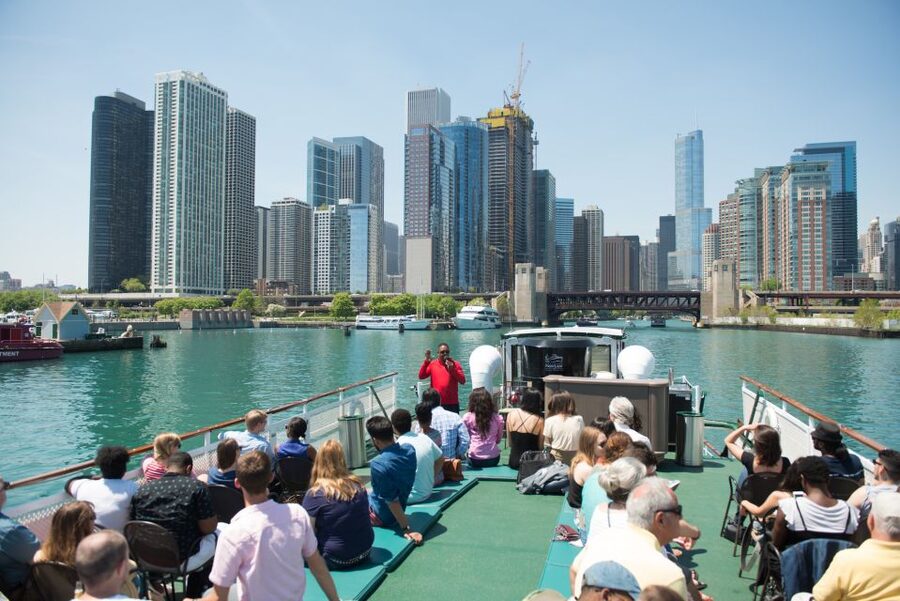
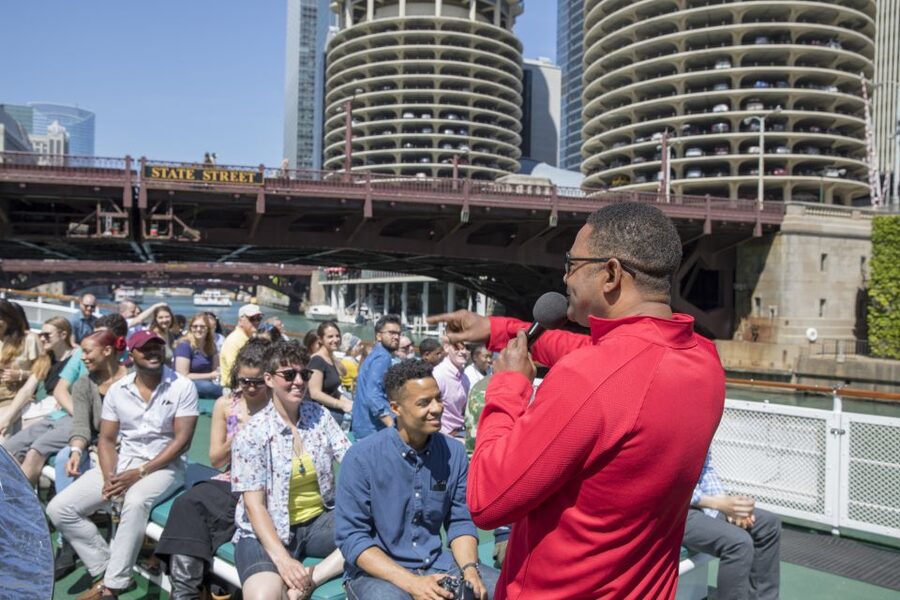
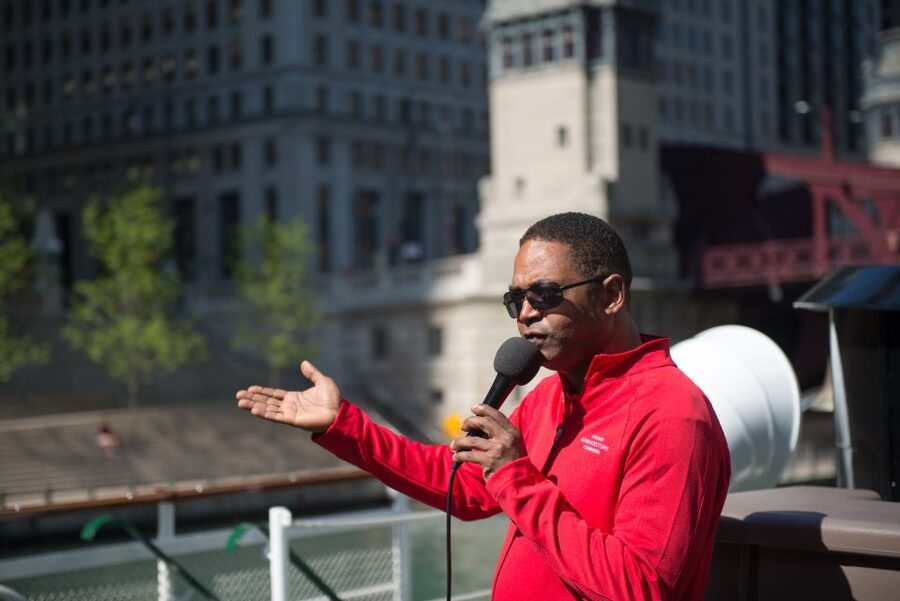
The strongest part of this experience is the human voice on board. A Chicago Architecture Center certified volunteer docent narrates in English, drawing from training that goes well beyond naming buildings.
The commentary covers more than 50 structures and 13 bascule bridges. You hear about architectural styles, materials, architects, important figures, and the way design affected daily life and the city’s growth. The goal is not simply to point at a tower and give you its name. The docent helps you understand why it looks the way it does.
Guides vary in personality, as you would expect with a volunteer-led program, but the standard is high. Russel was praised for his clear command of Chicago architecture. Amy was described as both informative and entertaining, while Patricia kept talking through the full 90 minutes with a strong grasp of the river and its buildings. Tim has led tours with an energetic, easy style, and Mary Jo made a particularly strong impression through her passion for the subject.
You may occasionally hear a guide pause, repeat a phrase, or use a dramatic delivery. That is a minor trade-off for live commentary. Unlike a recorded track, the docent can respond to the mood of the group and point out details as the boat moves.
Sit where you can see the guide if the talk is your main reason for booking. On some departures, sound quality has been a concern, with one passenger finding the audio too quiet. If you have hearing difficulty, the open-air setting and distance from the speaker may matter.
More Architecture Tours around Chicago:
- Chicago River 90-Minute Architecture Tour
★ 4.5 · 9,629 reviews - Chicago: Architecture River Cruise Skip-the-Ticket Line
★ 4.8 · 4,325 reviews - Chicago River 45-Minute Architecture Tour from Magnificent Mile
★ 4.5 · 2,924 reviews - Chicago Lake and River Architecture Tour
★ 4.5 · 2,308 reviews
The three branches and the working river
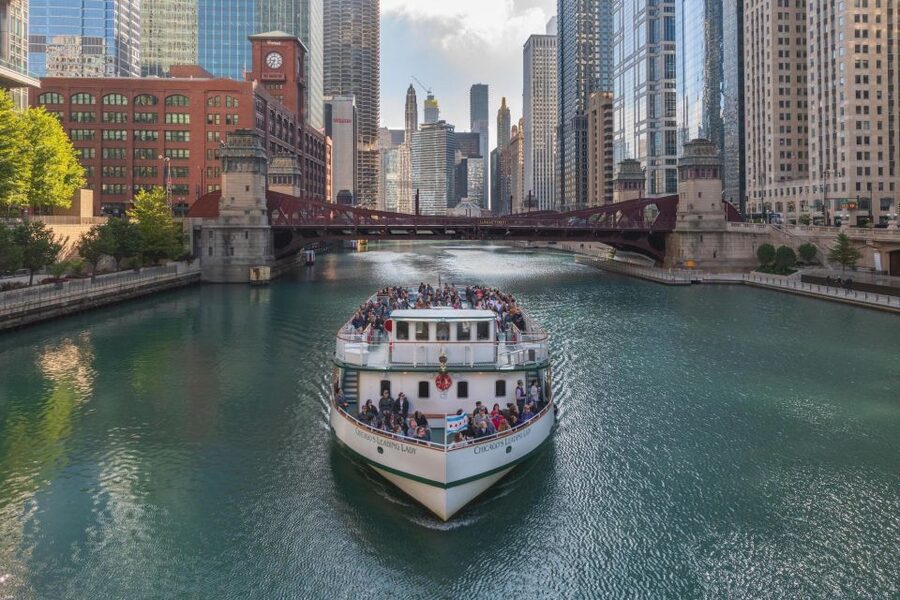
The route’s coverage of all three river branches gives you more than a parade of downtown towers. You see the river as part of Chicago’s structure, not just as a scenic strip.
The main corridor puts you close to the dense center of the city, where the building walls create the classic canyon effect. Here, changes in height, window patterns, setbacks, and ornament become easy to compare. Art Deco details can sit near neoclassical forms, while later mid-century modern and postmodern buildings add different shapes and materials.
The north and south branches offer a change of pace and viewpoint. The precise sequence can vary, but the wider route helps explain how the river reaches into the city and why it has mattered to Chicago’s growth. You are not simply looking outward at the skyline. You are watching the city organize itself around water, transport, engineering, and commerce.
The 13 bascule bridges are a special part of the route. Their movable spans remind you that the river is still a working piece of infrastructure, not merely a backdrop for architecture. Their design and operation fit into the larger story of how Chicago connected its streets and river traffic.
The boat’s movement also improves your sense of scale. A building that looks enormous from the sidewalk can appear differently from midriver, where you can judge it against neighboring towers and the width of the waterway.
The best time to choose your departure
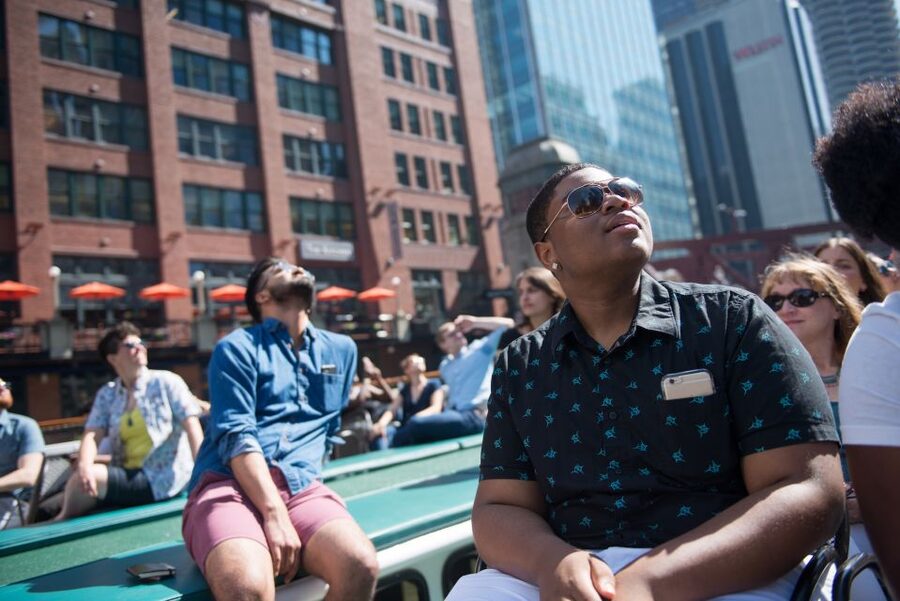
The cruise runs at different starting times, so check availability for your date. Morning departures can offer clear light and a calmer start to the day. Afternoon trips are useful when you want to place the cruise between downtown activities.
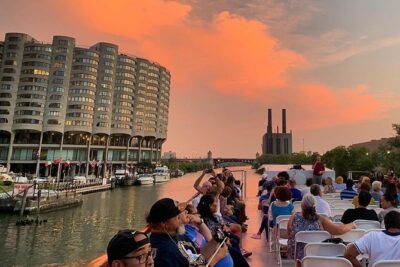
Sunset is particularly appealing. One October departure just before sunset gave the group views of the buildings as they began to light up. The change from daylight to evening adds a second layer to the same route, though you should still choose based on your schedule and expected weather.
Summer can bring heat on the upper deck. One passenger enjoyed the trip despite a very hot day, and the indoor air conditioning helped. If you dislike direct sun, sit under cover or use the interior salon for part of the ride.
The company operates in rain, but thunderstorms can affect your comfort even if the boat continues. A clear forecast will give you the easiest experience, yet the covered seating means you do not need perfect weather to make the booking worthwhile.
What the $57 ticket is really buying
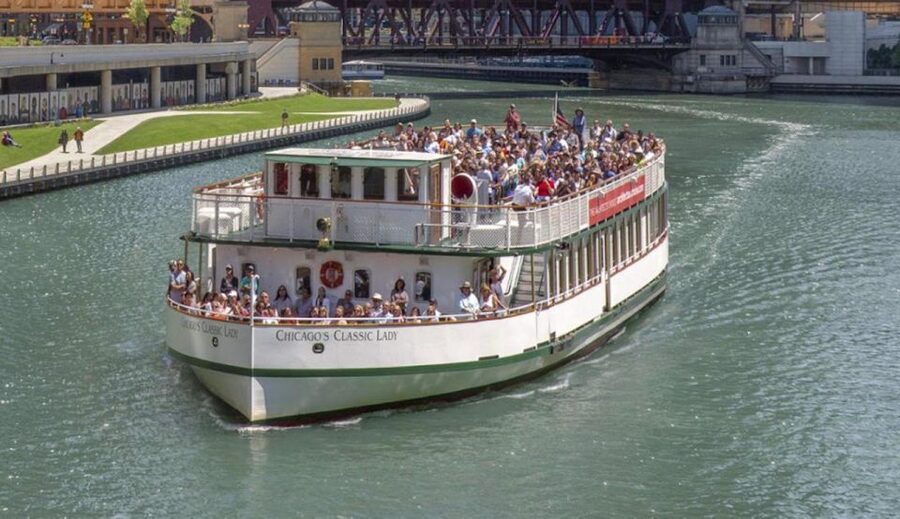
At $57 per person, this is not the cheapest way to see the Chicago skyline. You are paying for a 90-minute boat ride, guaranteed seating, crew support, open-air views, indoor facilities, and, most of all, a live Architecture Center docent.
I think the price is reasonable if you care about understanding what you see. A basic boat ride can show you the same river corridor, but this program adds context about more than 50 buildings and 13 bridges. The educational mission also matters: part of each ticket supports the Chicago Architecture Center’s nonprofit work.
The value improves if you use the museum add-on. For an extra $5, you can add general admission to the Chicago Architecture Center, compared with the normal $14 admission. You can visit after the cruise, and one booking detail states that the ticket can be used for up to five days after the boat trip.
That makes the add-on easy to recommend for anyone with enough time downtown. The center can help you place the cruise’s buildings in a larger context, while the boat gives you the river view that a museum cannot.
Who will get the most from this cruise
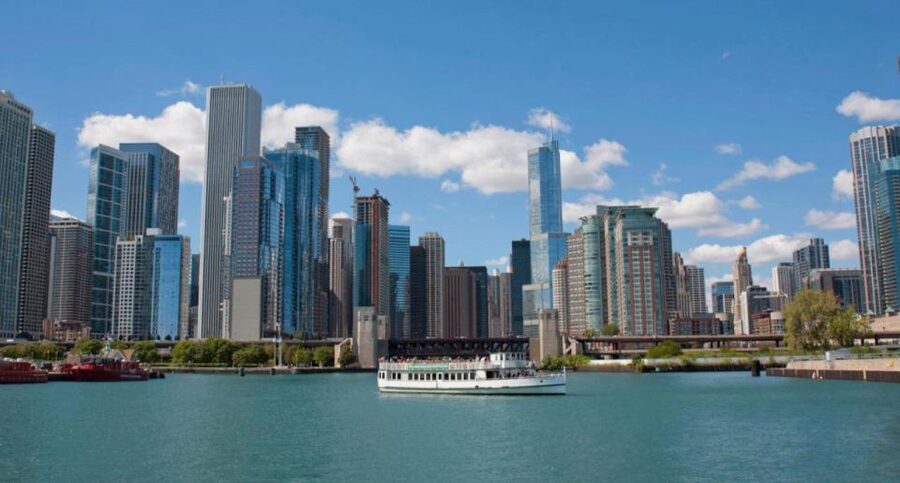
You do not need a background in architecture. Several guides explain technical ideas in an accessible way, and the tour works well as an introduction to Chicago. If terms such as Art Deco or postmodernism are new to you, you will still have plenty to take away.
Architecture students, designers, photographers, and anyone interested in cities will find extra value in the route. So will first-time visitors who want a quick orientation to downtown. The cruise gives you a useful mental map before you begin exploring on foot.
It also suits repeat visitors. The river changes your angle on familiar buildings, and the narration can bring out details you missed from the sidewalks. Families can enjoy the movement and views, though the educational content is the main attraction rather than nonstop entertainment.
The tour is less suitable if you want a quiet boat ride with no talking. The docent speaks through much of the 90 minutes, which is exactly why most people book this departure. It is also not ideal for anyone who cannot manage the dock access or transfer requirements.
A simple plan for making the most of it
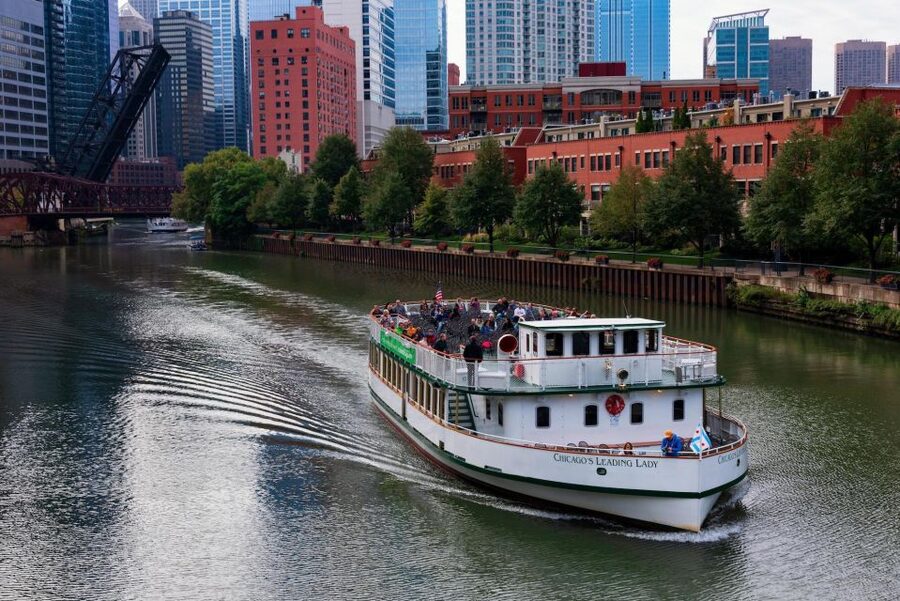
Arrive early enough to find the black awning and reach the dock without rushing. Wear sunglasses and a hat, and keep your belongings light. Leave large bags at your hotel because they are not allowed aboard.
Choose an open-air seat for the widest views, but do not hesitate to move inside if the sun becomes too strong. Keep your camera ready, but listen closely too. The buildings look impressive on their own, yet the stories about architects, bridges, materials, and city growth are what make this cruise worth the fare.
If you add the Chicago Architecture Center, visit it after the cruise while the river commentary is still fresh. The $5 upgrade is one of the better values attached to this experience.
Book ahead during busy periods. Departures frequently sell out, and late arrivals cannot be refunded. Free cancellation is available up to 24 hours before departure, and you can reserve now and pay later, which helps if your Chicago schedule is still shifting.
Should you book Chicago’s First Lady?
Yes, if you want Chicago’s architecture explained rather than simply photographed. The combination of all three river branches, open-air seating, 50-plus buildings, 13 bridges, and live CAC docents gives you a fuller experience than a standard sightseeing loop.
At $57, it is a considered purchase, not a throwaway activity. I would book it for a first Chicago visit, an architecture-focused weekend, or a return trip when you want a fresh view of the city. Add the $5 Architecture Center admission if you can spare the time.
Skip it only if dock access is a problem, you dislike live commentary, or your budget allows only the lowest-cost river ride. For most visitors who want to understand why Chicago looks the way it does, this is money well spent.
FAQ
How long is the Chicago’s First Lady architecture cruise?
The cruise lasts 90 minutes.
What language is the tour conducted in?
The live commentary is in English.
Who narrates the cruise?
Chicago Architecture Center certified volunteer docents provide the narration. Guides have included Russel, Amy, Tim, Patricia, Mary Jo, and others.
Does the cruise visit all three branches of the Chicago River?
Yes. The route travels along all three branches of the Chicago River.
How many buildings and bridges are discussed?
The docent shares stories about more than 50 buildings and 13 bascule bridges.
Is seating guaranteed?
Yes. Your ticket includes guaranteed seating on the open-air upper decks.
Is there indoor seating?
Yes. The boat has climate-controlled interior salons with covered seating.
Can I buy food and drinks on board?
Yes. Water, soda, wine, beer, chips, cookies, and nuts are available for purchase. Food and drinks are not included in the ticket price.
Is the boat wheelchair accessible?
The activity is described as wheelchair accessible, but there is no elevator to the dock. Motorized scooters and electric wheelchairs cannot be accommodated. Passengers who can transfer may use a provider’s manual wheelchair if one is available.
New to the itinerary around Chicago
- Private Chicago Architecture Tour★ 5.0 · 5 reviews
- Private Frank Lloyd Wright Architectural Tour by Luxury Vehicle★ 3.5 · 7 reviews
- Chicago Luxury Minibus City Tour and Architecture River Cruise★ 4.5 · 8 reviews
- Private Chicago Architecture Walking Tour★ 5.0 · 6 reviews
- Chicago History and Architecture Walking Tour with Boat Cruise★ 4.5 · 10 reviews
- Small Group History And Architecture Walking Tour of Chicago★ 4.5 · 8 reviews
- Chicago: History and Architecture Guided Kayak Tour★ 5.0 · 3 reviews
- Chicago Walking Tour: See Inside Art Deco Masterpieces★ 4.9 · 8 reviews
Architecture Cruises and Boat Tours, compared.
Chicago River: 1.5-Hour Guided Architecture Cruise
Read our review →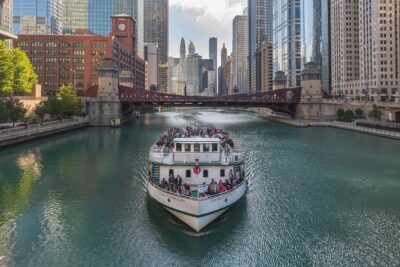
Chicago Architecture Center River Cruise aboard First Lady
Read our review →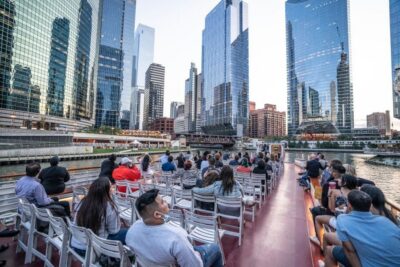
Architecture River Cruise Skip-the-Ticket Line
Read our review →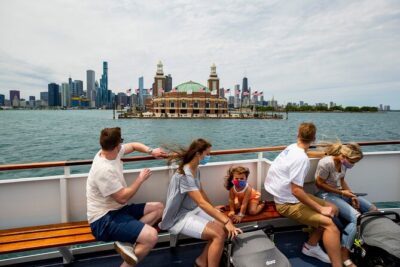
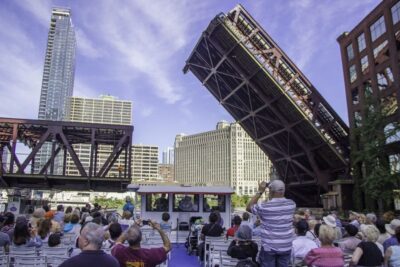
45-Minute Family-Friendly Architecture River Cruise
Read our review →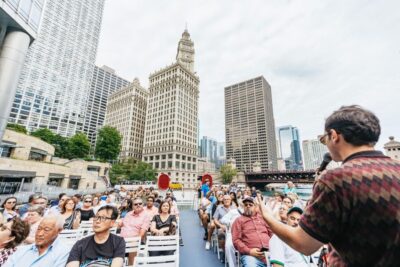
Chicago River 90-Minute Architecture Boat Tour
Read our review →Other lists with this tour