
Review · BARCELONA
Barcelona: The Genuis of Gaudi & Modernist Architects Tour
Barcelona’s most famous buildings make far more sense when you know what you’re looking at. This small-group walk links Sagrada Família with the Modernist façades of Passeig de Gràcia, explaining the symbols, colors, curves, and rivalries that turned one grand avenue into an open-air architecture lesson. I like the focused route and the chance to ask questions directly, especially with guides such as Sofía, Carlos, Anastasia, and Caio praised for their personal, lively approach.
I also like the mix of Gaudí and his contemporaries. You see Casa Batlló and La Pedrera, but also Casa Amatller and Casa Lleó Morera, buildings often missed by people who only chase Gaudí. The main consideration is simple: this is an exterior-focused walking tour, so admission inside these landmarks is not part of the experience, and the 2.5 hours involve city walking plus a short metro ride.
Key points to know before you book
- Five Modernist façades in one compact route: See Sagrada Família, La Pedrera, Casa Batlló, Casa Amatller, and Casa Lleó Morera.
- Small groups of up to 10: You have a better chance to ask questions than on a large city tour.
- Guides with arts backgrounds: Guides may be painters, musicians, or actors, bringing an artistic angle to the architecture.
- The metro connects the two main areas: The tour begins near Sagrada Família and uses about 10 minutes of subway travel before continuing along Passeig de Gràcia.
- Multiple languages are available: Tours are offered in English, Spanish, French, German, and Italian.
- Best for architecture from the outside: Plan separate visits if you want to enter the interiors of Gaudí’s major buildings.
Why this Barcelona architecture walk works
The strength of this experience is its theme. You are not simply moving from one famous address to another. You are following the rise of Barcelona’s Modernisme, the local form of Art Nouveau that changed the city around the turn of the 20th century.
That matters because Gaudí’s work can seem strange when you look at it without context. A balcony may resemble a mask, a roof may suggest a dragon’s back, and a wall may ripple like fabric. A guide helps you notice that these are not random flourishes. They reflect ideas about nature, religion, craft, color, structure, and the owner’s desire to make a public statement.
The tour also places Gaudí beside other architects. That comparison is useful. Casa Batlló may grab your attention first, but Casa Amatller and Casa Lleó Morera show how different designers worked within the same fashionable avenue. You get a better sense of Barcelona’s architectural identity when you see the buildings as part of a creative conversation rather than as isolated monuments.
The group limit of 10 is another practical advantage. A guide can respond to your questions without stopping a crowd of 30 or 40 people. The strongest comments about the guides point to this personal quality. Sofía was praised for answering questions in detail, while Carlos was described as offering a local view of the streets and architecture. Caio brought humor, useful city tips, and restaurant advice alongside his explanations.
That said, the quality of a walking tour always depends partly on the individual guide and the group’s pace. The available feedback is highly positive, with a 5 out of 5 rating from 20 reviews, but that does not change the basic format. You are paying for interpretation and company, not entry tickets or a private architectural consultation.
More Gaudí Tours in Barcelona:
- Barcelona: Park Güell and Gaudí House Museum Entry Ticket
★ 4.5 · 6,326 reviews - Barcelona: Gaudi’s Casa Vicens Skip-the-Line Entrance Ticket
★ 4.7 · 4,541 reviews - Barcelona: Gaudí’s Park Güell Tour with Fast-Track Ticket
★ 4.8 · 4,512 reviews
Starting near Sagrada Família
The stated starting point is near Av. de Gaudí, 3, by KFC, though the exact meeting point can vary with the option you book. Check your confirmation carefully before heading out.
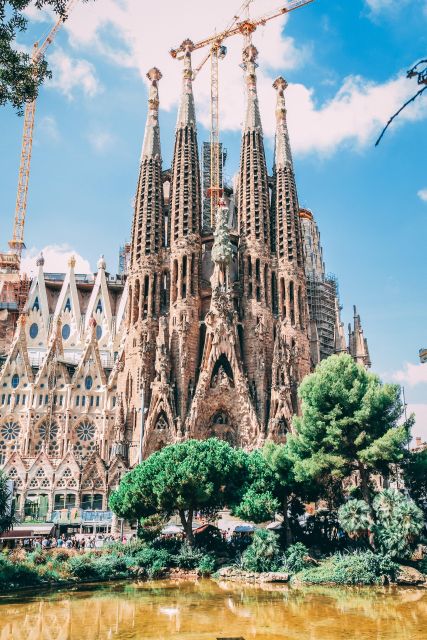
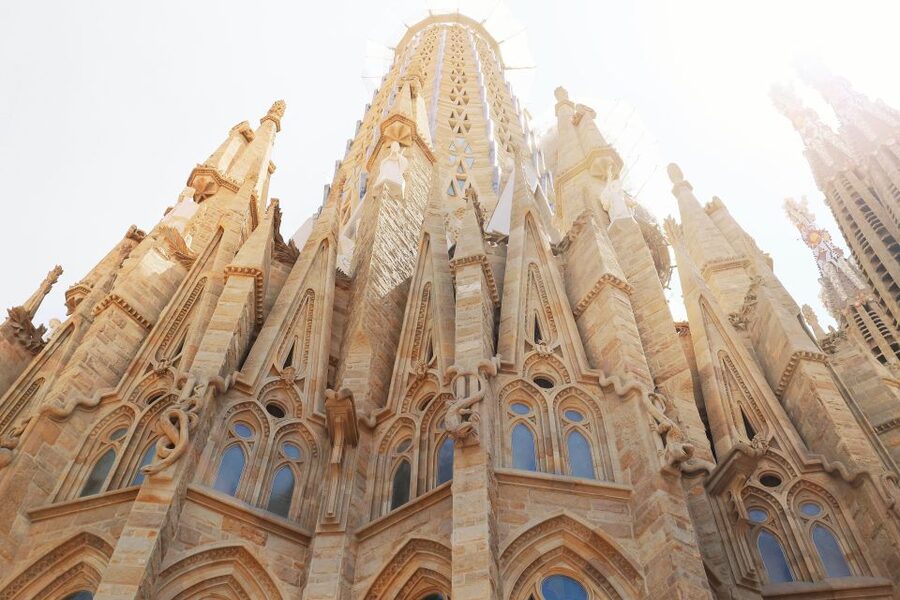
Beginning near Sagrada Família gives the tour an immediate visual jolt. Even from the outside, the basilica presents a mass of towers, carved figures, and complex surfaces that can be hard to read on your own. A guide can help sort out what belongs to Gaudí’s original vision, what reflects later work, and how the building fits into Barcelona’s Modernist story.
The scheduled visit here lasts about 45 minutes, making it the longest stop on the route. That is sensible. Sagrada Família has more detail than anyone can absorb at a glance, and a quick photo stop would waste the opportunity.
You can expect the guide to focus on the exterior and the ideas behind it, including the way organic forms, religious themes, light, and structure work together. The tour description stresses detailed explanations of façades rather than entry into the basilica. If seeing the interior is a priority, you will need to arrange that separately.
This first section also sets up the rest of the walk. Once you have seen Gaudí’s grandest project, the smaller buildings along Passeig de Gràcia become easier to compare. You start noticing how each architect handled stone, balconies, windows, ornament, and the demands of an urban street.
The 10-minute metro connection
After Sagrada Família, the group uses the metro for about 10 minutes. This is not sightseeing time, but it keeps the tour from spending too much of its limited duration on a long connecting walk.
The subway transfer also creates a clean break between the basilica and the central Modernist façades. Wear comfortable shoes, keep your ticket or booking details handy, and avoid bringing large bags. Luggage and oversized bags are not allowed on the activity.
Since the experience lasts 2.5 hours, the metro ride helps preserve time for the buildings themselves. It also means you should think of this as a city walk with public transport, not a single continuous stroll from one doorway to the next.
La Pedrera and Gaudí’s sculptural style
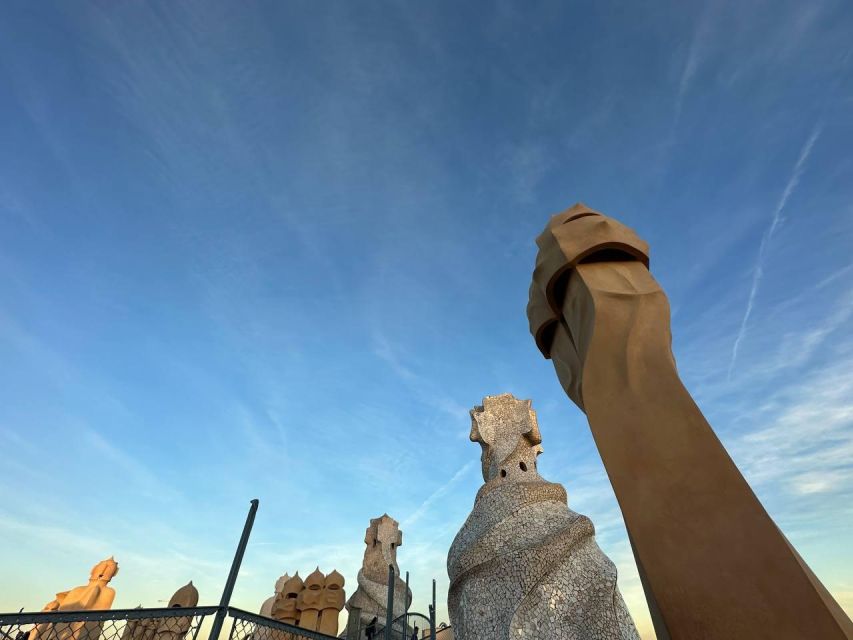
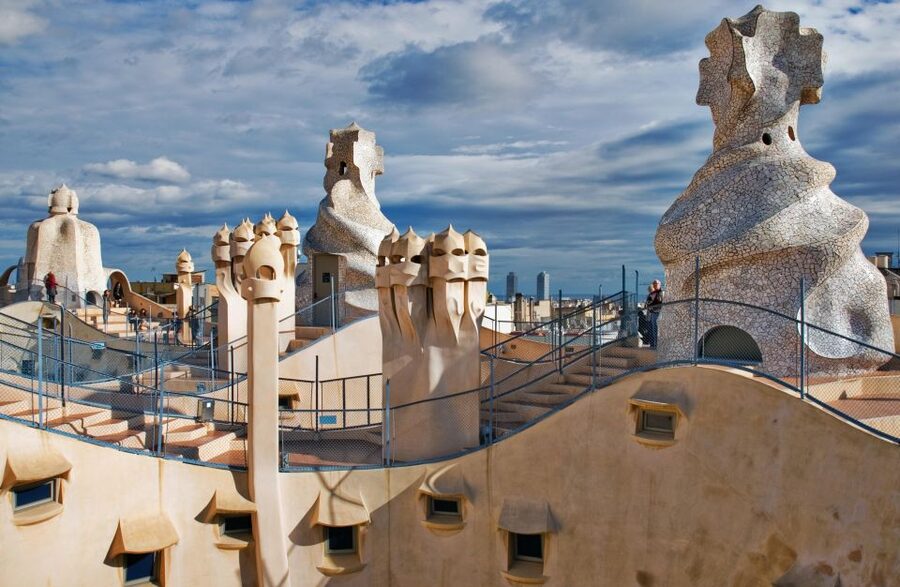
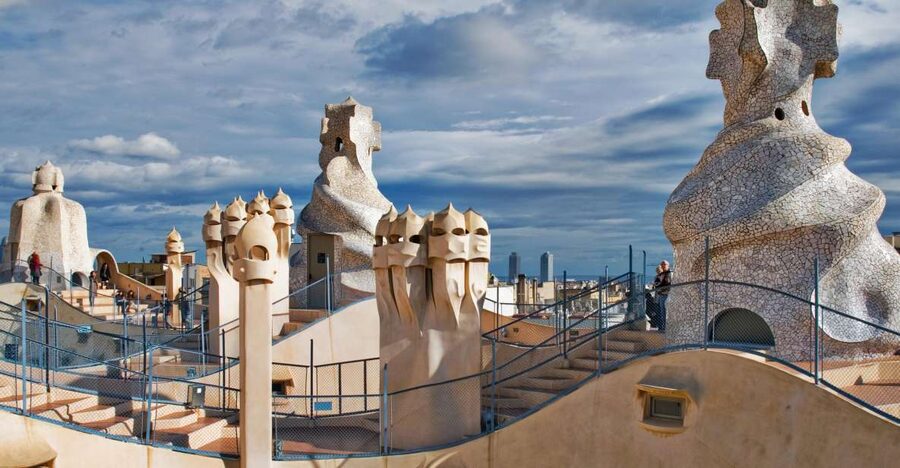
The next major stop is Casa Milà, better known as La Pedrera. The guided explanation here lasts about 15 minutes.
From the street, La Pedrera is all movement. Its stone frontage has no conventional flat rhythm, and the balconies appear almost forged rather than assembled. The building shows Gaudí pushing an ordinary apartment block toward sculpture while still keeping it tied to an active city street.
A short explanation helps you see the design choices instead of reducing the building to an unusual façade. Look for the relationship between the rough stone surface, the flowing balcony rails, and the changing shapes across the frontage. The point is not simply that the building looks strange. It is that Gaudí treated structure and decoration as parts of one design.
The limitation is time. Fifteen minutes is enough for a clear introduction and exterior viewing, but not enough for the full interior, roof, courtyards, or exhibition spaces. If La Pedrera is high on your personal list, plan a separate visit. This tour gives you context and a good outside view rather than a complete monument visit.
More Architecture Tours around Barcelona:
- Barcelona: Sant Pau Recinte Modernista Entry Ticket
★ 4.6 · 2,567 reviews - Barcelona: Sagrada Familia, Modernism, and Old Town Tour
★ 4.7 · 1,621 reviews - Sagrada Familia & Gaudi Tour Private or Small Group with Tickets
★ 4.5 · 1,188 reviews - Complete Gaudi Tour: Casa Batllo, Park Guell & Sagrada Familia
★ 5.0 · 1,152 reviews
Casa Batlló and the most theatrical façade
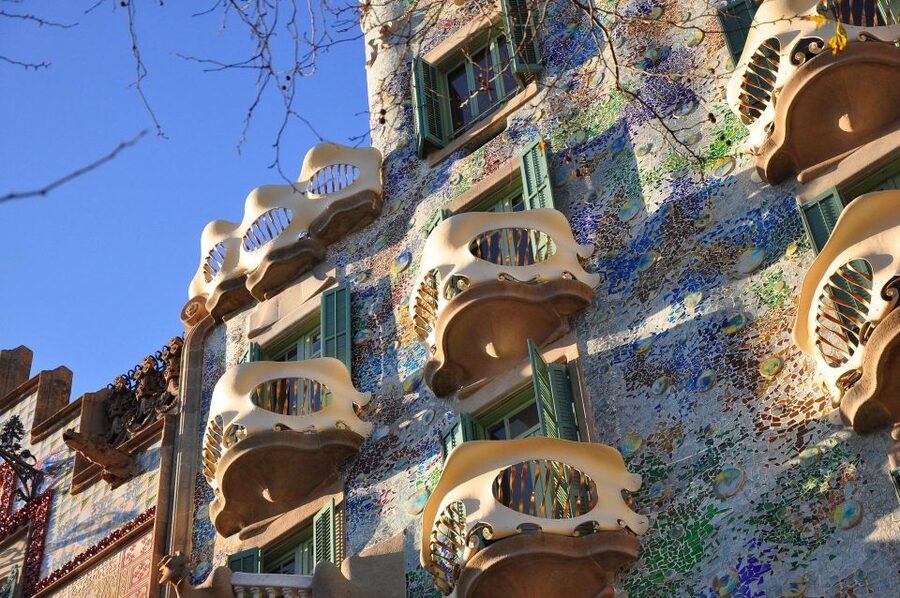
Casa Batlló receives about 20 minutes, giving it more attention than the other Passeig de Gràcia houses.
This is one of the best places to see how Gaudí used a private residence as a piece of public theater. The façade’s curved surfaces, irregular windows, colorful ceramic work, and bone-like balcony forms create a building that seems to change as you look at it from different points along the street.
A guide’s interpretation is especially useful here because photographs flatten the building. In person, the surface, light, and shapes work together in ways that are easy to miss through a camera screen. You may find yourself looking upward, then stepping back to understand the full composition.
Again, the visit is from the outside. Casa Batlló’s interior is famous, but entry is not included in this walk. If you want rooms, courtyards, or the roof terrace, treat this stop as a preview and book a separate admission.
Casa Amatller beside its better-known neighbor
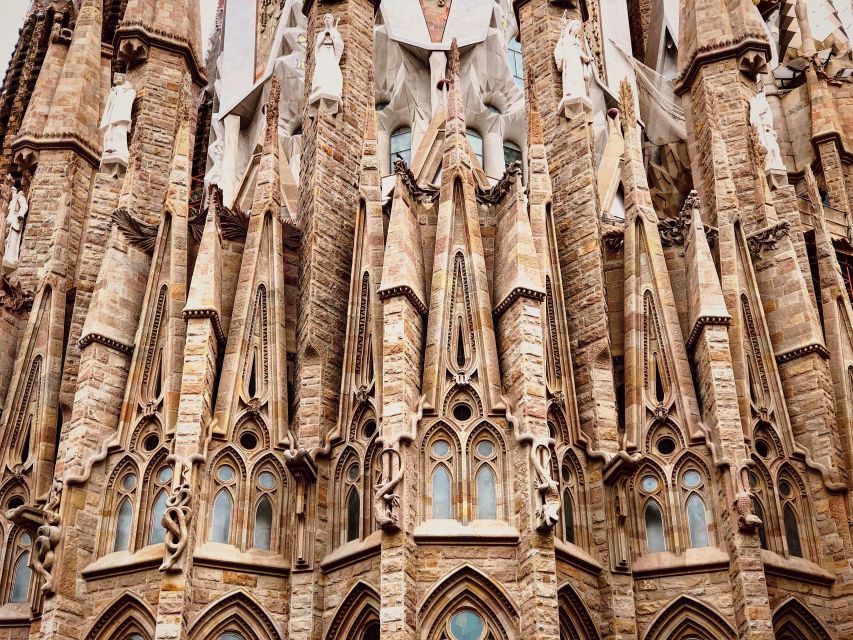
Casa Amatller receives about 15 minutes. It sits beside Casa Batlló, which makes the pairing particularly useful.
The building has a distinct personality and shows why Passeig de Gràcia should not be treated as a one-architect street. Its façade includes carefully arranged ornament and a more formal, crafted appearance than the flowing forms associated with Gaudí. The guide’s job here is to explain the differences and show how several Modernist architects were shaping the same avenue in competing ways.
This stop adds value because it prevents the tour from becoming a greatest-hits parade of Gaudí alone. You learn to compare designers rather than assume every unusual building in central Barcelona came from the same hand.
The short time allocation is appropriate for an exterior explanation. Casa Amatller is best understood as part of the group of neighboring façades, where contrast is the main attraction. You are seeing how architectural ambition became a form of social and commercial display in the city center.
Casa Lleó Morera and the Modernist ensemble
Casa Lleó Morera is another Passeig de Gràcia stop, with about 15 minutes of guided attention.
Its importance lies partly in the way it completes the architectural conversation on this block. Along with Casa Batlló and Casa Amatller, it forms a trio often discussed together because each presents a different response to Modernisme.
The guide can point out how ornament, craftsmanship, and façade composition distinguish the building from its neighbors. This is the sort of stop that benefits from explanation. Without a guide, you might photograph the façade and move on. With context, you begin to understand why the avenue is more than a collection of attractive façades.
The tour’s outside-only format is worth remembering here too. You will gain a readable introduction to the exterior, but you should not expect access to interior rooms or a long architectural study. The value comes from seeing the building in sequence with the others.
The lesser-known final stop
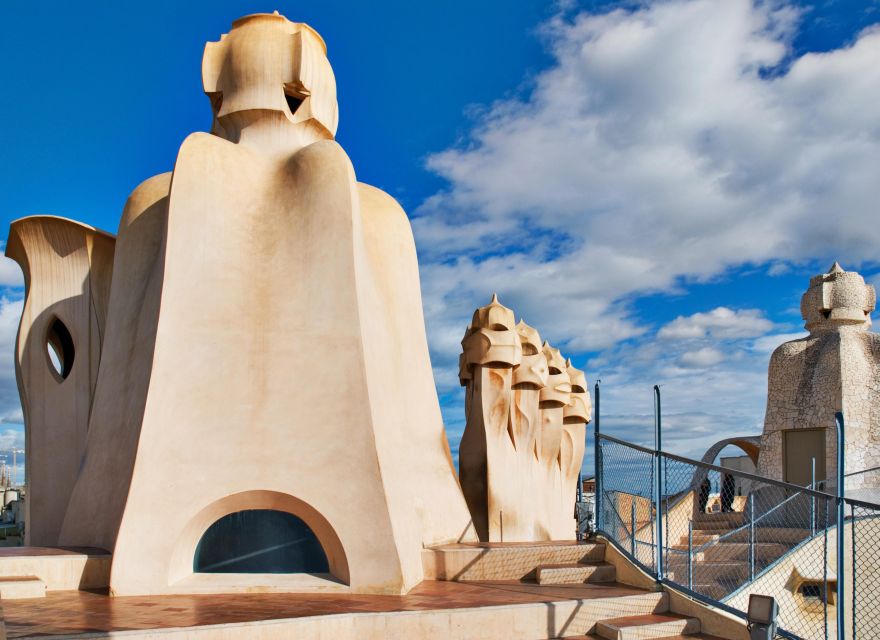
The itinerary includes an additional lesser-known architectural stop for about 15 minutes. The exact building is not identified in the available details, so you should not book this tour expecting a named monument or a guaranteed interior visit.
That uncertainty is not necessarily a problem. A final stop away from the most photographed façades can give the guide room to point out a detail you would likely pass without noticing. It also reinforces the tour’s broader lesson: Barcelona’s Modernist character is not limited to four famous buildings.
Think of this part as a bonus explanation rather than the main reason to book. The core value is the route from Sagrada Família through the major Passeig de Gràcia façades.
What the guides add to the experience
The operator describes its guides as artists and performers, including painters, musicians, and actors with broad training in art and history. That background suits a subject where storytelling and visual interpretation matter as much as dates.
The available guide feedback gives you a useful sense of the tone. Sofía was praised for being well informed and open to direct questions. Carlos received strong praise for his excellent manner and for showing Barcelona from a local point of view. On a rainy day, one small group ended up with Carlos alone, allowing for a relaxed conversation about the city and its architecture.
Anastasia added practical city suggestions beyond the buildings. Caio was noted for being charismatic, funny, helpful, and attentive to small details. He also offered restaurant advice and help with a reservation. These extras are not guaranteed, but they show how a small group can turn an architecture walk into a useful orientation for the rest of your stay.
Guides can also make the material easier to remember. Names, dates, and architectural terms are useful, but a good comparison or visual story stays with you longer. The best moments on this tour are likely to come when the guide connects a façade detail to a larger idea about the architect or the city.
Timing, value, and who should book
At $40 per person, this tour is fairly priced if you want a guided introduction to Barcelona’s Modernist center without paying for several separate attractions. You receive 2.5 hours, a small group, a multilingual live guide, explanations at five major buildings, and a metro connection between the two main areas.
The value drops if your main goal is to enter Sagrada Família, La Pedrera, or Casa Batlló. Those admissions are not part of the experience, and the visit times at the buildings are designed for exterior interpretation. In that case, use this tour as a planning tool, then reserve the interiors separately.
I would recommend it most to:
- First-time visitors who want a clear introduction to Gaudí and Modernisme
- Architecture fans who want to compare several designers in one outing
- People who prefer a small group and plenty of chances to ask questions
- Visitors who want practical Barcelona suggestions from a guide
- Anyone who has limited time and wants Sagrada Família and Passeig de Gràcia connected in one activity
You may prefer a different plan if you dislike walking, want extended time inside museums and monuments, or need a fully private tour. The activity is wheelchair accessible, but the route includes city streets and a metro segment, so confirm the details of your booked option if you have specific mobility needs.
The tour ends at Plaça de Catalunya. Two listed drop-off options point to the same central square, placing you in a useful area for continuing your day.
You can cancel up to 24 hours before the start for a full refund, and the reserve-now, pay-later option keeps your plans flexible. Tours are offered in English, Spanish, French, German, and Italian. Alcohol and drugs are not allowed, and large bags or luggage should be left elsewhere.
Should you book this Gaudí and Modernisme tour?
Book it if you want the story behind Barcelona’s most famous façades, not simply a list of addresses. The combination of Sagrada Família, La Pedrera, Casa Batlló, Casa Amatller, and Casa Lleó Morera gives you a strong overview in a short time, while the small group makes questions practical.
The best reason to choose it is the comparison between architects. You see why Gaudí is so famous, but you also learn that Barcelona’s Modernist identity came from several creative minds working across the same city.
Skip it if you want paid entry to the interiors or prefer to explore at your own pace with no fixed route. For everyone else, $40 buys a useful architectural primer, a central orientation, and a better way to read Barcelona’s extraordinary façades.
FAQ
How long does the Barcelona Gaudí and Modernist Architects Tour last?
The tour lasts 2.5 hours.
How much does the tour cost?
The listed price is $40 per person.
Which buildings are included?
The route includes Sagrada Família, Casa Milà, also known as La Pedrera, Casa Batlló, Casa Amatller, Casa Lleó Morera, and an additional lesser-known stop.
Can I enter the buildings?
The experience focuses on guided explanations of the façades from outside. Entry to the buildings is not stated as included.
Is transportation used during the tour?
Yes. The itinerary includes about 10 minutes on the subway or metro between the Sagrada Família area and the central Modernist buildings.
Where does the tour end?
The tour ends at Plaça de Catalunya.
How many people are in each group?
Groups are limited to 10 participants.
Which languages are available?
The live tour guide may conduct the experience in English, Spanish, French, German, or Italian.
Is the tour wheelchair accessible?
Yes, the activity is listed as wheelchair accessible. Check the details of your booked option if you need specific information about the meeting point or metro section.
New to the itinerary around Barcelona
- Roman & Gotic & Gaudi in Barcelona: private walking tour★ 4.5 · 2 reviews
- Visit to the Modernist houses of the Americans★ 5.0 · 2 reviews
- Barcelona Gaudi Tour: Sagrada Familia, Casa Batllo & Casa Mila★ 5.0 · 4 reviews
- Self-Guided Audio Tour-The Surrealist Barcelona of Dalí and Gaudí★ 3.5 · 8 reviews
- Barcelona Street Escape: Gaudi and the Hidden Treasure★ 5.0 · 17 reviews
- Gaudí & Catalan Modernism Private Walking Tour★ 5.0 · 11 reviews
- Gaudí and Barcelona Legends – Private Tour★ 5.0 · 4 reviews
- Gaudi’s Casa Batlló and La Pedrera with Chocolate Tasting★ 5.0 · 5 reviews
Gaudí Tours, compared.
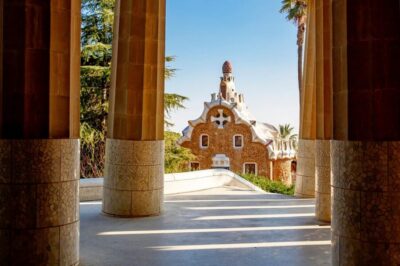
Park Güell and Gaudí House Museum Entry Ticket
Read our review →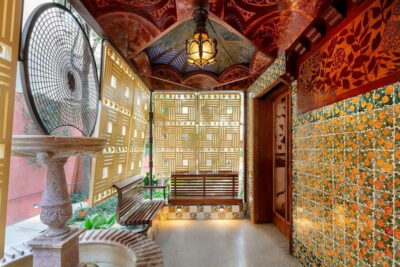
Gaudi’s Casa Vicens Skip-the-Line Entrance Ticket
Read our review →
Gaudí’s Park Güell Tour with Fast-Track Ticket
Read our review →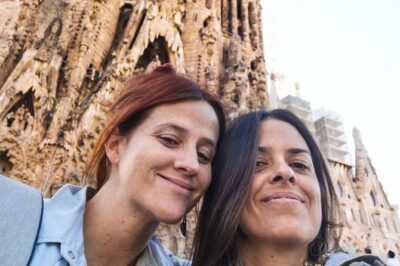
Sagrada Familia & Gaudi Tour Private or Small Group with Tickets
Read our review →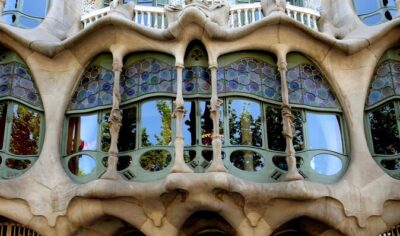
Complete Gaudi Tour: Casa Batllo, Park Guell & Sagrada Familia
Read our review →
Park Güell: Guided Tour with Optional Gaudí Experience Entry
Read our review →
Barcelona e-Bike Tour: Gaudí & Old Town Small Group
Read our review →
Ramblas, Old Town, Gothic and Gaudi Architecture Walking Tour
Read our review →Other lists with this tour