Review · BARCELONA
Barcelona: 2.5-Hour Gaudí Segway Tour
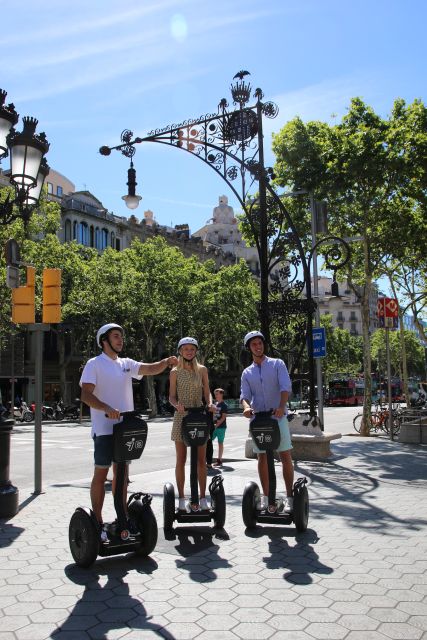
Barcelona’s Gaudí sights are spread across broad avenues and busy neighborhoods, so a Segway can save your feet while giving you a close look at the city’s most playful buildings. This route moves from Arc de Triomf through Eixample and Gràcia, with stops for Casa Milà, Casa Batlló, the Sagrada Família, and several less famous Modernist façades.
I like the careful training and small groups of two to six people per guide. I also like the mix of icons and lesser-known buildings, especially Casa Amatller, Casa de les Punxes, and Gràcia’s old civic center. The main drawback is simple: you need to be at least 16, physically steady, and comfortable sharing city streets with pedestrians and traffic.
Key points at a glance
- Arc de Triomf starting point: Meet at Passeig de Lluís Companys 10, then begin beside one of Barcelona’s most recognizable gateways.
- A strong Gaudí lineup: See Casa Milà, Casa Batlló, and the Sagrada Família, with time for photos and guided commentary.
- Modernist architecture beyond Gaudí: Casa Amatller, Casa de les Punxes, and Casa Fuster add welcome variety.
- Gràcia with local character: Visit Plaza de la Vila de Gràcia, its bell tower, and former town hall.
- Useful Segway instruction: Training, a helmet, safety equipment, insurance, and one drink are included.
- Fast city coverage: In 2.5 hours, you see more than you could comfortably cover on foot, though most stops are outside visits.
Why a Segway works well for Barcelona’s spread-out sights
Barcelona’s most famous Modernist buildings do not sit in one compact museum district. They are scattered along Passeig de Gràcia, around the Sagrada Família, and through neighborhoods that reward a little extra range.
That is the main reason to choose this tour. You can move between major sights without spending the whole morning walking from one avenue to the next. The Segway also gives you a higher viewing position than walking, useful when looking up at sculpted balconies, rooflines, and decorative stonework.
You should not think of this as a series of long building visits. The itinerary is built around riding, stopping, listening, and taking photographs. Casa Milà receives about 10 minutes of riding and sightseeing time, while the Sagrada Família neighborhood receives about 15 minutes. The exact flow can vary, but the tour is designed for an overview rather than interior admissions.
That distinction matters. If you want to enter the Sagrada Família or spend an hour examining La Pedrera’s rooftop, book separate tickets. If you want an efficient first look at Barcelona’s Modernist core, the Segway format makes good sense.
The small-group setup is another plus. Groups are limited to two to six people per guide, and larger bookings are divided among several guides. That should make it easier to ask questions, keep a comfortable pace, and receive help if you are still getting used to the machine.
More Architecture Tours by Bike and Segway in Barcelona
- Barcelona e-Bike Tour: Gaudí & Old Town Small Group
★ 5.0 · 769 reviews - Historical and Modernist Bike Tour Barcelona
★ 5.0 · 262 reviews - Barcelona Bike tour, Gaudí houses or beach bike or eBike tour
★ 5.0 · 140 reviews
Starting at Arc de Triomf on Passeig de Lluís Companys
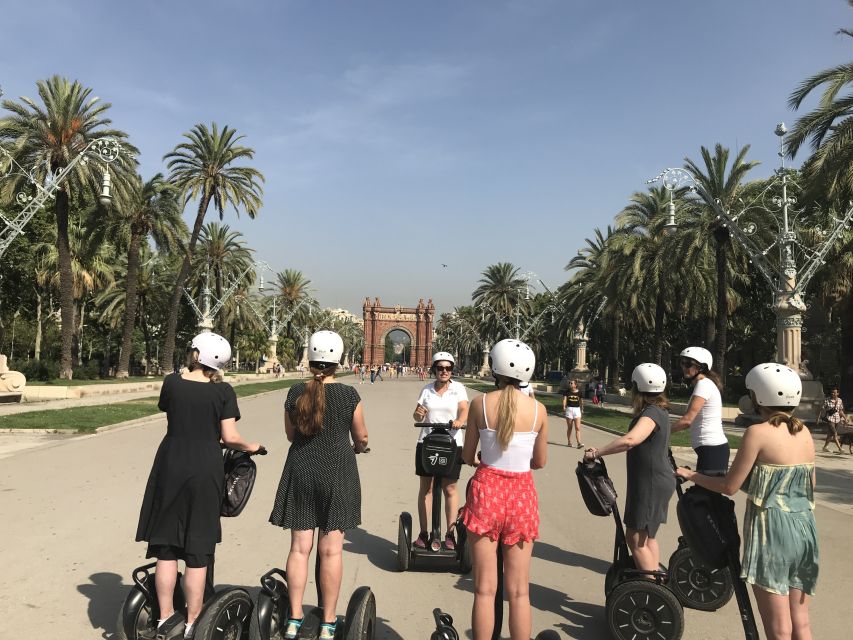
The meeting point is the provider’s office at Passeig de Lluís Companys 10, beside Arc de Triomf. This is a smart place to begin because the broad avenue gives the group room for the safety briefing and early practice.
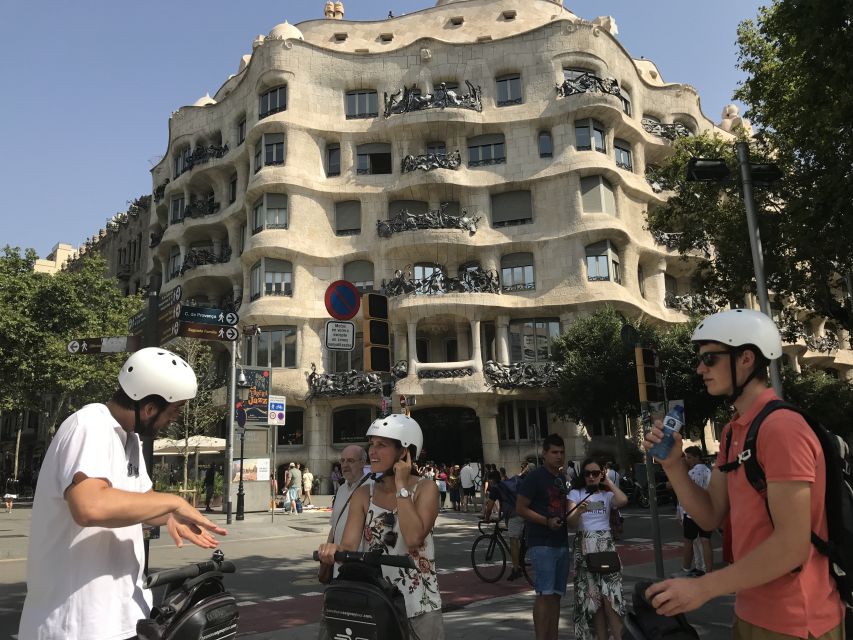
Your guide provides a Segway i2, helmet, safety equipment, and training before you set off. The training matters, even if you have used a Segway before. Several guides, including Edwin and Alex, are praised for taking time with instruction and making riders feel secure before joining the city streets.
Arc de Triomf itself is a fine first photo stop. Built for the 1888 Barcelona Universal Exposition, it gives the tour an immediate sense of the city’s transition into its modern era. From here, you head toward the Eixample, the planned district whose wide blocks helped Barcelona grow beyond its older center.
You will ride on public streets and around pedestrians, so the guide’s directions are not decoration. Listen closely, keep your movements controlled, and leave room for people on foot. The tour is fun, but it is still an urban riding activity.
Passeig de Gràcia and the strange faces of Modernism
Passeig de Gràcia is Barcelona’s grand architectural showcase. Its broad layout, shops, apartment buildings, and decorated façades make it one of the best places in the city to see how private wealth shaped Catalan Modernism.
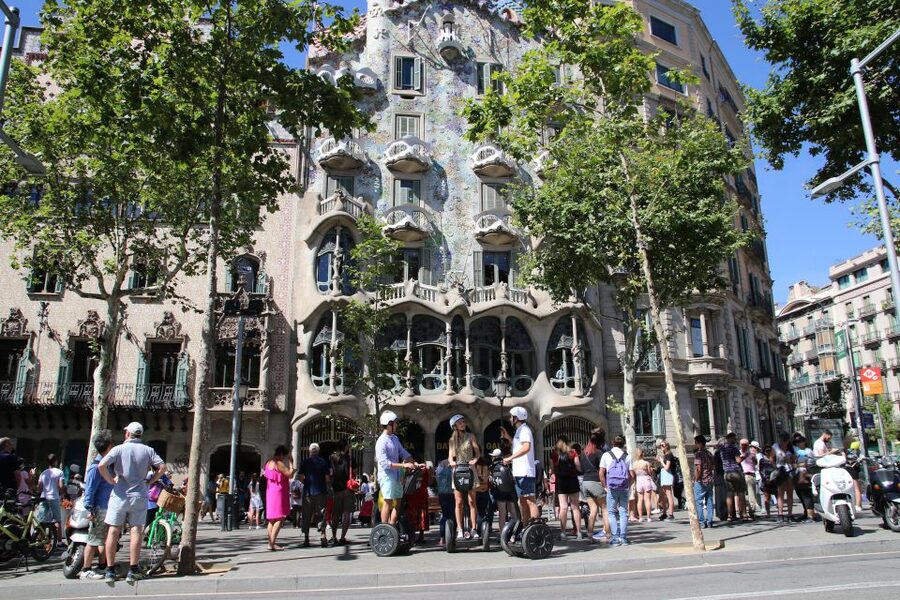
Casa Milà, better known as La Pedrera, is the first major Gaudí highlight. Its pale, wave-like stone façade seems to move even though the building is solid. Look up at the irregular balconies and the sculpted rooftop forms. From street level, you can appreciate the building’s rough, almost geological look without committing to an interior visit.
The tour allows around 10 minutes for this stop. That is enough for an explanation and photographs, but not enough to explore the rooftop, courtyards, or museum inside. I would treat the Segway stop as a preview and return later if La Pedrera interests you most.
A short distance away, Casa Batlló offers a very different mood. Its façade is covered with curved shapes, colorful ceramic details, and balconies that seem almost mask-like. Gaudí took familiar apartment-house elements and made them strange, theatrical, and hard to ignore.
Casa Batlló is one of those buildings you can understand better after hearing a guide point out the details. You will have time to see the exterior and hear the basic story, but again, this is not an indoor visit. The tour works best when you accept that it is showing you the city’s highlights rather than replacing them.
Casa Amatller and Casa de les Punxes add useful contrast
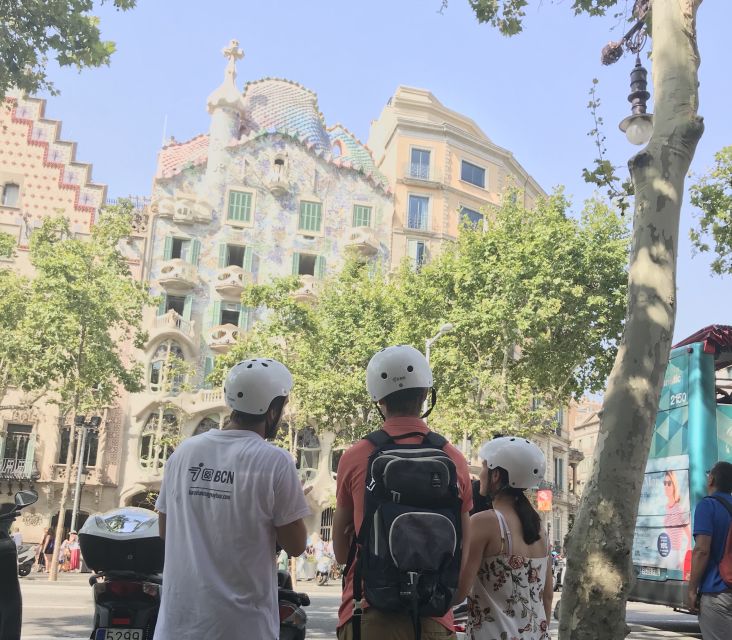
The route does not treat Gaudí as Barcelona’s only important architect. That is one of its better features.
Casa Amatller sits beside Casa Batlló and was commissioned in 1898 by a wealthy chocolate maker. Its stepped roof, careful ornament, and mix of architectural influences give it a different personality from Gaudí’s wilder work. Seeing these buildings side by side helps you understand that Passeig de Gràcia was not a one-architect show.
You also visit Casa de les Punxes, a castle-like Modernist building designed by Josep Puig i Cadafalch. Its pointed roof forms and decorative details make it easy to recognize from the street. It is less famous internationally than Casa Batlló, but it gives you a better sense of the friendly competition among Barcelona’s architects.
Casa Fuster, associated with Lluís Domènech i Montaner, is another important building included in the wider route. These stops are valuable because they widen the story. You are not simply collecting Gaudí façades. You are seeing how Catalan Modernism shaped whole streets, with architects borrowing, challenging, and reworking older European styles.
Your guide can help you focus on the details that pass quickly from a Segway: rooflines, balconies, stonework, color, and the way each building meets the street. Keep your camera ready, but do not forget to look above eye level.
More Architecture Tours by Bike and Segway in Spain
- Gaudi’s Barcelona 2-Hour Segway Tour with a Live Guide
★ 4.9 · 67 reviews - barcelona: Gaudi Highlights eBike tour
★ 4.8 · 59 reviews - Barcelona Gaudí Segway Tour
★ 5.0 · 58 reviews - Barcelona Gaudi Guided Small Group E Bike Tour
★ 5.0 · 53 reviews
The Sagrada Família neighborhood and La Monumental
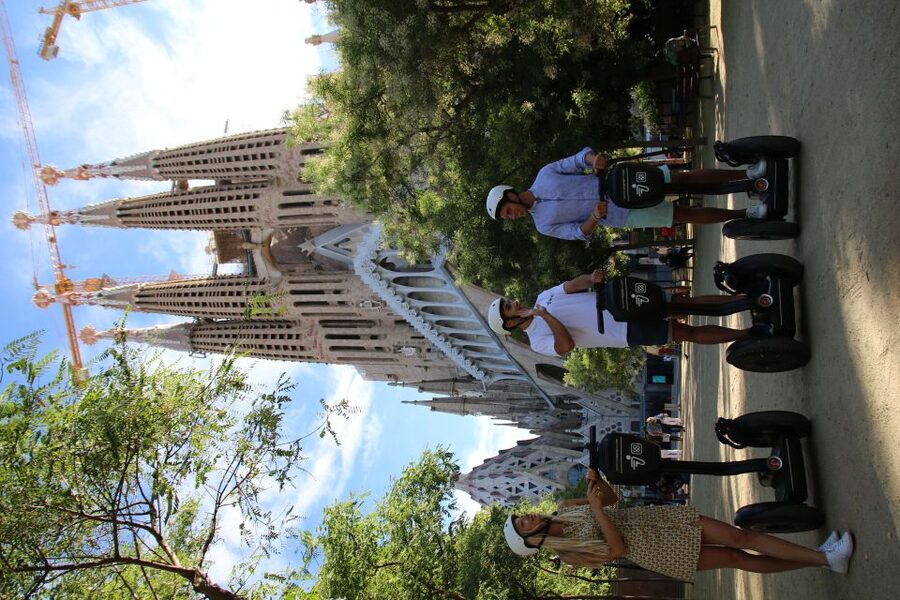
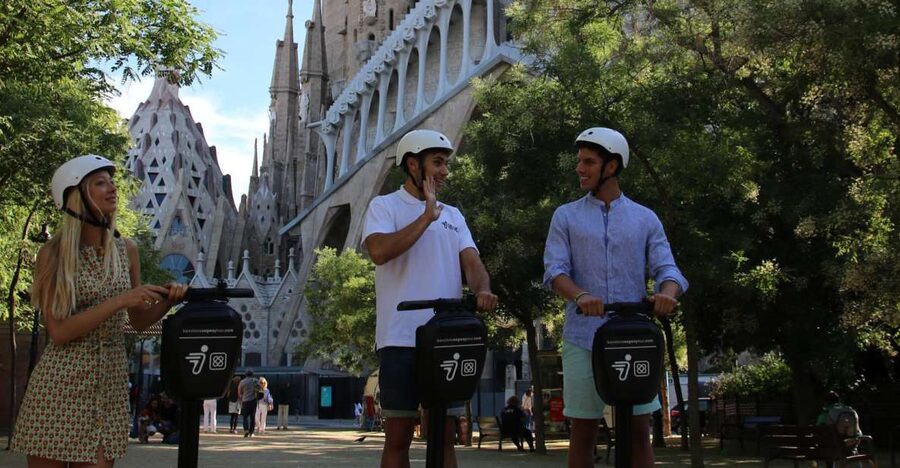
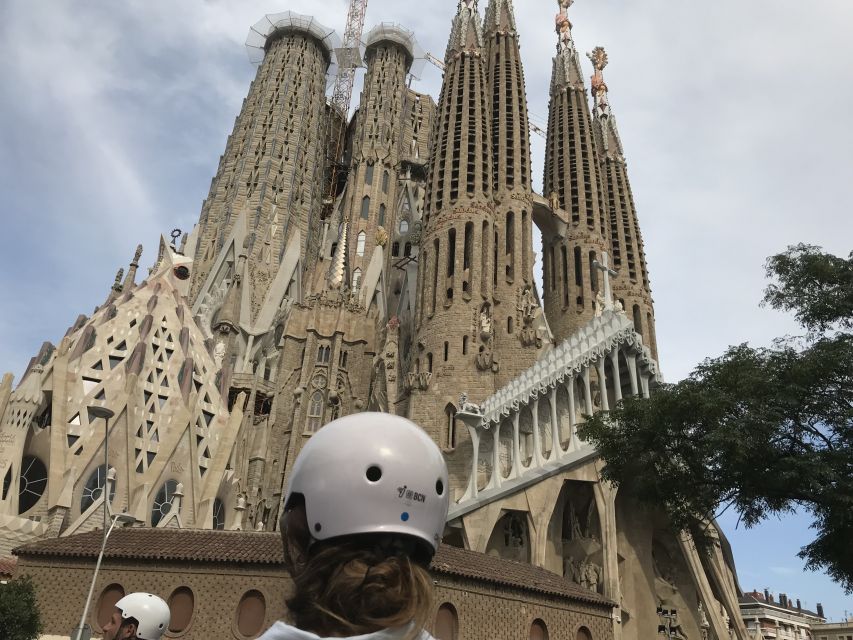
The Sagrada Família is the emotional high point of the ride for many people. Even unfinished, it is one of Barcelona’s most unmistakable buildings, with towers, carved façades, and details that reward a slow look.
The stop gives you about 15 minutes in the neighborhood for guided sightseeing, photographs, and some free time. You will see the exterior, not tour the basilica interior. That makes the stop especially useful for orientation if you plan to visit later with a timed admission.
The church’s unfinished state is part of its story, not a flaw to hide. Gaudí worked on it for years, and later architects and builders continued the project after his death. From the outside, different façades and sculptural styles make that long history visible.
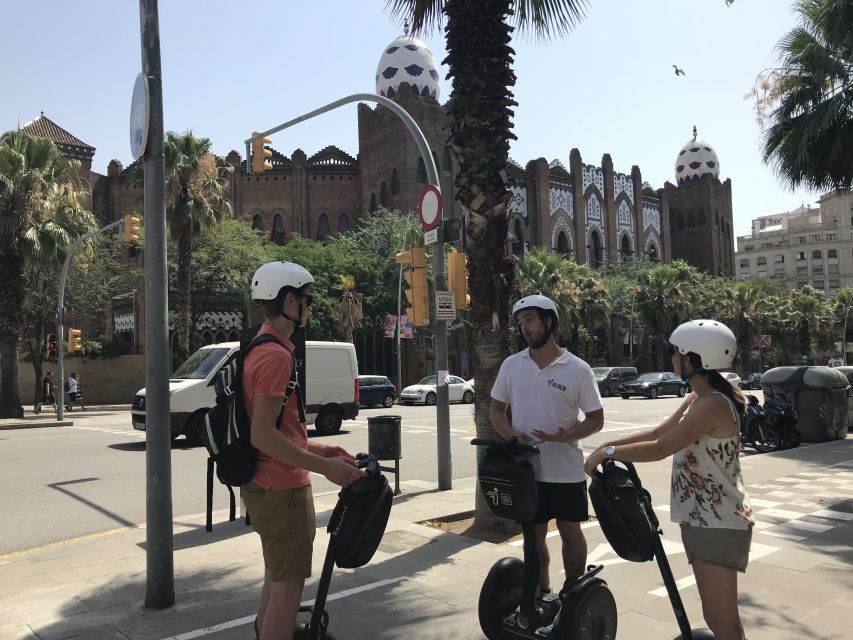
After the Sagrada Família, the route includes La Monumental, Barcelona’s last bullfighting arena to host bullfights before the Catalan parliament banned them. The building is a reminder that the city’s public traditions have changed over time. Its exterior also provides a useful counterpoint to the organic forms of Gaudí’s work.
This stretch of the tour can feel busy, and the guide needs to manage stops carefully. You may not get a long, quiet viewing period at either location. Still, the Segway lets you connect two major sights without losing time to a long walk.
A quick look at Gràcia’s older village identity
The ride then heads into Vila de Gràcia, a district with a very different feel from the grand blocks of Eixample. Gràcia began as a separate municipality in the 17th century and was formally annexed to Barcelona in 1897.
That background helps explain the district’s smaller scale. Instead of the wide avenues and large apartment blocks associated with Eixample, you find low buildings, narrow lanes, local shops, restaurants, and small art galleries. The tour makes a short escape to Plaza de la Vila de Gràcia, the district’s main square.
The square’s bell tower and former town hall, La Casa de la Vila de Gràcia, are the key sights. This is a useful stop because it shows Barcelona as a collection of former villages and neighborhoods, not just a showcase of famous façades.
You will not have time to explore every side street, and the tour does not turn into a food crawl or shopping walk. But the brief visit gives you enough context to return later on your own. If you like seeing how residents use a neighborhood rather than only checking off monuments, Gràcia is one of the best parts of the route.
What the guide adds to the ride
The guide can make or break a Segway tour. You need clear instructions, good street awareness, and more than a string of dates.
The strongest guide feedback centers on patience, safety, and local suggestions. Alex is praised for offering ideas about where to eat and what to see during the rest of a Barcelona stay. Edwin is noted for giving useful explanations while keeping the group moving at a good pace. Stephan is described as taking time to discuss each building, while Maria receives credit for explaining local culture and watching the group carefully.
Those details point to the kind of experience you should expect from a good guide here: practical riding help, short architectural explanations, and advice that can shape the rest of your visit. The guides speak Dutch, English, French, German, Italian, Portuguese, Russian, and Spanish, so check the available language before booking.
The tour is not a formal architecture lecture. It is better viewed as a moving introduction, with enough information to help you notice what you might otherwise pass without a glance.
Price, pace, and what you actually receive
At $42 per person, the tour offers fair value if you want to cover a wide section of Barcelona in one morning or afternoon. The price includes the Segway, helmet, training, safety equipment, insurance, a guide, and one drink.
The value is strongest for a first visit, a short stay, or anyone who finds long city walks tiring. You are paying not only for the machine, but also for route planning, street guidance, and explanations at several major sights.
It is less compelling if your main goal is entering museums and monuments. The tour does not include admission to the Sagrada Família, Casa Batlló, or Casa Milà, so add those costs if you want interiors. You also need to accept a fairly brisk sightseeing rhythm.
Comfort matters. Wear practical clothing and shoes. In winter, warm water-resistant clothing and gloves are recommended. Segway riding involves motions similar to climbing and descending stairs, and one person noted that the activity could be hard on the knees. You should also be between 35 and 120 kilograms, at least 110 centimeters tall, and able to ride without mobility assistance.
Local regulations set the minimum age at 16. Younger participants can join on high-end electric bicycles at discounted rates, but that is a different arrangement. Pregnant people and those with mobility impairments should not book this activity.
Cancellation is flexible up to 24 hours before the start for a full refund, and you can reserve now and pay later. Private tours and small groups are available, which may be worth considering if you want a slower pace or more time for questions.
Should you book this Barcelona Segway tour?
Book it if you want to see a large slice of Barcelona’s Modernist center without walking every block. It suits first-time visitors, short stays, active couples, families with participants aged 16 and older, and anyone who enjoys learning while moving.
I would especially recommend it before separate visits to the Sagrada Família or La Pedrera. The guide gives you a useful map of the city and helps you decide which buildings deserve more of your time.
Skip it if you dislike riding near traffic, need long quiet periods at each sight, or mainly want indoor access. For everyone else, $42 buys an efficient, well-planned introduction to Barcelona’s architecture, with the added pleasure of gliding from one extraordinary façade to the next.
FAQ
Where does the Barcelona Segway tour start?
Meet your guide at the activity provider’s office at Passeig de Lluís Companys 10, beside Arc de Triomf.
How long does the tour last?
The tour lasts 2.5 hours. Starting times vary, so check availability when booking.
What sights are included?
The route includes Arc de Triomf, Casa Milà, Casa Batlló, Casa Amatller, Casa de les Punxes, the Sagrada Família neighborhood, La Monumental, and Plaza de la Vila de Gràcia.
Is Segway training provided?
Yes. Training is included, along with a helmet, safety equipment, and insurance.
What is the minimum age?
Participants must be at least 16 years old under Barcelona’s local Segway regulations. Younger participants may join on high-end electric bicycles at discounted rates.
What languages are available?
Guides may lead tours in Dutch, English, French, German, Italian, Portuguese, Russian, or Spanish. Small groups and private options are available.
More Gaudí Tours in Barcelona
- Barcelona: Park Güell and Gaudí House Museum Entry Ticket
★ 4.5 · 6,326 reviews - Barcelona: Gaudi’s Casa Vicens Skip-the-Line Entrance Ticket
★ 4.7 · 4,541 reviews - Barcelona: Gaudí’s Park Güell Tour with Fast-Track Ticket
★ 4.8 · 4,512 reviews - Sagrada Familia & Gaudi Tour Private or Small Group with Tickets
★ 4.5 · 1,188 reviews
New to the itinerary around Barcelona
- Roman & Gotic & Gaudi in Barcelona: private walking tour★ 4.5 · 2 reviews
- Visit to the Modernist houses of the Americans★ 5.0 · 2 reviews
- Barcelona Gaudi Tour: Sagrada Familia, Casa Batllo & Casa Mila★ 5.0 · 4 reviews
- Barcelona Street Escape: Gaudi and the Hidden Treasure★ 5.0 · 17 reviews
- Gaudí & Catalan Modernism Private Walking Tour★ 5.0 · 11 reviews
- Self-Guided Audio Tour-The Surrealist Barcelona of Dalí and Gaudí★ 3.5 · 8 reviews
- Gaudi’s Casa Batlló and La Pedrera with Chocolate Tasting★ 5.0 · 5 reviews
- Gaudí and Barcelona Legends – Private Tour★ 5.0 · 4 reviews
Gaudí Tours, compared.
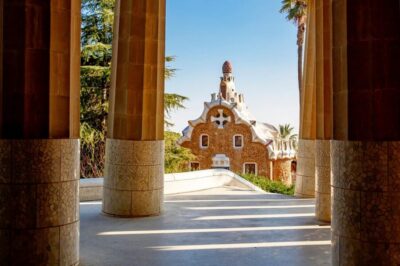
Park Güell and Gaudí House Museum Entry Ticket
Read our review →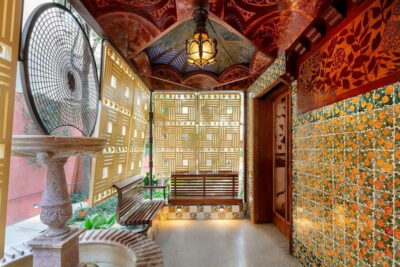
Gaudi’s Casa Vicens Skip-the-Line Entrance Ticket
Read our review →
Gaudí’s Park Güell Tour with Fast-Track Ticket
Read our review →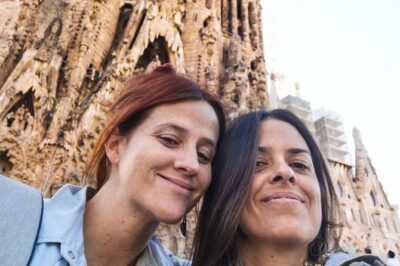
Sagrada Familia & Gaudi Tour Private or Small Group with Tickets
Read our review →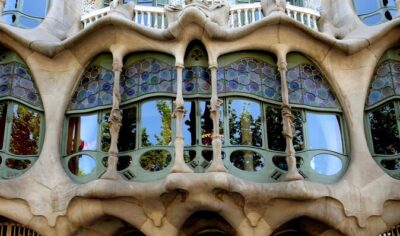
Complete Gaudi Tour: Casa Batllo, Park Guell & Sagrada Familia
Read our review →
Park Güell: Guided Tour with Optional Gaudí Experience Entry
Read our review →
Barcelona e-Bike Tour: Gaudí & Old Town Small Group
Read our review →