
Review · HUNGARY
Architectural Budapest: Private Tour with a Local Expert
Budapest’s architecture tells the story of a city that has been shaped, damaged, rebuilt, and redesigned. This private walk links grand places such as St. Stephen’s Basilica, the Opera House, and Parliament with less expected sights, including the Art Nouveau Postal Savings Bank and the round Hotel Budapest.
I like the private format, since your guide can adjust the pace and focus. I also like the chance to connect buildings with Budapest’s return to independence, a theme guide Beata handled well by mixing architecture with everyday places such as Szimpla Bar. The main drawback is the price: at $578.41 for up to two people, this is a costly two-hour walk, and transport or entry tickets cost extra.
Key points to know before booking
- Private for up to two people: You get a personal guide rather than a shared group experience.
- Seven very different sights: The route covers Baroque, neoclassical, Neo-Renaissance, Art Nouveau, Gothic Revival, medieval, and modernist design.
- Flexible focus: You can ask for more history, more design, or more attention to parts of Budapest you have not seen.
- Two-hour format: This works well as a focused introduction, but it cannot provide a long visit inside every landmark.
- A citywide finish: The walk begins at St. Stephen’s Basilica and ends near Hotel Budapest in the Buda district.
- Plan for walking: The tour is not recommended for people with impaired mobility, and transport tickets are not included.
Why this private Budapest architecture walk is different

Many city walks stay within one compact district. This one presents Budapest as a collection of changing architectural ideas. You begin in central Pest, pass grand boulevards and cultural buildings, cross into the story of Buda, and finish with a modernist structure that looks very different from the city’s famous domes and stone facades.
That broad range is the tour’s best feature. You are not only looking at attractive buildings. You are seeing how Budapest moved from imperial ambition to Art Nouveau experimentation, wartime damage, communist-era modernism, and a newer city identity.
The two-hour length keeps the experience manageable. You can fit it into a morning or afternoon without giving up an entire day. Still, the route covers a lot of ground. Ask your guide at the start how much walking is planned and which stops matter most to you.
Because this is a private tour, you can shape the conversation. If you care about decorative details, ask for more time with the Postal Savings Bank. If you prefer political history, focus on Parliament and Buda Castle. If you want a broad first look at the city, let the guide keep the route moving.
More Private Architecture Tours in the world:
- Sagrada Familia & Gaudi Tour Private or Small Group with Tickets
★ 4.5 · 1,188 reviews - Treasures of Barcelona: Private Gaudi Walking Tour
★ 5.0 · 128 reviews - Sagrada Familia & Gaudi Guided Tour Private or Small Groups
★ 4.7 · 106 reviews
Starting beneath the dome of St. Stephen’s Basilica
The meeting point is St. Stephen’s Basilica on Szent István tér. This is a practical place to begin because the church gives you an immediate lesson in Budapest’s formal, monumental side.
The basilica is a major neoclassical building, known for its large dome and central role in Catholic Budapest. Even if you only view it from outside, it sets the tone for the tour: grand scale, careful symmetry, and a building designed to express civic and religious importance.
This is a good place to tell your guide what you want from the next two hours. The itinerary is tailored, and the pace can change according to your interests. You may want to ask for more detail about architectural styles, urban planning, or the political changes that shaped the city.
One limitation is worth keeping in mind. The tour includes the basilica as a sight, but admission tickets for monuments and museums are not included. Do not assume the walking fee covers entry inside every building.
Andrássy Avenue and the Hungarian State Opera House
From the basilica, the experience moves toward Andrássy Avenue, one of Budapest’s most elegant urban routes. The avenue is lined with impressive buildings, luxury shops, and cultural institutions. It shows how Budapest once presented itself as a major European capital with grand ambitions.
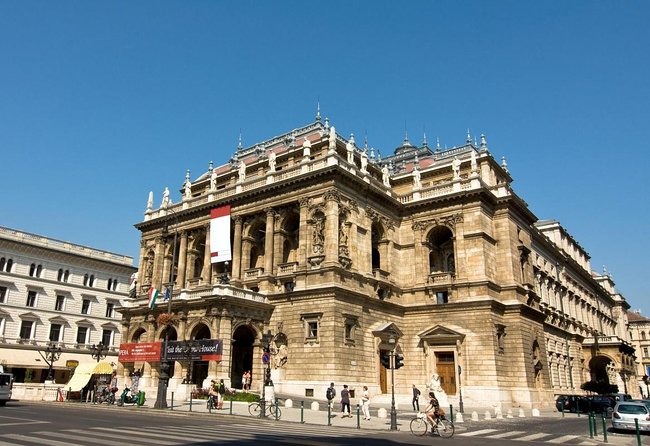
The Hungarian State Opera House is the star stop here. Its Neo-Renaissance design and lavish appearance make it one of the city’s key cultural buildings. The outside offers plenty to discuss, from the formal facade to the way the building fits into the avenue’s larger plan.
The Opera House also gives your guide a chance to explain how architecture and performance were linked. This was not simply a practical theater. It was built to signal refinement, wealth, and cultural confidence.
You should clarify whether your chosen route includes interior access. The information provided does not include an Opera House entry ticket, and the tour is only about two hours. Treat this stop mainly as an architectural and historical visit unless your guide confirms otherwise.
Andrássy Avenue itself deserves attention, not just a quick walk between buildings. Its scale, shops, and connected facades show how urban design can turn a street into a statement about a city. If you have already seen the usual central sights, ask to spend more time noticing the buildings between the headline attractions.
The playful details of the Postal Savings Bank
The Postal Savings Bank is one of the most rewarding stops for anyone who likes architecture that does not take itself too seriously. It is an early 20th-century building in the Art Nouveau style, where practical office design meets elaborate decoration.
This building helps break up the succession of grand classical facades. Rather than relying only on columns and domes, it uses ornamental details and a more playful approach to surfaces and form. Your guide can help you spot how function and decoration work together.
I would give this stop extra time if you enjoy architectural details. The building may be less immediately famous than the basilica or Parliament, but it offers a better lesson in how Budapest developed its own visual character.
It also shows why a private guide can be useful. A quick pass by the building may not reveal what makes it special. With someone pointing out the Art Nouveau elements, you can compare it with the more formal Neo-Renaissance Opera House and neoclassical basilica.
More Architecture Tours around the world:
- Chicago Architecture River Cruise
★ 5.0 · 15,756 reviews - Chicago River 90-Minute Architecture Tour
★ 4.5 · 9,629 reviews - Chicago River: 1.5-Hour Guided Architecture Cruise
★ 4.8 · 8,046 reviews - Barcelona: Park Güell and Gaudí House Museum Entry Ticket
★ 4.5 · 6,326 reviews
Parliament beside the Danube
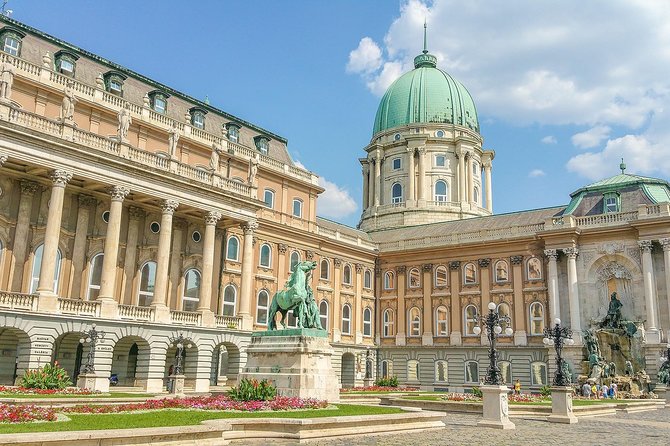
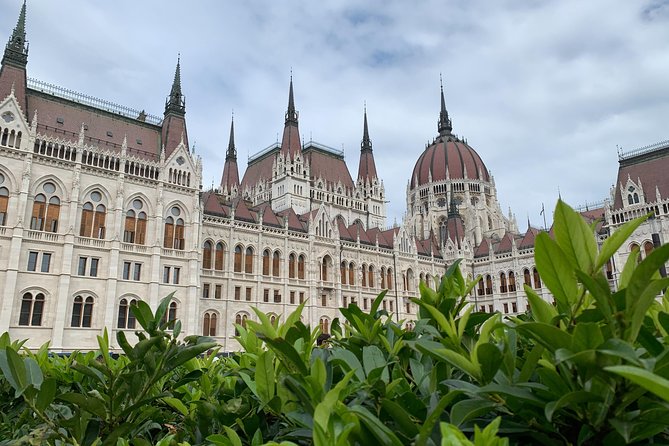
The Hungarian Parliament Building brings the tour back to Budapest’s monumental scale. Along the Danube, its Gothic Revival design is one of the city’s most recognizable sights and a symbol of Hungary’s political life.
Here, architecture carries a clear message. The building is meant to impress from a distance, especially when viewed in relation to the river. Its Gothic Revival language connects Hungarian politics to older European traditions while also creating a powerful national image.
Your guide can place Parliament within the wider story of Budapest’s skyline. The building is not an isolated attraction. It helps explain why the Danube is so important to the city’s identity and why the riverfront is one of the best places to understand Budapest’s scale.
The provided tour details do not include an interior visit or an entry ticket. If you want to go inside Parliament, plan that separately or ask before booking. This walking experience is better understood as an outside architectural tour, with interpretation added by your guide.
Crossing into the past on Castle Hill
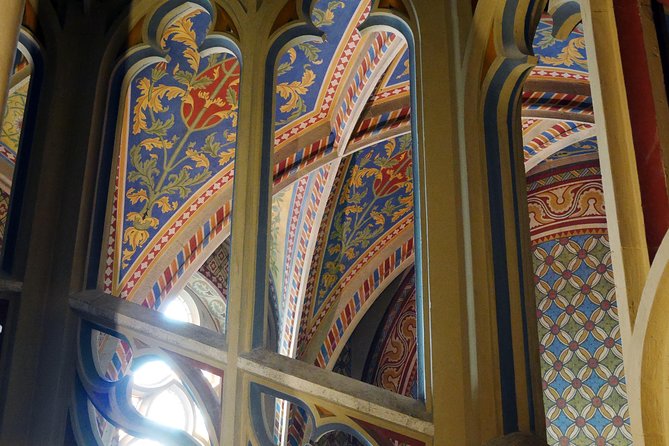
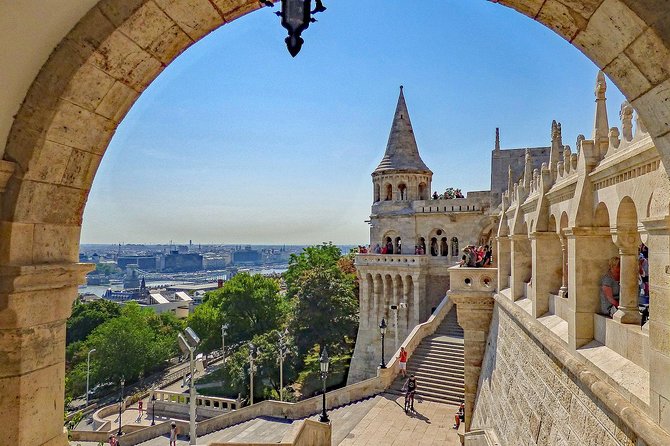
Castle Hill changes the mood. The district includes Buda Castle, Matthias Church, and Fisherman’s Bastion, making it the most obvious link to Budapest’s medieval past.
Buda Castle has shaped the city’s skyline for centuries. From this high position, it also changes your view of Pest and the Danube. The tour uses the castle district to show how power, defense, religion, and royal life influenced the form of the city.
Matthias Church adds a religious and decorative layer, while Fisherman’s Bastion gives the hill a more picturesque appearance. Together, these places show why Castle Hill cannot be reduced to one architectural period. Medieval roots, later rebuilding, and polished historic styles all meet here.
This is likely the most demanding section for walking. The experience is not recommended for people with impaired mobility, and the route may involve uneven ground or changes in elevation. Those details are not mapped out in the supplied information, so ask the guide about the planned route if hills are a concern.
Castle Hill is also where the private format can pay off. You can choose between a broad explanation of the district and a closer look at one building. If you have already toured the castle area, ask to spend more time on the parts of Budapest you have barely seen.
A sharp change at Hotel Budapest
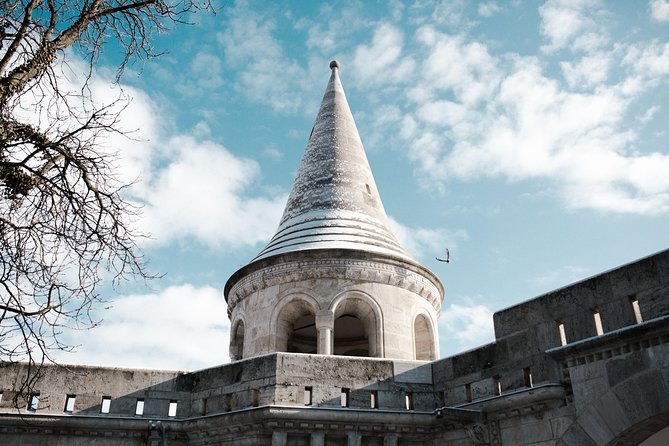
The final listed sight is Hotel Budapest, a cylindrical hotel in the Buda district. Its modernist design provides a sharp contrast with the classical, Baroque, medieval, and Gothic Revival buildings seen earlier.
This is a useful ending because it prevents the tour from treating Budapest as a preserved old city only. The round hotel represents a later stage in the city’s development, when modern materials and new forms challenged the historic styles that dominate postcards.
You may not find this stop as immediately beautiful as the basilica or Parliament. That is precisely why it belongs on an architecture tour. It asks you to consider what Budapest looked like as it moved into the modern era, and how new buildings fit into a city known for older landmarks.
The ending is at Szilágyi Erzsébet fasor 47, in the Buda district. That location matters. You do not finish back at the starting point, so plan your next move from Buda rather than assuming you can simply walk back to St. Stephen’s Basilica.
How much ground can two hours cover?
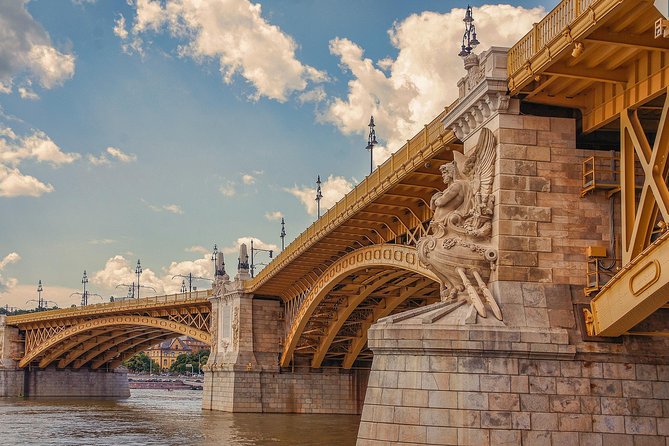
The stated duration is about two hours, and the itinerary spans central Pest, the Danube, Castle Hill, and another part of Buda. That is a lot for a short walk. Some stops may receive only an exterior explanation, and weather or your walking pace can change the route.
The tour description allows stops to vary with weather. It also says the itinerary adapts to your interests and pace. I would use that flexibility early rather than waiting until the end. Tell the guide which three sights matter most to you, then let the remaining stops fill out the story.
Transport tickets are not included. Since the start and finish are in different parts of the city, budget for any public transport or taxi you need before or after the walk. The tour is near public transportation, but the exact transport arrangement is not supplied.
A mobile ticket makes access simple, and confirmation is provided when you book. Service animals are allowed, and most people can participate, but the walking demands mean this is not a good fit for anyone who needs an accessible route.
What the $578.41 price really means
The price is $578.41 per group of up to two people. For two people, that works out to about $289.21 each. If you are traveling alone, the group price makes the experience especially expensive.
You are paying for privacy, a local guide, and a route that can respond to your interests. That can be worthwhile if you want to ask questions freely, avoid a fixed group pace, or focus on architecture rather than a standard sightseeing checklist.
The value is weaker if you only want to see the main buildings from outside. Budapest has many public architectural sights that you can visit independently, and two hours is not long enough to create a full architectural survey.
I would consider this price reasonable only when the private format matters to you. A couple who loves design, a parent traveling with a teenager, or a small group with very specific interests may get more from it than someone seeking a cheap orientation walk.
One useful sign is the way guide Beata handled different interests. She included opera, Szimpla Bar, and less-seen parts of the city, while also explaining Budapest’s return to independence. That suggests the conversation can move beyond dates and building names, though your assigned guide may be someone else.
Who should book this experience?
I would recommend it to visitors who want a focused introduction to Budapest’s built environment and prefer personal conversation over a large group. It also suits returning visitors who have already seen the classic sights and want help connecting them with less familiar buildings.
Families may appreciate the ability to adjust the subject. The mix of opera, political history, medieval sites, modern design, and informal city life gives a guide several ways to keep different age groups interested.
Architecture students and design-minded visitors should pay attention to the range of styles. In two hours, you can compare neoclassical, Neo-Renaissance, Art Nouveau, Gothic Revival, medieval, and modernist work.
I would hesitate to book it if you need a step-free or low-effort route, want guaranteed interior access, or have only a small budget. You should also avoid expecting a slow, detailed visit inside every major building. This is a moving overview, not a museum tour.
Free cancellation is available if you cancel at least 24 hours before the start time. Changes made within that period are not accepted, and the amount paid is not refunded for a late cancellation.
Should you book this Budapest architecture tour?
Book it if you want a private architectural overview with room to ask questions and you value a guide who can connect famous landmarks with less obvious parts of the city. The strongest feature is the range: one walk moves from the basilica and Opera House to Art Nouveau details, Parliament, Castle Hill, and a modernist hotel.
Think twice if the $578.41 group price feels high for two hours. You will need to pay separately for transport and any admission, and the route may cover more ground than some people can comfortably manage.
For the right visitor, this is a useful way to see Budapest as a changing city rather than a row of postcard buildings. Before you start, name your priorities, ask about the walking route, and confirm which stops will receive the most time.
FAQ
How long is the Architectural Budapest private tour?
The tour lasts approximately two hours.
How many people can join the private tour?
The price covers one private group of up to two people. Only your group participates.
Where does the tour start?
The meeting point is St. Stephen’s Basilica at Budapest, Szent István tér 1, 1051 Hungary.
Where does the tour end?
The tour ends at Budapest, Szilágyi Erzsébet fasor 47, in the Buda district.
Are transport and monument admission included?
No. Entry tickets for transportation, museums, and monuments are not included.
Can the itinerary change?
Yes. The itinerary can adapt to your interests and walking pace, and stops may vary because of weather conditions.
New to the itinerary around the world
- Wilmington History and Architecture Tour★ 4.8 · 18 reviews
- Washington, DC: Georgetown Architecture Walking Tour★ 5.0 · 8 reviews
- Walk & Discover KL’s Architectural and Heritage Gems★ 5.0 · 7 reviews
- Washington DC: Dupont Circle & Embassy Row Architecture Tour★ 5.0 · 6 reviews
- New Orleans : Garden District Architecture Walking tour★ 4.8 · 5 reviews
- Unveiling Brno: History, Culture & Architectural Delights★ 5.0 · 2 reviews
- Vicenza: Palladian Architecture Private Walking Tour★ 3.3 · 3 reviews
- Private Colonial Williamsburg Architectural Tour★ 5.0 · 5 reviews
Private Architecture Tours, compared.

Sagrada Familia & Gaudi Tour Private or Small Group with Tickets
Read our review →
Barcelona 1.5h Private Old Town, Gothic & Ramblas Walking Tour
Read our review →
Treasures of Barcelona: Private Gaudi Walking Tour
Read our review →
Sagrada Familia & Gaudi Guided Tour Private or Small Groups
Read our review →
Best of Chicago: Architecture & Highlights City Private Tour
Read our review →
Private Harajuku Omotesando Architecture Walking Tour
Read our review →
Private Santa Barbara History and Architecture Walking Tour
Read our review →
Private Barcelona Modernism and Gaudí Walking Tour
Read our review →Other lists with this tour