
Review · BARCELONA
Antoni Gaudí’s Torre Bellesguard: A treasure to discover
Torre Bellesguard gives you a different side of Antoni Gaudí. Instead of the crowded grandeur of Park Güell or the Sagrada Família, you get a small castle on a quiet hillside, built over the remains of a medieval fortress linked to King Martí I of Barcelona. The narrow stairways and unusual rooms make the visit feel personal and slightly mysterious.
I like the quiet gardens and the terrace, where you can look across Barcelona’s rooftops. I also like the historical layers: Roman remains, a medieval royal site, and Gaudí’s work from 1900 to 1909 all meet here. The main drawback is the uphill approach and limited accessibility, since you must manage stairs inside the tower.
Key points at a glance
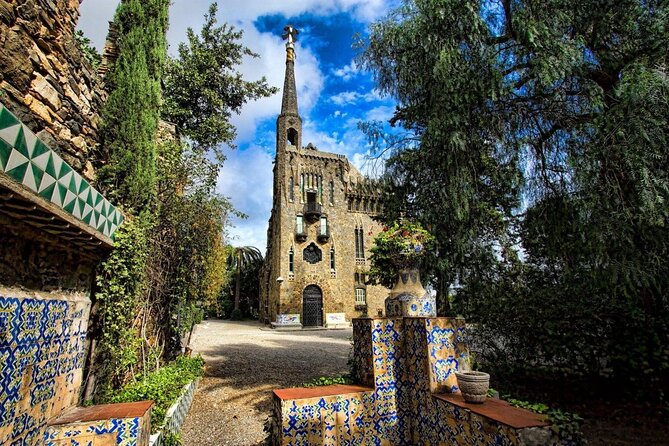
- A less familiar Gaudí building: Torre Bellesguard opened to the public in 2013, making it one of his newer museum experiences.
- Medieval roots: The house occupies the site of a fortress used by Martí I the Humane, the last king of the House of Barcelona.
- A compact one-hour visit: The audio-guided tour covers the interior, terrace, and gardens without taking half a day.
- Strong city views: The terrace gives you a clear look over Barcelona’s rooftops.
- Quiet setting: This part of northern Barcelona feels calmer than Gaudí’s best-known sites.
- Important access note: Stairs and tight passages make the visit unsuitable for anyone who cannot comfortably go up and down stairs.
Why Bellesguard feels different from Gaudí’s famous sites
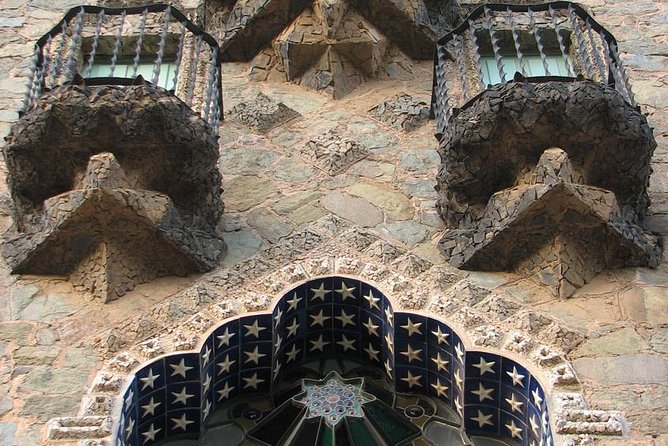
Gaudí is often associated with bright mosaics, flowing stone, and grand public buildings. Torre Bellesguard has those familiar touches, but its mood is more restrained. From outside, it looks like a pointed stone castle. Inside, the building reveals itself room by room, with decorative details that reward a slower look.
The setting matters. Bellesguard sits away from Barcelona’s busiest sightseeing streets, in a quieter part of the city. You are not simply entering another Gaudí museum. You are visiting a private home built on a site with royal and Roman connections.
The building was designed and constructed between 1900 and 1909. It is sometimes described as castle-like, but it is also a residence and museum. That mix explains the experience: the exterior suggests fortifications, while the interior feels more domestic and enclosed.
I would choose this visit if you have already seen some of Gaudí’s major works and want a quieter, more unusual stop. It also works well for anyone interested in how architecture can preserve older layers of a place rather than erase them.
More Gaudí Tours in Barcelona:
- Barcelona: Park Güell and Gaudí House Museum Entry Ticket
★ 4.5 · 6,326 reviews - Barcelona: Gaudi’s Casa Vicens Skip-the-Line Entrance Ticket
★ 4.7 · 4,541 reviews - Barcelona: Gaudí’s Park Güell Tour with Fast-Track Ticket
★ 4.8 · 4,512 reviews
Reaching the hillside tower
The journey is part of the practical calculation. Bellesguard is not in the central sightseeing zone, and the final approach includes an uphill walk. One useful route is the L7 metro line to Avinguda Tibidabo, followed by a walk of about 1.3 kilometers. From Liceu, the full trip can take roughly 30 minutes by train and on foot.
The walk may feel long on a hot day, especially because the house sits uphill. Wear comfortable shoes and carry water. The effort is not extreme, but this is not a stop you casually fold into a stroll between Plaça Catalunya and the Gothic Quarter.
There is a blue funicular near Avinguda Tibidabo. The available information does not confirm that it takes you to Torre Bellesguard, so ask the ticket seller before relying on it. A bus can also help with the return toward Plaça Catalunya, according to the route information provided for the area.
This slightly removed location is both a weakness and an advantage. You spend more time getting there, but you also leave behind much of central Barcelona’s noise. If you plan the visit around other northern Barcelona sights, the location becomes easier to justify.
Entering a Gaudí castle from 1900 to 1909
The site’s story reaches back beyond Gaudí. Roman-era connections are part of its background, and the hill later held a medieval fortress associated with Martí I the Humane. He was the last king of the House of Barcelona.
Gaudí used that past as a starting point. The result is not a literal reconstruction of the old fortress. Instead, the building recalls a medieval stronghold through its shape and materials while adding his own structural and decorative ideas.
That historical link gives the visit more substance than a quick look at an eccentric house. You can read Bellesguard as a meeting point between old Catalonia and modernist Barcelona. The name and castle form are tied to the site’s royal past, while the interior carries Gaudí’s personal style.
The building opened to the public in 2013. That matters because many visitors to Barcelona have seen Gaudí’s major works but have never entered Bellesguard. It feels less familiar and less processed as a museum experience.
The Hall of the Bricks and the narrow interior
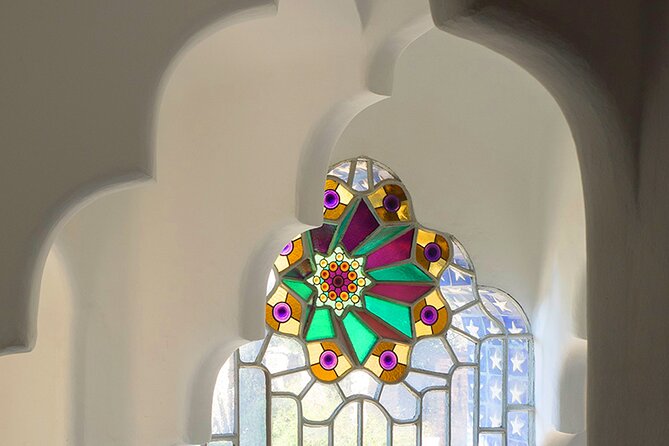
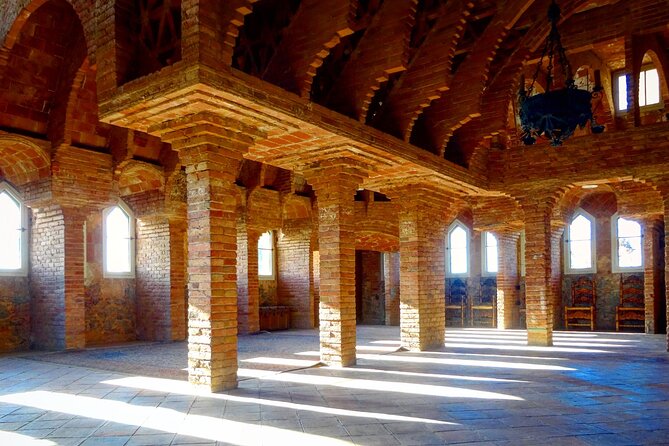
Inside, your audio guide leads you through the main rooms. The Hall of the Bricks is one of the named highlights. Its material and construction details help you notice how Gaudí worked with basic surfaces rather than relying only on colorful decoration.
The smoking room offers another glimpse of the building as a home, not just an architectural display. That room helps balance the castle image with the reality of private domestic life. You are seeing spaces designed for people to use, not only facades created to impress from the street.
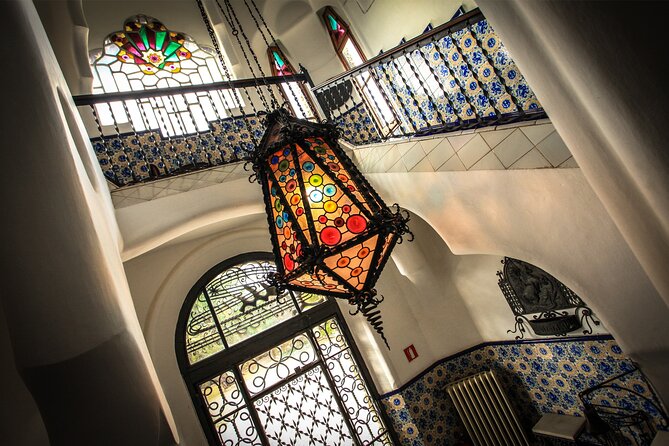
The interior can feel tight as you move upward. The stairways become narrow, and the building’s compact shape is part of its character. It also creates the main access issue. You need to be able to manage stairs, and visitors with limited mobility may find the route difficult.
I would not rush through these rooms. Look at the transitions between stone, brick, windows, and decorative surfaces. Bellesguard is not huge, so the visit depends more on close attention than on covering a long sequence of galleries.
More Architecture Tours around Barcelona:
- Barcelona: Sant Pau Recinte Modernista Entry Ticket
★ 4.6 · 2,567 reviews - Barcelona: Sagrada Familia, Modernism, and Old Town Tour
★ 4.7 · 1,621 reviews - Sagrada Familia & Gaudi Tour Private or Small Group with Tickets
★ 4.5 · 1,188 reviews - Complete Gaudi Tour: Casa Batllo, Park Guell & Sagrada Familia
★ 5.0 · 1,152 reviews
What the audio guide adds
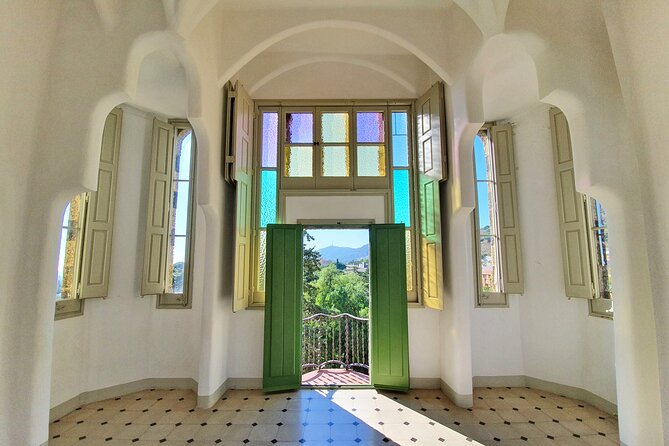
The included audio guide gives you the basic structure for the visit. It explains the site’s earlier history and points out the building’s rooms and details. Since the experience is about one hour, the commentary helps keep the visit focused.
The guide is offered in English, which makes the tour easy to use for English-speaking visitors. Equipment is provided at the site. One recorded experience had occasional problems with the audio device, though it remained useful overall. That is a small but real consideration, especially if you expect flawless commentary from start to finish.
A staff member may be present to help with the visit, but this is not presented as a fully guided architectural tour with a named specialist. The audio guide does most of the explaining. If you want an active conversation about Gaudí, design, or Catalan history, this may feel more limited than a private guide.
For me, the audio format fits the building. You can move at your own pace and pause to inspect details. The tradeoff is that you must supply some of your own curiosity. Keep looking after the commentary ends, especially in smaller rooms and stairwell areas.
The terrace and Barcelona rooftops
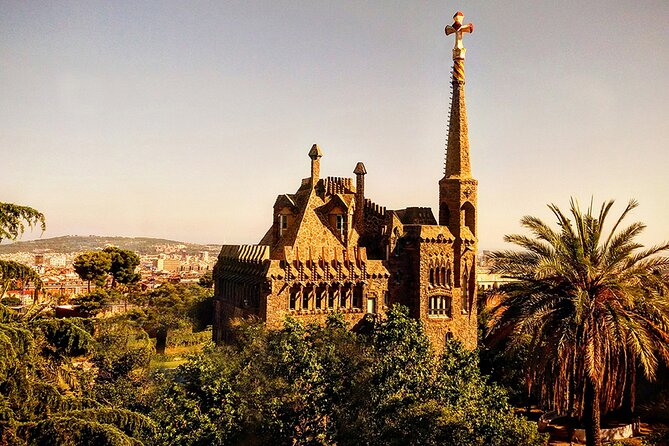
The terrace is the payoff for climbing through the tower. From up high, you get views over Barcelona’s rooftops and a sense of the building’s hilltop position. The view is not the only reason to visit, but it gives the tour a satisfying finish.
The terrace also changes how you understand the building. From inside, Bellesguard can feel narrow and enclosed. Outside, the elevation opens the view and explains why this location mattered long before Gaudí arrived.
Weather can affect this part of the visit. Rain may prevent you from enjoying the terrace fully, and hot weather makes the uphill walk and stair climb less pleasant. Check the forecast and plan your timing accordingly if the view is important to you.
The rooftop stop is especially useful for photographers, though the experience is still worthwhile if you are more interested in architecture than pictures. You will see Barcelona from a quieter northern angle rather than from the city’s most famous lookout points.
Gardens, mosaics, and a calm finish
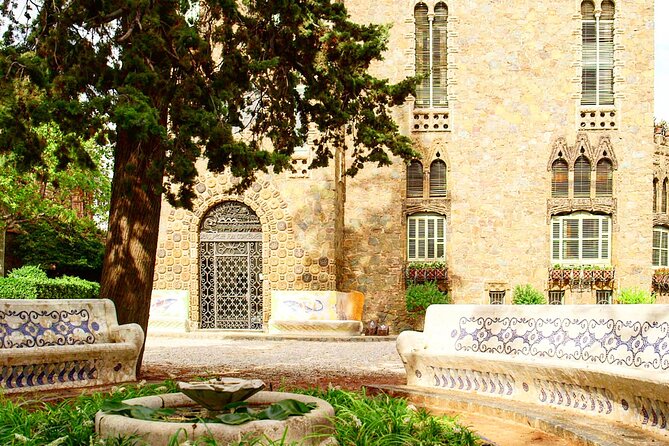
After the interior, you can walk through the gardens. They provide a welcome change from the confined rooms and narrow stairs. The grounds include plantings and occasional Gaudí-related works, with mosaics among the details worth watching for.
I like this part because it slows the visit down. The house asks you to look up, squeeze through passages, and follow an audio explanation. The gardens let you step back and see the building in its setting.
The grounds are not a substitute for a large city park, and you should not expect hours of walking. Think of them as a peaceful extension of the house. They are ideal for a few quiet minutes after the indoor tour, especially if you have been moving through crowded Barcelona attractions earlier in the day.
The gardens also soften the building’s fortress appearance. From outside, stone and pointed forms can make Bellesguard feel severe. Plants, open space, and mosaics give it a more relaxed feel.
Is the $14.38 price good value?
At about $14.38 per person, the admission is modest for a Gaudí site in Barcelona. The price includes entry and the audio guide, but not food or drinks. You are paying for a focused architectural visit rather than a long attraction with many rooms or exhibits.
The value depends on what you want. If your priority is a major landmark with a large interior, Bellesguard may feel small. The visit lasts about an hour, and the building is compact. Add the travel time and uphill walk, and the outing takes longer than the tour itself.
If you appreciate architecture, history, and quieter places, the price makes more sense. You get access to a Gaudí work that many visitors skip, along with the terrace, gardens, and a layered site connected to Roman and medieval Barcelona.
I would consider it good value for repeat visitors and serious Gaudí fans. For a first-time visit with only one day in Barcelona, the decision is harder. You may prefer to spend that time at the Sagrada Família, Casa Batlló, or Park Güell before adding Bellesguard.
Who should book this experience?
Bellesguard suits you if you like architecture that reveals itself slowly. It is a good choice for someone who wants a calmer setting, enjoys historical context, and does not mind traveling beyond central Barcelona.
It also works well for photographers, Gaudí enthusiasts, and visitors who have already seen the main modernist sights. The terrace and gardens give the experience some breathing room, while the interior offers plenty of small features to study.
Families may enjoy the castle shape and unusual rooms, but the stairs require attention. Anyone with mobility limitations should think carefully before booking. The site has reduced accessibility, and you must go up and down stairs.
This is not the best pick if you want a fully interactive guide, a long tour, or a central location. The audio commentary is useful, but the experience is mostly self-paced. You will get more from it if you enjoy exploring without constant staff narration.
Planning the visit without surprises
Wear comfortable shoes. The walk from public transport includes an uphill stretch, and the building itself requires stairs. The route is manageable for most people who can walk and climb normally, but it is not designed for easy wheelchair access.
Service animals are allowed, and the site is near public transportation. Confirmation is normally provided when you book. If you book within one day of the visit, confirmation arrives as soon as possible and depends on availability.
The experience offers free cancellation if you cancel at least 24 hours before the start time. Cancellations made less than 24 hours ahead are not refunded, and last-minute changes are not accepted.
Give yourself extra time beyond the one-hour tour. The walk, check-in, audio equipment, gardens, and terrace can turn this into a relaxed half-day outing, especially if you stop for lunch nearby. Food and drinks are not included in the admission price.
Should you book Torre Bellesguard?
Book it if you want a quieter, less familiar Gaudí experience with a castle-like exterior, medieval connections, unusual rooms, gardens, and a rooftop view. The $14.38 price is fair, and the compact tour fits well into a day built around northern Barcelona.
Skip it if your schedule is tight, you dislike uphill walks, or stairs are a problem. Also skip it if you expect a long, highly interactive guided tour.
For most architecture fans, Bellesguard is worth the trip. It shows Gaudí working on a smaller and more intimate scale, in a place where Roman, royal, medieval, and modernist Barcelona meet.
FAQ
Where is Torre Bellesguard?
Torre Bellesguard is in Barcelona, Spain, in a quieter area north of the city center.
How long does the visit take?
The visit lasts approximately one hour. Allow additional time for the journey, uphill walk, entry process, terrace, and gardens.
What is included in the admission?
Admission to Torre Bellesguard and an audio guide are included.
Is the audio guide available in English?
Yes. The experience is offered in English and includes audio guide equipment.
When was Torre Bellesguard built?
Gaudí designed and built Torre Bellesguard between 1900 and 1909.
Can I visit the gardens?
Yes. After exploring the building, you can walk through the gardens and see plantings and Gaudí-related works.
Is Torre Bellesguard accessible for people with limited mobility?
Accessibility is reduced. Visiting the tower requires going up and down stairs, including narrow stairways.
Are food and drinks included?
No. Food and drinks are not included unless specifically stated.
Can I cancel for a refund?
Yes, you can cancel for a full refund if you cancel at least 24 hours before the experience start time. Cancellations made less than 24 hours ahead are not refunded.
New to the itinerary around Barcelona
- Roman & Gotic & Gaudi in Barcelona: private walking tour★ 4.5 · 2 reviews
- Visit to the Modernist houses of the Americans★ 5.0 · 2 reviews
- Barcelona Gaudi Tour: Sagrada Familia, Casa Batllo & Casa Mila★ 5.0 · 4 reviews
- Barcelona Street Escape: Gaudi and the Hidden Treasure★ 5.0 · 17 reviews
- Gaudí & Catalan Modernism Private Walking Tour★ 5.0 · 11 reviews
- Self-Guided Audio Tour-The Surrealist Barcelona of Dalí and Gaudí★ 3.5 · 8 reviews
- Gaudi’s Casa Batlló and La Pedrera with Chocolate Tasting★ 5.0 · 5 reviews
- Gaudí and Barcelona Legends – Private Tour★ 5.0 · 4 reviews
Gaudí Tours, compared.
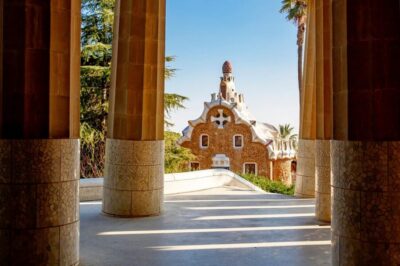
Park Güell and Gaudí House Museum Entry Ticket
Read our review →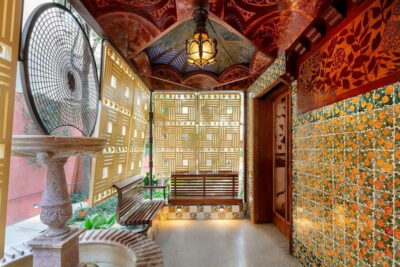
Gaudi’s Casa Vicens Skip-the-Line Entrance Ticket
Read our review →
Gaudí’s Park Güell Tour with Fast-Track Ticket
Read our review →
Sagrada Familia & Gaudi Tour Private or Small Group with Tickets
Read our review →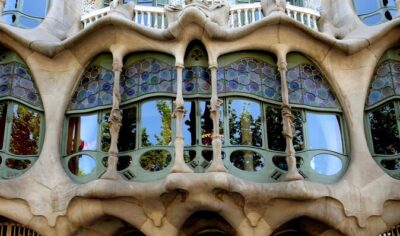
Complete Gaudi Tour: Casa Batllo, Park Guell & Sagrada Familia
Read our review →
Park Güell: Guided Tour with Optional Gaudí Experience Entry
Read our review →
Barcelona e-Bike Tour: Gaudí & Old Town Small Group
Read our review →
Ramblas, Old Town, Gothic and Gaudi Architecture Walking Tour
Read our review →Other lists with this tour