
Review · MADRID
Architour through Lavapiés and Rastro with an architect
Madrid’s Lavapiés is best understood at walking pace, one doorway and one odd corner at a time. This private three-hour architecture walk with Emilio, an architect who lives in the neighborhood, links medieval streets, a former Inquisition jail, 1930s rationalism, Art Deco theaters, street art, markets, and modern museum design.
I like the personal angle and the range. You get local knowledge of Lavapiés, not just a list of buildings, plus practical stops for coffee, tapas, vermouth, and Madrid restaurant suggestions. The main consideration is the price, $210.12 per person, which makes the tour most appealing to a small group that will take full advantage of Emilio’s attention and advice.
Key points at a glance
- A private walk led by architect Emilio: Expect architecture, politics, neighborhood history, and personal recommendations rather than a standard sightseeing circuit.
- Lavapiés beyond the usual sights: The route includes an Inquisition jail beneath a corrala, the 1930s Municipal Printing Press, and two important theaters.
- El Rastro changes by day: Sunday brings the famous street market; on other days, the focus shifts to vintage furniture shops.
- A look inside modern design: The Reina Sofía extension offers a useful lesson in contemporary museum architecture and the competition that shaped it.
- Food is part of the rhythm: You stop at Mercado San Fernando for tapas and a drink, but drinks are not included.
- Good shoes are essential: The route covers several districts and has enough walking that comfort matters more than style.
Lavapiés in the hands of a local architect
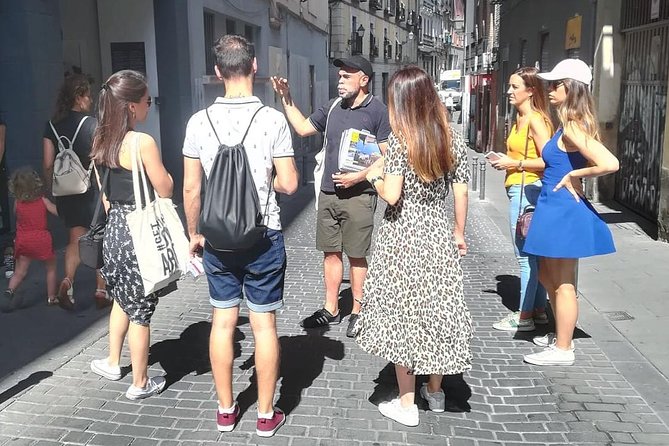
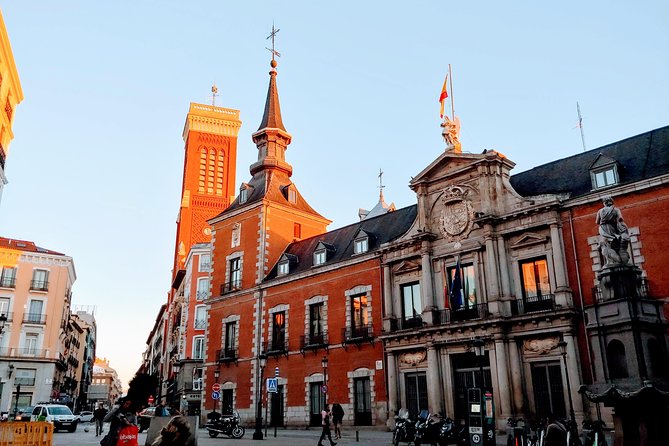
The tour begins at Plaza de Tirso de Molina, a useful meeting point near public transportation. Emilio sets the scene with the story of Madrid and the neighborhood before moving into the smaller details that are easy to miss on your own.
That local connection matters here. Lavapiés is not a polished monument district. Its appeal comes from layers: old housing, immigrant communities, theaters, workshops, markets, reused industrial buildings, and new cultural spaces. Emilio’s approach connects those layers to architecture and politics, so you are not simply looking at façades. You are learning why the streets look as they do and how the neighborhood has changed.
This is a private activity, so only your group takes part. That gives you room to ask questions, linger at a building, or adjust the pace. It also means the price is less attractive for a solo visitor than for a couple, family, or small group using the private format together.
More Architecture Tours around Spain:
- Barcelona: Park Güell and Gaudí House Museum Entry Ticket
★ 4.5 · 6,326 reviews - Barcelona: Gaudi’s Casa Vicens Skip-the-Line Entrance Ticket
★ 4.7 · 4,541 reviews - Barcelona: Gaudí’s Park Güell Tour with Fast-Track Ticket
★ 4.8 · 4,512 reviews
From Tirso de Molina to an Inquisition jail
The opening stop at Plaza de Tirso de Molina lasts about 15 minutes. It is not a grand set-piece, but it gives you a framework for the walk and for Madrid’s development.
From there, the route reaches the former Inquisition jail, a striking example of the way old history can hide in plain sight. The prison sits beneath a corrala, the traditional Madrid housing type built around an interior courtyard. You spend about 10 minutes here, and the value is in the contrast: a place associated with fear and punishment tucked into an ordinary residential setting.
This is one of the tour’s strongest ideas. Lavapiés is full of buildings that carry more than one story. A plain entrance or shared courtyard can reveal a past that you would probably miss without someone explaining it.
El Rastro, with the right day in mind
El Rastro appears early in the route, but the experience depends on your booking day. On Sunday, you visit the street market. During the rest of the week, the focus shifts to vintage furniture shops.
That distinction is important. If you want the full Sunday market atmosphere, choose a Sunday date. If you prefer browsing furniture and design shops with less market activity, another day may suit you better. The listed stop is short, about 15 minutes, so this is an introduction rather than a long shopping session.
I would not book this tour solely for El Rastro. The market is only one piece of the route, and the best reason to include it is the context Emilio gives you about the neighborhood around it. If you plan to shop, leave extra time after the tour.
Art Deco at El Pavón Teatro Kamikaze
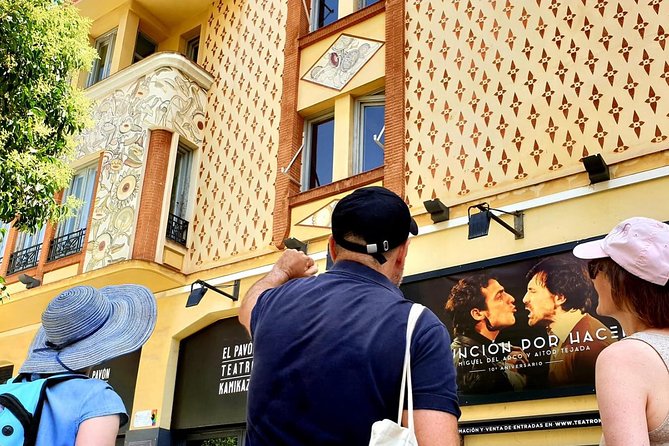
The next brief stop is El Pavón Teatro Kamikaze. You pause for about five minutes to see the façade and its Art Deco clock.
That short timing tells you what to expect. This is an architectural viewing stop, not a theater performance or a long interior visit. The façade gives the route another layer, showing how Madrid’s entertainment buildings reflected modern design in a busy neighborhood.
There is also an option to stop for coffee in the theater’s café. Coffee is not listed as included, so bring a little spending money if you want to take that break. It can be a useful pause midway through a walking tour, especially if you are traveling with people who prefer a slower pace.
Same streets, read through a different style:
- Barcelona: Sant Pau Recinte Modernista Entry Ticket
★ 4.6 · 2,567 reviews - Barcelona: Sagrada Familia, Modernism, and Old Town Tour
★ 4.7 · 1,621 reviews - Sagrada Familia & Gaudi Tour Private or Small Group with Tickets
★ 4.5 · 1,188 reviews - Complete Gaudi Tour: Casa Batllo, Park Guell & Sagrada Familia
★ 5.0 · 1,152 reviews
The Municipal Printing Press and Madrid’s rationalist side
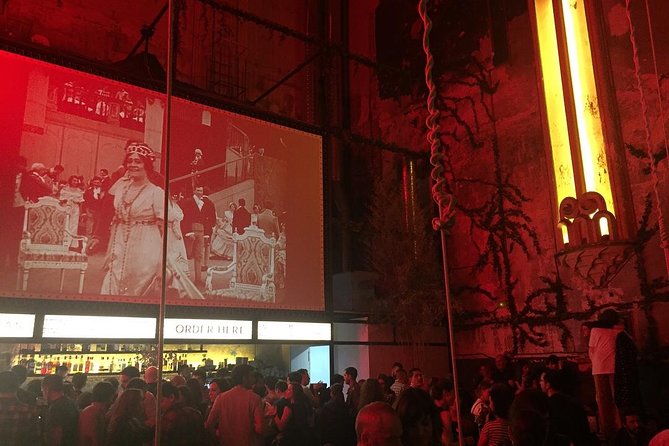
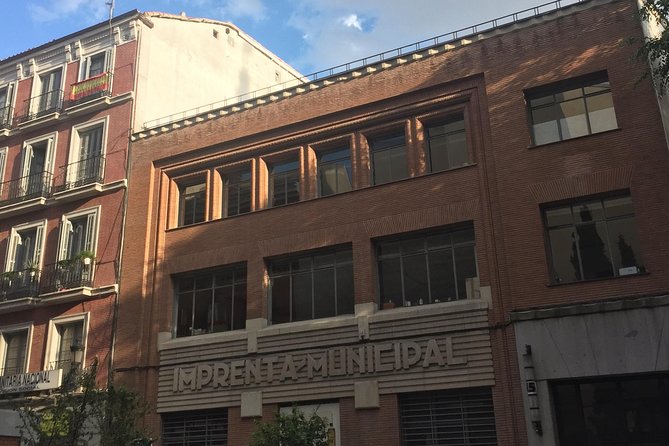
The Municipal Printing Press is one of the most distinctive stops. The building is described as a 1930 example of Madrid’s rationalist architecture, and access is included in the tour price.
This is where the architectural focus becomes especially useful. Rationalist design favors function, clear forms, and modern construction ideas. You do not need a background in architecture to appreciate it. Emilio’s role is to point out what you are seeing and explain why the building mattered in its period.
The stop lasts about 15 minutes, long enough for an explanation without turning the tour into a technical lecture. If you like buildings that are less famous than Madrid’s major monuments, this may be one of the most rewarding parts of the route.
Plaza de Lavapiés and a changing neighborhood
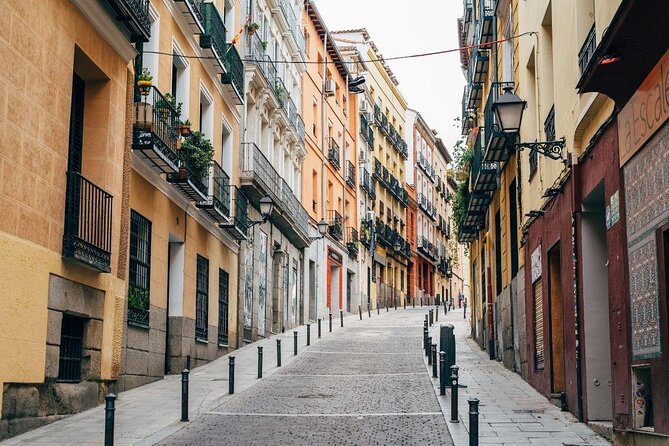
Plaza Lavapiés gives the district its name and serves as a short, five-minute stop. The square is presented as a meeting point for people from different cultures, long-established residents, and newer neighbors who are changing the area.
This is a useful point in the walk because it connects architecture to everyday life. Buildings do not exist separately from the people who use them. The square helps explain why Lavapiés can feel both old and newly altered at the same time.
The stop is short, so do not expect a full social history of Madrid’s communities. Instead, think of it as a clear pause that helps you read the neighborhood as a living place rather than as an outdoor museum.
Reina Sofía’s extension and the 1999 design contest
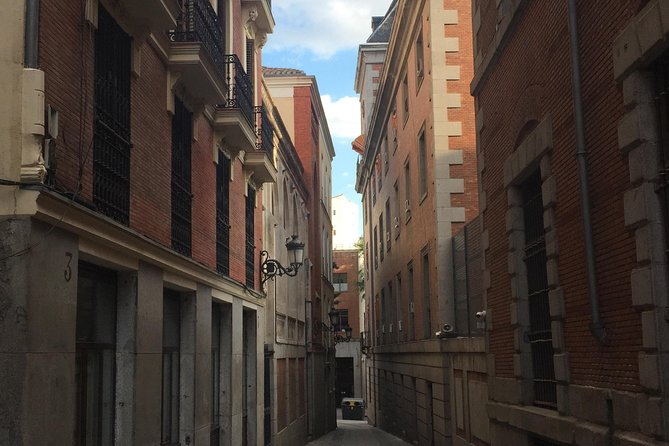
The Reina Sofía stop focuses on the museum’s extension by Jean Nouvel. You visit parts of the modern addition, including the restaurant, library, and covered patio, and hear about the different proposals considered in the 1999 design competition.
This is a welcome change of scale. After old courtyards, market streets, and historic theaters, the route turns to contemporary museum design. The covered patio and public areas also show how a large cultural building tries to create useful space around its galleries.
The stop lasts around 10 minutes and does not amount to a full Reina Sofía museum visit. You are examining the extension and its design story, not touring the collection. If you want to see Picasso’s Guernica or spend time in the galleries, plan a separate visit.
Tapas and advice at Mercado San Fernando
Mercado San Fernando is both a food stop and the advertised end point at C. de Embajadores, 41. You can have tapas and a drink while Emilio offers suggestions for the rest of your stay in Madrid and discusses the buildings and ideas covered on the walk.
The stop is listed at about 15 minutes, which is enough for a quick bite but not a long market meal. Drinks are not included, and food or tapas should also be treated as an extra personal expense unless your booking details say otherwise.
I like this ending because it turns the tour into a practical introduction to Madrid. You can ask Emilio where to eat, what neighborhoods to visit next, or which rooftop, restaurant, or design shop deserves your time. Previous comments also point to vermouth, beer, and favorite local addresses as memorable parts of the experience.
There is a small planning issue to note. The route information names Mercado San Fernando as the end point, yet it also lists La Tabacalera and Teatro Figaro as later stops. Confirm the exact order and finishing place before booking, especially if you have a reservation afterward.
La Tabacalera and street art in an old factory
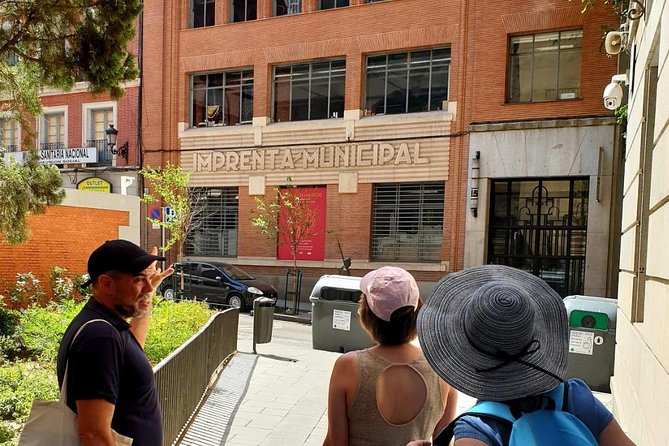
La Tabacalera de Lavapiés is an abandoned industrial building now used for exhibitions and a community-managed area. The walls feature work by urban artists, giving the stop a very different mood from the formal Reina Sofía extension.
This is a good example of Lavapiés’ habit of reusing old spaces. A former industrial site becomes a place for art and neighborhood activity rather than simply being cleared away. The stop is listed at about 15 minutes, so you get an introduction rather than a full exhibition visit.
The building is closed for works from July 25, according to the supplied tour information. If your date is near that period, confirm whether the stop is open and whether the route has been adjusted. This is one of the details that can change the feel of the tour.
Teatro Figaro and the modern movement
The final listed sight is Teatro Figaro, described as the first theater built in Spain according to modern movement principles. The stop lasts about five minutes and centers on the building itself.
Like El Pavón, this is a quick architectural encounter. Together, the two theaters show how much design history is packed into this part of Madrid. You see different expressions of modern theater architecture without spending the day inside performance venues.
The short stop also keeps the walking tour moving. If theater interiors are your main interest, this tour may leave you wanting more. If your goal is to understand how Madrid’s streets combine old housing, public buildings, theaters, markets, and reused factories, the brief visits work well.
What the $210.12 price gives you
At $210.12 per person, this is not a bargain walking tour. The value depends on how many people share the private booking and how much you use Emilio’s time and local advice.
You are paying for a private group, an architect’s interpretation, access to the listed buildings, and a route that goes beyond Madrid’s standard highlights. You are also paying for the chance to ask specific questions about architecture, neighborhood change, restaurants, markets, and other areas of the city.
Group discounts are available, which may improve the math for a family or small party. For one or two people, the cost is harder to justify unless architecture is a major interest or you value a private guide who can tailor the conversation.
Food, coffee, tapas, and drinks are extra. The tour itself is about three hours, though one published description places it closer to three and a half. Allow some flexibility rather than booking a tight connection afterward.
Walking comfort, meeting details, and weather
Wear your most comfortable walking shoes. The route covers several parts of central Madrid, and the practical advice from the experience is clear: this is not a stroll for stiff new shoes.
Start at Plaza de Tirso de Molina. The supplied meeting information gives Mercado San Fernando as the end point, but the later listed stops create some uncertainty about the final sequence. Ask for the confirmed route before the day begins.
The tour is offered in English and is near public transportation. Service animals are allowed, and most people can participate. It requires good weather, so poor conditions can lead to a new date or a full refund. Free cancellation is available up to 24 hours before the start time; cancellations or changes inside that window are not refunded or accepted.
Who will get the most from this tour?
I would choose this for someone who has already seen Madrid’s major monuments and wants to understand a central neighborhood at street level. It also suits architecture students, design-minded visitors, and people who enjoy hearing about politics and urban change alongside buildings.
It works well for a small private group with mixed interests because the stops vary. One person can focus on theaters, another on markets, another on street art and food. Emilio’s suggestions for restaurants, rooftops, furniture shops, and other areas of Madrid add value beyond the scheduled walk.
You may want another option if you dislike walking, want a major museum tour, or expect long visits inside every building. Several stops last only five or 10 minutes, and the route is built around connections between places rather than extended time at one attraction.
Should you book the Lavapiés Architour?
Book it if you want Madrid explained through its buildings and daily life, not just photographed from the outside. Emilio’s local connection, architectural training, and easy conversation make the route especially useful early in a Madrid stay, when restaurant and neighborhood advice can shape the rest of your trip.
The price is high for a three-hour walk, so I would favor it for a group, an architecture enthusiast, or anyone who values private attention. Choose Sunday for El Rastro, wear good shoes, budget for food and drinks, and confirm the closing status of La Tabacalera and the final route. With those points clear, this is a thoughtful way to see Lavapiés as a real neighborhood, not a collection of disconnected sights.
FAQ
How long is the Lavapiés and El Rastro tour?
The tour lasts approximately three hours. One description places the experience at about three and a half hours, so allow some flexibility.
Who leads the tour?
The tour is led by Emilio, an architect who lives in Lavapiés and discusses the neighborhood’s architecture, history, politics, and daily life.
What language is the tour offered in?
The tour is offered in English.
Is this a private tour?
Yes. Only your group participates in the activity.
Where does the tour begin?
The meeting point is Plaza de Tirso de Molina in central Madrid.
Where does the tour finish?
The supplied meeting information gives Mercado San Fernando, at C. de Embajadores, 41, as the end point. Because later listed stops create some uncertainty about the exact order, confirm the final route when booking.
Is El Rastro visited every day?
On Sundays, the tour visits the El Rastro street market. On other days, the route focuses on vintage furniture shops.
Are food and drinks included?
No. Drinks at markets, cafés, bars, and restaurants are not included. The tour includes a stop at Mercado San Fernando for tapas and a drink.
Can I cancel for a refund?
You can cancel at least 24 hours before the start time for a full refund. Poor weather or failure to meet the minimum number of participants can also lead to a new date or a full refund.
New to the itinerary around Spain
- Gaudí and Modernist Art: Guided Tour in Palma de Mallorca★ 4.5 · 3 reviews
- Roman & Gotic & Gaudi in Barcelona: private walking tour★ 4.5 · 2 reviews
- Visit to the Modernist houses of the Americans★ 5.0 · 2 reviews
- Barcelona Gaudi Tour: Sagrada Familia, Casa Batllo & Casa Mila★ 5.0 · 4 reviews
- Gaudí & Catalan Modernism Private Walking Tour★ 5.0 · 11 reviews
- Self-Guided Audio Tour-The Surrealist Barcelona of Dalí and Gaudí★ 3.5 · 8 reviews
- Barcelona Street Escape: Gaudi and the Hidden Treasure★ 5.0 · 17 reviews
- Gaudí and Barcelona Legends – Private Tour★ 5.0 · 4 reviews
Madrid Architecture Tours, compared.
Architecture tour Gran Vía from its best rooftops 20thC
Read our review →
Madrid Historic with an architect : Arabs, Austrias and Bourbons
Read our review →

Other lists with this tour