
Review · MADRID
Madrid Historic with an architect : Arabs, Austrias and Bourbons
Madrid’s old center makes more sense when you read its buildings as layers. On this private walk, architect Emilio connects Arab foundations, Habsburg-era planning, and Bourbon grand design while moving from the Teatro Real to the Royal Palace, Plaza Mayor, and Puerta del Sol. The plans and historic photos help turn scattered sights into one clear story.
I like the route for two reasons. First, it visits places you could easily pass without understanding, including the Arab Wall, San Nicolás church, and the ruins beneath Plaza de Ramales. Second, a private guide can adjust the pace and stop for coffee, which matters on a walk that may last closer to three and a half hours. The main consideration is that history and urban development share equal billing with architecture, so this is not a technical building tour alone.
Key points to know before booking
- A private walk with an architect: Only your group takes part, allowing room for questions and changes in pace.
- Madrid in three historic chapters: The route links Arab origins, the Austrias, and the Bourbons through actual streets and buildings.
- Plans and old photos included: These visual aids help explain how Madrid changed over 12 centuries.
- No interior Royal Palace visit: You study every exterior facade, but admission inside is not part of the tour.
- A strong central route: Begin at Plaza de Isabel II and finish near Puerta del Sol after passing through Plaza Mayor.
- Best for history-minded walkers: The walk suits you if context matters as much as taking photographs.
Madrid’s story begins at the Teatro Real
The tour starts at Plaza de Isabel II, beside the Teatro Real. This is a useful opening point because the opera house introduces Madrid as a city shaped by royal decisions, changing taste, and large public projects.
You spend about 10 minutes looking at the building and hearing how the opera theater developed. The stop is brief, so do not expect an interior performance venue visit. Its value is as a first lesson in how architecture can show the ambitions of a capital.
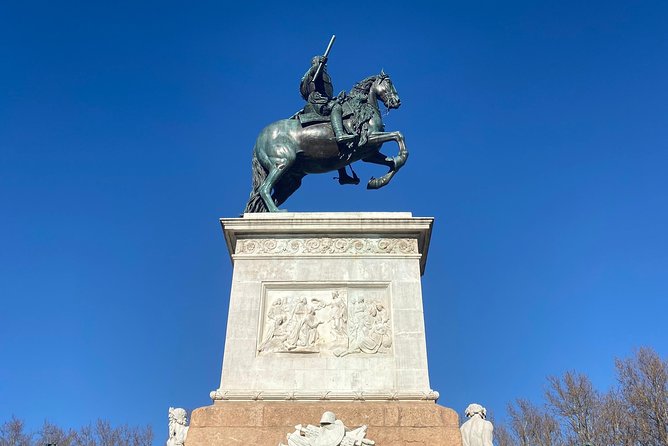
From here, the walk moves toward Plaza de Oriente. The square gives your guide room to explain how the area changed from the Arab period to the present. That broad time span is the central idea of the experience: Madrid is not presented as a collection of isolated monuments, but as a city repeatedly rebuilt around older foundations.
More History Walks around Spain:
- Historical and Modernist Bike Tour Barcelona
★ 5.0 · 262 reviews - Bike Tour in Barcelona: History, Architecture and Culture
★ 3.5 · 29 reviews - Bilbao: Historical and Architectural Walking Tour
★ 3.6 · 17 reviews
Plaza de Oriente and the Bourbon view of Madrid
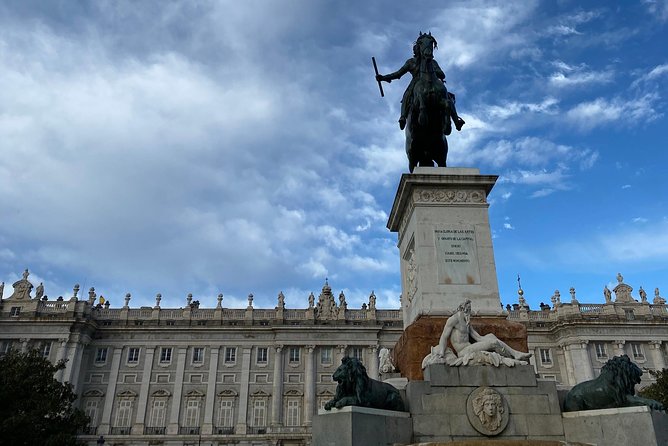
Plaza de Oriente offers a good contrast with the tighter medieval streets later in the route. You look at the square’s urban design and hear how its role changed over time. The stop lasts about 10 minutes, enough for an overview rather than a long architectural lecture.
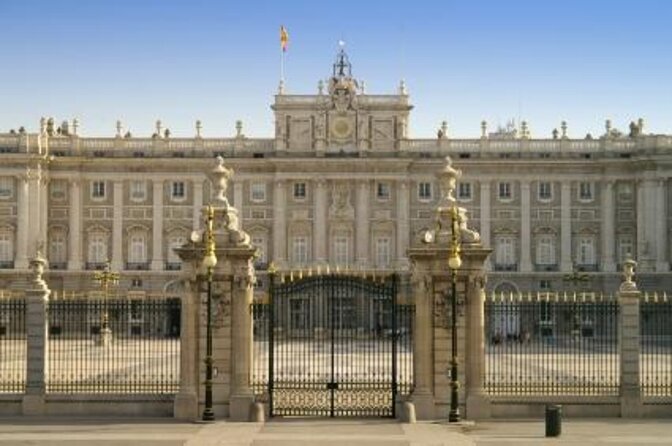
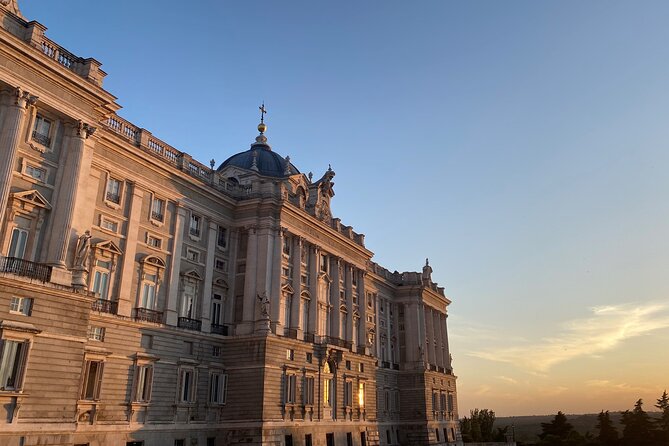
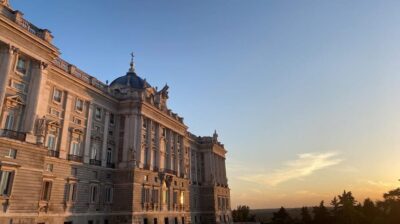
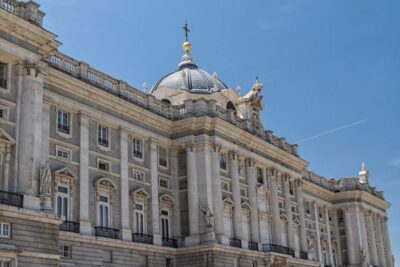
The nearby Royal Palace is the tour’s grandest exterior. You examine its different facades and learn about the architects and monarchs involved in the project. This is where the Bourbon chapter becomes especially clear. The palace is not just a royal residence to photograph. Its scale and formal design reflect a plan for a stronger, more ordered capital.
The important practical point is that the interior is not included. You will not enter the palace as part of this experience, and the listed admission is separate. If palace rooms, paintings, and furnishings are high on your list, plan another visit. If you mainly want to understand the exterior and its place in Madrid’s development, the stop gives you what you need without adding an interior admission or a long queue.
Plaza de Ramales brings Madrid down to street level
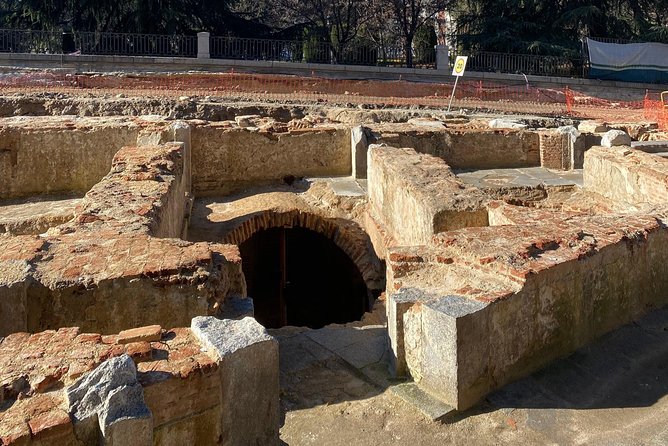
After the palace, the route becomes more intimate at Plaza de Ramales. Here, you see remains of the Church of San Juan, where the painter Velázquez was buried, along with the Church of Santiago.
This is one of the walk’s more unusual stops. The remains are easy to overlook if you are exploring alone, yet they connect art, religion, and the physical growth of the city. You get about 10 minutes here, enough to understand why this small square matters.
The nearby Real Iglesia Parroquial de Santiago y San Juan Bautista receives a shorter stop of about five minutes. It is dedicated to the apostle Santiago, and the explanation places the church within the older religious structure of Madrid. Do not expect a lengthy church visit. The strength of this part of the walk lies in the links between several nearby sites.
San Nicolás shows Madrid’s older building traditions
The Church of St. Nicholas of the Servitas, or San Nicolás de las Servitas, is described as Madrid’s oldest church. Its Mudejar tower is the key feature, especially the horseshoe arches.
This is a welcome change from the palace facades and formal squares. The tower points to a different architectural language, one tied to the city’s earlier periods and the continued influence of Islamic building traditions. The stop lasts about five minutes, so your guide focuses on the tower and its place in Madrid’s story.
If you prefer grand interiors, this may feel like a quick look. I think its strength is precisely its scale. A small, old structure can reveal more about Madrid’s beginnings than another broad royal facade.
More Architecture Tours around Spain:
- Barcelona: Park Güell and Gaudí House Museum Entry Ticket
★ 4.5 · 6,326 reviews - Barcelona: Gaudi’s Casa Vicens Skip-the-Line Entrance Ticket
★ 4.7 · 4,541 reviews - Barcelona: Gaudí’s Park Güell Tour with Fast-Track Ticket
★ 4.8 · 4,512 reviews - Barcelona: Sant Pau Recinte Modernista Entry Ticket
★ 4.6 · 2,567 reviews
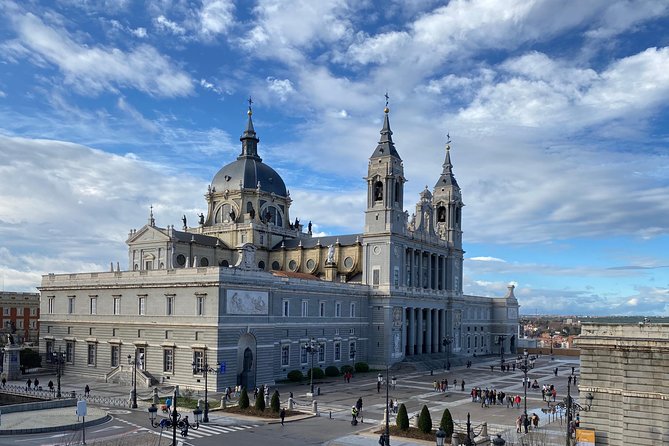
La Almudena and the city’s religious center
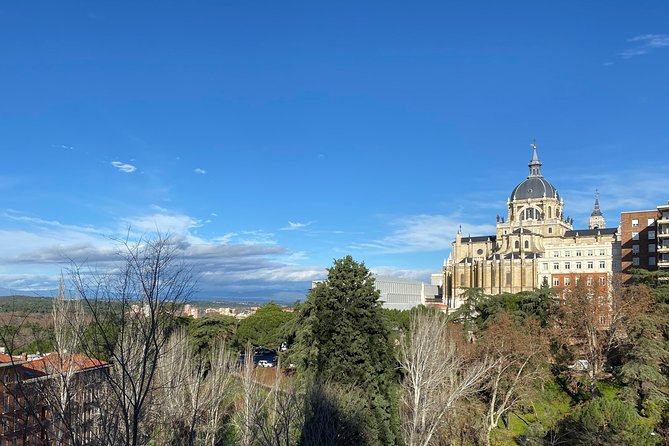
At the Museo de la Catedral de la Almudena, you view the cathedral from outside and hear its story. The stop is listed at about five minutes, so this is a short orientation rather than a full cathedral visit or museum tour.
The cathedral matters here as part of Madrid’s religious and civic center. Your guide explains it from the viewpoint of the square, helping you see how the cathedral fits beside the royal complex and the older city. Since no interior ticket is included, you should treat this as an exterior explanation.
This pattern repeats throughout the experience: you see many important buildings, but the tour is about connections rather than admissions. That keeps the route moving and allows the guide to cover more ground.
The Arab Wall reveals Madrid before the palace
The Arab Wall is one of the most important stops for understanding the city’s earliest period. You see the remaining sections of the walls built in the ninth century, the clearest physical reminder of Madrid before it became a royal capital.
The remains are not a vast fortress complex. They are fragments, and that is part of the lesson. Madrid grew around earlier defenses, streets, and settlements. The wall gives the tour a firm starting point before the later churches, palaces, and public squares take over.
I especially like this stop because it prevents the tour from becoming only a parade of royal buildings. The city’s Arab origins are easy to miss beneath later construction. Here, the guide can show how the oldest layer still survives in the modern center.
Plaza de la Villa connects medieval and civic Madrid
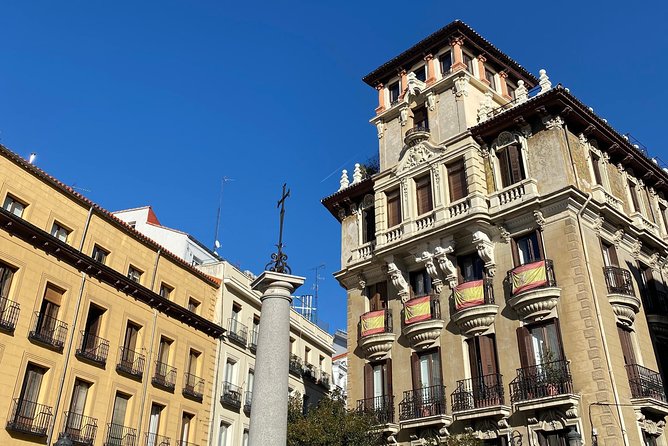
At Plaza de la Villa, you explore the old City Hall and the buildings around the square. Casa de Cisneros and Casa de los Lujanes help explain the city’s older civic and residential architecture.
This square rewards a slow look. The buildings differ in age and character, so you can see how Madrid developed without one single design controlling everything. Your guide uses the facades to discuss the people and institutions that shaped the city.
The stop lasts around 10 minutes. That is enough for a clear explanation, though anyone who loves architectural details may want to ask questions and accept a slightly slower pace. Because the tour is private, you can use this part of the walk to focus on whatever catches your eye.
Mercado de San Miguel gives the route a practical pause
Mercado de San Miguel is the most social stop on the route. Its iron structure makes it different from the stone churches and royal buildings you have just seen. You can stop for a drink or tapas here, although food and drinks are not included.
This is a useful pause during a three-hour walk. It gives you a chance to sit, warm up, or simply reset before the final squares. One of the tour’s strengths is that the guide can pause for coffee and conversation rather than treating the route as a race between landmarks.
Prices inside the market are not part of the tour cost, so budget separately if you want to eat. The market is also a popular place, and a short stop may feel more like a break than a detailed architectural visit. Still, the contrast between the old center and this steel market makes the stop worthwhile.
Plaza Mayor explains Madrid’s public life
The walk then reaches Plaza Mayor, the social and commercial center of Madrid for roughly four centuries. The square is a strong place to discuss the Castilian model of a grand urban plaza and the many public uses that such spaces have carried over time.
You get about 10 minutes here. That may sound short for a square this important, but the larger value comes from hearing how it fits into the city’s political and commercial development. The guide helps you look beyond the balconies and postcard views.
Plaza Mayor is also where the stated route ends. The information for the experience gives Plaza Mayor as the end point, while the final listed stop is Puerta del Sol. In practical terms, confirm the exact finish with your guide, since the route description includes both. Either way, both locations are central and close to major transport links.
Puerta del Sol closes the historical loop
The final point is Puerta del Sol, home to Madrid’s Kilometer 0. This is a fitting finish because the square represents the city as a modern meeting point, not just an old royal or religious center.
After seeing Arab walls, medieval churches, royal buildings, and the Austrias-era Plaza Mayor, you end in a place tied to the road network of modern Spain. The point is not simply to collect monuments. It is to see how Madrid grew from a fortified settlement into a national capital and then into a busy contemporary city.
The stop is short, about five minutes. Use it to ask any final questions and orient yourself for the rest of your day.
What the architect-led format adds
A local architect brings a different focus from a standard sightseeing guide. Emilio uses plans and historic photographs to show how streets and buildings changed over time. That can make a large amount of information easier to follow, especially when the same area has been rebuilt more than once.
The guide also brings personal familiarity with Madrid. The experience is led in English, and the private format means you can ask about a particular facade, style, or period without waiting for a whole group to move on.
You should know what this format does not promise. It is not a technical course in structural engineering, and it does not enter every building. The historical, political, and social setting is part of the architectural explanation. If you want only dates, floor plans, and building materials, the tour may feel too broad. If you want to understand why Madrid looks the way it does, the broader approach works well.
Is $65.89 good value?
At $65.89 per person, the price needs to be judged against the private format, the three to three-and-a-half-hour duration, and the lack of included admission tickets. You are paying mainly for the guide’s time, interpretation, and route planning, not for entry to the Royal Palace or other paid sights.
That can be good value if you are traveling with several people and can use the available group discount. A private walk also gives you a better chance to ask questions and adjust the pace than a large scheduled group. The value is weaker if you want interior visits, food, or a conventional highlights tour with several included tickets.
The tour is often reserved well ahead, with an average booking point of about 63 days before the date. That suggests you should not leave it until the last minute if your Madrid schedule is fixed.
Timing, walking, and weather
The advertised duration is approximately three to three and a half hours. Because the route includes 12 stops and the guide may pause for coffee or extended questions, allow extra room in your day. A rushed appointment immediately afterward would be a poor match.
The meeting point is Plaza de Isabel II, 4. The route stays in central Madrid and passes near public transportation. Most people can take part, and service animals are allowed.
Good weather is required. If poor weather cancels the experience, you are offered another date or a full refund. You can also cancel for a full refund up to 24 hours before the start time. After that cutoff, refunds are not available, and late changes are not accepted.
Who should book this Madrid walk?
I would choose this tour if you like architecture but also want the political and social reasons behind it. It suits a first visit because it gives you a framework for the center, and it suits a return visit because it points out older details you may have missed.
It is also a good choice for couples, families, or friends who want a private pace. The route includes free exterior stops, so you can cover a lot without stacking several admission tickets into one morning.
I would choose something else if your priority is entering the Royal Palace, touring the cathedral interior, or eating your way through Madrid. This is a walking explanation of the city, not a ticket bundle or food tour.
Final verdict: book it for the connections
Book this experience if you want Madrid to feel less like a list of monuments and more like one changing city. The Arab Wall, Mudejar tower, royal palace, Plaza Mayor, and Kilometer 0 form a strong sequence, and the architect-led explanations give those places a clear order.
Skip it if you need a tightly timed architectural survey with interior access. For most curious walkers, though, the private format, visual aids, and focus on Madrid’s Arab, Austrias, and Bourbon layers make $65.89 a reasonable price for a serious introduction to the old center.
FAQ
How long does the Madrid Historic with an architect tour last?
The experience lasts approximately three to three and a half hours. Allow extra time if the walk includes a coffee pause or longer questions.
Where does the tour start?
The meeting point is Pl. de Isabel II, 4, in central Madrid.
Where does the tour finish?
The stated end point is Plaza Mayor, while Puerta del Sol is also listed as the final stop. Confirm the exact finishing point with your guide.
Is the Royal Palace interior included?
No. The tour explains the Royal Palace exteriors and the architects and monarchs connected with the project, but interior admission is not included.
Is food or drink included at Mercado de San Miguel?
No. You may stop there for a drink or tapas, but you pay for any food or drinks separately.
Is the tour offered in English?
Yes. The experience is offered in English.
Is this a private tour?
Yes. Only your group participates in the activity.
Can I cancel for a full refund?
Yes, if you cancel at least 24 hours before the experience start time. Cancellations or changes made less than 24 hours in advance are not refunded or accepted.
New to the itinerary around Spain
- Gaudí and Modernist Art: Guided Tour in Palma de Mallorca★ 4.5 · 3 reviews
- Roman & Gotic & Gaudi in Barcelona: private walking tour★ 4.5 · 2 reviews
- Visit to the Modernist houses of the Americans★ 5.0 · 2 reviews
- Barcelona Gaudi Tour: Sagrada Familia, Casa Batllo & Casa Mila★ 5.0 · 4 reviews
- Barcelona Street Escape: Gaudi and the Hidden Treasure★ 5.0 · 17 reviews
- Gaudí & Catalan Modernism Private Walking Tour★ 5.0 · 11 reviews
- Self-Guided Audio Tour-The Surrealist Barcelona of Dalí and Gaudí★ 3.5 · 8 reviews
- Gaudi’s Casa Batlló and La Pedrera with Chocolate Tasting★ 5.0 · 5 reviews
Madrid Architecture Tours, compared.
Architecture tour Gran Vía from its best rooftops 20thC
Read our review →
Architour through Lavapiés and Rastro with an architect
Read our review →
Other lists with this tour