
Review · BELGIUM
Private Tour to Belgian Architecture Gem: Ghent
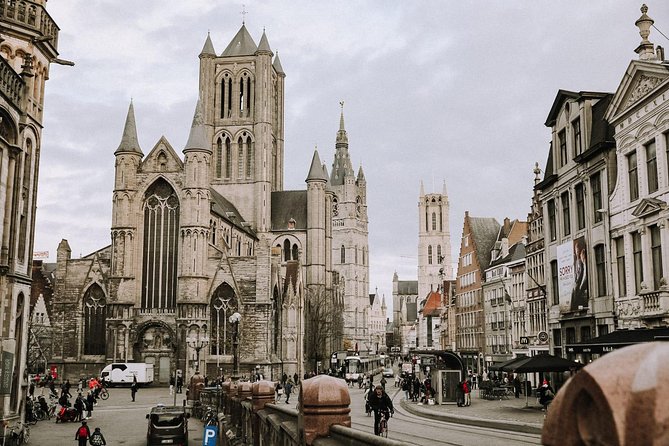
Ghent’s architecture tells its story in stone. On this private walk, you move from the medieval Vrijdagmarkt to the castle, old port, Belfry, Town Hall, and St. Bavo’s Cathedral, learning how Gothic and Baroque styles share the same city streets. The tour’s best prize is entry to Jan van Eyck’s Ghent Altarpiece, a major work that many city walks only point out from the outside.
I like the private format because you can steer the conversation toward what catches your eye, and I like the way the route mixes famous sights with smaller places such as the oldest bar in town and the old meat market. Guide Gamaal is especially worth requesting if available, thanks to his strong focus on paintings, sculpture, and cathedral details.
The main caution is timing. The advertised duration is about 1 hour 30 minutes to 2 hours 40 minutes, but the listed stop times add up to considerably longer. You may need to move briskly, skip certain stops, or confirm the exact pace before booking.
Key points to know before you book
- Van Eyck’s famous altarpiece is included: The tour enters St. Bavo’s Cathedral to see The Adoration of the Mystic Lamb, also called the Ghent Altarpiece.
- A private group of up to 10 keeps the walk flexible: You can ask questions and focus on the buildings that interest you most.
- The route links Ghent’s major architectural zones: Expect squares, a medieval castle, old trading quays, the Belfry, Town Hall, and several churches or civic buildings.
- Gothic and Baroque styles become the main lesson: Graslei and Korenlei provide the clearest comparison, while the Town Hall shows how different periods can collide on one façade.
- The route includes local pauses: You pass an old market, a historic bar, and a coffee stop where homemade waffles may be available.
- The schedule needs clarification: The listed stops include more time than the advertised tour length, so ask what can realistically fit into your booking.
Why Ghent works so well for an architecture walk
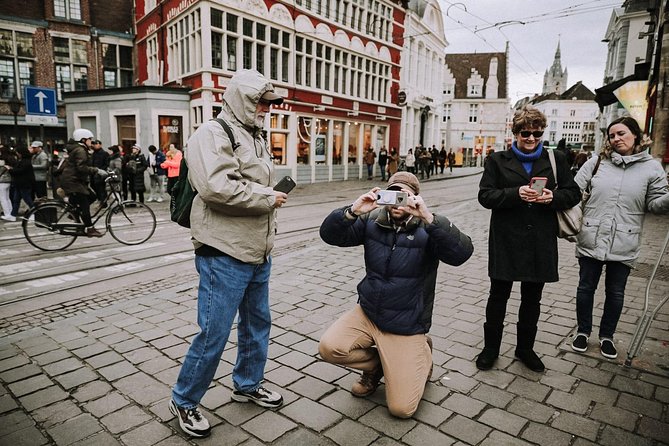
Ghent is a fine city for learning by comparison. Its historic center places medieval towers, merchant houses, civic buildings, churches, and later Baroque façades within an easy walking route. You do not need to travel across town to see how styles changed. The evidence is right in front of you.
A private guide also helps with the parts that can be hard to read on your own. A façade may look merely old until you know why it has a pointed arch, a heavy curve, a statue, or a different color of stone. The guide’s job here is not just to name buildings. It is to explain why they look the way they do and how Ghent’s political and commercial past shaped them.
This is a walking tour rather than a museum-heavy experience. Much of the value comes from seeing how the buildings relate to one another. The route begins at Stadshal, or City Pavilion, at Poeljemarkt and returns there at the end. The exact route pace matters, so I would treat the stop list as a menu of sights rather than a promise that every listed minute will be observed.
More Private Architecture Tours in the world:
- Sagrada Familia & Gaudi Tour Private or Small Group with Tickets
★ 4.5 · 1,188 reviews - Treasures of Barcelona: Private Gaudi Walking Tour
★ 5.0 · 128 reviews - Sagrada Familia & Gaudi Guided Tour Private or Small Groups
★ 4.7 · 106 reviews
Vrijdagmarkt and the road toward Gravensteen
The tour opens at Vrijdagmarkt, one of Ghent’s major squares. You have about 20 minutes here to look at the surrounding buildings and get a sense of the city’s scale before heading toward the castle.
This is a useful first stop because a broad square lets you study façades without feeling pressed against them. Your guide can set up the main themes of the walk, including the way Ghent’s public spaces changed as the city grew and as different ruling periods left their mark.
From here, the group crosses Langemunt, a shopping street on the way to Gravensteen. This section is more of a connecting walk than a formal stop, but it helps you see how daily commerce now occupies streets that once served older city functions.
Gravensteen and St. Veerleplein
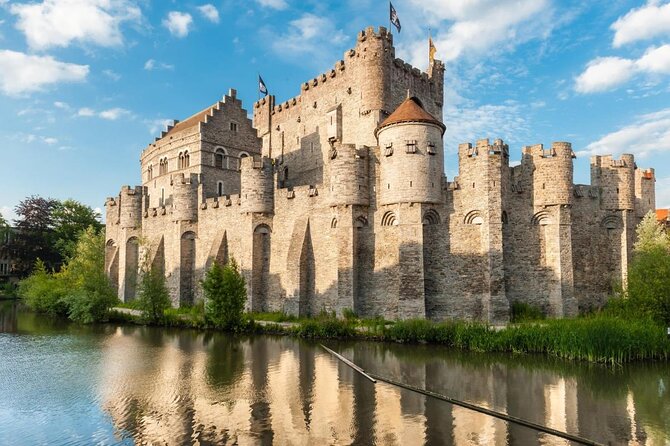
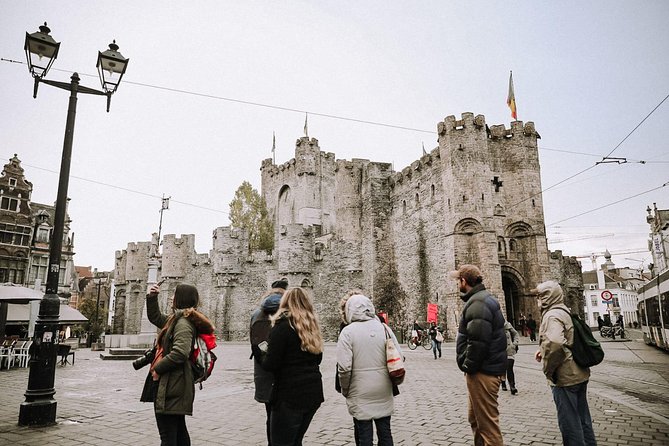
Gravensteen, the Counts of Flanders castle, is one of the tour’s most memorable exteriors. It is described as one of Ghent’s oldest buildings and a symbol of the power held by the Flemish counts during the medieval period. The planned visit lasts about 20 minutes.
The focus here appears to be the castle’s setting and architectural story rather than a full interior visit. Your guide also explains the pillar in front of the castle and points out the city’s most beautiful Baroque façade. That combination is typical of this tour: one large, famous monument, followed by a smaller architectural detail that might otherwise pass unnoticed.
At St. Veerleplein, you spend about 15 minutes looking at the Baroque façade and learning about medieval public entertainment. This is a good example of why a guide helps. The square is not just a pretty open space. It connects architecture with the way people once gathered, watched events, and used the city’s public buildings.
Markets, food, and a historic drinking stop
The route continues to Het Groot Vleeshuis, the old meat market. The building is tied to Ghent’s food trade and to the period when Flanders was under the monarchy of Castile and Spain. The tour uses the market to discuss Spanish influence and the kinds of food once sold there.
You get around 10 minutes at this stop, so expect an architectural explanation rather than a full food tour. If food history interests you, this is a good place to ask questions, but coffee and tea are not included in the tour price.
Next comes ’t Galgenhuis, described as the oldest bar in town. The stop also relates to the vegetable market and local craft beer. You have another 10 minutes here, enough to see the setting and hear its story. You may be tempted to stop for a drink, but any purchase would be at your own expense and could affect the schedule.
This part of the walk adds useful texture. Ghent is not presented only as a collection of churches and grand civic buildings. Markets, bars, food trades, and ordinary urban routines are part of the city’s character too.
More Architecture Tours around the world:
- Chicago Architecture River Cruise
★ 5.0 · 15,756 reviews - Chicago River 90-Minute Architecture Tour
★ 4.5 · 9,629 reviews - Chicago River: 1.5-Hour Guided Architecture Cruise
★ 4.8 · 8,046 reviews - Barcelona: Park Güell and Gaudí House Museum Entry Ticket
★ 4.5 · 6,326 reviews
The coffee and waffle pause on Kortemunt
Kortemunt is planned as a 30-minute coffee break if you want one. You may also have the chance to try premium homemade waffles. Coffee and tea are not included, so budget separately if you choose to pause.
This is one of the more flexible parts of the experience. If you care most about architecture, you may prefer to use the time for questions or keep moving. If you want a short rest during a walking tour, the break gives you room to slow down.
For families and mixed-interest groups, this pause can make the tour easier. Not everyone wants two hours of continuous commentary, and a private guide can adjust the conversation. Still, the stated tour duration and the many planned stops make it wise to ask how long this break can really be.
Graslei and Korenlei: the clearest style lesson
Graslei and Korenlei are the architectural heart of the route. These waterfront quays grew from Ghent’s old port area, and the tour explains how the city expanded and absorbed earlier port spaces and walls.
Here, the guide sets up a quick exercise in identifying Gothic and Baroque features. This is more useful than a string of dates because it gives you a way to look at other buildings for the rest of your trip. You can compare pointed forms, vertical lines, and medieval restraint with the fuller shapes and decorative details associated with Baroque design.
The quays are also a good place for photographs, though the private tour’s value is not limited to taking pictures. You are learning how the buildings face the water and how trade helped shape the city’s public image. Plan to spend about 20 minutes here.
St. Michael’s Bridge and Korenmarkt
At St. Michael’s Bridge, the discussion turns to the widespread presence of the Archangel St. Michael across Belgian cities. The stop is listed at about 15 minutes and gives you another chance to look at Ghent from a slightly different angle.
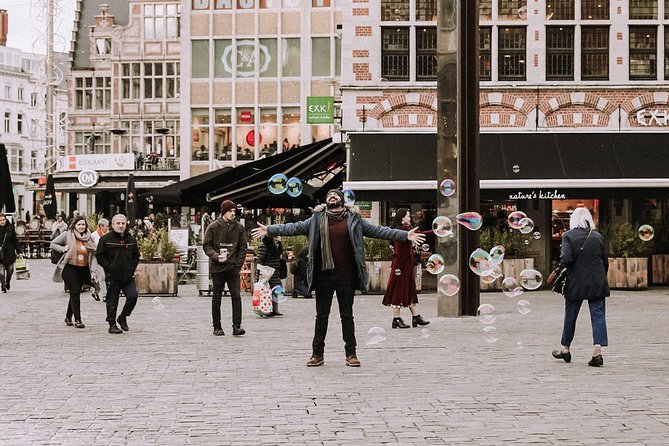
The bridge connects naturally with Korenmarkt, the city’s lively main square. The route allows about 15 minutes here and includes a visit inside a large palace at the north end of the square. The supplied details do not name the building or specify exactly how much interior access is possible, so I would ask the guide what you will see before setting expectations too high.
Korenmarkt is a good place to understand Ghent as a working city rather than a preserved stage set. Its scale and activity contrast with the tighter medieval spaces earlier in the walk. You can also use this stop to ask the guide how the square changed over time.
The Belfry and the choice to climb
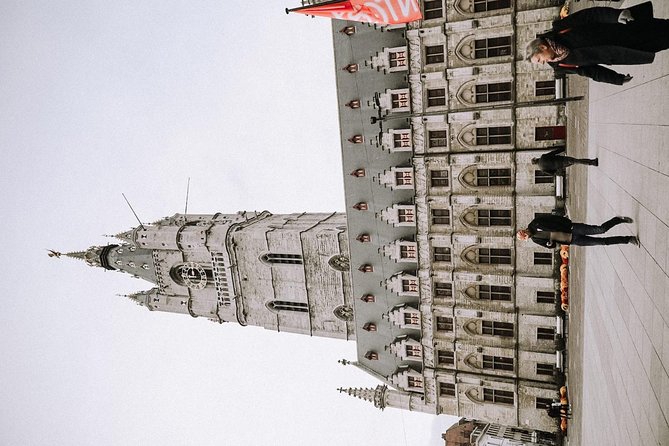
Ghent’s Belfry rises 91 meters and once safeguarded the city’s treasures. The tour spends about 20 minutes discussing the tower, including the Roeland clock and the way the Belfry brings several architectural periods together.
Climbing the 350 steps is optional. That is important for pacing and comfort. If you climb, you may need to allow extra time beyond the standard walking discussion, and the tour’s advertised duration may not include a full ascent and descent. The supplied information does not confirm whether a separate climbing ticket is included, so ask before you go.
Even if you do not climb, the Belfry is a key part of the city’s story. It represents civic power, security, and the wealth of a town that needed a secure place for its treasures. The guide’s explanation of the Roeland clock adds a mechanical and political detail to what might otherwise be just another tower photograph.
Town Hall and the influence of Charles V
Ghent Town Hall is one of the most useful stops for understanding the city’s mixed appearance. Two architectural styles from two different periods meet in the same building. The contrast is easy to see, and the guide connects it to the influence of Charles V.
You also learn why the statue of Charles V appears whiter than the rest. That small detail gives the stop a human scale. Instead of only hearing about rulers and construction periods, you have a visual clue to remember.
About 20 minutes is planned here. I would use it to ask how the two sections differ and which details identify each style. This is exactly the kind of question a private tour handles well, since the guide can spend more time on your level of interest rather than following a fixed group script.
St. Bavo’s Cathedral and the Ghent Altarpiece
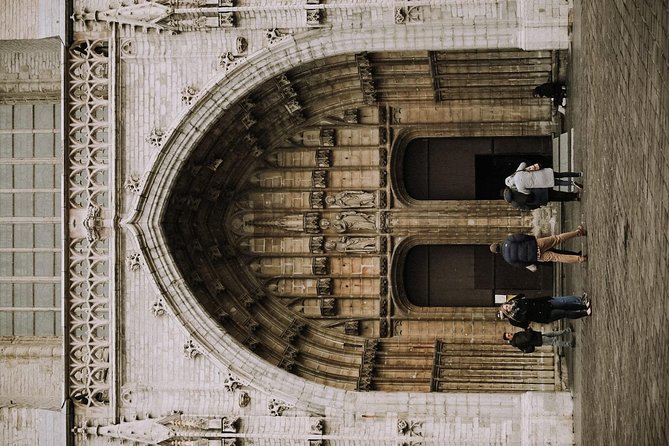
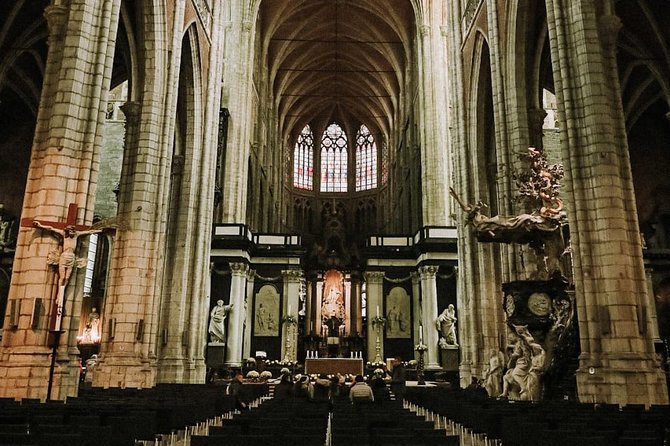
The tour then reaches Sint-Baafsplein before entering St. Bavo’s Cathedral. The church took two centuries to build, and the guide uses the interior to explain more of Ghent’s architectural development.
The major draw is the Ghent Altarpiece by Jan van Eyck, completed in 1432. Entry to see the altarpiece is included, making this more than an exterior architecture walk. You can examine the setting of one of the city’s most important works while also discussing the church itself.
The planned time is about 30 minutes. That is a meaningful amount of time, but anyone who wants a slow look at the altarpiece should ask how much of the stop is devoted to it. The attraction is famous, and a rushed visit would limit the benefit of having admission included.
This is also where the guide’s art background matters most. Gamaal is specifically noted for explaining paintings, sculptures, and cathedrals, so request him if he is available and those subjects are central to your interests. The tour information does not guarantee a particular guide, but his name gives you a useful preference to state when booking.
Geeraard de Duivelsteen and the return walk
The final named stop is Geeraard de Duivelsteen, or the Castle of Gerald the Devil. Despite its name, Gerard the Devil never visited the castle. The building has served several functions over time and is now described as a famous art gallery.
You have about 10 minutes here. It is a compact ending to the route, especially after the larger spaces of the Belfry and cathedral. The stop reinforces a recurring theme: a building’s name or original purpose does not tell its whole story. Uses change, and Ghent’s old structures continue to take on new roles.
The activity ends back at the starting point near Stadshal. That makes the tour easy to combine with the rest of a day in central Ghent, though the actual walking time and order of stops may vary.
What the $331.03 group price means
The price is $331.03 for a private group of up to 10 people. For one or two people, that is a substantial cost for a short walking tour. For a larger family or friend group, the per-person price becomes much more reasonable, especially because the fee covers a private guide rather than a shared group experience.
The included admission to the Ghent Altarpiece improves the value. You are not paying only for directions and exterior commentary. You also get access to the tour’s most important art stop, though coffee, tea, waffles, drinks, and any other personal purchases are extra.
The best value comes when you use the private format well. Bring questions, say which styles interest you, and ask the guide to adjust the balance between architecture, art, food history, and local stories. If you simply want a quick orientation, the price may feel high. If your group wants a focused explanation of Ghent without joining strangers, it makes more sense.
Timing, comfort, and practical details
The advertised duration ranges from about 1 hour 30 minutes to 2 hours 40 minutes. That is a wide range, and the listed stop estimates suggest a longer visit if every stop receives its full planned time. Confirm the expected duration and priorities before setting up another appointment afterward.
The tour requires good weather. If poor weather causes cancellation, you are offered another date or a full refund. Your own cancellation is different: the booking is non-refundable and cannot be changed for any reason.
You receive a mobile ticket, and the meeting point is Stadshal, or City Pavilion, at Poeljemarkt, 9000 Gent. The tour returns to the same place. It is near public transportation, service animals are allowed, and most people can participate. Since this is a walking route with an optional 350-step climb, tell the guide if you prefer to skip the tower ascent.
Should you book this private Ghent walk?
Book it if your group wants a personal introduction to Ghent’s buildings, especially if the Ghent Altarpiece, Gothic and Baroque architecture, and the city’s medieval center are high on your list. It suits families, couples, and small groups who value questions and a flexible conversation more than a fixed script.
I would especially consider it for a group of five to 10 people, when the price spreads more comfortably across the participants. Request Gamaal if available if paintings, sculpture, and church architecture are your priorities.
Skip it if you want a long, slow museum visit, a food tour, or a guaranteed full climb of the Belfry. The schedule needs clarification, and the non-refundable booking policy calls for careful planning. For the right group, though, this is a focused way to connect Ghent’s grand landmarks with the smaller details that make the city easier to understand.
FAQ
How long does the private Ghent architecture tour last?
The approximate duration is listed as 1 hour 30 minutes to 2 hours 40 minutes.
How many people can join the private tour?
The price covers a private group of up to 10 people.
Is entry to the Ghent Altarpiece included?
Yes. Expenses to visit Jan van Eyck’s Ghent Altarpiece are included.
Can I climb the Ghent Belfry?
Yes, climbing the 350 steps is optional. The provided details do not confirm whether a separate admission fee applies, so ask before booking.
Where does the tour begin?
It begins at Stadshal, or City Pavilion, at Poeljemarkt, 9000 Gent, Belgium.
Where does the tour finish?
The activity ends back at the meeting point.
Are coffee and tea included?
No. Coffee and tea are not included. The route includes an optional coffee break on Kortemunt, where homemade waffles may also be available.
What happens if bad weather cancels the tour?
If poor weather causes the experience to be canceled, you are offered a different date or a full refund. Your own cancellation or amendment is non-refundable.
New to the itinerary around the world
- Washington, DC: Georgetown Architecture Walking Tour★ 5.0 · 8 reviews
- Wilmington History and Architecture Tour★ 4.8 · 18 reviews
- New Orleans : Garden District Architecture Walking tour★ 4.8 · 5 reviews
- Walk & Discover KL’s Architectural and Heritage Gems★ 5.0 · 7 reviews
- Washington DC: Dupont Circle & Embassy Row Architecture Tour★ 5.0 · 6 reviews
- Unveiling Brno: History, Culture & Architectural Delights★ 5.0 · 2 reviews
- Vicenza: Palladian Architecture Private Walking Tour★ 3.3 · 3 reviews
- Private Colonial Williamsburg Architectural Tour★ 5.0 · 5 reviews
Private Architecture Tours, compared.

Sagrada Familia & Gaudi Tour Private or Small Group with Tickets
Read our review →
Barcelona 1.5h Private Old Town, Gothic & Ramblas Walking Tour
Read our review →
Treasures of Barcelona: Private Gaudi Walking Tour
Read our review →
Sagrada Familia & Gaudi Guided Tour Private or Small Groups
Read our review →
Best of Chicago: Architecture & Highlights City Private Tour
Read our review →
Private Harajuku Omotesando Architecture Walking Tour
Read our review →
Private Santa Barbara History and Architecture Walking Tour
Read our review →
Private Barcelona Modernism and Gaudí Walking Tour
Read our review →Other lists with this tour