
Review · BARCELONA
Barcelona: German City Tour from Gaudí’s Perspective
Gaudí’s Barcelona makes the most sense when you see his buildings as part of one long experiment. This 4.5-hour private tour follows his path from student projects and Historicism toward Modernism and surreal forms, with the Golden Square, Casa Milà, Sagrada Família, and other landmarks tied into the story.
I like the German-language format and the way the tour links architecture to Barcelona’s wider past, rather than treating each façade as a separate photo stop. I also like the calm pace, two included public-transit rides, and guides such as Johannes, who are prepared to answer detailed questions. The main drawback is clear: interiors are mostly not included, so this is a city walk and architectural overview, not a ticketed Gaudí museum tour.
Key points to know before booking
- Gaudí’s changing style is the main subject: You follow his move from Historicism to Modernism and later fantastic, almost surreal forms.
- The Golden Square puts his work in context: This central area helps explain Barcelona’s artistic and urban development.
- Johannes is a named German-speaking guide: Past guests especially valued his answers, stories, practical advice, and friendly way with teenagers.
- The tour stays outdoors: Buildings are generally admired from the street, with museum visits and interior access mostly left out.
- It is private for up to three people: At $294 per group, the cost works out to $98 per person for a full group.
- Plan for any weather: The walk runs in sun, rain, wind, and strong showers, so shoes, water, and weather protection matter.
Seeing Gaudí as a man who kept changing
Many Barcelona tours present Gaudí as a single image: the bearded architect behind the Sagrada Família, surrounded by strange curves, ceramic color, and nature-inspired shapes. This experience takes a more useful approach. It treats Gaudí as a working architect who kept testing new ideas.
You begin with his years as a student and early professional work. That matters because Gaudí did not appear fully formed. He earned money by preparing plans for professors and contributed to the grounds for the 1888 World’s Fair in Ciutadella Park. Those early jobs helped him develop the practical skills that later supported his more daring designs.
The tour then traces his move from Historicism toward Catalan Modernism. You can compare early contract work with later buildings and look for the gradual change in his treatment of structure, decoration, light, and natural forms.
I like this method because it gives you something to watch for. Instead of simply asking if a building looks beautiful, you can ask what Gaudí is trying to solve. Is he borrowing from earlier styles? Is he making structure part of the decoration? Is nature serving as a pattern, a source of movement, or a way to rethink the whole building?
More Gaudí Tours in Barcelona:
- Barcelona: Park Güell and Gaudí House Museum Entry Ticket
★ 4.5 · 6,326 reviews - Barcelona: Gaudi’s Casa Vicens Skip-the-Line Entrance Ticket
★ 4.7 · 4,541 reviews - Barcelona: Gaudí’s Park Güell Tour with Fast-Track Ticket
★ 4.8 · 4,512 reviews
Starting at Plaça Reial and finding Barcelona’s story
The meeting point is at the Three Graces Fountain in Plaça Reial, beside Liceu metro station. This is a practical place to begin because it is easy to identify and connects directly with public transit.
The square also puts you near the old center of Barcelona, where urban history and tourism meet. From here, the guide can begin with the city itself before moving into Gaudí’s career. That broader setting is important. Gaudí was not designing in isolation. His work developed during a period when Barcelona was expanding, changing its social identity, and building a strong Catalan cultural voice.
Do not expect a long stop inside a museum or a formal lecture in a quiet room. This is an outdoor city walk. The guide uses streets and squares to show how buildings relate to one another and how Barcelona’s different artistic periods appear in the city around you.
The arrangement works best if you enjoy learning while moving. You may stop for photographs, ask questions, and take a bathroom break without being hurried. At 4.5 hours, though, this is still a substantial outing. Wear shoes you can walk in comfortably.
The Golden Square and Gaudí’s Modernist Barcelona
The Golden Square, or Quadrat d’Or, is one of the tour’s central settings. This area is known for its concentration of Modernist architecture, and it gives you a chance to compare Gaudí with the wider movement around him.
That comparison is valuable. Gaudí is often treated as if he created Barcelona’s architectural character alone, but his work makes more sense beside the buildings and streets of the same period. You can look at façades, balconies, ironwork, windows, and decorative details, then consider how Gaudí pushed familiar ideas in less expected directions.
The guide’s job here is not just to point at a famous address. It is to explain what changed from one period to the next and why Gaudí’s work feels so different. The tour also brings in myths and lesser-known stories about the architect. That adds personality, but a good guide should help you separate colorful legend from documented fact.
This is one place where a German-speaking guide can make a real difference if you want to ask detailed questions. Johannes has been praised for handling questions about both Gaudí and Barcelona, and for making the material engaging for younger visitors. If you are traveling with teenagers, the mix of true stories, unusual details, and visual examples may hold their attention better than a standard architecture talk.
Casa Milà and the move toward fantastic forms
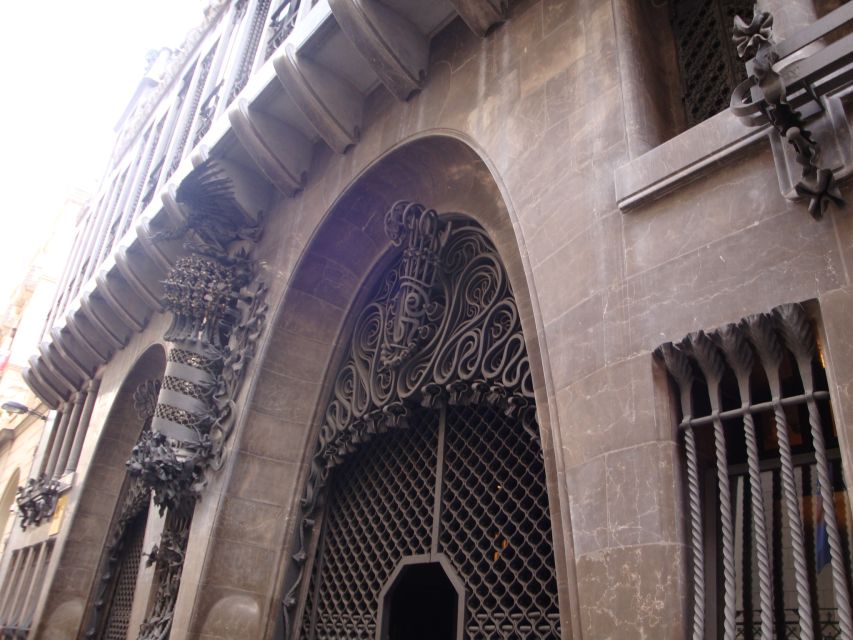
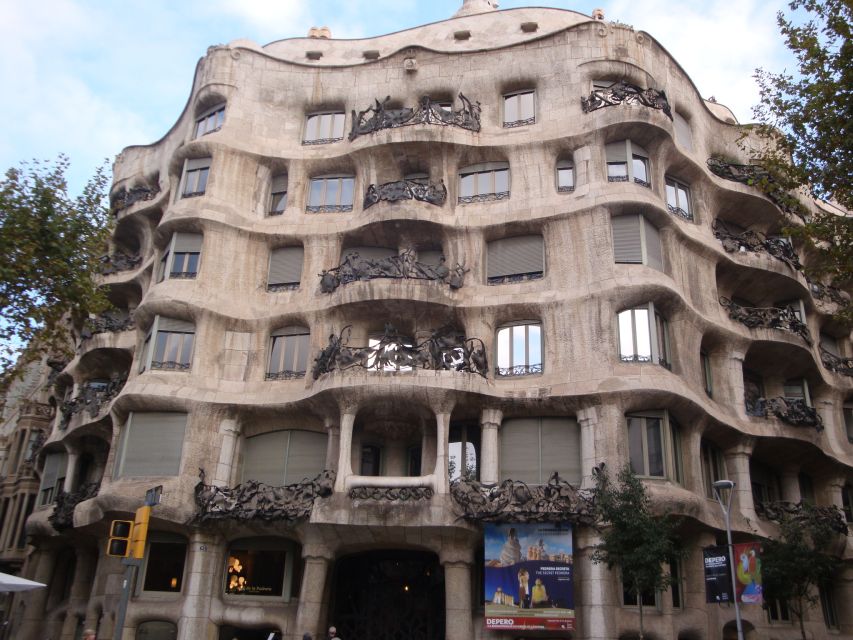
Casa Milà, often called La Pedrera, represents a later phase in Gaudí’s work. It is a useful point for discussing his growing distance from straight historical references and his interest in fluid, sculptural design.
The supplied program specifically links Casa Milà with Gaudí’s forays into surrealism. That description helps explain why the building can seem less like a conventional apartment block and more like a constructed rock formation or a moving surface. You will examine it from the outside, since interior exploration is generally not part of this tour.
That limitation deserves attention. Casa Milà rewards an interior visit, especially if you want to see how Gaudí handled courtyards, circulation, and the roof. This experience will not replace that visit. Instead, it gives you the architectural frame and the wider story, which can help you decide later if an admission ticket is worthwhile.
I see the exterior-only format as both a weakness and a strength. You miss the chance to inspect rooms and structural details up close, but you also spend more time comparing several places across the city rather than using a large part of the afternoon inside one monument.
More Architecture Tours around Barcelona:
- Barcelona: Sant Pau Recinte Modernista Entry Ticket
★ 4.6 · 2,567 reviews - Barcelona: Sagrada Familia, Modernism, and Old Town Tour
★ 4.7 · 1,621 reviews - Sagrada Familia & Gaudi Tour Private or Small Group with Tickets
★ 4.5 · 1,188 reviews - Complete Gaudi Tour: Casa Batllo, Park Guell & Sagrada Familia
★ 5.0 · 1,152 reviews
Sagrada Família and 43 years of changing ideas
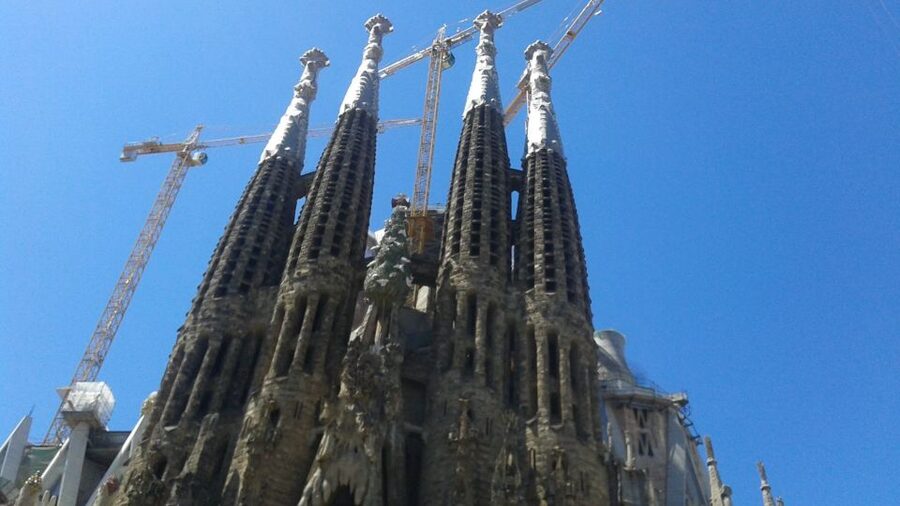
The Sagrada Família is the emotional center of Gaudí’s career, and the tour uses it to explain how his ideas developed over time. Construction began when he was 31, and he devoted much of the rest of his life to the project.
The church is especially useful for showing the idea that Gaudí reinvented himself roughly every decade. His work on the Sagrada Família lasted 43 years, so the building carries traces of different stages rather than one fixed style. You can connect the earlier experiments discussed during the walk with the later sacred architecture.
The story of Colònia Güell adds another important piece. Gaudí designed the church for this worker colony and completed its crypt. The crypt became a testing ground for ideas that later appeared in the Sagrada Família. Even if the route does not provide a full visit to Colònia Güell, understanding its place in the story helps you see the Sagrada Família as a process of testing, revising, and pushing ideas further.
Again, expect to admire monuments mainly from outside. If your main goal is to enter the Sagrada Família, see the interior, and study its light and columns at close range, you will need a separate ticket and visit. This tour prepares you for that experience, but it does not provide it.
Ciutadella Park and Gaudí before the famous buildings
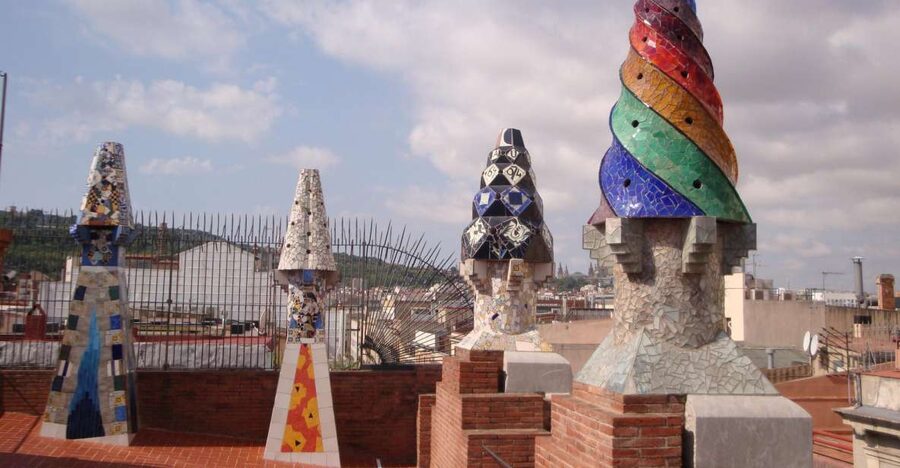
Ciutadella Park helps bring Gaudí back to his early working life. Before he became the architect associated with the Sagrada Família, he worked on projects connected with the world’s fair grounds there.
This part of the story is easy to overlook, yet it gives the tour balance. You see that his career included practical assignments and collaborative work, not just grand buildings commissioned by wealthy patrons. The early material also makes his later freedom more interesting. His bold designs came from years of learning how materials, plans, clients, and public projects actually worked.
The park setting changes the rhythm of the afternoon. After dense streets and façades, an open public space gives the guide room to discuss Barcelona’s urban development. It also shows how the city’s public areas formed part of the architectural story.
You should not expect every stop to feel like a major monument. Some locations are valuable because they explain a stage in Gaudí’s life. That is the point of this tour. It is less about collecting famous buildings and more about seeing the links between them.
A relaxed walk, with two public-transit rides
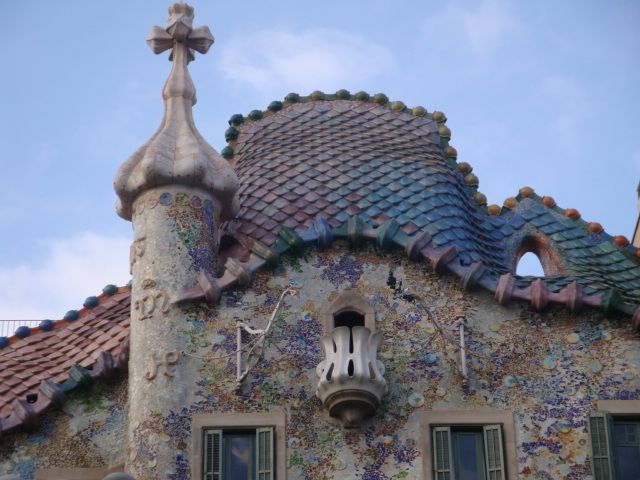
The tour includes two trips by public transportation, and the tickets are included. That is a small but useful detail. Gaudí’s Barcelona is spread out, and walking every connection would make the afternoon tiring and less focused.
You still need to bring the transit tickets with you, so do not leave them in your hotel or assume the guide will hold everything. The route combines walking with these short rides, allowing the guide to cover more than a single neighborhood.
The pace is intentionally relaxed. There is time for photographs and short pauses, and the guide will not push you to rush from one façade to the next. That makes the tour easier for people who want conversation and explanation rather than a fast checklist.
The tradeoff is time. Four and a half hours is a large block of a Barcelona day, and a private tour at this length costs more than a quick group walk. I would schedule it on a day when you want to focus on architecture, not on a packed plan of museums and shopping.
What the $294 private price really buys you
The listed price is $294 per group of up to three people. At the maximum group size, that comes to $98 per person for 4.5 hours, before considering the included public-transit tickets.
That is not a cheap walking tour. It becomes easier to justify if you are a couple or a small family who wants a German-language guide and the ability to ask questions without competing with a large group. A private format also makes the relaxed pace more useful because the guide can respond to your interests.
The value depends on what you want. If you only need a list of Gaudí buildings and a few quick facts, this will feel expensive. If you want a connected explanation of his career, Barcelona’s development, Catalan Modernism, and the stories around the architect, the longer format gives you more to work with.
One price point deserves an honest note. A past booking was described as excellent in guiding quality but expensive at €270. That is a fair warning. The guide may be the strongest part of the experience, but the cost will make most sense when three people share it or when German-language instruction is important to you.
The guide can make or break this experience
The strongest praise centers on Johannes, a native German-speaking guide who combines detailed information with a lively delivery. He has been described as able to answer questions about Gaudí and Barcelona, tell true stories, and keep the afternoon entertaining for teenagers.
That matters because architecture tours can become dry very quickly. Gaudí offers plenty of strange designs, but the buildings alone do not explain how his work developed. You need someone who can connect the dates, commissions, artistic changes, and personal stories without turning the walk into a string of disconnected facts.
The guide also provides practical advice about Barcelona. One past group received restaurant recommendations and continued to get answers to questions after the tour. That kind of help is not guaranteed as a formal part of the program, so I would not book on that expectation, but it suggests a guide who takes an interest in the whole visit.
The experience lists both German and English as available languages. If German is important to you, confirm the language when booking. The advertised focus is a German-language tour, while English is also listed as an option.
Weather, clothing, and the outdoor format
This is a three-weather tour. It runs in sun, rain, wind, and strong showers, so you need to prepare rather than hope for perfect conditions.
In summer, bring a hat, sunglasses, sunscreen, and a small bottle of water. In winter, a jacket or thin coat should be enough according to the practical guidance provided, but rain protection remains sensible. Since the tour uses streets and squares, wet weather can affect your comfort even when the guide continues as planned.
The outdoor format also means you should think about what you want from Barcelona. You will see monuments from their exteriors, with museum visits and interior exploration generally excluded, apart from a couple of exceptions. This works well for a first architectural orientation. It works less well if you want long, quiet time inside the Sagrada Família or Casa Milà.
Who should book this Gaudí tour
I would recommend it most strongly to:
- German-speaking couples or families who want a private guide
- Small groups of up to three who can share the cost
- People interested in how Gaudí’s style changed over his career
- Visitors who want city history along with architecture
- Families with teenagers who respond to stories and unusual details
- Anyone who prefers a slow, question-friendly walk to a rushed group tour
I would look elsewhere if your main goal is interior access, a short introduction, or the lowest possible price. You may also prefer another activity if you dislike walking in uncertain weather or if four and a half hours feels too long for one subject.
Cancellation is flexible: you can cancel up to 24 hours ahead for a full refund, and reserve now while paying later. Those terms reduce some of the risk, especially when your Barcelona plans are still changing.
Should you book it?
Book this tour if you want to understand Gaudí as an evolving architect rather than simply photograph his most famous buildings. The German-language guidance, private group format, relaxed pace, and detailed explanations make it a strong choice for a small group that values conversation.
Do not book it expecting a museum visit or full access to the interiors. Think of it as a long, well-supported outdoor lesson in Gaudí and Barcelona, with Casa Milà, Sagrada Família, Ciutadella Park, the Golden Square, and the story of Colònia Güell connected into one afternoon. At $294, it is best value when shared by three people and when the guide’s experience matters as much as the sights.
FAQ
Where does the tour meet?
The meeting point is at the Three Graces Fountain in Plaça Reial, near Liceu metro station.
How long does the tour last?
The tour lasts 4.5 hours.
What languages are available?
The listed languages are German and English. The tour is presented as a German-language experience, with guides such as Johannes who speak German as a first language.
Is this a private tour?
Yes. It is a private group experience for up to three people.
Are attraction tickets and interior visits included?
Museum visits and interior exploration are generally not included. The monuments are mainly viewed from outside, with a couple of exceptions.
How much does the tour cost?
The listed price is $294 per group of up to three people. Public-transit tickets for the two rides during the tour are included.
New to the itinerary around Barcelona
- Roman & Gotic & Gaudi in Barcelona: private walking tour★ 4.5 · 2 reviews
- Visit to the Modernist houses of the Americans★ 5.0 · 2 reviews
- Barcelona Gaudi Tour: Sagrada Familia, Casa Batllo & Casa Mila★ 5.0 · 4 reviews
- Barcelona Street Escape: Gaudi and the Hidden Treasure★ 5.0 · 17 reviews
- Gaudí & Catalan Modernism Private Walking Tour★ 5.0 · 11 reviews
- Self-Guided Audio Tour-The Surrealist Barcelona of Dalí and Gaudí★ 3.5 · 8 reviews
- Gaudí and Barcelona Legends – Private Tour★ 5.0 · 4 reviews
- Gaudi’s Casa Batlló and La Pedrera with Chocolate Tasting★ 5.0 · 5 reviews
Gaudí Tours, compared.
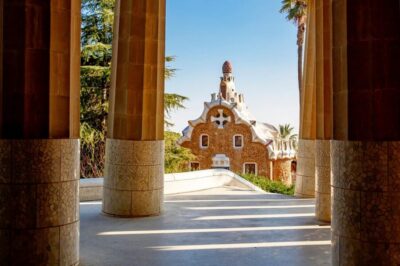
Park Güell and Gaudí House Museum Entry Ticket
Read our review →
Gaudi’s Casa Vicens Skip-the-Line Entrance Ticket
Read our review →
Gaudí’s Park Güell Tour with Fast-Track Ticket
Read our review →
Sagrada Familia & Gaudi Tour Private or Small Group with Tickets
Read our review →
Complete Gaudi Tour: Casa Batllo, Park Guell & Sagrada Familia
Read our review →
Park Güell: Guided Tour with Optional Gaudí Experience Entry
Read our review →
Barcelona e-Bike Tour: Gaudí & Old Town Small Group
Read our review →
Ramblas, Old Town, Gothic and Gaudi Architecture Walking Tour
Read our review →Other lists with this tour