

Review · IRELAND
Dublin, in a day, on foot. History, culture & architecture!
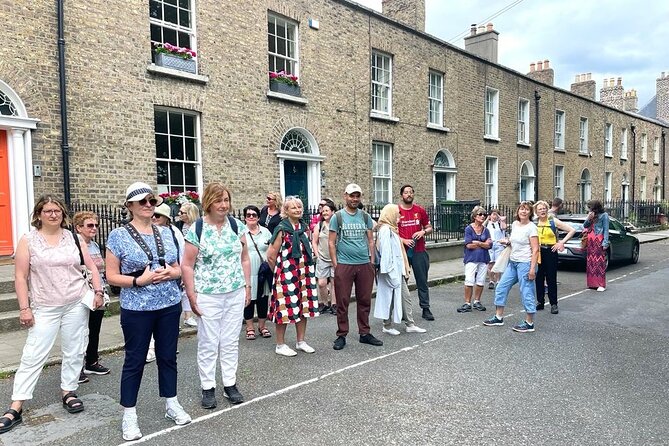
Dublin reveals itself best on foot, one literary corner, old pub, and grand doorway at a time. With guide Dairine Nuttall, you get a private eight-hour walk that can bend around your interests, from Oscar Wilde and James Joyce to the State Apartments at Dublin Castle. I like the personal format, and I like the small details, such as the Nobel medal and W. B. Yeats’s passport. The main drawback is simple: admission fees are extra, and a full day on Dublin streets takes stamina.
This is a strong choice for a first visit, especially if you want to see the major sights without spending half the day studying a map. Dairine can also adjust the pace and route, which matters if your group wants more time at the Book of Kells, a pub lunch, or Dublin’s literary places. Weather is another consideration. One past outing went ahead in rain, so bring a coat and expect the day to stay flexible.
What makes this Dublin walk different
- A private route for up to 10 people: Your group does not share the guide with strangers.
- Merrion Square’s literary treasures: See Georgian Dublin, museums, galleries, and details linked to Joyce, Yeats, and Wilde.
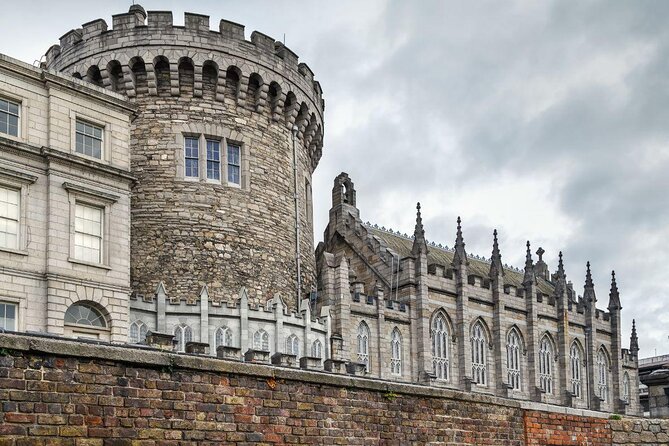
- A useful Dublin Castle visit: Tour the State Apartments and St Patrick’s Hall, with the castle gardens nearby.
- An authentic pub break: Dairine can suggest an old pub that serves food, giving the long walk a welcome pause.
- Two important cathedrals and libraries: St Patrick’s Cathedral and Marsh’s Library add quiet, memorable stops.
- Flexible timing: The route can change around your interests, including literary sights and other central Dublin highlights.
Starting in Georgian Dublin at Merrion Square
The day begins at Grafton Street, but the first major area is Merrion Square and Dublin’s Georgian quarter. This is a smart opening because it introduces the city through its architecture, public institutions, and writers rather than rushing straight to the most obvious postcard sights.
You can expect a look at museums, galleries, libraries, and Parliamentary Dublin. The tour is not limited to exteriors. Dairine plans to dip into selected institutions for highlights in art, literature, and archaeology, although the exact stops can depend on your interests and what is open.
The small objects here may be more memorable than a long lecture. Two examples are a Nobel medal for literature and W. B. Yeats’s passport. These details make Irish literary history feel personal. You are not simply hearing that Ireland produced famous writers. You are seeing objects that belonged to them.
If James Joyce interests you, ask about Sweny’s. This old chemist shop opened in 1847 and has changed little. It appears in Joyce’s Ulysses and now works as a Joyce center run by volunteers. On some visits, a song may break out there. That is exactly the sort of unscripted, local touch a private guide can help you find.
Oscar Wilde also belongs in this opening section. His connection to Merrion Square gives the neighborhood a bit of personality beyond its orderly Georgian facades. You will want to look closely at the doors, railings, and brickwork as you walk. The pleasure here comes from seeing how Dublin’s political and literary life share the same streets.
One practical point: three hours is allocated to this first part. That is a substantial block of the day. If you are mainly interested in castles and cathedrals, tell Dairine early. If writers, art, and archaeology are high on your list, this is where the tour earns its time.
More History Walks around the world:
- Chicago in a Day: Food, History & Architecture Walking Tour
★ 5.0 · 1,153 reviews - Charleston’s Best Highlights: History, Culture & Architecture
★ 5.0 · 422 reviews - Palm Springs Modernism Architecture & History Bike Tour
★ 5.0 · 359 reviews
Crossing central Dublin via Grafton Street

The walk toward Dublin Castle uses an unusual route through the center instead of simply following the most direct line. This gives you a closer look at Dublin as a working city, with shops, pubs, restaurants, and heritage buildings sharing the same streets.
Grafton Street is the meeting and finishing point, so you get a useful orientation to one of Dublin’s main central areas. Along the way, Dairine points out Georgian ceilings and architectural details that are easy to miss when you are focused on shopping or getting to the next sight.
This section is planned for about an hour, including a break in an old pub that does food well. Food is not included, but the pause is valuable after several hours on foot. Dairine has suggestions, and the timing gives you a chance to ask questions while sitting down rather than walking.
I like that the pub stop is treated as part of the city experience, not as an afterthought. Dublin’s pubs are social places as well as places to eat and drink. A Harp beer and a proper Irish lunch were part of one successful wet-weather day, but your food and drinks are your own expense.
The route is still a walking tour, so do not think of this as a hop-on, hop-off sightseeing day. You cover real ground between stops. Comfortable shoes and a rain jacket will serve you better than a packed schedule of extra plans.
Understanding Dublin Castle and British rule
Dublin Castle receives about two hours. It was the seat of British rule for more than 700 years, and the complex helps explain the political story of the city. The visit is more useful with a guide because the buildings do not all look alike or explain themselves clearly from the outside.
The State Apartments are the main attraction. You can see the former throne room and St Patrick’s Hall, where Irish presidents are inaugurated. That contrast is worth noting: the same complex connects Ireland’s colonial past with the modern state.
There is also a Revenue Museum for anyone interested in taxation. It is a niche stop, but private touring makes niche interests workable. If taxes are not your thing, you can spend more time in the State Apartments or the castle gardens instead.
The gardens behind the castle offer a quiet break from the city streets. Nearby, the Chester Beatty Museum has a popular restaurant, giving you another possible place for food or rest. The tour does not include admission fees, so check the cost of entering the castle and other paid sites before you arrive.
The castle is one of the clearest examples of why this private format can be useful. You can ask about Irish independence, the former administration, presidential ceremonies, or the layout of the buildings without having to follow a fixed group conversation. You also avoid spending equal time on parts that do not interest you.
St Patrick’s Cathedral and Dublin’s older story
On the way to St Patrick’s Cathedral, the route may pass Dublin City Hall if it is open. You will also pass Burdocks, one of Dublin’s best-known fish-and-chip shops. Outside is a list of famous customers, an amusing little pause before the more solemn cathedral visit.
St Patrick’s Cathedral dates from 1195 and is the largest cathedral in Ireland. Inside, you can expect tombs, monuments, and reminders of both difficult and joyful chapters in Irish life. The building carries national importance, but it is also a place where the details reward slow looking.
Jonathan Swift, author of Gulliver’s Travels, served as dean here for many years and is buried in the cathedral. His presence gives the visit a clear literary link, especially after the earlier stops connected with Joyce, Yeats, and Wilde.
The planned visit lasts about an hour. Admission is not included, so budget for the cathedral separately. If your group has limited time or a tight budget, ask Dairine how much of the cathedral and the other paid attractions you can reasonably fit into the day.
St Patrick’s Cathedral can also be a useful change of mood. After Georgian streets, shops, and a pub, the cathedral offers a quieter interior and a stronger sense of age. You will not get the same experience by simply photographing the outside and moving on.
More Architecture Tours around the world:
- Chicago Architecture River Cruise
★ 5.0 · 15,756 reviews - Chicago River 90-Minute Architecture Tour
★ 4.5 · 9,629 reviews - Chicago River: 1.5-Hour Guided Architecture Cruise
★ 4.8 · 8,046 reviews - Barcelona: Park Güell and Gaudí House Museum Entry Ticket
★ 4.5 · 6,326 reviews
Marsh’s Library and the return to St Stephen’s Green
The return route goes through Marsh’s Library, founded by Archbishop Narcissus Marsh and described as Ireland’s oldest public library. Its book cages are an unusual feature. Readers could be locked into them while using valuable books, a reminder of how seriously libraries once guarded their collections.
The library has an old-world appearance that may remind you of a film set, but the real appeal is its function and age. It is a compact stop with a strong sense of place. This is another reason to allow time for indoor visits rather than planning the day only around large landmarks.
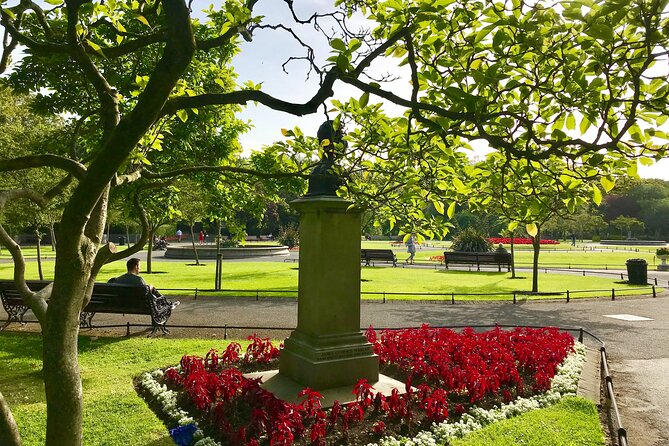
The final hour leads through interesting streets back toward St Stephen’s Green and the central area. You can finish at Grafton Street, where the tour began, or ask to be left at another destination. That flexibility is useful if you have dinner plans, a hotel nearby, or another appointment.
The advertised route includes St Stephen’s Green, but the day is not presented as a rigid checklist. Dairine can adjust the final part of the walk and the balance between sights. The more specific you are about your priorities before the tour begins, the more useful this flexibility becomes.
How the private format affects the day
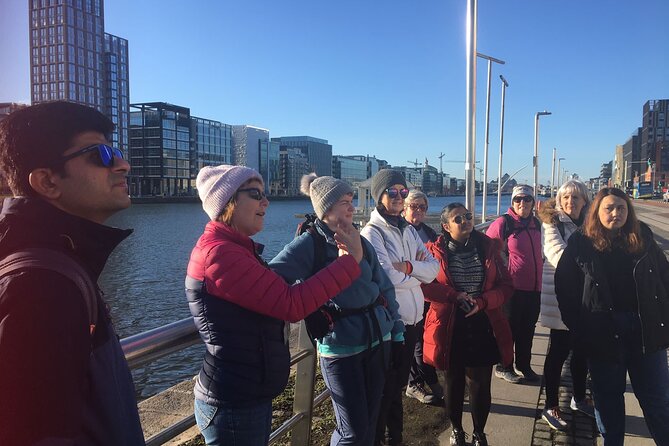
The tour costs $520.57 per group of up to 10 people. That is a large amount for one person, but the calculation changes for a family or group. At the full limit, the guide fee works out to roughly $52 per person before admissions, meals, and drinks. For four people, it is about $130 per person.
The value is in the dedicated guide and the ability to shape the route. A large group may prefer the fixed price because everyone can ask questions and move at one pace. A couple or small family pays more per person, but gains a much more personal day than a standard group walk.
The tour lasts about eight hours. That makes the cost easier to justify if you use it as your main Dublin sightseeing day. You are not paying for a short introduction and then arranging the rest yourself. You get a full day with a guide, several major sights, and time for questions and a meal break.
Still, admissions are not included. Dublin Castle, St Patrick’s Cathedral, Marsh’s Library, and other attractions may require separate payment. Ask for the current prices when planning, especially if you also want to visit the Book of Kells. One past private day included that sight, showing that the route can change, but it should not be assumed as part of every version of the tour.
Who should book this eight-hour walk

I would choose this tour if you are visiting Dublin for the first time and want a clear introduction without being confined to a large group. It also suits families who want to ask plenty of questions, couples marking a special occasion, and people with a strong interest in Irish writers, architecture, or political history.
It works particularly well for a short stay. One couple arranged a long layover specifically to allow time in Dublin, and the private format helped them use the day efficiently. That kind of schedule demands a guide who can keep the route moving and avoid wasted time finding each place.
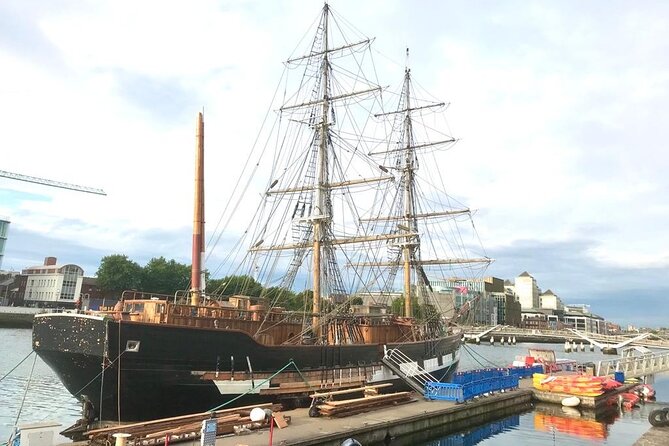
The tour can also suit repeat visitors. One outing focused on Dublin’s docklands, sculptures, and bridges rather than simply following the central route. That tells you something useful about the guide’s approach: the advertised highlights are a starting point, not necessarily the only option.
I would be more cautious if you dislike walking for most of a day or want every ticket included in one price. The tour is also less suitable if you prefer to explore entirely alone. Its strength is the conversation, local context, and ability to change direction.
Weather should shape your expectations. Dublin can be wet, and the tour proceeds in rain rather than automatically becoming a museum day. Wear practical shoes and waterproof clothing. The guide has shown flexibility in poor weather, including arranging a car for one particularly wet outing, but transportation is not listed as a standard feature, so do not assume a vehicle is included.
Practical details before you reserve
The meeting point and usual end point are on Grafton Street in Dublin. The activity is available Tuesday through Friday from 9:00 a.m. to 5:30 p.m. for the stated operating period. Confirmation arrives at booking, and you receive a mobile ticket.
This is a private activity, with only your group participating. Service animals are allowed, it is near public transportation, and most people can take part. Because the day is long, tell Dairine about interests, mobility concerns, or must-see places before the start.
Free cancellation is available up to 24 hours before the start time. Cancellations or changes made less than 24 hours ahead are not accepted for a refund, and the cut-off uses Dublin local time.
Should you book Dairine’s Dublin day?
Book it if you want one well-shaped day that combines famous sights with literary addresses, old libraries, pub culture, and useful local context. The strongest part is the personal route: Dairine can spend more time on Joyce, Wilde, Yeats, architecture, political history, or food depending on what matters to you.
Skip it if you want the lowest-cost way to see Dublin or if you would rather buy individual admissions and wander alone. For a group of four to 10, the fixed price becomes more reasonable, especially when you value efficient sightseeing and questions answered along the way.
For a first visit, I would use the booking notes to name your top three priorities and ask which admissions fit the day. That small bit of planning will help you get the best balance of Merrion Square, Dublin Castle, St Patrick’s Cathedral, and the quieter places that make this city memorable.
FAQ
Where does the tour start and end?
The tour starts on Grafton Street in Dublin and normally ends there as well. The guide can leave you at another destination if you prefer.
How long does the experience last?
The walking tour lasts approximately eight hours.
How many people can join?
This is a private tour for your group, with up to 10 people.
Is the tour available every day?
The stated operating hours are Tuesday through Friday, from 9:00 a.m. to 5:30 p.m.
Is the guide included in the price?
Yes. The tour includes the services of the guide, Dairine Nuttall.
Are admission tickets included?
No. Admissions, where applicable, are not included in the tour fee.
Can the itinerary be customized?
Yes. The private format lets you build a route around your interests, and the guide is flexible about changing the itinerary.
Is food included?
No. Food and drinks are not included. The tour usually allows time for a break in an old pub, and Dairine can suggest places that serve food.
Can I cancel for a full refund?
Yes, if you cancel at least 24 hours before the experience starts. Cancellations and changes made less than 24 hours before the start time are not accepted for a refund.
New to the itinerary around the world
- Washington, DC: Georgetown Architecture Walking Tour★ 5.0 · 8 reviews
- Wilmington History and Architecture Tour★ 4.8 · 18 reviews
- Washington DC: Dupont Circle & Embassy Row Architecture Tour★ 5.0 · 6 reviews
- New Orleans : Garden District Architecture Walking tour★ 4.8 · 5 reviews
- Walk & Discover KL’s Architectural and Heritage Gems★ 5.0 · 7 reviews
- Unveiling Brno: History, Culture & Architectural Delights★ 5.0 · 2 reviews
- Vicenza: Palladian Architecture Private Walking Tour★ 3.3 · 3 reviews
- Private Colonial Williamsburg Architectural Tour★ 5.0 · 5 reviews