
Review · BARCELONA
Barcelona: Gaudi’s Casa Vicens Skip-the-Line Entrance Ticket
Casa Vicens is where Antoni Gaudí first showed the imagination that later made him famous. Built from 1883 to 1885 as a summer house, it mixes geometric tiles, floral patterns, and Moorish-inspired details in a way that feels unlike Casa Batlló or Casa Milà.
I like two things here: you can move at your own speed, and the house is often calm enough for you to study small details without being pushed along. The audio guide adds useful context, and the garden gives the visit a welcome pause. The main consideration is size. Casa Vicens is smaller than many people expect, so it may not fill half a day.
Key points to know before visiting
- Gaudí’s first major work: Casa Vicens shows the early ideas that grew into his later Barcelona buildings.
- A quieter Gaudí visit: The house usually feels less crowded than Casa Batlló and Casa Milà.
- Self-guided by design: You choose how long to spend in each room, with no personal guide included.
- Bring your own headphones: The audio guide is downloaded to your phone and available in 16 languages.
- Plan on about an hour: Some visitors finish in 30 minutes, while others stay for around 75 minutes.
- Good value for architecture fans: At $26, the ticket costs less than some major Gaudí attractions and gives access to the house, garden, exhibitions, and gift shop discount.
Why Casa Vicens matters in Gaudí’s story
Casa Vicens is not simply another handsome modernist house. It is the first important project by Gaudí, commissioned by Manuel Vicens and built between 1883 and 1885. That makes it the place to see him at the beginning of his career, before his work became more flowing, sculptural, and widely recognizable.
I find that early stage especially interesting. The building feels more ordered than the later Casa Batlló, with strong lines, repeated shapes, and a clear rhythm across the façade. At the same time, it is already unmistakably personal. Ceramic tiles, plant-inspired decoration, colorful surfaces, and carefully handled light show an architect testing ideas that would become central to his work.
The house was designed as a holiday residence with a garden. That original purpose helps explain its scale and mood. It was not planned as a giant public showpiece. It was a private home meant to offer shade, decoration, and a pleasant retreat from the city.
UNESCO declared Casa Vicens a World Heritage Site in 2005. You do not need to be an architecture specialist to appreciate it, but a little context helps. This is a visit about origins: the roots of Gaudí’s style are easier to recognize here because the building is compact and its details are close at hand.
More Casa Batllo and La Pedrera Tours around Barcelona:
- Complete Gaudi Tour: Casa Batllo, Park Guell & Sagrada Familia
★ 5.0 · 1,152 reviews - Gaudi´s Casa Vicens Skip the Line Ticket with Audioguide
★ 4.5 · 685 reviews - Barcelona: Gaudi’s Casa Vicens Guided Tour
★ 4.8 · 401 reviews
Arriving at Carrer de les Carolines
Casa Vicens is at Carrer de les Carolines, 20 to 26, in Barcelona’s Catalonia region. Your ticket is tied to the date and time printed on it, so check those details before setting out.
The skip-the-line benefit is useful, but keep your expectations sensible. It means priority entry through the ticket line, not a private arrival or a personal escort. Once inside, the visit is open and self-paced.
I like the freedom of this arrangement. You do not have to wait for a group to gather, and you are not required to keep pace with a guide. Families can move quickly through a room if children lose interest, while architecture fans can stop and study a tile pattern or ceiling detail.
The house is wheelchair accessible, and staff assistance is available when needed. The ticket covers the full complex, including the permanent and temporary exhibitions.
Reading the exterior before you enter
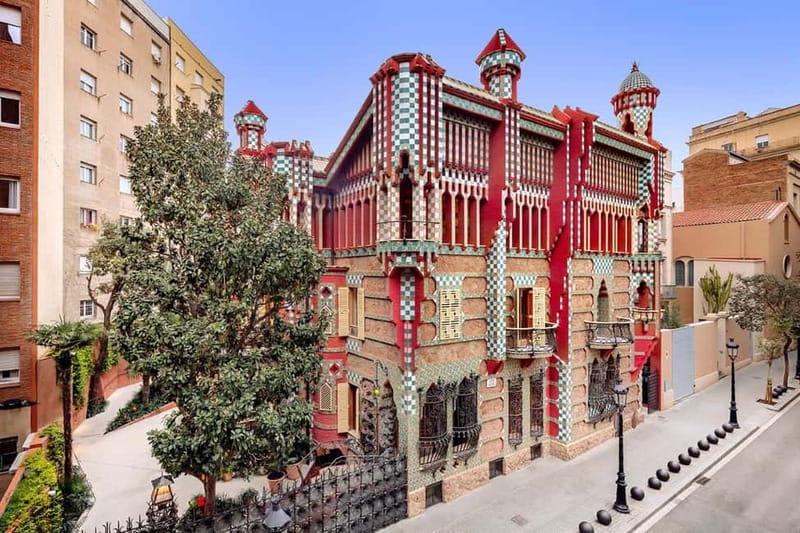
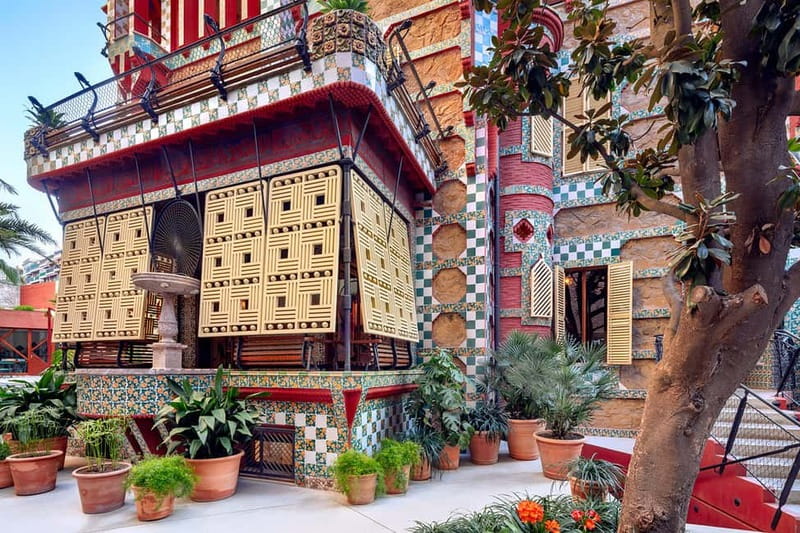
Take a few minutes outside before heading in. Casa Vicens rewards a slow first look because the façade is busy with patterns, color, and repeated forms. The decoration draws on surrounding vegetation as well as geometric and Moorish influences.
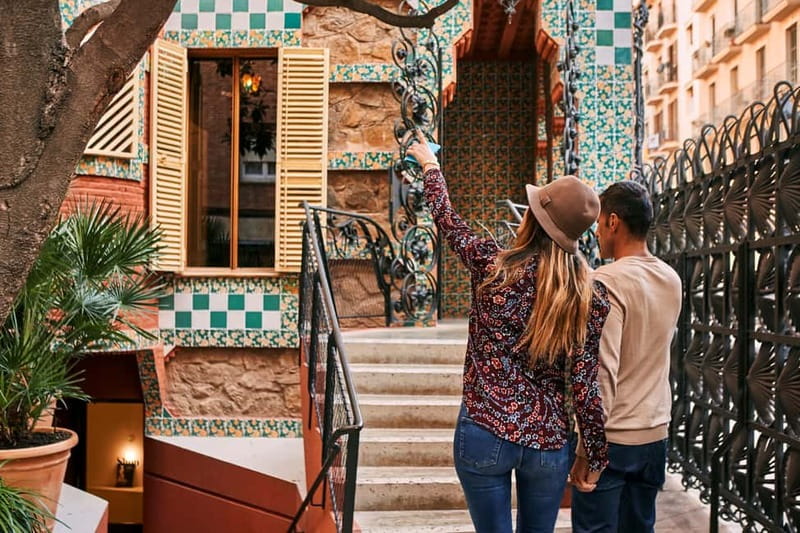
This is one of the best places to understand that Gaudí did not treat decoration as an afterthought. The surfaces help shape the identity of the building. Tiles, ironwork, windows, and plant motifs work together rather than appearing as separate ornaments added at the end.
The exterior is also a good reminder that Gaudí’s career did not begin with the dreamlike forms many people associate with him. Here, the design is more disciplined and angular. You can see an architect balancing structure with decoration, tradition with invention.
It is a strong photo stop, but the house is not enormous. If you arrive expecting the scale of a major palace, you may feel surprised. That smaller size is also part of the appeal. You can take in the main ideas without becoming worn out by a huge interior route.
Moving through the rooms at your own pace

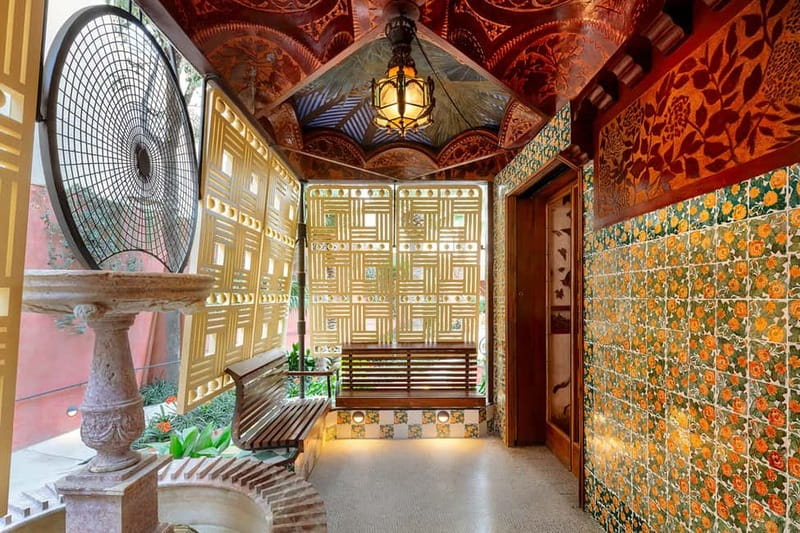
Inside, you will visit the restored house and its different rooms, each offering another look at Gaudí’s early design language. The visit is not a guided performance. You walk through independently, pausing when something catches your eye.
I recommend resisting the urge to hurry through the first rooms. The most rewarding details are often the ones you notice after a few seconds: repeated botanical forms, unusual surfaces, patterned walls, and the way decoration carries from one space into another.
The house feels personal in a way that larger attractions sometimes do not. You are looking at rooms made for domestic life, not only grand public display. That makes it easier to imagine how the decorative scheme would have shaped everyday living in the home.
The interior also helps you compare Gaudí’s early and later work. Casa Vicens is less fluid than Casa Batlló and less sculptural than Casa Milà. Its geometry is more obvious, and its ornament has a strong sense of repetition. If you visit it before the other two houses, you can watch his ideas develop across Barcelona. If you visit it afterward, you can trace those later inventions back to their starting point.
More Gaudí Tours in Barcelona:
- Barcelona: Park Güell and Gaudí House Museum Entry Ticket
★ 4.5 · 6,326 reviews - Barcelona: Gaudí’s Park Güell Tour with Fast-Track Ticket
★ 4.8 · 4,512 reviews - Sagrada Familia & Gaudi Tour Private or Small Group with Tickets
★ 4.5 · 1,188 reviews - Park Güell: Guided Tour with Optional Gaudí Experience Entry
★ 4.1 · 832 reviews
Using the audio guide without losing your freedom

The audio guide is included and available in Catalan, Spanish, French, English, Portuguese, German, Korean, Chinese, Japanese, Polish, Russian, Italian, Ukrainian, and Hebrew. You need to download it to your phone, so bring headphones.
This detail matters. Without headphones, you may need to listen through your phone speaker, which is less comfortable in quiet rooms and less considerate of people around you. Downloading the guide before entering can also save time if your mobile connection is weak.
The guide explains the house’s history and the thinking behind its architecture. It is especially useful if this is your first Gaudí visit or if you want more than photographs. You can pause, skip sections, or stop listening whenever you like.
That flexibility is one of the strongest reasons to choose this ticket. I prefer being able to spend extra time in a room that interests me instead of waiting for a scheduled group. The audio guide gives the visit structure without taking away your independence.
The building also includes a documentary and exhibitions about architecture and Gaudí’s influence. These additions help place Casa Vicens within a wider story. They are worth allowing time for, particularly if you want to understand how this early house connects with later designers and modernist work.
The garden, exhibitions, and small pauses
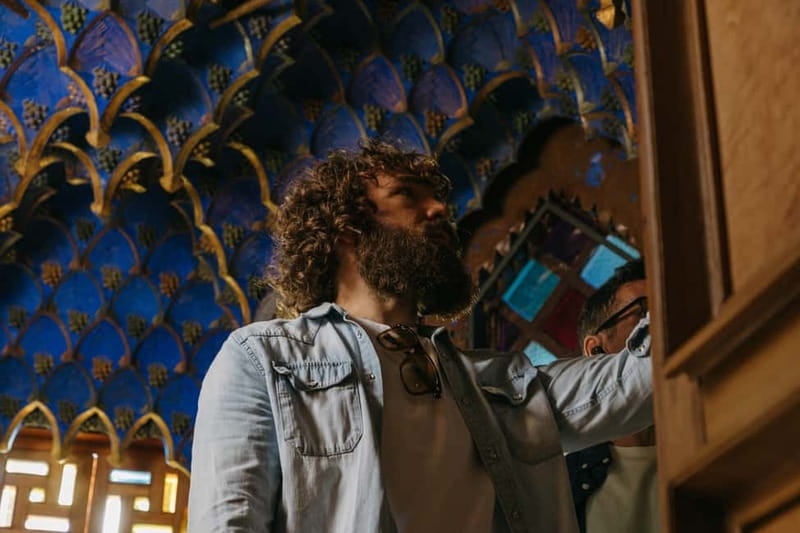
The garden is not a separate major attraction, but it changes the pace of the visit. After studying the patterned rooms, stepping outdoors gives you space to look back at the house as a whole.
I like this part because it shows the original relationship between the building and its garden. Casa Vicens was planned as a holiday home, not just a decorated façade squeezed into a city block. The outdoor area helps explain the sense of retreat that shaped the project.
The site also has a café, which can make the visit easier to fit into a relaxed afternoon. The gift shop offers souvenirs and receives a discount with the ticket. Some visitors may find the shop particularly worthwhile if they want books or design-related gifts rather than standard Barcelona merchandise.
Do not treat these extras as the main reason to book. The house is the heart of the visit. Think of the garden, documentary, exhibitions, café, and shop as useful additions that make a one-hour stop feel more complete.
How long to stay and when to go
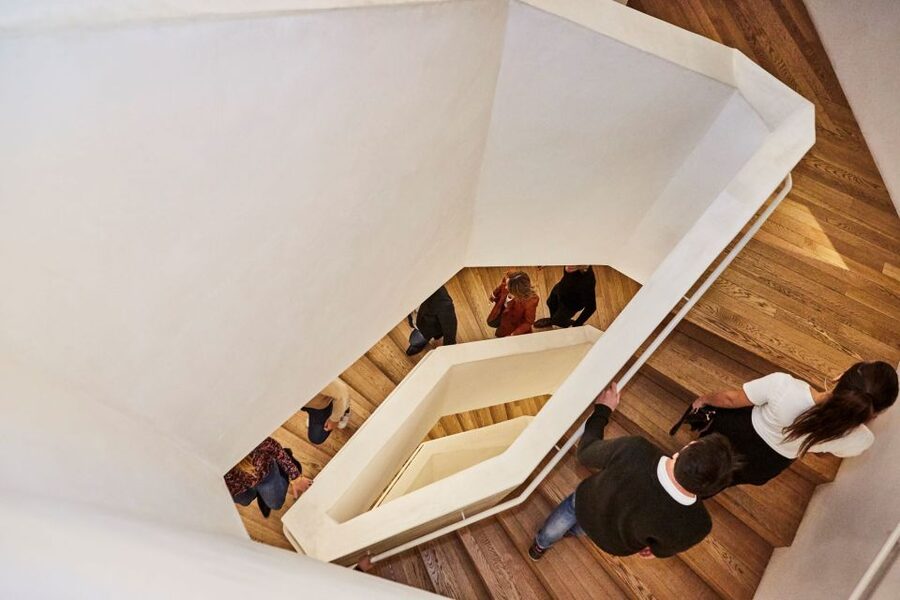
You can finish Casa Vicens in about 30 minutes if you move briskly and focus on the main rooms. Allow 60 to 75 minutes if you want to use the audio guide, watch the documentary, enjoy the garden, and look closely at the details.
That makes it easy to pair with other plans in Barcelona. You do not need to surrender half a day, and the visit works well when you are already in the area. A morning time slot can be especially appealing if you want a quieter start and a less hurried look around.
The ticket is valid for one day, but entry is only allowed on the date and at the time printed on your ticket. Once you pass through an entrance point, you cannot leave and reenter, so use the restroom and gather your belongings first. Keep the ticket with you throughout the visit.
Is $26 a fair price?
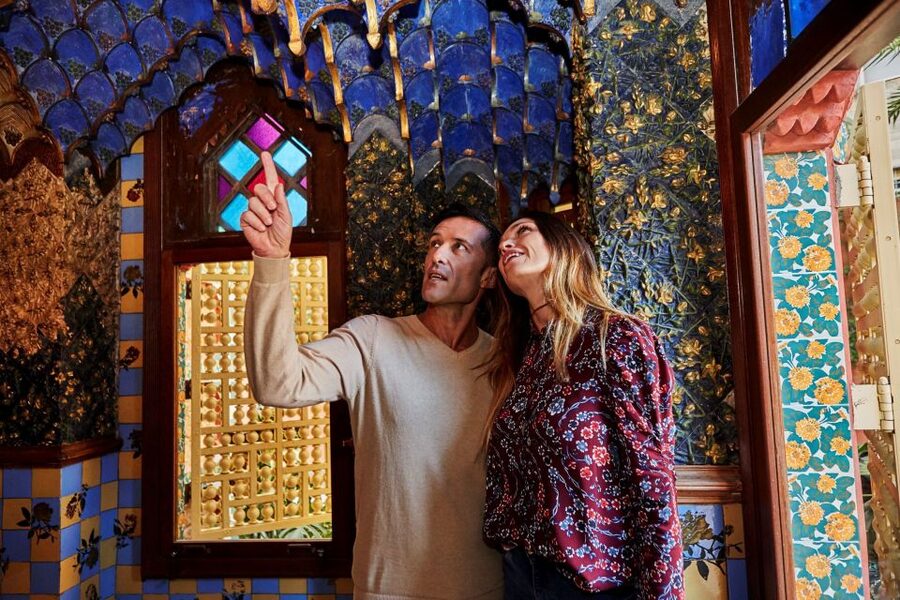
At $26 per person, Casa Vicens is not a bargain museum stop, but the price compares reasonably with other major Gaudí houses. You are paying for access to a UNESCO-listed building, the garden, permanent and temporary exhibitions, and an audio guide in 16 languages.
The value depends on what you want from a Gaudí visit. If you measure value by size alone, Casa Vicens may feel expensive because the house is compact. If you care about seeing the architect’s first major work in a calmer setting, the price is easier to justify.
I think it works best for visitors who want quality rather than quantity. You are not buying a long route filled with dozens of rooms. You are buying close access to a carefully preserved house where the decoration can be studied without the pressure found at Barcelona’s busiest attractions.
The ticket also includes free cancellation up to 24 hours before the visit and a reserve-now, pay-later option. Those terms are useful if your schedule is still changing.
What the visit does well, and where it falls short
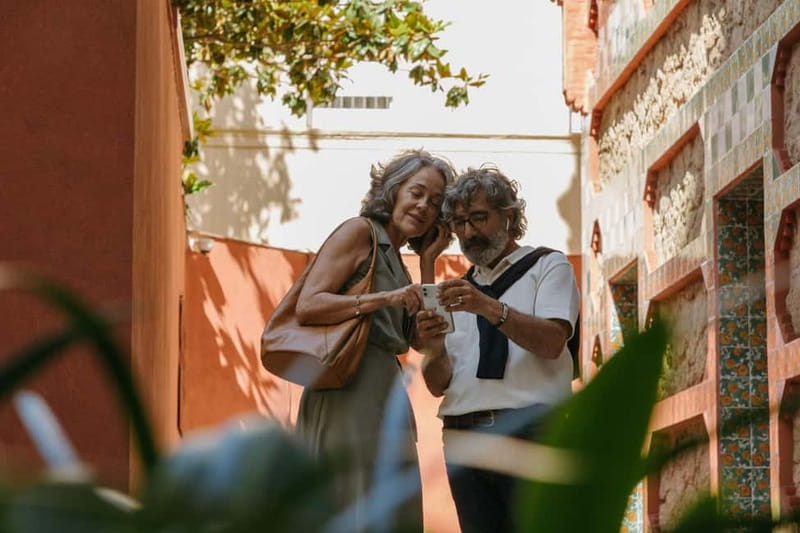
The greatest strength is the atmosphere. Casa Vicens often feels peaceful, especially compared with the city’s more famous Gaudí buildings. That gives you time to notice the colors, tilework, floral forms, fountain effects, and small architectural choices.
The second strength is control. You can choose your own pace, listen to the audio guide when useful, and move on when you have seen enough. That is a good setup for families, independent visitors, and anyone who dislikes fixed group tours.
Staff are described as helpful and accommodating, and the house is kept in excellent condition. The audio guide is generally easy to use, though you should download it in advance and bring headphones. Phone service or technical issues can sometimes interfere with a self-guided visit, so a little preparation is worthwhile.
The main weakness is scale. Casa Vicens will not give you the same long, grand route as a larger attraction. Some people may finish sooner than expected, and the $26 price can feel high if you are interested only in a quick photograph.
There is also no personal guide included. If you want live explanations, questions answered on the spot, and a set narrative, this is not the right format. You are choosing independence over guided interpretation.
Who will enjoy Casa Vicens most?
I would recommend this experience to you if you enjoy architecture, decorative arts, photography, or the story of how a major artist developed. It is also a good choice if you have already seen Casa Batlló and Casa Milà and want a different side of Gaudí.
Families may appreciate the shorter visit and the ability to move freely. The house offers enough unusual detail to keep older children interested without demanding a full day. People with limited time can also fit it into a busy Barcelona schedule.
You may want to skip it if you are looking only for Gaudí’s largest or most dramatic work. Casa Vicens is early, compact, and more controlled in design. Its importance comes from what it reveals, not from sheer scale.
Should you book Casa Vicens?
Yes, if you want to see where Gaudí’s architectural story begins and prefer a quieter, self-guided visit. The skip-the-line entry, audio guide, garden, and flexible timing make it an efficient choice at $26.
Book it with the right expectations. Plan for roughly an hour, bring headphones, and pay attention to the details rather than expecting a huge palace. If you want a calm look at an unusual early house, Casa Vicens is one of Barcelona’s smartest Gaudí choices.
FAQ
Where is Casa Vicens located?
Casa Vicens is at Carrer de les Carolines, 20 to 26, 08012 Barcelona, in Catalonia, Spain.
What does the Casa Vicens ticket include?
The ticket includes skip-the-line entry, access to the house and garden, permanent and temporary exhibitions, the audio guide, and a discount at the gift shop.
Is a personal guide included?
No. This is an entrance ticket with a self-guided audio tour. A personal guide is not included.
How long does a visit to Casa Vicens take?
The visit can take about 30 minutes to 1 hour 15 minutes, depending on how closely you study the rooms and whether you use the audio guide and exhibitions.
Do I need to bring headphones?
Yes. The audio guide is downloaded to your mobile phone, and headphones are not provided.
In how many languages is the audio guide available?
The audio guide is available in 16 languages: Catalan, Spanish, French, English, Portuguese, German, Korean, Chinese, Japanese, Polish, Russian, Italian, Ukrainian, and Hebrew.
Is Casa Vicens wheelchair accessible?
Yes. An accessible tour is available for people with reduced mobility.
Can I leave and reenter Casa Vicens?
No. Once you pass through an entrance point, you cannot leave the museum and enter again. Keep your ticket with you during the visit.
Can I use the ticket at any time on the chosen day?
No. You must enter on the date and at the time shown on your ticket.
Can I cancel the booking?
Yes. You can cancel up to 24 hours in advance for a full refund. A reserve-now, pay-later option is also available.
More Skip-the-Line Tickets around Barcelona
- Barcelona: Skip-the-Line Gaudi’s Park Guell Guided Tour
★ 4.5 · 90 reviews - Gaudi houses Private Tour: La Pedrera & Casa Vicens Skip-the-Line
★ 4.5 · 20 reviews
New to the itinerary around Barcelona
- Roman & Gotic & Gaudi in Barcelona: private walking tour★ 4.5 · 2 reviews
- Visit to the Modernist houses of the Americans★ 5.0 · 2 reviews
- Barcelona Gaudi Tour: Sagrada Familia, Casa Batllo & Casa Mila★ 5.0 · 4 reviews
- Barcelona Street Escape: Gaudi and the Hidden Treasure★ 5.0 · 17 reviews
- Gaudí & Catalan Modernism Private Walking Tour★ 5.0 · 11 reviews
- Self-Guided Audio Tour-The Surrealist Barcelona of Dalí and Gaudí★ 3.5 · 8 reviews
- Gaudí and Barcelona Legends – Private Tour★ 5.0 · 4 reviews
- Gaudi’s Casa Batlló and La Pedrera with Chocolate Tasting★ 5.0 · 5 reviews
Casa Batllo and La Pedrera Tours, compared.
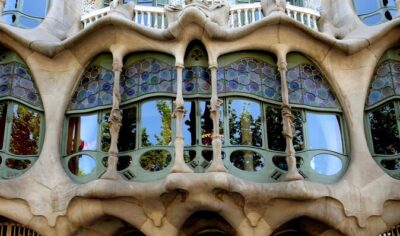
Complete Gaudi Tour: Casa Batllo, Park Guell & Sagrada Familia
Read our review →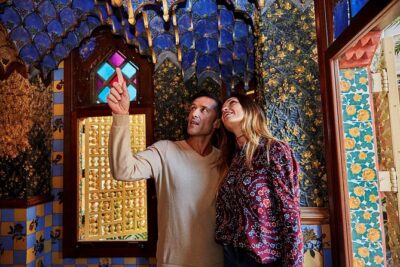
Gaudi´s Casa Vicens Skip the Line Ticket with Audioguide
Read our review →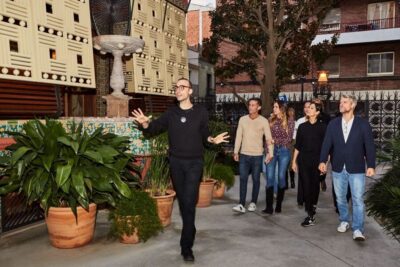

Casa Vicens, Pedrera, and Casa Batlló Guided Tour
Read our review →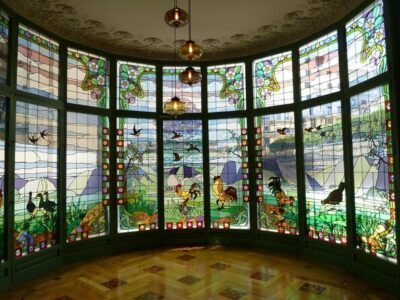
Barcelona Architecture Walking Tour With Casa Batlló Upgrade
Read our review →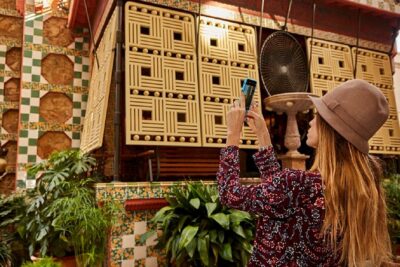
Sweet Gaudi: the most delicious visit to Casa Vicens
Read our review →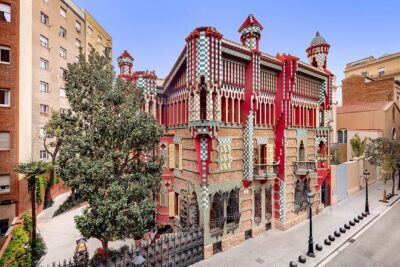
Barcelona Gaudi Houses Tour: Casa Vicens, Pedrera & Casa Batlló
Read our review →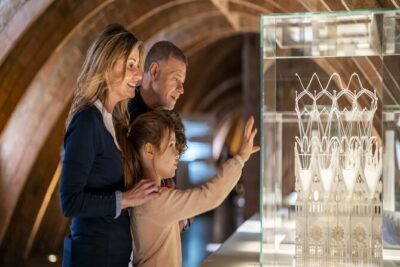
Gaudi Guided Tour: Casa Batllo, La Pedrera & Casa Vicens
Read our review →Other lists with this tour