
Review · CHICAGO
Marvels & Feats: An Engineer’s Tour of Chicago Architecture
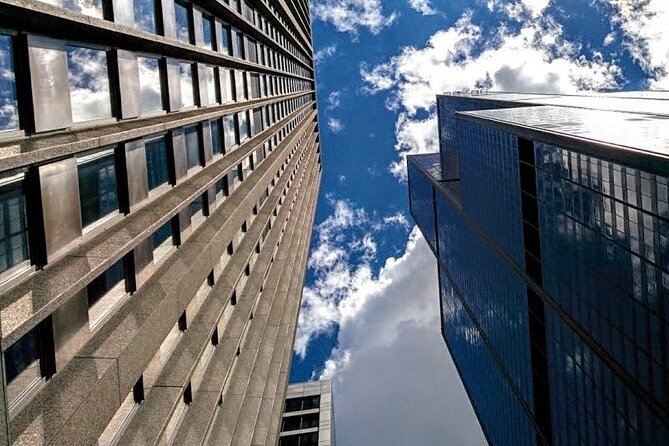
Chicago’s skyscrapers are not just tall buildings. They are answers to stubborn problems: soft ground, heavy walls, strong wind, and the simple pull of gravity. On this two-hour walk, a working engineer explains how Chicago’s buildings solved those problems, from early skyscraper design to newer projects along the river.
I like the engineering focus, which gives you a different way to read the city. I also like the chance to enter a few buildings instead of viewing every landmark from the sidewalk. Guide Hillary’s accessible approach helps turn technical ideas into something you can follow without watering them down.
The main consideration is pace. You’ll walk outdoors in all weather, cover downtown streets and the Riverwalk, and need a moderate level of fitness. If you want a broad architectural survey with many famous facades, this narrower tour may feel specialized.
Key points about this Chicago architecture walk
- A rare engineering-centered route: You’ll look at Chicago through gravity, wind, foundations, materials, and structural design.
- More than 150 years of progress: The route connects early skyscraper ideas with newer construction along the Chicago River.
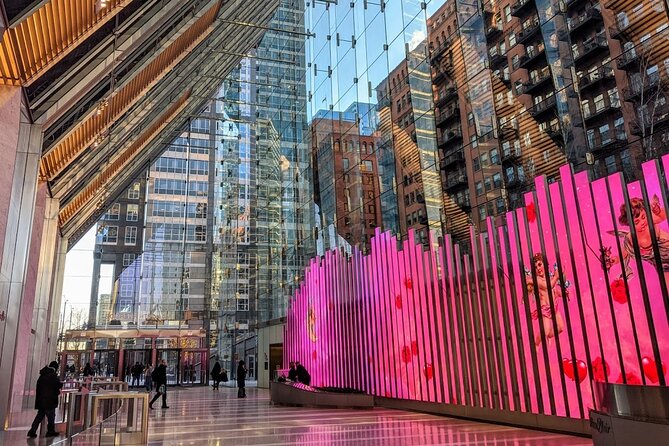
- Several interior visits: You get inside a few buildings, adding scale and atmosphere that street-level viewing cannot provide.
- A guide who can explain the technical side: Engineer Hillary presents difficult ideas in a clear, approachable way.
- A small maximum group of 20: The group size should make it easier to hear the guide and ask questions.
- A scenic finish: The walk ends at Riverpoint Park, with a broad view of the Chicago River.
Why Chicago makes such a good engineering classroom
Chicago is often called the birthplace of the skyscraper because the city became a testing ground for taller buildings in the late 19th century. The reason was practical. A growing commercial center needed more office space, and building upward offered a solution when valuable land in the center became crowded.
Height created fresh problems. Traditional masonry walls became too heavy when they rose many stories. The ground beneath Chicago was also difficult to build on, so a tall structure needed more than a handsome facade. Engineers had to work out how to distribute weight and keep buildings stable.
That is the central appeal of this route. You are not simply told when a building was built or who designed it. You are asked to notice how it works. Look at a facade, and you may begin thinking about what supports it, where the weight travels, and how the structure responds to wind.
The tour also gives you a human link to early skyscraper design. You’ll see a building associated with the father of the skyscraper, an engineer who was a classmate of Gustav Eiffel. That detail helps place Chicago’s building story in a wider world of 19th-century engineering rather than treating the city as an isolated success.
More Architecture Tours around Chicago:
- Chicago Architecture River Cruise
★ 5.0 · 15,756 reviews - Chicago River 90-Minute Architecture Tour
★ 4.5 · 9,629 reviews - Chicago River: 1.5-Hour Guided Architecture Cruise
★ 4.8 · 8,046 reviews
Starting at 430 South Michigan Avenue
The walk begins at 430 South Michigan Avenue at 2:30 pm. This location places you near the southern part of the Loop, Chicago’s central business district, and the first portion of the tour stays mainly downtown.
The opening section lasts about 1 hour and 15 minutes. That is enough time to build a clear foundation before you reach the river, but it also means you should arrive ready to walk rather than expecting a short orientation followed by long stops.
Your guide uses actual buildings to explain the ideas. That matters because engineering can become abstract quickly. A discussion of structural loads makes more sense when you can look up at the building being discussed, enter its public spaces, and see how its design affects the experience of being inside.
Hillary, identified as an engineer, has the job of making these subjects graspable without making them childish. That balance is important. You do not need an engineering background, but you should have some interest in how buildings work.
Reading the Loop through gravity and wind
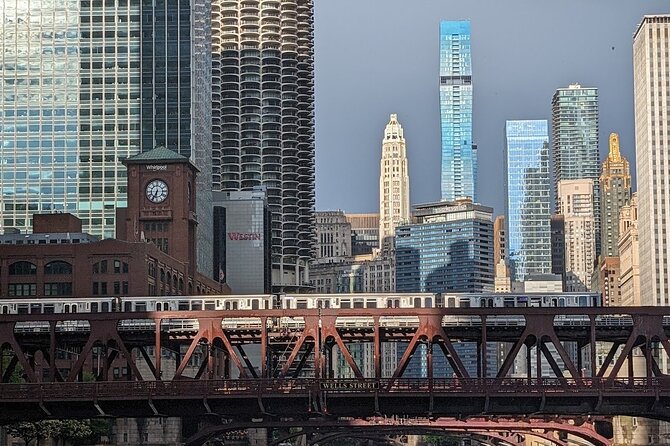
The Loop section is the heart of the experience. Here, you’ll learn how buildings manage gravity, the most basic force in construction, and wind, which becomes a major concern as structures rise higher.
A building does not merely sit on the ground. Its weight must travel through floors, columns, walls, and foundations. As you look at Chicago’s older buildings, the guide can show you how changing construction methods allowed architects and engineers to create more usable space and taller forms.
Wind creates a different challenge. A tall building can sway, and the forces acting on it are not always obvious from the sidewalk. The tour gives you a way to understand why some structural choices are hidden behind the facade and why a building’s shape can matter as much as its materials.
I like this approach because it turns familiar city streets into a kind of open-air laboratory. You might have walked past these buildings before without asking how they stay upright. Now, ordinary details can become clues.
The route includes the story of a building that gained a reputation as haunted because it settled unevenly on its floating foundation. That is a useful example of how structural behavior can become urban legend. The building’s reputation is not presented as a ghost story alone. Instead, you learn how movement in the ground affected the structure and shaped public perception.
This portion also lets you consider the difference between an old building’s intended design and its later life. Construction does not end when the last stone or pane is installed. Settlement, weather, changing use, and maintenance all influence how a building performs over time.
Why going inside matters
A major advantage of this tour is that you enter a few buildings along the way. The admission cost is included, so you do not need to plan separate tickets for these stops.
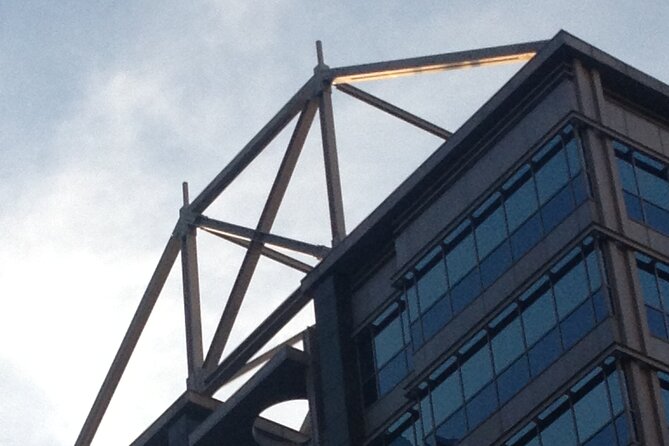
From the street, architecture can look flat. You see the exterior, perhaps admire the height, and move on. Inside, you can understand scale more clearly. You may notice the relationship between public space and structure, how weight is carried above you, or how a building’s interior design responds to its purpose.
The exact interiors can depend on access and availability, so you should not treat this as a guaranteed list of specific buildings. Still, the interior visits are an important part of the experience. They help connect engineering ideas to the spaces people actually use.
I would especially value this feature if you have already taken a standard architecture cruise or seen Chicago’s famous buildings from the outside. This walk gives you a different angle. Instead of collecting landmark names, you spend time asking why a building looks and behaves as it does.
Same streets, read through a different style:
- Chicago Architecture Center River Cruise aboard First Lady
★ 5.0 · 5,536 reviews - Chicago: Architecture River Cruise Skip-the-Ticket Line
★ 4.8 · 4,325 reviews - Chicago River 45-Minute Architecture Tour from Magnificent Mile
★ 4.5 · 2,924 reviews - Chicago Lake and River Architecture Tour
★ 4.5 · 2,308 reviews
From the Loop to the Chicago Riverwalk
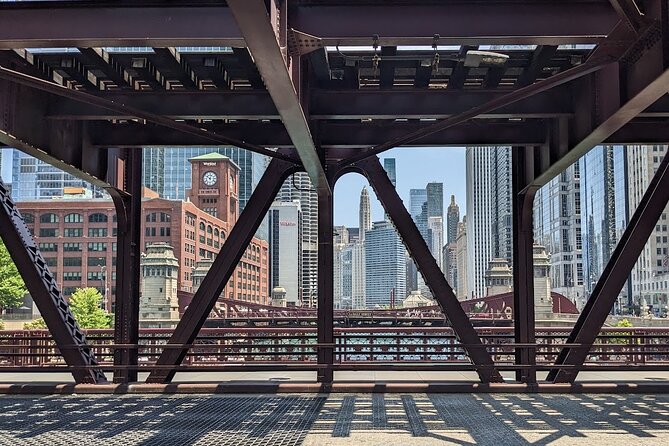
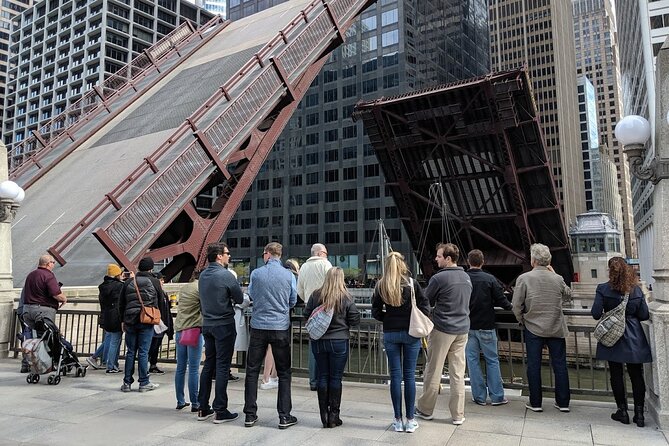
After roughly 75 minutes downtown, the route moves toward the Chicago Riverwalk for about 45 minutes. This second section shifts the focus toward more recent engineering work and gives you changing views along the water.
The river creates a useful contrast with the older buildings. In the Loop, you are looking at the early problems of vertical construction and the birth of the skyscraper. Along the river, you can consider how engineers handle newer demands in a city that has already learned from more than a century of building.
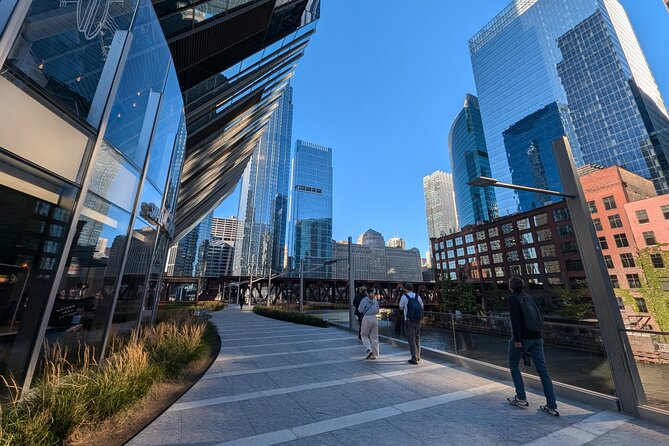
The Riverwalk portion is also more scenic. You’ll have views of the water and surrounding structures as the guide continues the engineering discussion. The setting gives you a break from the tighter downtown streets, although you should still expect to remain on foot.
The final destination is Riverpoint Park at 150 North Riverside Plaza. The tour ends with a wide view of the Chicago River, a satisfying finish after spending the walk looking closely at individual structures.
Because the walk ends at a different place from where it begins, plan your next activity around Riverpoint Park rather than South Michigan Avenue. This is not a loop route, and hotel pickup and drop-off are not provided.
Is $35 a fair price?
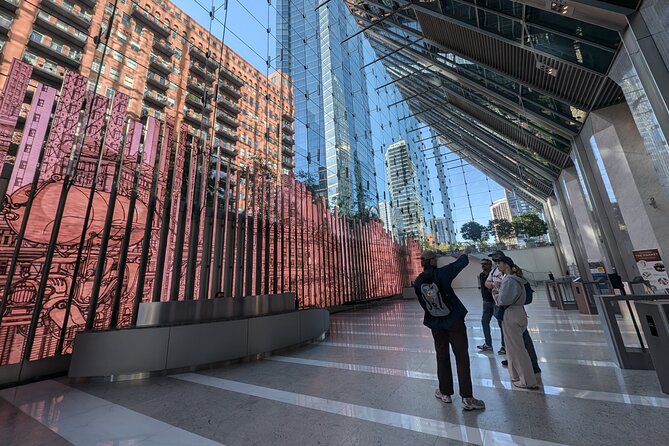
The cost is $35 per person. For a two-hour guided walk, that is a reasonable price if you want an expert-led explanation rather than a quick list of building dates and names.
The value comes from the guide’s specialist viewpoint, the interior visits, and the focused subject. You are paying for a structured way to understand Chicago’s construction story, not simply for transportation or entry to a single attraction.
It is also a small-group experience, capped at 20 people. That number is not private-tour size, but it is more manageable than a large city walk. You should have a better chance of hearing the guide and following demonstrations or explanations in busy downtown spaces.
The price may feel less compelling if you prefer to wander independently, do not care about structural design, or want a tour centered mainly on famous architects and decorative details. This experience places function and engineering near the front of the conversation.
Who will enjoy this most
This tour is a strong match for you if you like architecture but want to understand more than style. It suits curious visitors who enjoy learning how things work, including people with no formal technical training.
It should also appeal to engineering students, design-minded travelers, and anyone who has wondered how Chicago’s tall buildings deal with soft ground and strong wind. Parents with older children may find the subject engaging, though the tour is not described as a children’s program.
The route requires moderate physical fitness. You’ll be walking for two hours, spending time outside, and moving through downtown and along the river. There is no promise of a weather-related cancellation, since the tour operates in all weather. Dress for the conditions, and choose comfortable shoes.
Service animals are allowed, and the starting point is near public transportation. Those details make the tour easier to fit into a day in central Chicago, but you still need to manage your own way to 430 South Michigan Avenue and away from Riverpoint Park.
What the five-star feedback tells you
The strongest praise centers on how clearly and interestingly the guide presents the material. One five-star comment specifically credits Hillary with opening up early Chicago architecture and pointing out lesser-known parts of the city.
That is a useful signal about the experience’s character. You are not signing up for a dry technical lecture. The success of the tour depends on connecting engineering principles to real places, stories, and details you might otherwise walk past.
The phrase hidden gems appeared in the feedback, but the more important point is what that means here. The route can change your attention. A building does not have to be one of Chicago’s most famous landmarks to teach you something important about foundations, materials, or structural design.
The tour has a five out of five rating from 42 reviews, with 100 percent recommended. That is encouraging, though the subject remains specific. A high rating does not mean every visitor will want two hours of engineering discussion. Read the experience on its own terms, and book it because the focus suits you.
Timing, weather, and cancellation
The scheduled start is 2:30 pm, and the walk lasts about two hours. That makes it a useful afternoon activity, with enough time beforehand for lunch or an earlier visit near South Michigan Avenue.
You should dress for the forecast because the tour runs in all weather. Rain, cold, heat, or strong wind can change how comfortable the outdoor portions feel. The engineering stories may remain interesting, but poor clothing can make any walking tour feel much longer.
You can cancel for a full refund up to 24 hours before the start time. Changes or cancellations made less than 24 hours before the experience are not accepted for a refund, and cut-off times use Chicago’s local time.
Confirmation is sent within 48 hours of booking, subject to availability. Since the tour averages booking about 45 days ahead, reserving early is sensible if your schedule is fixed.
Should you book Marvels & Feats?
Book this tour if you want Chicago’s skyscrapers explained through foundations, gravity, wind, and construction rather than only through dates and design styles. The engineer-led format, interior access, small maximum group, and Riverwalk finish give the two hours a clear purpose.
Skip it if you want a relaxed architecture stroll with little technical discussion, or if a moderate walking route in changing weather is not a good fit. For the right audience, $35 buys a fresh way to see the Loop and Chicago River, with enough practical detail to keep you looking up long after the tour ends.
FAQ
Where does the tour start?
The tour starts at 430 South Michigan Avenue, Chicago, Illinois 60605.
What time does the tour begin?
The scheduled start time is 2:30 pm.
How long does the experience last?
The tour lasts approximately two hours.
Where does the tour end?
The walk ends at Riverpoint Park, 150 North Riverside Plaza, Chicago, Illinois 60606.
What areas does the tour cover?
It spends about 1 hour and 15 minutes in the Loop and about 45 minutes along the Chicago Riverwalk.
Is a guide included?
Yes. A local guide is included, with engineer Hillary identified as the guide in the available feedback.
Does the tour include building interiors?
Yes. You’ll visit the interiors of a few buildings notable for their structural design.
How much does the tour cost?
The price is $35 per person.
What happens in bad weather?
The tour operates in all weather conditions, so you should dress appropriately.
What is the cancellation policy?
You can cancel up to 24 hours before the start time for a full refund. Cancellations or changes made less than 24 hours before the start time are not accepted for a refund.
New to the itinerary around Chicago
- Private Chicago Architecture Tour★ 5.0 · 5 reviews
- Private Frank Lloyd Wright Architectural Tour by Luxury Vehicle★ 3.5 · 7 reviews
- Chicago Luxury Minibus City Tour and Architecture River Cruise★ 4.5 · 8 reviews
- Private Chicago Architecture Walking Tour★ 5.0 · 6 reviews
- Chicago History and Architecture Walking Tour with Boat Cruise★ 4.5 · 10 reviews
- Small Group History And Architecture Walking Tour of Chicago★ 4.5 · 8 reviews
- Chicago: History and Architecture Guided Kayak Tour★ 5.0 · 3 reviews
- Chicago Walking Tour: See Inside Art Deco Masterpieces★ 4.9 · 8 reviews
Chicago Architecture Tours, compared.
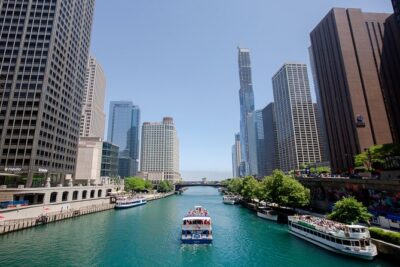
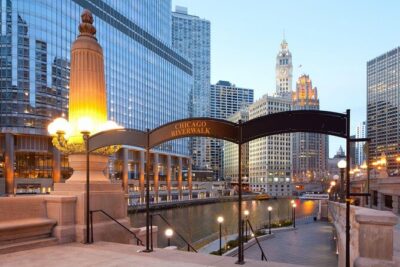
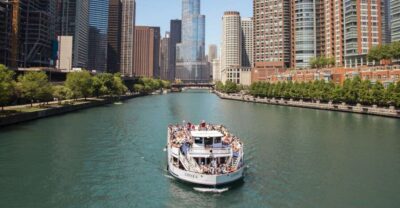
Chicago River: 1.5-Hour Guided Architecture Cruise
Read our review →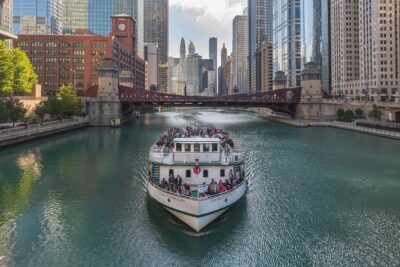
Chicago Architecture Center River Cruise aboard First Lady
Read our review →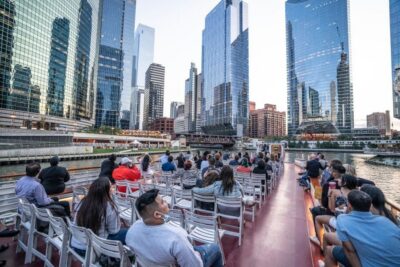
Architecture River Cruise Skip-the-Ticket Line
Read our review →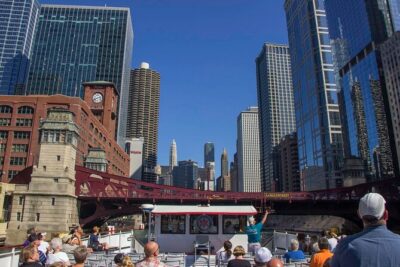
Chicago River 45-Minute Architecture Tour from Magnificent Mile
Read our review →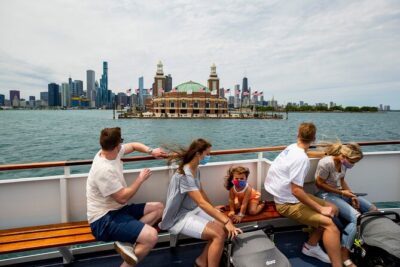
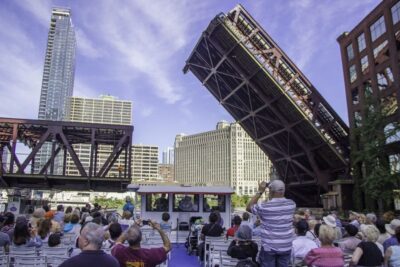
45-Minute Family-Friendly Architecture River Cruise
Read our review →Other lists with this tour