Review · BARCELONA
Gaudí and Modernism – Private Walking Tour
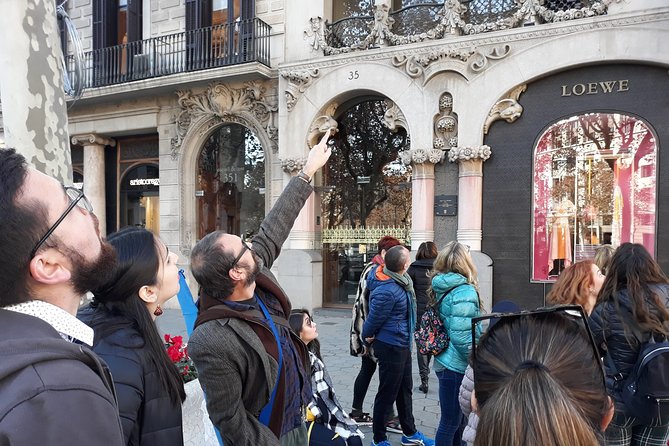
Barcelona’s Modernist architecture makes far more sense when you see it as part of the city’s social and political story. This private 2.5-hour walk links the grand avenues of the Eixample with the work of Gaudí, Domènech i Montaner, and Puig i Cadafalch, ending at the Sagrada Família.
I like the relaxed pace and the way the route connects buildings to real people, including chocolate makers and a tobacco industrialist. I also like that guide Patrick can adjust the walk to your needs, a useful touch for older visitors or anyone who prefers time to stop and look closely. The main consideration is that the Sagrada Família is viewed from outside, so you will need a separate visit if you want to see the interior.
Key points to know before booking
- Private English-language walk: Your group tours alone, with no strangers added.
- Patrick’s history-based approach: Expect architecture explained alongside Barcelona’s political, social, and cultural changes.
- A strong introduction to the Eixample: The route moves from Plaça de Catalunya into the city’s grand Modernist district.
- Four memorable façades: Casa Lleó i Morera, Casa Amatller, Casa Malagrida, and the Sagrada Família receive the main attention.
- A relaxed pace: The guide can adapt the walk for older visitors and allow time for questions and close inspection.
- A practical starting point: The tour begins near the Apple store on Passeig de Gràcia and finishes at the Sagrada Família.
Why this walk helps you read Barcelona
Gaudí is the headline name, but Barcelona’s Modernist movement was much larger than one architect. At the turn of the 20th century, newly wealthy Catalan families rebuilt or commissioned homes in the Eixample, the planned district laid out beyond the old city walls.
This walk gives you a useful frame for that change. You begin at Plaça de Catalunya, where the old city meets the newer Eixample. From there, the route follows Passeig de Gràcia, the grandest avenue of the new district, before moving toward some of Barcelona’s best-known Modernist façades and the Sagrada Família.
I like this approach because it prevents the buildings from becoming a parade of pretty surfaces. You hear how industrial wealth, family ambition, Catalan identity, and changing political life shaped the city. The guide also points out small details that are easy to miss when you are taking photographs and trying to navigate busy streets at the same time.
The tour is conducted in English and is private, which matters here. Modernist façades can be crowded with ornament, symbols, animals, flowers, and references to the owners’ trades. With only your own group, you can ask why a detail matters instead of simply moving along with a large crowd.
More Private Architecture Tours in Barcelona
- Sagrada Familia & Gaudi Tour Private or Small Group with Tickets
★ 4.5 · 1,188 reviews - Barcelona 1.5h Private Old Town, Gothic & Ramblas Walking Tour
★ 5.0 · 318 reviews - Treasures of Barcelona: Private Gaudi Walking Tour
★ 5.0 · 128 reviews
Starting at Plaça de Catalunya
The meeting point is at the Apple store at Passeig de Gràcia, 1, near Plaça de Catalunya. The square is more than a convenient place to meet. It marks the boundary between Barcelona’s older center and the Eixample, making it a fitting opening chapter for the walk.
Here, the guide explains how Barcelona expanded and how its new avenues changed the city. You also hear about marks left by fighting during the Spanish Civil War, details that can still be seen around the square. That opening gives the buildings ahead a sharper context: this is not only a story of design, but also of conflict, wealth, and urban change.
The stop is brief, about 10 minutes, so do not expect a long historical lecture in the square. Its purpose is to get you oriented before the architecture begins. If this is your first morning in Barcelona, the location is useful because it places you at the edge of several central neighborhoods.
Passeig de Gràcia and the Eixample’s wealthy families
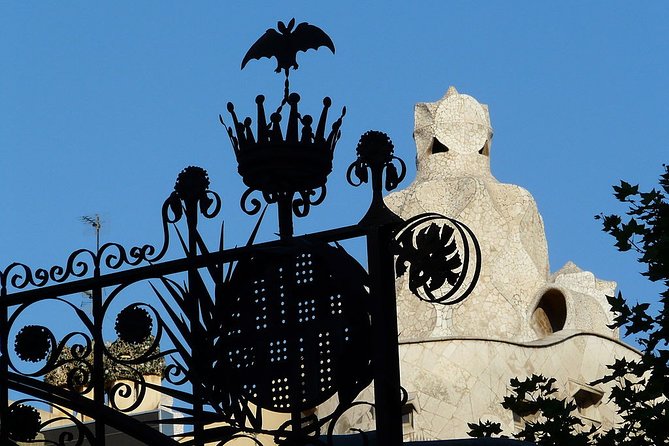
Passeig de Gràcia was the showcase avenue of the 19th and early 20th century. The Catalan bourgeoisie built or remodeled homes here, competing through architecture in much the same way wealthy families elsewhere competed through clothing, furniture, and social events.
The guide spends about 15 minutes explaining the avenue’s role in the old Eixample. You will see how broad streets and formal façades created a very different setting from the narrow lanes of the old city.
This is also a good place to keep your eyes above street level. Shops and traffic occupy much of the modern view, but the important work is often around balconies, windows, rooflines, and carved stone. A guide can help you look in the right places before you continue.
The route is not an interior museum tour. Most of the value comes from seeing the buildings in their street setting and learning how they relate to one another. If you prefer long indoor visits with extensive time inside each house, this walk may feel too fast. If you want a clear introduction before visiting specific interiors, it works well.
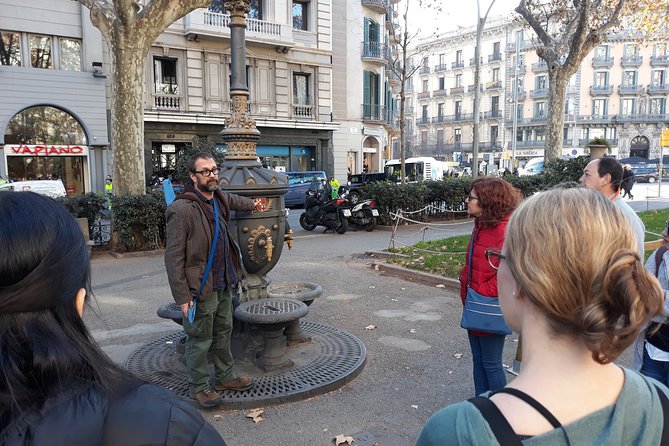
The Bancs Fanals, Barcelona’s decorative street furniture
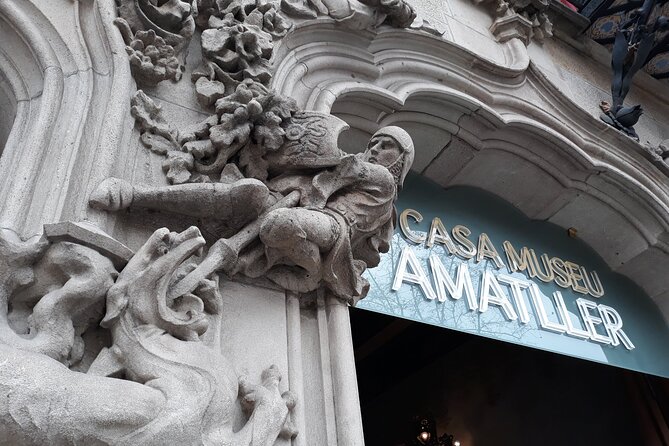
One of the shorter stops is the Bancs Fanals, the elaborate benches and lampposts that decorate Passeig de Gràcia. The set has been part of the avenue for more than a century and is packed with small symbols and decorative details.
This is exactly the sort of feature you might walk past without noticing. The stop takes about 10 minutes, giving you time to examine the forms instead of treating the street furniture as background scenery.
I especially like the inclusion of this stop because it shows that Barcelona’s Modernism was not confined to famous houses. The style reached into public spaces, lighting, benches, paving, and other parts of daily life. It also breaks up the larger architectural explanations with something small and tactile.
The practical catch is that this is a street-based tour. You will be standing and walking while looking upward, so comfortable shoes and attention to traffic are sensible. The supplied information does not give a distance in miles, but the total duration and relaxed pace suggest a manageable city walk rather than a rushed march.
More Private Architecture Tours in Spain
- Sagrada Familia & Gaudi Guided Tour Private or Small Groups
★ 4.7 · 106 reviews - Private Barcelona Modernism and Gaudí Walking Tour
★ 4.7 · 54 reviews - Park Guell and Sagrada Familia, Gaudí’s Masterpieces Private Tour
★ 5.0 · 46 reviews - Wonders of Gaudi: Park Guell & Sagrada Familia Private Tour
★ 5.0 · 46 reviews
Casa Lleó i Morera and the Manzana de la Discordia
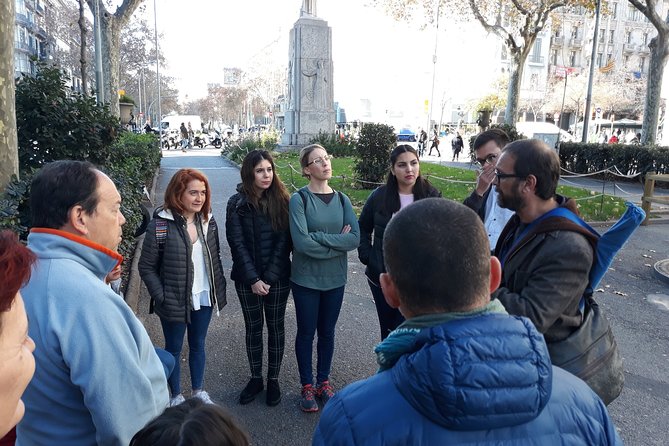
Casa Lleó i Morera is part of the famous Manzana de la Discordia, a block where several major Modernist buildings compete for attention. The house was designed by Domènech i Montaner at the beginning of the 20th century.
The façade contains clues about both the architect and the owner. The guide uses those details to discuss the house’s symbols, decoration, and the ideas behind its design. You are not simply told that the building is ornate. You are encouraged to ask what the ornament is saying and why it appears where it does.
This is one of the places where a private guide earns the fee. The façade can look like an overwhelming wall of stone, balconies, and decoration. A clear explanation gives you a way to break it into sections and understand how the parts work together.
The stop is also a useful counterpoint to Gaudí. Barcelona’s Modernism had several important architects, and Domènech i Montaner’s work deserves attention in its own right. If you arrive in the city thinking only about Gaudí, this building helps widen your view.
Casa Amatller and the chocolate-making family behind it
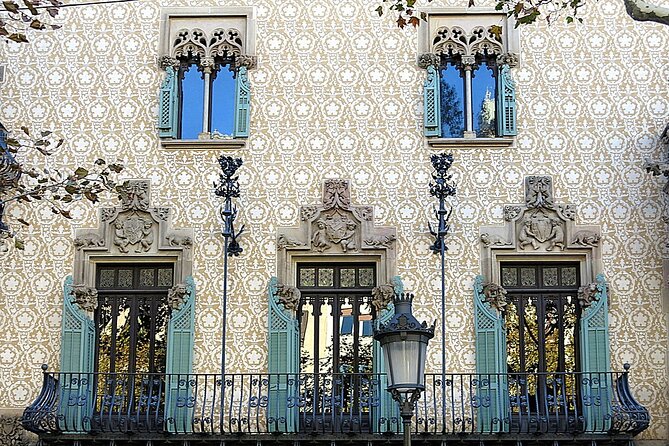
Casa Amatller, designed by Puig i Cadafalch, was owned by a family of chocolate producers. That connection gives the stop an unusually personal angle. Instead of discussing architecture in the abstract, the guide links the house to the Amatller family, the chocolate trade, and the symbols placed on the façade.
Look for the details that refer to the owners and their work. The building’s decoration is not random. Its forms and images help tell the story of a prosperous family presenting its identity in a highly public way.
You may also be able to enter the inner courtyard free of charge to see the staircase, old elevator, and refined sculptures. The information provided does not promise a full interior visit, so treat this as a possible extra rather than the main reason to book. Conditions may affect access on the day.
This stop is particularly helpful if you like architecture tied to everyday life. Chocolate, family business, social status, and design all meet in one building. It makes the Eixample feel less like a collection of monuments and more like a neighborhood shaped by people with money, taste, and something to prove.
Casa Malagrida and the story of tobacco wealth
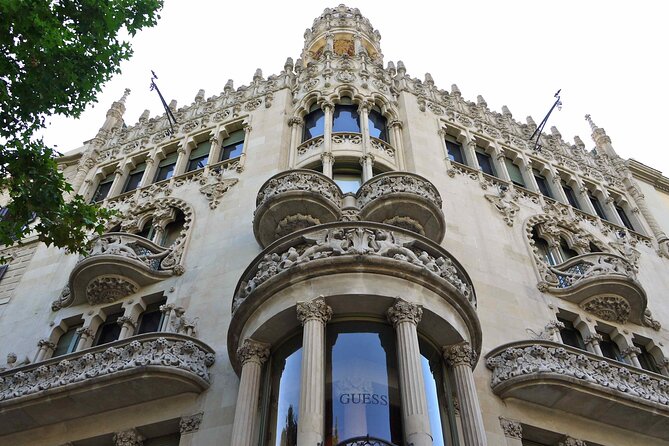
Casa Malagrida is described as the first Modernist bourgeois house on the route. It belonged to Señor Malagrida, a wealthy tobacco industrialist whose life connected Argentina and Spain.
The façade becomes a way to discuss his biography. Its decoration reflects the owner’s background and the movement of money and ideas between countries. This is a smaller stop than the Sagrada Família, but it adds an important layer to the walk: Barcelona’s new wealth did not come from one source, and the city’s grand houses belonged to families with international connections.
I find this kind of stop valuable because it gives you a pause from the most famous names. You see how the Modernist style filtered into the homes of successful business owners, not only major public monuments.
The supplied route information lists Casa Malagrida among the stops, though the order can vary in the written description. Your guide will direct the walk in the practical order used on the day.
Finishing at the Sagrada Família
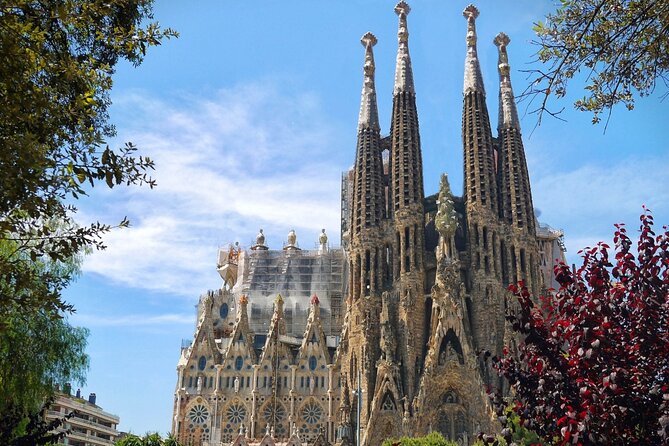
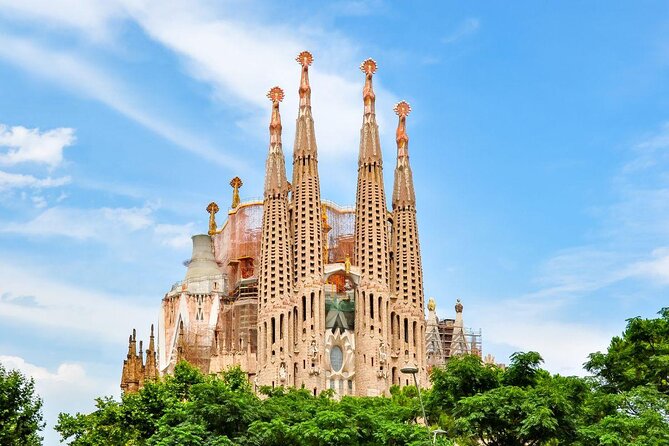
The Sagrada Família is the grand finale. The tour spends about 30 minutes examining its exterior and explaining its long, surprising construction story.
You will look at its different façades from outside and hear about the building’s symbols, design choices, and unfinished state. This is not a ticketed interior visit. The tour ends in front of the basilica, so plan a separate booking if you want to enter.
Ending here makes sense. After seeing smaller houses and public details along Passeig de Gràcia, you arrive at Gaudí’s largest and most celebrated work. The earlier stops also help you approach it with better questions. Instead of seeing only towers and elaborate stonework, you can consider how Gaudí pushed Barcelona’s Modernist ideas into a far more ambitious religious structure.
Allow time after the tour to look around on your own. The guide’s 30-minute exterior explanation gives you a foundation, but the basilica is too large to absorb in a single glance. Since the walk finishes here, you can continue with your own plans without returning to the starting point.
What Patrick adds to the experience
Patrick is the named guide associated with this tour, and the strongest praise centers on his way of joining architecture with political, social, and architectural history. That combination matters in Barcelona, where buildings often carry more than one story at once.
The experience is not presented as a technical lecture. The pace is relaxed, with room for questions and discussion. That makes it a good fit if you want to understand why a building looks the way it does rather than simply collect names and dates.
Patrick has also adapted the walk to the needs of two seniors. That does not guarantee a particular pace for every booking, but it does suggest that you can raise mobility or timing concerns when arranging your private tour.
I would book this early in a Barcelona visit. The explanations can help you notice details later, especially if you visit other Gaudí houses or return to the Eixample on your own.
Is $66.08 per person good value?
At $66.08 per person, the value depends on the size of your group. Because this is a private tour, the price buys personal attention rather than a standard group presentation. For a couple or small family, that can be a fair trade if you care about questions, flexible pacing, and a guide who can adapt the explanation.
The route lasts about two and a half hours and includes several major exterior sights without requiring admission tickets. You are paying for the guide’s time, interpretation, and the convenience of a one-way route from Plaça de Catalunya to the Sagrada Família.
I would not choose it if your main goal is entering the major buildings. The Sagrada Família is exterior-only, and the tour’s core activity is walking and looking from public streets. But if you want a clear introduction to Barcelona Modernism before paying for separate interior visits, the price is easier to justify.
Group discounts are offered, and the tour is available as a mobile ticket. Pickup is also listed as an option, though the stated meeting point remains the Apple store on Passeig de Gràcia. Confirm the exact pickup arrangement when booking.
Who should book this private walk?
I recommend it for a first visit to Barcelona, especially if you want the city’s architecture explained in plain terms. It suits couples, families, and small private groups who prefer discussion over a fixed group script.
It is also a good choice for anyone interested in the people behind the façades. The Amatller chocolate connection, Malagrida’s tobacco business, and the social world of Passeig de Gràcia give the route more character than a simple Gaudí checklist.
Older visitors may appreciate the relaxed approach and the possibility of adapting the pace. Still, it is a walking tour, so you should be comfortable spending about two and a half hours moving through the city.
Book something else if you want a full interior experience, a short transfer-based tour, or a highly specialized architectural seminar. This walk is strongest as an accessible introduction that helps you make sense of what you see afterward.
Practical details before you go
The tour is offered in English and is available daily during the listed operating period, from 8:00 AM to 5:00 PM. Confirmation is provided at booking, and the meeting point is near public transportation.
Most people can participate. Since the tour requires good weather, poor conditions may lead to a new date or a full refund. You can cancel for a full refund up to 24 hours before the start time, but changes or cancellations inside that window are not accepted.
The route starts at Plaça de Catalunya and ends at the Sagrada Família. That one-way design is useful: you finish at one of Barcelona’s main sights instead of having to retrace your steps across the city.
Should you book Gaudí and Modernism?
Book it if you want Barcelona’s architecture tied to its families, politics, businesses, and urban growth. The private format, relaxed pace, and Patrick’s ability to connect design with history are the main reasons to choose it.
Skip it if you mainly want interior admission or a quick photo tour. For everyone else, this is a sensible first-day introduction to the Eixample, with enough detail to make the rest of your Barcelona sightseeing more rewarding.
FAQ
Where does the tour begin?
The tour begins at the Apple store on Passeig de Gràcia, 1, in the Eixample near Plaça de Catalunya.
Where does the tour end?
The tour ends in front of the Sagrada Família in Barcelona’s Eixample district.
How long does the tour last?
The walking tour lasts approximately 2 hours and 30 minutes.
Is the tour private?
Yes. Only your group participates in the private tour or activity.
Is the tour offered in English?
Yes. English is the listed tour language.
Does the tour include entry to the Sagrada Família?
No interior entry is stated. The Sagrada Família is viewed from outside for about 30 minutes, and the tour ends in front of the basilica.
What happens if the weather is bad?
The experience requires good weather. If it is canceled because of poor weather, you will be offered another date or a full refund.
More Walking Tours in Spain
- Gaudi’s Modernist Legacy: Small Group Walking Tour
★ 4.5 · 43 reviews - The Story of Gaudi and Modernism Private Walking Tour
★ 5.0 · 36 reviews - Barcelona: Evening Walking Tour in the Gaudi Area with Tapas
★ 3.9 · 35 reviews - Life of Gaudi and Architectural | Walking Tour | 2h
★ 5.0 · 35 reviews
More Walking Tours in Barcelona
- Ramblas, Old Town, Gothic and Gaudi Architecture Walking Tour
★ 5.0 · 723 reviews - Barcelona: Ramblas, Old Town & Gaudí Houses Walking Tour
★ 4.9 · 239 reviews - Barcelona Architecture Walking Tour With Casa Batlló Upgrade
★ 5.0 · 137 reviews - Night Tapas Walking Tour in Barcelona Modernist Area with Small Group and Dinner
★ 4.5 · 56 reviews
New to the itinerary around Barcelona
- Roman & Gotic & Gaudi in Barcelona: private walking tour★ 4.5 · 2 reviews
- Visit to the Modernist houses of the Americans★ 5.0 · 2 reviews
- Barcelona Gaudi Tour: Sagrada Familia, Casa Batllo & Casa Mila★ 5.0 · 4 reviews
- Barcelona Street Escape: Gaudi and the Hidden Treasure★ 5.0 · 17 reviews
- Gaudí & Catalan Modernism Private Walking Tour★ 5.0 · 11 reviews
- Self-Guided Audio Tour-The Surrealist Barcelona of Dalí and Gaudí★ 3.5 · 8 reviews
- Gaudí and Barcelona Legends – Private Tour★ 5.0 · 4 reviews
- Gaudi’s Casa Batlló and La Pedrera with Chocolate Tasting★ 5.0 · 5 reviews
Gaudí Tours, compared.
Park Güell and Gaudí House Museum Entry Ticket
Read our review →
Gaudi’s Casa Vicens Skip-the-Line Entrance Ticket
Read our review →
Gaudí’s Park Güell Tour with Fast-Track Ticket
Read our review →
Sagrada Familia & Gaudi Tour Private or Small Group with Tickets
Read our review →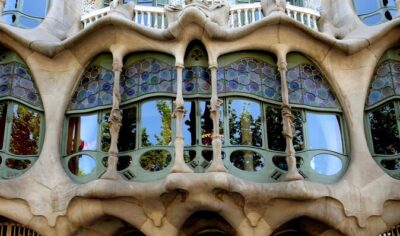
Complete Gaudi Tour: Casa Batllo, Park Guell & Sagrada Familia
Read our review →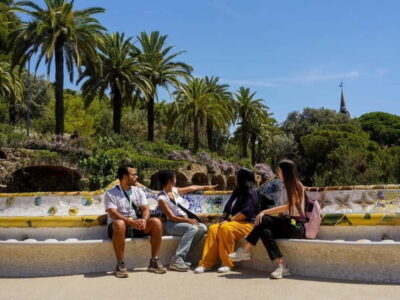
Park Güell: Guided Tour with Optional Gaudí Experience Entry
Read our review →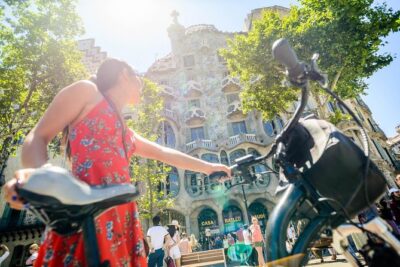
Barcelona e-Bike Tour: Gaudí & Old Town Small Group
Read our review →