Review · BARCELONA
Gaudí and Barcelona Legends Walking Tour
Barcelona’s most famous buildings make far more sense when you stop treating them as pretty façades and start reading their details. This walk links Casa Milà, Casa Batlló, and Casa Amatller with stories about Gaudí, rival architects, artists, and the city itself.
I like the focus on small groups and the way the route moves from Passeig de Gràcia into El Born, giving you both grand Eixample architecture and an older neighborhood. I also like that guides such as Christian, Michael, and Chris use questions, stories, and cultural context rather than simply reciting dates.
The main caution is time. Two hours is enough for an excellent introduction, but not for entering the major buildings or seeing every detail at leisure. Admission fees are separate, and the advertised group size needs checking because the tour is described as limited to eight in one place and up to 15 in another.
Key points at a glance
- Casa Milà begins the architectural story: Learn why Gaudí’s final civic building looks so unlike a conventional apartment block.
- Passeig de Gràcia becomes part of the tour: Pavement, lamps, façades, and street design all receive attention.
- The Block of Discord rewards a slow look: Casa Batlló, Casa Amatller, and Casa Morera show how different Modernisme could be.
- Els 4 Gats connects architecture with art: Picasso and Gaudí are part of the café’s story.
- El Born adds legends and local atmosphere: The final 30 minutes shift from grand avenues to an older city district.
- No attraction entry is included: You see the exteriors and glimpse the Palace of Catalan Music lobby, but paid interiors require another ticket.
Why this two-hour walk works as a Barcelona introduction
This is a good orientation walk for your first day in Barcelona, especially if Gaudí is high on your list but you do not yet know how his work fits into the city’s wider Modernisme movement. The route is not limited to one architect. It places Gaudí beside Lluís Domènech i Montaner and other designers, which gives you a more accurate view of Barcelona’s early modern architecture.
I like that the tour starts in Eixample and finishes in Ciutat Vella. Eixample gives you broad streets, grand façades, and the ordered city built beyond the old walls. El Born feels older and more irregular. In two hours, you get a useful sense of how Barcelona changed and expanded.
The price is $46.85 per person. That is reasonable if you want a guide to interpret buildings you might otherwise pass without noticing. It is less appealing if you expect admission to Casa Batlló, Casa Milà, or the Palace of Catalan Music, because those tickets are not included. Think of this as a guided introduction from the street, not a full architecture museum visit.
The pace is likely steady. You will walk between several stops, pause for short explanations, and spend about 30 minutes in El Born. A moderate level of fitness is requested, and practical shoes will make the experience easier.
More Walking Tours in Barcelona
- Ramblas, Old Town, Gothic and Gaudi Architecture Walking Tour
★ 5.0 · 723 reviews - Barcelona 1.5h Private Old Town, Gothic & Ramblas Walking Tour
★ 5.0 · 318 reviews - Barcelona: Ramblas, Old Town & Gaudí Houses Walking Tour
★ 4.9 · 239 reviews
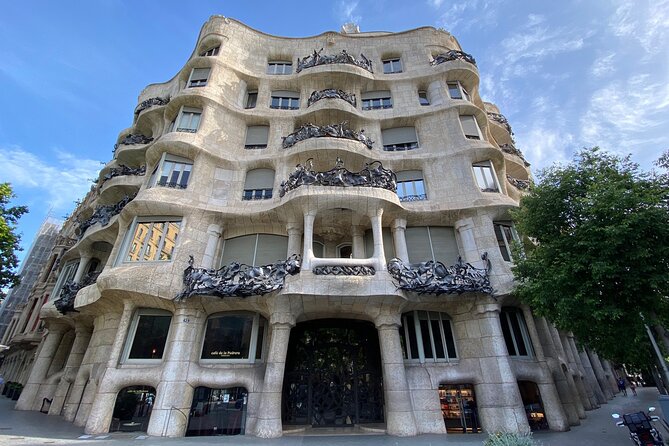
Casa Milà starts with Gaudí’s last civic building
The meeting point is at Passeig de Gràcia 90, beside the upper part of the boulevard. The first stop is Casa Milà, better known as La Pedrera, where you spend about 10 minutes learning about the façade and its place in Gaudí’s career.
The useful point here is that Casa Milà was Gaudí’s last civic building before he devoted the rest of his working life to the Sagrada Família. That makes the stop more than a quick photo pause. You are looking at a turning point in his career.
From the street, your guide can direct your attention to the building’s unusual forms and explain how its exterior differs from a standard apartment block. You will not enter, and the admission fee is not included. If you want the roof, courtyards, or interior rooms, plan a separate visit.
Ten minutes is enough for an introduction, but not for a close study. I would treat this stop as a visual lesson that prepares you for the next stretch along Passeig de Gràcia.
Passeig de Gràcia reveals Barcelona’s design details
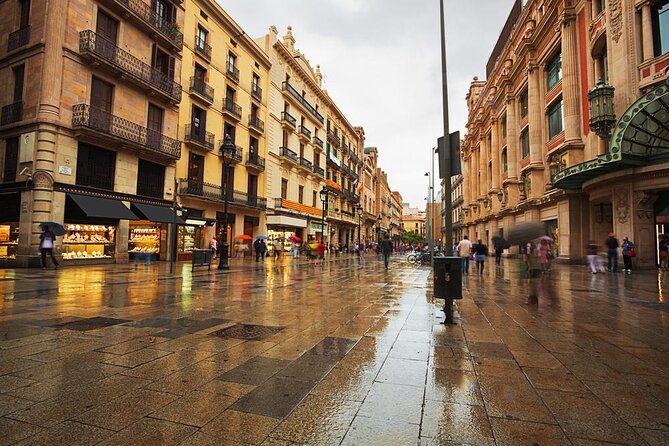
The route continues down Passeig de Gràcia, one of the city’s grand avenues. The guide does not focus only on famous façades. Street paving and lamp posts are also part of the story, which is a smart choice because Barcelona’s Modernisme appears in small public details as well as in headline buildings.
This section helps you understand why the avenue feels so carefully designed. You are not simply moving from one Gaudí address to another. You are seeing an urban setting where architecture, street furniture, and public space were meant to work together.
The boulevard can be busy, and the tour requires attention while walking and listening. That is normal for a city walk, but it means you should not expect a quiet, museum-like setting. Your reward is a more direct sense of Barcelona as a living city rather than a collection of isolated monuments.
Casa Batlló and Casa Amatller show two different ideas of beauty
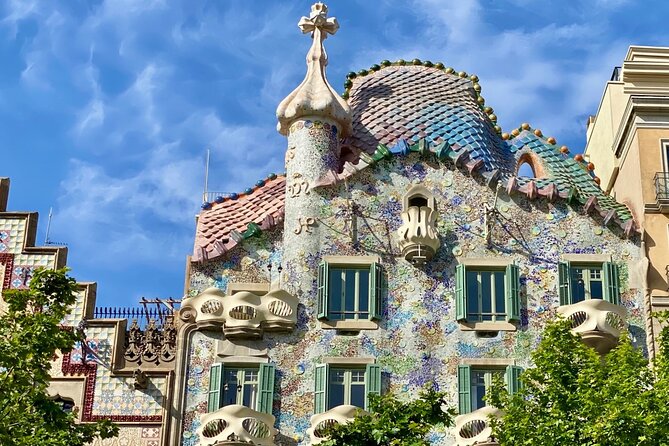
Casa Batlló receives another 10-minute stop. The guide explains the exterior and Gaudí’s inventive approach to the building. From the street, the façade gives you plenty to examine, and a guide can help you notice details that are easy to miss when the pavement is crowded.
Again, entrance is not included. Casa Batlló has a paid interior experience, so this tour works well if you want a first look before deciding if a separate visit is worth your time. If you already know you want to go inside, book that independently and allow extra time beyond this walk.
Next comes Casa Amatller, also scheduled for about 10 minutes. This is one of the most useful stops because it prevents the tour from turning into a Gaudí-only outing. Casa Amatller has its own Modernisme identity, and many people walk past it while concentrating on Casa Batlló.
The guide draws attention to its history and architecture, helping you compare the two buildings rather than lumping them together. That comparison is one of the best reasons to take this tour. Barcelona’s famous avenue is not decorated by one repeated style. Different architects made very different choices within the same broad period.
More Walking Tours in Spain
- Barcelona Architecture Walking Tour With Casa Batlló Upgrade
★ 5.0 · 137 reviews - Treasures of Barcelona: Private Gaudi Walking Tour
★ 5.0 · 128 reviews - Night Tapas Walking Tour in Barcelona Modernist Area with Small Group and Dinner
★ 4.5 · 56 reviews - Private Barcelona Modernism and Gaudí Walking Tour
★ 4.7 · 54 reviews
The Block of Discord puts architectural rivalry on display
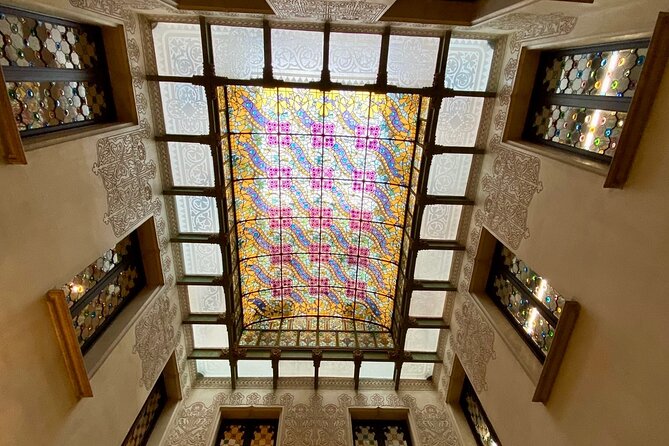
The group then examines La Mansana de la Discordia, or the Block of Discord, where several Modernisme buildings sit close together. The name points to the visual clash between their designs, and the short stop makes the idea easy to grasp.
Casa Morera, designed by Lluís Domènech i Montaner, receives special attention. Its decorative work can look like a wall of flowers at first glance, but the guide points out a surprising detail hidden within the decoration. The stop lasts only about five minutes, so you will need to look closely and listen carefully.
This is a good example of why a guide adds value. Without context, you may see a colorful façade. With direction, you begin to compare materials, ornament, and design choices among the buildings around you.
The drawback is that the stop is brief. If you enjoy architectural details and photography, you may want to return later when you can study the façades at your own speed.
Plaça Catalunya marks the shift from new town to old town
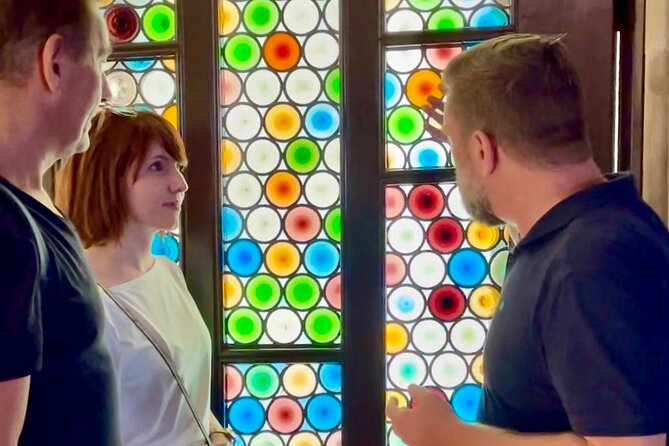
The walk passes Plaça Catalunya, the broad point where Eixample meets the old city. It is not listed as a long formal stop, but its location matters. The square helps you understand the transition in Barcelona’s layout.
From here, the route moves away from the broad avenues and toward older streets. That change gives the tour a natural shape. You begin with planned expansion and Modernisme, then move toward places tied to artists, music, legends, and the historic center.
You will not get a full urban-planning lecture in this short tour, but even a brief explanation here can help you place the rest of the walk on a mental map.
Els 4 Gats links Barcelona to its artists
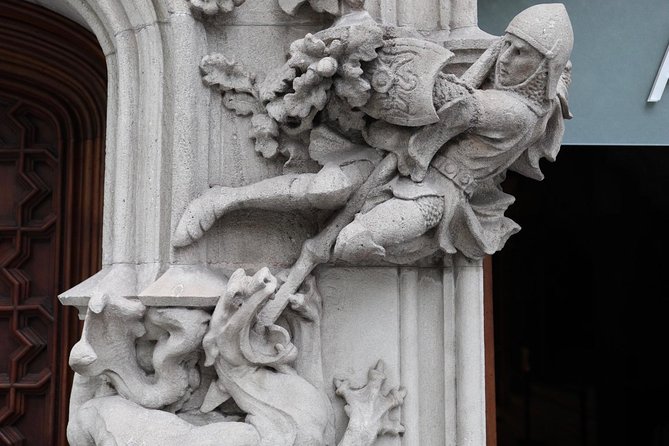
Els 4 Gats is a modernist art café with a strong connection to Barcelona’s artistic life. The stop lasts about 10 minutes and is free to view from the route.
The café mattered to Barcelona in much the same way that art cafés mattered in Paris. Picasso came here, and Gaudí did too. That connection gives the tour a welcome change of subject. You are no longer looking only at façades. You are considering the people, ideas, and social spaces that helped shape the city’s culture.
I especially like this part for visitors who want more than a list of buildings. It adds a human side to Modernisme. The tour’s guides are praised for explaining culture as well as architecture, and that balance appears to be one of its strongest features.
The stop is short, so you should not expect an extended café visit or an art-history lecture. It is a compact introduction to an important meeting place.
The Palace of Catalan Music closes the architecture portion
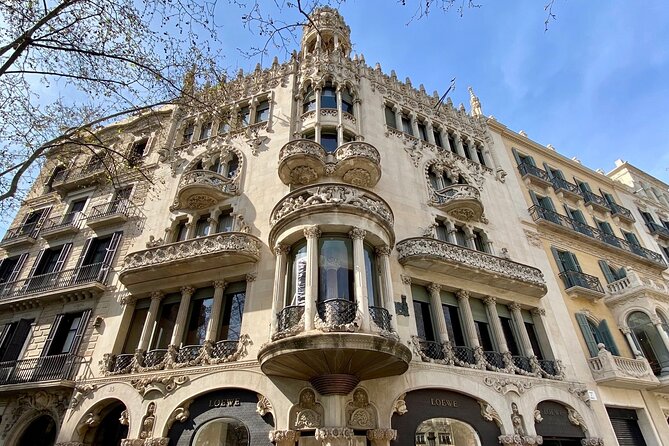
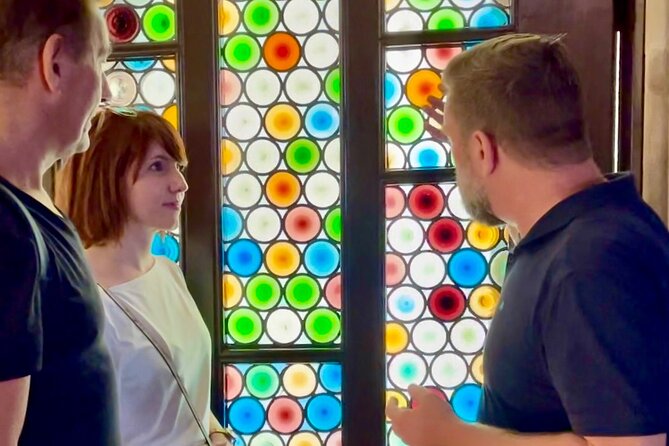
The final architectural stop is the Palace of Catalan Music, where the guide explains the richly decorated exterior and offers a glimpse into the beautiful lobby. The scheduled time is about 10 minutes.
This concert hall is another work associated with Modernisme, and it helps broaden your understanding of the period beyond Gaudí. The exterior has many details, so listen for the guide’s suggestions about where to look. The lobby glimpse is useful, but entrance to the building is not included.
You should not confuse this brief look with a concert-hall tour. If the interior is a priority, you will need to arrange a separate paid visit or performance. Still, ending near the Palace of Catalan Music gives the walk a clear destination and places you near the next part of the route.
The stated end point is C/ Palau de la Música, 4-6, in Ciutat Vella. That is practical if you plan to continue exploring the old center afterward.
El Born brings the legends into the streets
The final 30 minutes are spent in El Born, where the guide connects the neighborhood to the legends introduced during the tour. This is the longest single section of the walk, and it changes the mood from landmark viewing to local storytelling.
El Born is a useful finish because its streets offer a different setting from Passeig de Gràcia. You can consider how Barcelona’s stories survive in particular places rather than treating legends as abstract tales.
The word legends suggests a mix of local tradition, historical memory, and stories attached to the neighborhood. The available details do not specify each legend, so I would not book this expecting a fixed list of famous ghost stories or dramatic tales. What you can expect is a guided look at references in the neighborhood and their connection to the earlier route.
This portion may be the most enjoyable for you if you prefer atmosphere and conversation to a rapid sequence of monuments. It is also where guides such as Christian, Michael, and Chris can bring a more personal tone to the walk. Direct feedback describes their style as casual, involving, and similar to walking with a friend, while still providing strong background on Barcelona and its architects.
The guides and group size matter
The experience is offered in English. Guides named in the available material include Christian, Michael, and Chris. Their approach focuses on stories, questions, architecture, history, and Barcelona’s culture. One family with teenagers found the pace and content useful, which suggests the tour can work for mixed-age groups when the guide keeps the explanations lively.
The tour description says it is limited to eight for a personal experience, while the additional information gives a maximum of 15. That difference is worth clarifying before you pay. Eight people would feel intimate and make it easier to ask questions. Fifteen is still a manageable walking group, but it may feel less personal at busy stops.
The experience has a five-star rating from 34 reviews, with 100 percent recommending it. The strongest praise centers on the guides’ ability to explain architecture, involve the group, maintain a good pace, and make Barcelona look different afterward. Those are meaningful strengths for a short city walk.
Practical details before you book
The tour lasts about two hours and begins at Passeig de Gràcia 90. It ends at the Palace of Catalan Music. The route is near public transportation, and service animals are allowed.
You receive confirmation when booking, and free cancellation is available up to 24 hours before the start time. Cancellations or changes made less than 24 hours ahead are not refunded or accepted. The experience also requires a minimum number of participants, so an operator cancellation could lead to another date, another experience, or a full refund.
Wear comfortable shoes and keep your attention on the route. The walk includes several pauses but does not include attraction admissions. If you want to enter Casa Milà, Casa Batlló, or the Palace of Catalan Music, budget extra money and time.
Who should book this Barcelona walk?
I would choose this tour if you want a clear introduction to Gaudí and Modernisme without spending half a day inside one attraction. It suits first-time visitors, families with older children or teenagers, and anyone who likes architecture explained in plain language.
It is also a good fit if you want both Eixample and El Born in one short outing. The mix of famous buildings, an art café, a concert hall, and local legends gives you more variety than a route devoted only to Gaudí.
I would hesitate if you want interior access, long photography stops, or a detailed architectural study of every building. The pace is designed for coverage and context. At $46.85, the value comes from the guide’s interpretation, not from included tickets.
Should you book it?
Book this walk if you want to see Barcelona’s Modernisme as part of a wider story about architects, artists, public design, and old-city legends. The guides’ personal style, the short walking route, and the contrast between Passeig de Gràcia and El Born make it a useful first look.
Skip it if you already know the buildings well or plan to spend your time inside Casa Batlló and Casa Milà. For everyone else, it offers a sensible two-hour foundation, provided you confirm the expected group size and remember that all attraction entry fees are separate.
FAQ
How long does the Gaudí and Barcelona Legends Walking Tour last?
The tour lasts approximately two hours.
What is the price of the tour?
The listed price is $46.85 per person.
Is the tour offered in English?
Yes. The tour is offered in English.
Where does the tour begin?
The meeting point is Pg. de Gràcia, 90, in Barcelona’s L’Eixample district.
Where does the tour end?
The tour ends at the Palace of Catalan Music, C/ Palau de la Música, 4-6, in Ciutat Vella.
Are attraction entrance fees included?
No. Entrance fees to attractions are not included.
What buildings and neighborhoods are covered?
The route includes Casa Milà, Passeig de Gràcia, Casa Batlló, Casa Amatller, the Block of Discord, Plaça Catalunya, Els 4 Gats, the Palace of Catalan Music, and El Born.
Can I cancel for a full refund?
Yes. You can cancel up to 24 hours before the experience start time for a full refund.
More Gaudí Tours in Barcelona
- Barcelona: Park Güell and Gaudí House Museum Entry Ticket
★ 4.5 · 6,326 reviews - Barcelona: Gaudi’s Casa Vicens Skip-the-Line Entrance Ticket
★ 4.7 · 4,541 reviews - Barcelona: Gaudí’s Park Güell Tour with Fast-Track Ticket
★ 4.8 · 4,512 reviews - Sagrada Familia & Gaudi Tour Private or Small Group with Tickets
★ 4.5 · 1,188 reviews
New to the itinerary around Barcelona
- Roman & Gotic & Gaudi in Barcelona: private walking tour★ 4.5 · 2 reviews
- Barcelona Gaudi Tour: Sagrada Familia, Casa Batllo & Casa Mila★ 5.0 · 4 reviews
- Visit to the Modernist houses of the Americans★ 5.0 · 2 reviews
- Barcelona Street Escape: Gaudi and the Hidden Treasure★ 5.0 · 17 reviews
- Gaudí & Catalan Modernism Private Walking Tour★ 5.0 · 11 reviews
- Self-Guided Audio Tour-The Surrealist Barcelona of Dalí and Gaudí★ 3.5 · 8 reviews
- Gaudí and Barcelona Legends – Private Tour★ 5.0 · 4 reviews
- Gaudi’s Casa Batlló and La Pedrera with Chocolate Tasting★ 5.0 · 5 reviews
Gaudí Tours, compared.
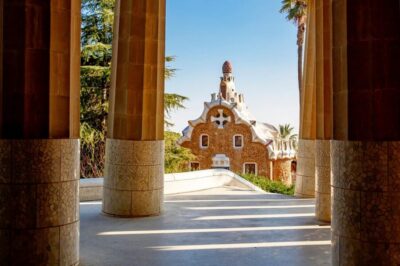
Park Güell and Gaudí House Museum Entry Ticket
Read our review →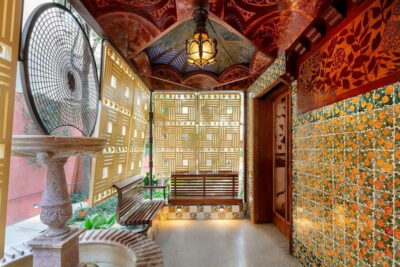
Gaudi’s Casa Vicens Skip-the-Line Entrance Ticket
Read our review →
Gaudí’s Park Güell Tour with Fast-Track Ticket
Read our review →
Sagrada Familia & Gaudi Tour Private or Small Group with Tickets
Read our review →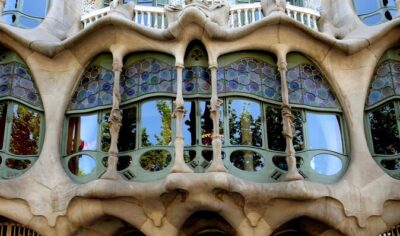
Complete Gaudi Tour: Casa Batllo, Park Guell & Sagrada Familia
Read our review →
Park Güell: Guided Tour with Optional Gaudí Experience Entry
Read our review →
Barcelona e-Bike Tour: Gaudí & Old Town Small Group
Read our review →