Review · BARCELONA
Ramblas, Old Town, Gothic and Gaudi Architecture Walking Tour
Barcelona’s story comes into focus when you walk from Roman ruins and medieval lanes to Gaudí’s dragon-like façades. This tour links the Gothic Quarter with Passeig de Gracia, so you see how the city grew from an old walled center into a grand modern boulevard.
I like the small maximum of 15 people, which makes it easier to hear the guide and ask questions. I also like the route’s useful shape: you begin in the oldest part of Barcelona and finish near Casa Batlló and La Pedrera, right where you may want to continue exploring.
The main drawback is simple: you walk a lot in just over two hours, and the tour does not include entry to any monument. You also pay €1 for a radio headset and need a metro ticket for a short ride.
Key points before you book
- Roman ruins and medieval lanes: Start in Barcelona’s oldest quarter, with churches, courtyards, alleys, and traces of the Roman city.
- Gaudí from the outside: See Casa Batlló and La Pedrera without paying for interior admission.
- A useful first-day route: Move from the Old Town to Passeig de Gracia and finish near major modernist sights.
- Small group format: The tour has a maximum of 15 people, a good size for questions and easier movement through narrow streets.
- Guides with personality: Guides including Yannis, Filipa, Christian, Anna, Henrietta, and Tyler are praised for lively explanations, local insight, and good pacing.
- Bring a little extra: Monument tickets are not included, and you need to cover the headset rental and short metro ride.
From Roman Barcelona to the medieval Gothic Quarter
The tour begins at Foot Locker on Plaça de Catalunya, a practical meeting point between the old center and the newer districts. From here, you head into the Gothic Quarter, the oldest part of the city.
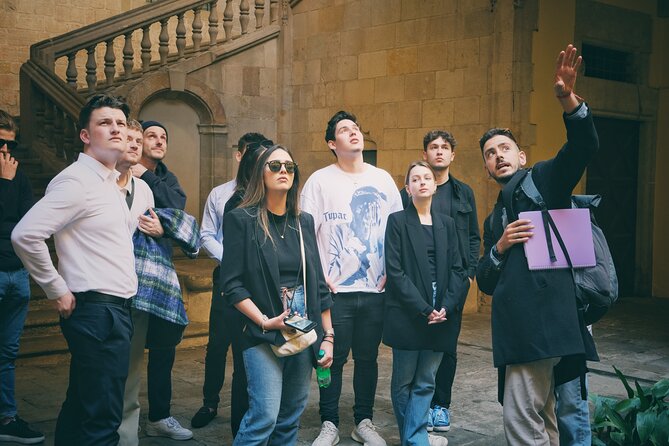
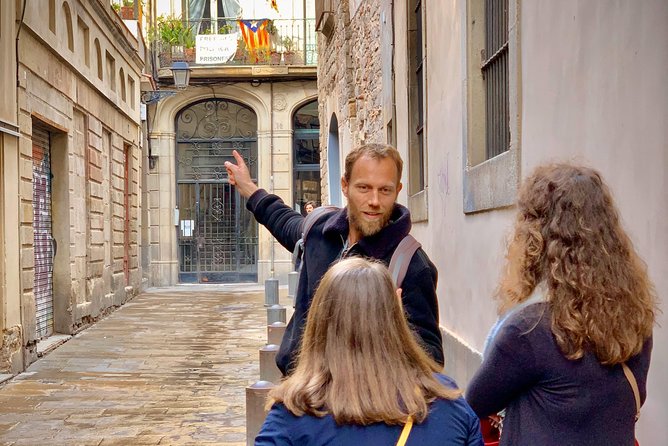
This is the most atmospheric part of the walk. You pass through narrow streets, small squares, courtyards, medieval churches, and Roman remains. The layout can feel confusing if you explore alone, so a guide is useful here. The point is not simply to look at old stone. It is to understand how Barcelona’s earliest city fit together and how later buildings grew around it.
Allow about 30 minutes for the Gothic Quarter. That sounds short, but the route continues through several nearby sights, and the guide keeps the pace moving. You will want comfortable shoes. Some streets are uneven, and the quarter is not a place where you can keep a steady stride.
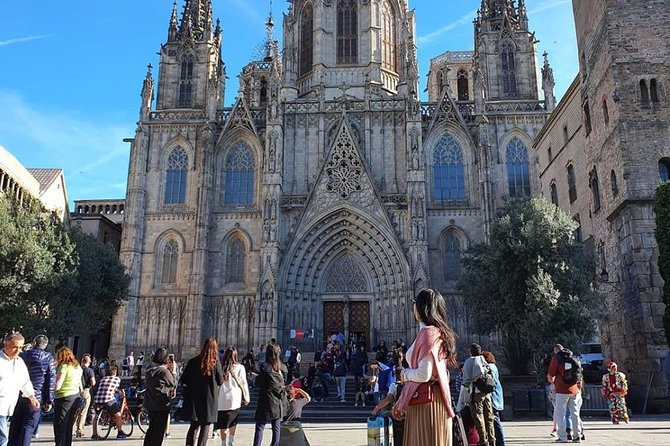
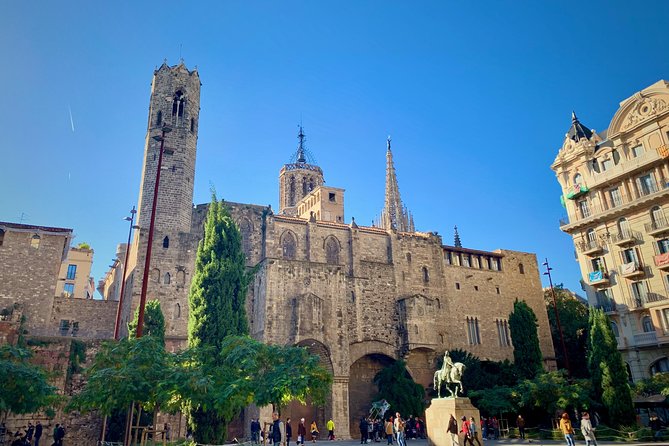
The Barcelona Cathedral is part of this section. Its medieval Gothic design gives you a strong reference point for the quarter, even though entry is not included. The tour focuses on the exterior and surrounding streets, so plan a separate visit if you want to see the inside.
I find this opening valuable because it gives the rest of Barcelona some context. After seeing the old center, the broad avenues and bold façades later in the tour feel like part of a long urban story rather than a collection of unrelated sights.
More Walking Tours in Barcelona
- Barcelona 1.5h Private Old Town, Gothic & Ramblas Walking Tour
★ 5.0 · 318 reviews - Barcelona: Ramblas, Old Town & Gaudí Houses Walking Tour
★ 4.9 · 239 reviews - Barcelona Architecture Walking Tour With Casa Batlló Upgrade
★ 5.0 · 137 reviews
Las Ramblas, Placa Reial, and the city’s public squares
The stop at Las Ramblas is brief, listed at about two minutes, but it places you beside Barcelona’s best-known street. You see the setting of markets, bars, and restaurants, then continue toward smaller and more characterful spaces in the Old Town.
Do not expect a long stroll down Las Ramblas or time to browse every stall. This is more of a quick orientation point. It helps you locate one of the city’s main public corridors without using up too much of the walking tour.
Placa Sant Felip Neri offers a sharp change of mood. This tucked-away square sits in the Old Town and feels far removed from the noise of the main streets. You have about five minutes here, enough to take in the space and hear why it matters.
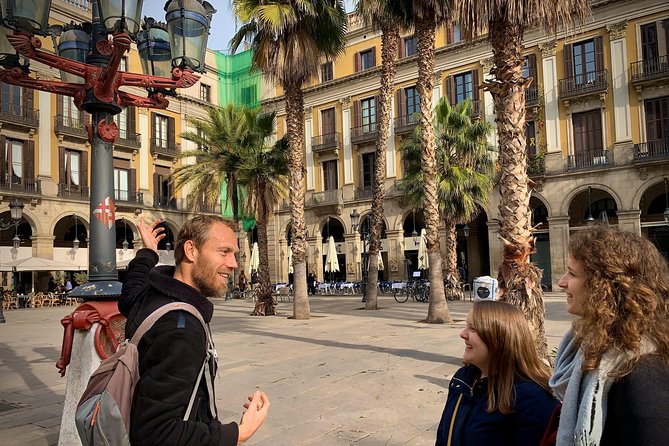
Placa Reial provides another contrast. Its large arcaded shape, palm trees, restaurants, and evening atmosphere show a more open and social side of central Barcelona. Again, the stop is short, so think of it as a guided introduction rather than free time for a meal or drink.
These quick stops work best if you want orientation. If you prefer long periods for photographs or sitting in a square, the schedule may feel brisk. You can always return later, since the tour gives you the locations and basic sense of direction.
Casa Batlló and the strange beauty of Gaudí
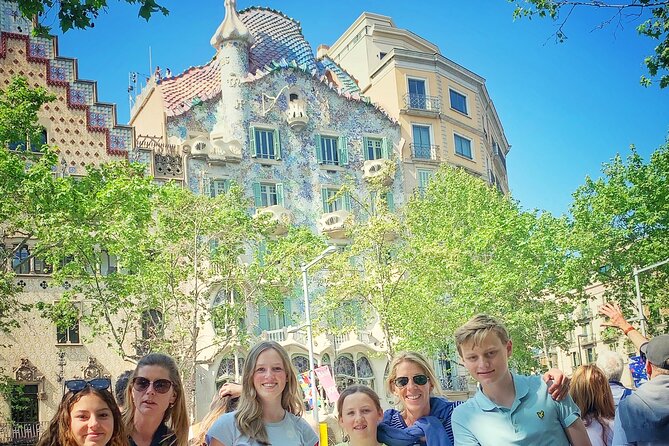
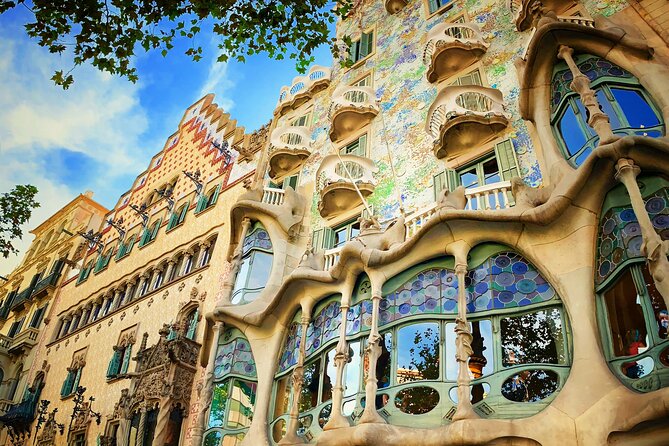
The route then shifts toward Barcelona’s Modernisme architecture. Casa Batlló is the major visual treat. The building’s curved surfaces, bone-like forms, and dragon-like details explain why it is often called the House of Bones or House of Dragons.
The guide views the building from outside. That matters for your budget, since interior admission is not part of the tour, but it also limits the visit. You will learn how to read the façade and spot its unusual shapes, yet you will not see the famous interior rooms, stairway, or roof.
About 10 minutes are set aside for Casa Batlló. That is enough for an explanation and photographs, but not a full architectural study. If Gaudí is your main reason for visiting Barcelona, schedule a separate paid visit to one of his buildings. This walking tour is better at connecting the buildings than replacing an interior tour.
The guide’s storytelling can make a real difference here. Yannis is praised for presenting history with humor, while Filipa is noted for keeping children interested with stories and small surprises. Christian, a Barcelona native according to the tour feedback, is also singled out for making the city and its buildings feel personal.
You should not expect the same guide every time, but the range of names and comments suggests a team with different styles. Some guides focus on historical background, others on anecdotes and local advice. That variety can be a plus, though your exact experience depends on the person leading your departure.
Passeig de Gracia and Barcelona’s modernist showpiece
Passeig de Gracia receives the longest part of the tour, about 45 minutes. This is where the route pays off for anyone interested in architecture.
The avenue is one of Barcelona’s grandest streets, lined with Modernisme homes, decorative tiles, distinctive lampposts, and polished façades. Here you can compare several buildings close together instead of seeing Gaudí in isolation. The guide can point out how different architects worked within the same fashionable district and how decoration extended beyond the buildings themselves.
This section also helps explain the change from old Barcelona to the planned city beyond the medieval center. You move from tight lanes to a broad, formal avenue with large residences and elaborate details. The contrast is one of the tour’s strongest features.
Casa Milà, also called La Pedrera, receives about five minutes. It was Gaudí’s major private home for the Milà family and is known for its mountain-like appearance. The exterior has a rough, rolling quality that contrasts with Casa Batlló’s more playful façade.
As with Casa Batlló, you do not go inside. The tour gives you the building’s setting, name, and architectural meaning, but you will need a separate ticket for the interior. For many people, this is enough on a first orientation walk. You can then decide which building deserves your time and money later.
Casa Amatller sits beside Casa Batlló and adds an important comparison. It was designed by Puig i Cadafalch in a different Modernisme style. Seeing the two buildings together is more useful than viewing either one alone because you can compare their shapes, ornament, and overall mood.
More Walking Tours in Spain
- Treasures of Barcelona: Private Gaudi Walking Tour
★ 5.0 · 128 reviews - Night Tapas Walking Tour in Barcelona Modernist Area with Small Group and Dinner
★ 4.5 · 56 reviews - Private Barcelona Modernism and Gaudí Walking Tour
★ 4.7 · 54 reviews - Gaudi’s Modernist Legacy: Small Group Walking Tour
★ 4.5 · 43 reviews
What the two-hour route feels like
The stated duration is about 2 hours 15 minutes. That is long enough to cover several districts but short enough to fit into a first day in Barcelona. The route does not linger at each monument, so you should view it as a city introduction with architectural interpretation.
The walking is substantial. One person specifically noted that there is a lot of walking, while other feedback describes the pace as comfortable and says breaks were taken when needed. Those points can both be true: the speed may be manageable, but the total distance still adds up.
There is a short metro ride during the tour. Bring a valid transport ticket or get one through the guide. The headset costs €1 per person and is supplied by an outside provider. Carrying a few euros is sensible, although payment by card has also been accepted.
The small group limit of 15 is one of the better practical details. A smaller group is easier to move through tight Gothic streets and makes it more realistic to ask questions. It also helps the guide keep everyone together during the metro section and at busy public squares.
Families can consider this tour, too. Tyler is specifically praised for handling a stroller and for using a route that worked well for an infant. Still, the route includes narrow streets, a metro transfer, and plenty of walking, so parents should judge the child’s stamina carefully.
The guides and the value of local explanation
The advertised price is $35.37 per person. For that amount, you receive a professional English-speaking guide, the Old Town walk, and exterior explanations at the main Gaudí buildings. You do not receive monument admission, the headset, or the short metro fare.
I see this as a fair price for orientation rather than a bargain ticket to Barcelona’s major interiors. The value comes from having someone connect Roman Barcelona, medieval streets, Las Ramblas, Catalan history, and Modernisme in one route. If you would otherwise wander past the buildings without knowing what you are seeing, the guide earns the fee quickly.
The guide quality matters more here than on a simple point-to-point walk. The tour feedback gives strong marks to Yannis, Filipa, Christian, Anna, Henrietta, Tyler, Hanna, Loic, Evan, Melanie, Cristina, and Creasy. Their praised qualities include humor, clear explanations, local background, patience, and useful suggestions for food and safety.
Evan is described as a history teacher who brought the scenes to life. Anna is praised for stories and architecture. Henrietta is noted for a good pace, while Melanie is praised for practical dining and safety advice. You cannot select all of these guides, but these details show what to look for: a guide who explains why the city looks as it does, not one who merely names buildings.
A further plus is that solo visitors can fit in comfortably. The group is mixed, and the format gives you a clear structure without requiring a private tour. The tour has received a 4.9 rating from 723 reviews, with 99 percent recommending it, which points to a consistently strong experience, though no group tour can guarantee a perfect guide match.
Best timing, practical limits, and who should book
I would put this tour near the start of your Barcelona stay. It gives you a map in your head, introduces two major parts of the city, and can make later independent walks more rewarding. Several guide comments also point to its usefulness as a first-day activity.
Book it if you want:
- A clear introduction to Barcelona’s Old Town and Modernisme
- Historical and architectural explanation rather than only photo stops
- A small group instead of a large city walk
- Exterior views of Casa Batlló, La Pedrera, and Casa Amatller
- Practical suggestions for restaurants, safety, and later sightseeing
Think twice if you want:
- Entry to the cathedral or Gaudí buildings
- Long stops for shopping, meals, or detailed photography
- A slow walking pace
- A tour limited to Gaudí alone
- Full protection from rain or poor weather
The experience requires good weather and a minimum number of participants. If poor weather or low enrollment cancels it, you are offered another date, another experience, or a full refund. You can cancel for a full refund up to 24 hours before the start time, but changes or cancellations inside that window are not accepted.
Should you book this Barcelona walking tour?
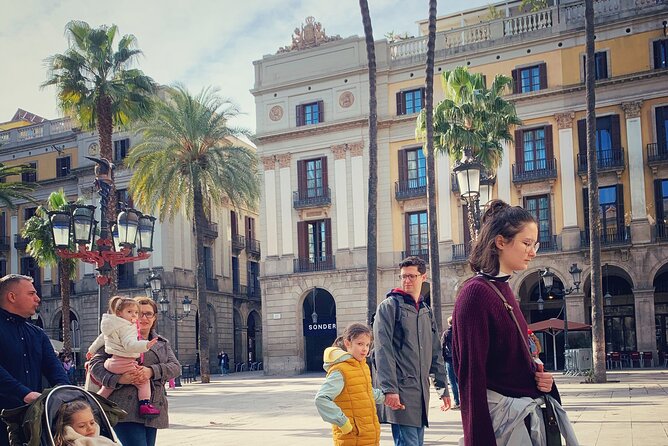
I would book this if you want a strong first look at Barcelona and do not need monument interiors included. Its best feature is the sequence: Roman traces and medieval lanes first, then public squares, then the grand Modernisme buildings of Passeig de Gracia.
The tour is especially useful for first-time visitors, families who want a guided route, solo visitors seeking company, and anyone who likes history tied to real streets and buildings. Wear good shoes, bring water, allow extra money for the headset and metro, and keep another part of your schedule free for entering Casa Batlló, La Pedrera, or the cathedral.
If you already know Barcelona well or want a slow architectural study, choose a more focused tour. For most first visits, though, this is a practical and lively way to get your bearings fast.
FAQ
How long does the walking tour last?
The tour lasts approximately 2 hours and 15 minutes.
Where does the tour begin?
It begins at Foot Locker, Pl. de Catalunya, 20, Ciutat Vella, Barcelona.
Where does the tour finish?
The tour ends on Carrer del Consell de Cent, 310, in the Eixample, near Casa Batlló and Casa Milà.
Does the tour include entry to the monuments?
No. Tickets for the Barcelona Cathedral, Casa Batlló, La Pedrera, and other monuments are not included. The Gaudí buildings are viewed from the outside.
Is transportation included?
No. The tour includes a short metro ride, but you need to bring your own public transport ticket or obtain one through the guide.
What is the cancellation policy?
You can cancel up to 24 hours before the start time for a full refund. Cancellations or changes made less than 24 hours before the tour are not accepted.
More Old Town Architecture Walks in Barcelona
- Barcelona: Sagrada Familia, Modernism, and Old Town Tour
★ 4.7 · 1,621 reviews - Barcelona e-Bike Tour: Gaudí & Old Town Small Group
★ 5.0 · 769 reviews - Astana: Old City Tour, Imperialistic and Soviet Architecture
★ 5.0 · 4 reviews - Copenhagen City, Old Town, Nyhavn, Architecture Walking Tour
★ 5.0 · 3 reviews
More Gaudí Tours in Barcelona
- Barcelona: Park Güell and Gaudí House Museum Entry Ticket
★ 4.5 · 6,326 reviews - Barcelona: Gaudi’s Casa Vicens Skip-the-Line Entrance Ticket
★ 4.7 · 4,541 reviews - Barcelona: Gaudí’s Park Güell Tour with Fast-Track Ticket
★ 4.8 · 4,512 reviews - Sagrada Familia & Gaudi Tour Private or Small Group with Tickets
★ 4.5 · 1,188 reviews
New to the itinerary around Barcelona
- Roman & Gotic & Gaudi in Barcelona: private walking tour★ 4.5 · 2 reviews
- Visit to the Modernist houses of the Americans★ 5.0 · 2 reviews
- Barcelona Gaudi Tour: Sagrada Familia, Casa Batllo & Casa Mila★ 5.0 · 4 reviews
- Barcelona Street Escape: Gaudi and the Hidden Treasure★ 5.0 · 17 reviews
- Gaudí & Catalan Modernism Private Walking Tour★ 5.0 · 11 reviews
- Self-Guided Audio Tour-The Surrealist Barcelona of Dalí and Gaudí★ 3.5 · 8 reviews
- Gaudi’s Casa Batlló and La Pedrera with Chocolate Tasting★ 5.0 · 5 reviews
- Gaudí and Barcelona Legends – Private Tour★ 5.0 · 4 reviews
Gaudí Tours, compared.
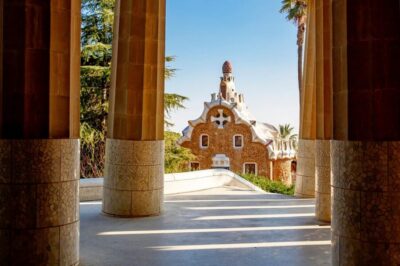
Park Güell and Gaudí House Museum Entry Ticket
Read our review →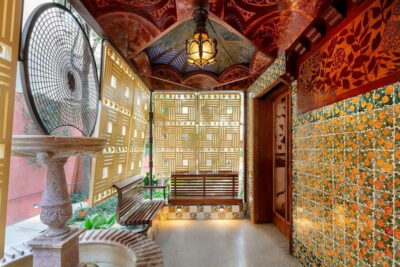
Gaudi’s Casa Vicens Skip-the-Line Entrance Ticket
Read our review →
Gaudí’s Park Güell Tour with Fast-Track Ticket
Read our review →
Sagrada Familia & Gaudi Tour Private or Small Group with Tickets
Read our review →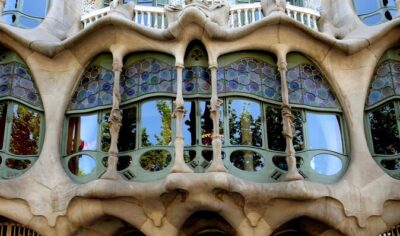
Complete Gaudi Tour: Casa Batllo, Park Guell & Sagrada Familia
Read our review →
Park Güell: Guided Tour with Optional Gaudí Experience Entry
Read our review →
Barcelona e-Bike Tour: Gaudí & Old Town Small Group
Read our review →