Review · BARCELONA
Private Barcelona Modernism and Gaudí Walking Tour
Barcelona’s Modernist buildings are not quiet background scenery. They twist, ripple, sparkle, and sometimes seem to grin at you. This walking tour connects the city’s greatest works, from Sagrada Familia to Casa Batlló and La Pedrera, while explaining how Gaudí and his rivals changed Barcelona.
I like the way the tour places Gaudí beside Lluís Domènech i Montaner and Josep Puig i Cadafalch, so you see Modernisme as a creative movement rather than a one-man show. I also like the chance to spot lesser-known façades, including Casa Comalat and Palau Montaner. The main consideration is simple: this is a long city walk, and the buildings are spread across the Eixample.
Key points at a glance
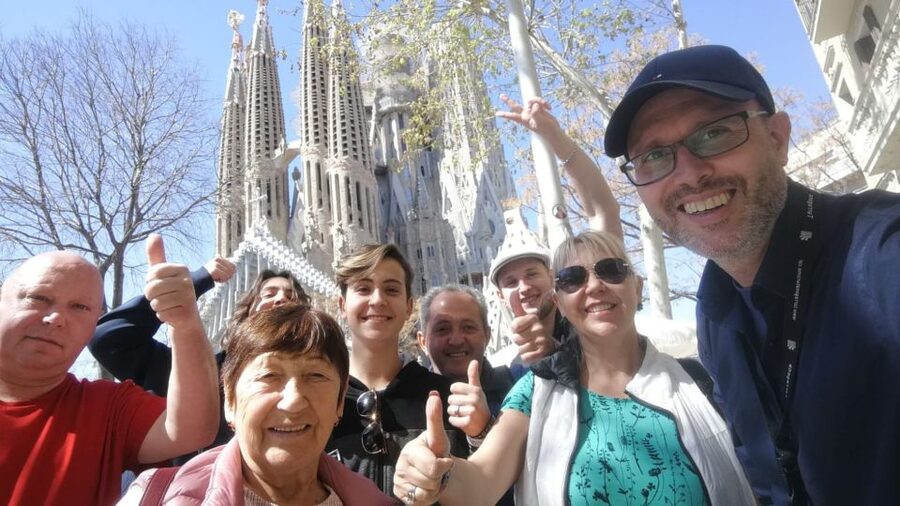
- Sagrada Familia anchors the route: Study Gaudí’s basilica, its unfinished story, and the Passion façade by Josep Subirachs.
- Passeig de Gràcia becomes an open-air gallery: See Casa Batlló, La Pedrera, Casa Amatller, and Casa Lleó Morera.
- Gaudí is placed in context: Compare his work with buildings by Domènech i Montaner, Puig i Cadafalch, and other Modernist architects.
- The Eixample gets its own story: Learn how Ildefons Cerdà planned the district beyond Barcelona’s medieval walls.
- Small numbers keep the walk personal: Groups are limited to 12, with a private-group option available.
- The price is unusually modest: At $21 per person, you pay mainly for interpretation and orientation, not admission to interiors.
Why Barcelona Modernisme makes a good walking tour
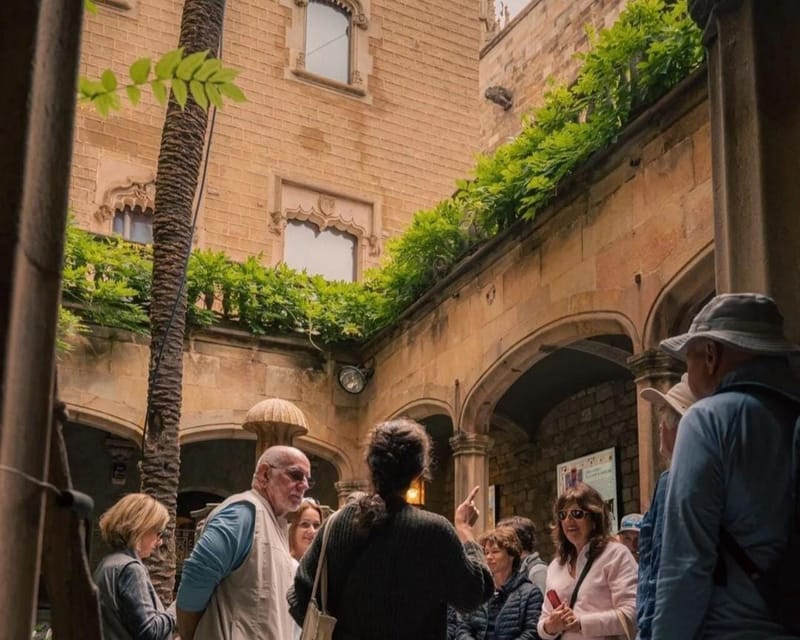
Barcelona’s Modernist architecture is easier to understand when you see several buildings close together. One façade may use stone like sculpture, another colored tile like a mosaic, and another curved ironwork that seems borrowed from plants or sea creatures.
The tour focuses on the Eixample, the district created as Barcelona expanded beyond its medieval walls in the mid-19th century. Ildefons Cerdà planned a grid of broad streets and large blocks, with space intended for light, air, greenery, and urban life. The plan makes this kind of sightseeing practical: you can cover a remarkable number of important buildings on foot.
I like this setting because the architecture is not locked away behind museum doors. You see it beside shops, apartments, traffic, cafés, and ordinary city life. The grand façades were made for wealthy families, but they now form part of Barcelona’s daily streetscape.
The guide helps you read details that are easy to miss. A doorway, balcony, roofline, or sculpted figure can reveal something about a building’s purpose, its owner, or the architect’s ideas. That turns a pleasant stroll into a lesson in design and city planning without making the walk feel like a classroom.
More Private Architecture Tours in Barcelona
- Sagrada Familia & Gaudi Tour Private or Small Group with Tickets
★ 4.5 · 1,188 reviews - Barcelona 1.5h Private Old Town, Gothic & Ramblas Walking Tour
★ 5.0 · 318 reviews - Treasures of Barcelona: Private Gaudi Walking Tour
★ 5.0 · 128 reviews
Starting with Gaudí’s unfinished masterpiece
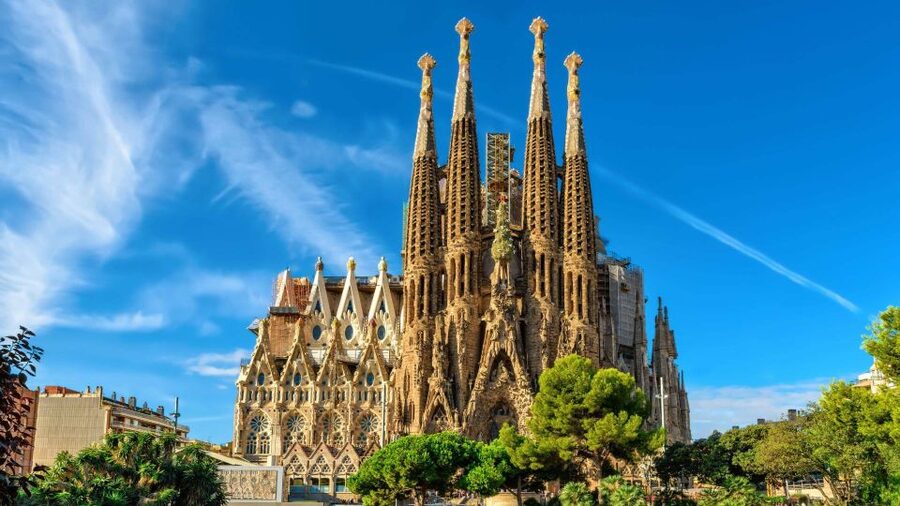
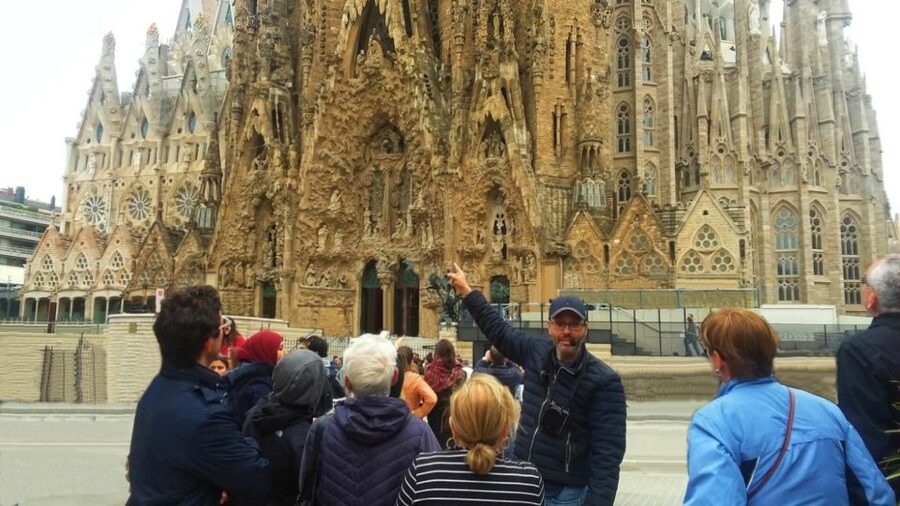
Sagrada Familia is the emotional high point of the route, even if you only view it from outside. Its scale and detail make it difficult to take in all at once. Your guide can help you separate Gaudí’s original ideas from the work added by later architects.
The basilica has been under construction for more than a century. That long building story is part of what makes it so interesting. You are not looking at a finished monument from one period. You are looking at an evolving work shaped by Gaudí, his successors, changing construction methods, and changing ideas about how the project should continue.
Pay close attention to the Passion façade. It was designed by Josep Subirachs, Gaudí’s successor, and its sharper, more severe style has prompted plenty of discussion. The contrast with Gaudí’s more organic forms gives your guide a useful opening to explain how different artists interpreted the same enormous project.
This stop is mainly about viewing and understanding the basilica’s exterior. Admission to the interior is not listed among the inclusions, so do not assume that the walking tour gives you entry. If you want to go inside, check the available option carefully and consider booking an interior visit separately.
One useful planning detail is that the route may end at Sagrada Familia. If you already know you want to visit inside, ask about arranging that visit after the walk. One person who joined the tour wished they had realized the ending point in advance, since they would have planned their interior visit there.
Passeig de Gràcia and the famous architectural trio
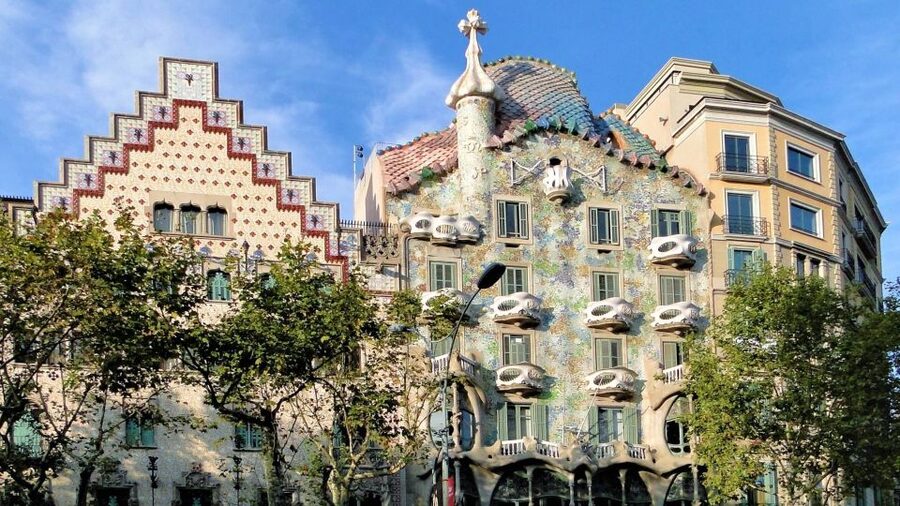
Passeig de Gràcia is Barcelona’s grandest Modernist showcase. Along this broad avenue, three neighboring buildings make a particularly useful comparison: Casa Batlló, Casa Amatller, and Casa Lleó Morera.
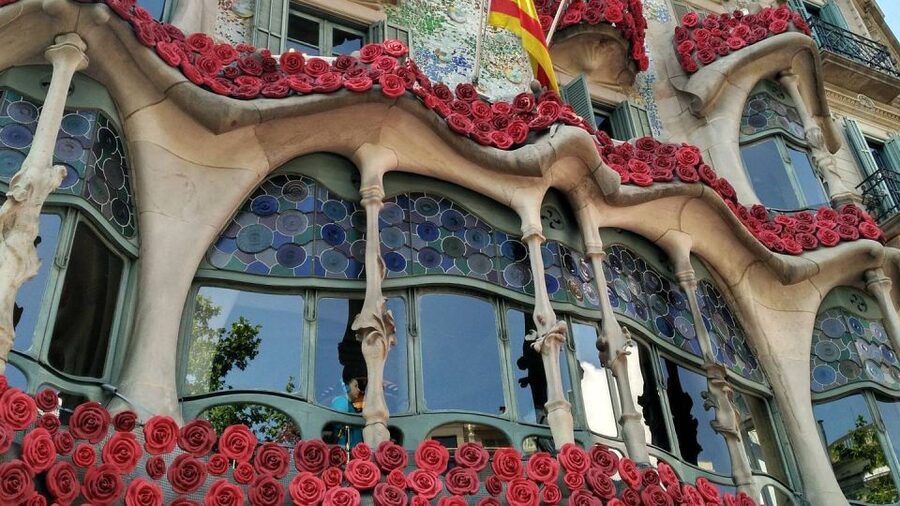
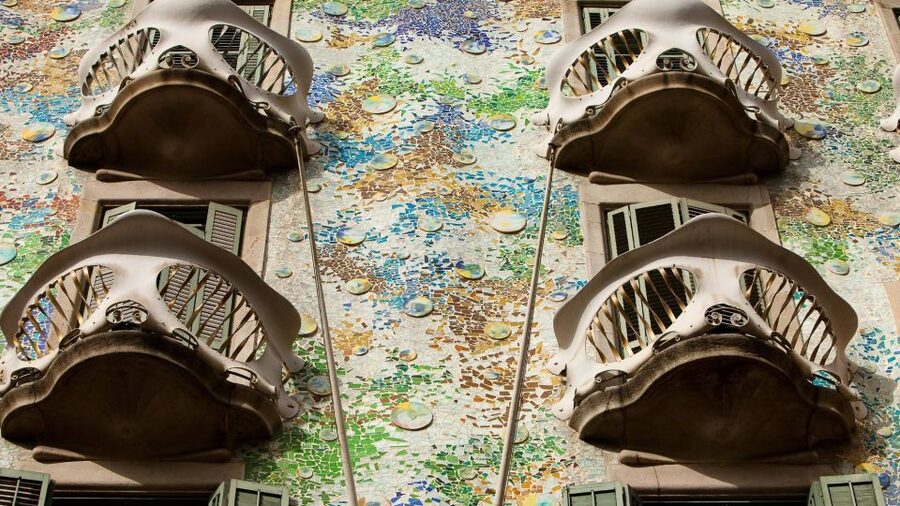
Casa Batlló is Gaudí’s most theatrical work on the route. Its undulating façade is often compared to a rolling sea, and the colored surface changes character as you look from the lower levels toward the roof. The balconies and windows do not follow the stiff order you might expect from a conventional apartment building.
Your guide can explain how Gaudí used shape, color, and texture to make the building feel alive. You will also hear how the house fits into the rivalry among Barcelona’s leading architects. This is not simply a beautiful façade. It is part of a period when wealthy owners competed for attention and architects competed to deliver it.
Next comes Casa Amatller, designed by Josep Puig i Cadafalch. Its appearance differs sharply from Casa Batlló, with a more carefully composed historical and decorative style. Seeing the two together helps you understand that Catalan Modernisme had no single formula.
Casa Lleó Morera, by Lluís Domènech i Montaner, completes the trio. It is an important reminder that Gaudí did not work alone or in isolation. Domènech i Montaner brought his own approach to ornament, structure, and craftsmanship, and his building adds another voice to the avenue.
I find this side-by-side comparison more useful than seeing Gaudí buildings one at a time. You can look from one façade to the next and ask what each architect was trying to achieve. The result is a clearer sense of artistic competition and personal style.
La Pedrera and Gaudí’s civil work
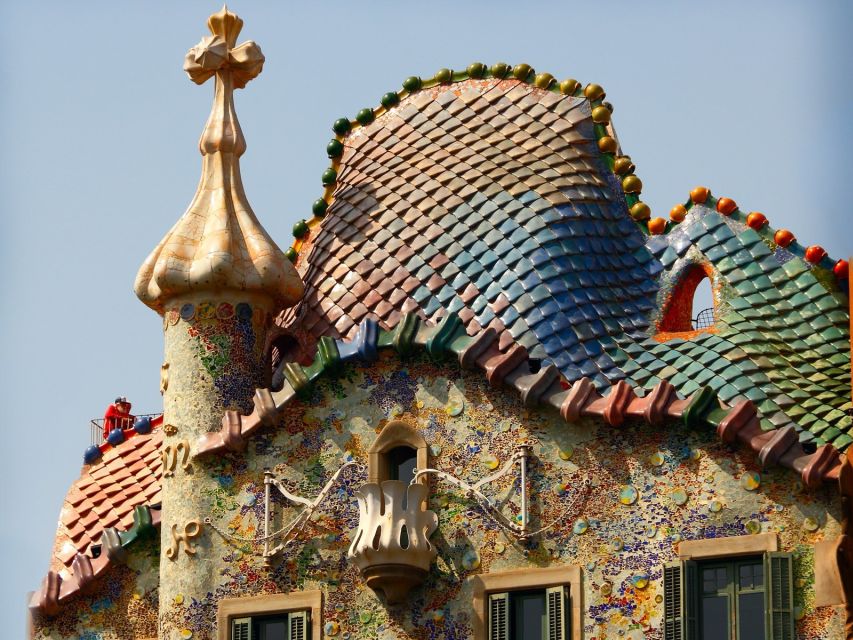
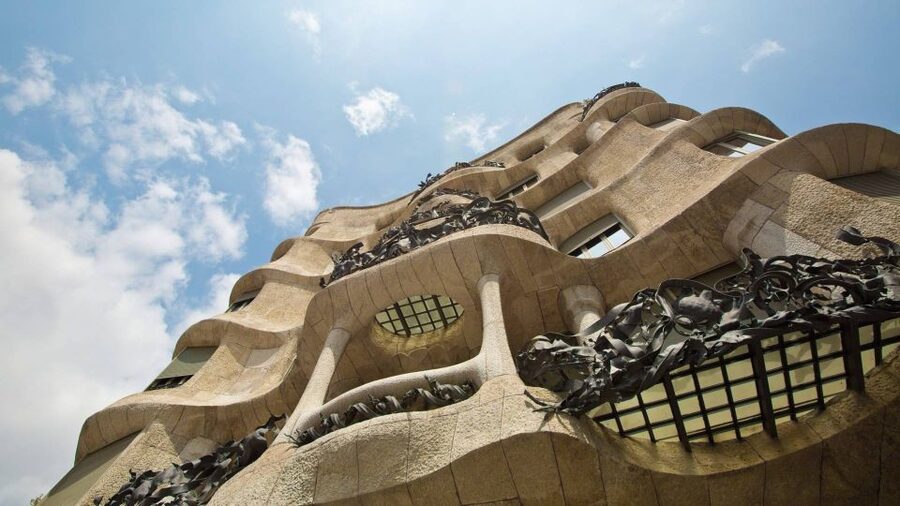
La Pedrera, also called Casa Milà, is one of Gaudí’s most famous buildings and a UNESCO World Heritage Site. It was his last civil project, and its rough, rolling stone façade looks unlike a normal apartment block.
The building’s exterior is the main focus on this walking tour. The lack of straight lines is impossible to miss, but the guide can point out how the design works as a complete composition. The façade, balconies, windows, and roofline all contribute to the building’s unusual character.
La Pedrera is also a good place to think about Gaudí’s practical side. His work is often described only as imaginative, but these buildings were designed for real occupants and real urban blocks. A strong guide will connect the fantastic appearance with the needs of a working residential building.
If you want to explore La Pedrera’s interior, roof, or exhibition spaces, you will need to confirm admission separately. The tour price covers the guided walk, not stated entrance fees. At $21, that is still a fair deal if you want context before returning for an indoor visit.
More Private Architecture Tours in Spain
- Sagrada Familia & Gaudi Guided Tour Private or Small Groups
★ 4.7 · 106 reviews - Park Guell and Sagrada Familia, Gaudí’s Masterpieces Private Tour
★ 5.0 · 46 reviews - Wonders of Gaudi: Park Guell & Sagrada Familia Private Tour
★ 5.0 · 46 reviews - Best Gaudi Private Tour with Sagrada Familia & Park Guell in BCN
★ 5.0 · 45 reviews
The quieter buildings that reward attention
The route includes several buildings that receive less attention than Sagrada Familia, Casa Batlló, and La Pedrera. This is one of the tour’s best features. You get the famous landmarks, but you also learn to notice the less obvious work around them.
Casa Calvet represents an earlier phase of Gaudí’s career. Its design is more restrained than his later buildings, making it useful for seeing how his ideas developed. It does not shout for attention in the same way as Casa Batlló, so your guide’s explanation matters here.
Casa Comalat shows the influence of Gaudí’s organic forms. Look for the curving shapes and decorative details that echo the natural world. It is a good example of how Gaudí’s ideas spread beyond buildings designed by Gaudí himself.
Palau del Baró de Quadres, by Puig i Cadafalch, adds another strong example of Catalan Modernisme. Casa Terradas, better known as Casa de les Punxes, brings a more castle-like presence to the route. Its pointed features make it easy to recognize, but the guide gives you a better sense of how it fits into the period’s fascination with medieval references and decorative design.
Palau Montaner is another architectural stop that broadens the picture. Together, these buildings show that Barcelona’s Modernist heritage is not limited to a few famous addresses. The city’s creative burst reached across residential buildings, palaces, and commercial streets.
What the guides add to the experience
The quality of this tour depends heavily on the guide, and the available guide team has earned strong praise for warmth, clarity, and subject knowledge. Stephanie is described as an expert in art and architecture who covers both landmark buildings and less familiar examples. Isabel has been praised for making the walk feel like time spent with a friend, rather than a formal lecture.
Antonio is noted for his clear explanations of Barcelona’s monuments and history. André has led a tour that became a private experience for the group, with extra discussion about artists, inspiration, and the city’s development. Other named guides include Roberto, Olga, Jordi, Miguel, and Flora.
That range of names matters because a private or small-group walk can feel quite different depending on who leads it. The strongest guides appear to adjust to questions and point out details that match your interests. Olga, for example, was appreciated for answering questions and offering useful ideas for enjoying the rest of a Barcelona visit.
The listed languages are English and Spanish. If you care about language choice, confirm it when booking. The group limit is 12 people, while a private-group option is also available. A smaller group gives you a better chance to hear explanations clearly and ask about buildings that catch your eye.
The walking demands and practical rhythm
Plan for 3 to 3.5 hours and wear comfortable shoes. The buildings are spread across the Eixample, and the route involves steady city walking rather than one short cluster of sights. One account described the actual walk as closer to two hours, so the pace can vary, but you should still prepare for the full advertised time.
Do not bring luggage or large bags. This is a walking experience through central Barcelona, not a luggage-storage solution. A small day bag with water and a phone should be more practical than a full suitcase.
The meeting point can change according to the option you book. Check the exact starting location before setting out, especially if you are coming from another part of Barcelona. The endpoint may be Sagrada Familia, which can help you plan an onward visit or a meal nearby.
Children up to age two can join free of charge. The tour is best for people who can manage a substantial urban walk and stay attentive while looking upward, stopping at façades, and moving between buildings.
Is $21 a good value?
At $21 per person, this is one of the more affordable ways to get a structured introduction to Barcelona’s Modernist architecture. You are paying for a live guide who connects many scattered buildings into one story, rather than paying for admission to a single monument.
The value is strongest if you are new to Barcelona or find architectural details hard to interpret on your own. A guide can save you from simply photographing façades and moving on without understanding why they matter. The tour also helps you create a useful shortlist of interiors to visit later.
The price is less compelling if you have already studied Gaudí extensively or plan to hire a fully private specialist for your group. Still, the small maximum of 12 and the private option give you some flexibility. Gratuities are optional, and personal expenses are not included.
The tour has a 4.7 rating from 54 reviews, with repeated praise for guides who are friendly, enthusiastic, and able to explain both art and city history. The most consistent strength is not just the list of buildings. It is the way the guides make the walk conversational and responsive.
Who should book this Barcelona walk?
I would recommend it to first-time visitors who want to understand Barcelona’s Modernist center before choosing which buildings to enter. It is also a good fit for architecture fans who want to compare several major names instead of spending all their time inside one attraction.
Families can benefit from the changing scenery, though younger children may tire during the long walk. People with a tight schedule should note the full 3 to 3.5-hour commitment and the distance between stops.
You should skip it if you strongly dislike walking, want interior admission included, or prefer to explore at your own pace with no fixed route. You may also want a different arrangement if your main goal is a detailed interior visit to Sagrada Familia or La Pedrera.
Should you book it?
Book this tour if you want the why behind Barcelona’s extraordinary façades. At $21, it offers a practical introduction to Gaudí, the Eixample, and the wider Modernist movement, with enough variety to keep the walk interesting.
Before paying, confirm the meeting point, language, group format, and whether any interior admission is part of your selected option. Wear good shoes, leave your luggage behind, and plan for the route to finish at Sagrada Familia. If those details suit your day, this is a smart and inexpensive way to get your bearings in Barcelona’s most imaginative district.
FAQ
How long does the tour last?
The advertised duration is 3 to 3.5 hours. The actual pace can vary, so allow the full period when planning your day.
What languages are available?
The tour is available in English and Spanish with a live guide.
Is this a private tour?
A private-group option is available. The standard experience is described as a small group with a maximum of 12 participants.
Does the tour include entry to Sagrada Familia?
The included services list a guided tour but does not list monument admission. Confirm the exact option if you want to enter Sagrada Familia.
Does the tour include entry to La Pedrera or Casa Batlló?
No entrance tickets are listed among the inclusions. The route lets you admire these buildings as part of the walking tour, but you should confirm separately if an option includes indoor admission.
Where does the tour meet?
The meeting point may vary depending on the option you book. Check the specific meeting instructions before your tour.
What should I bring?
Bring comfortable shoes. Do not bring luggage or large bags.
Can young children join?
Children up to two years old can join free of charge. The walk still requires several hours of city walking, so consider your child’s comfort and stamina.
More Walking Tours in Spain
- Gaudi’s Modernist Legacy: Small Group Walking Tour
★ 4.5 · 43 reviews - The Story of Gaudi and Modernism Private Walking Tour
★ 5.0 · 36 reviews - Barcelona: Evening Walking Tour in the Gaudi Area with Tapas
★ 3.9 · 35 reviews - Life of Gaudi and Architectural | Walking Tour | 2h
★ 5.0 · 35 reviews
More Walking Tours in Barcelona
- Ramblas, Old Town, Gothic and Gaudi Architecture Walking Tour
★ 5.0 · 723 reviews - Barcelona: Ramblas, Old Town & Gaudí Houses Walking Tour
★ 4.9 · 239 reviews - Barcelona Architecture Walking Tour With Casa Batlló Upgrade
★ 5.0 · 137 reviews - Night Tapas Walking Tour in Barcelona Modernist Area with Small Group and Dinner
★ 4.5 · 56 reviews
New to the itinerary around Barcelona
- Roman & Gotic & Gaudi in Barcelona: private walking tour★ 4.5 · 2 reviews
- Visit to the Modernist houses of the Americans★ 5.0 · 2 reviews
- Barcelona Gaudi Tour: Sagrada Familia, Casa Batllo & Casa Mila★ 5.0 · 4 reviews
- Barcelona Street Escape: Gaudi and the Hidden Treasure★ 5.0 · 17 reviews
- Gaudí & Catalan Modernism Private Walking Tour★ 5.0 · 11 reviews
- Self-Guided Audio Tour-The Surrealist Barcelona of Dalí and Gaudí★ 3.5 · 8 reviews
- Gaudí and Barcelona Legends – Private Tour★ 5.0 · 4 reviews
- Gaudi’s Casa Batlló and La Pedrera with Chocolate Tasting★ 5.0 · 5 reviews
Gaudí Tours, compared.
Park Güell and Gaudí House Museum Entry Ticket
Read our review →
Gaudi’s Casa Vicens Skip-the-Line Entrance Ticket
Read our review →
Gaudí’s Park Güell Tour with Fast-Track Ticket
Read our review →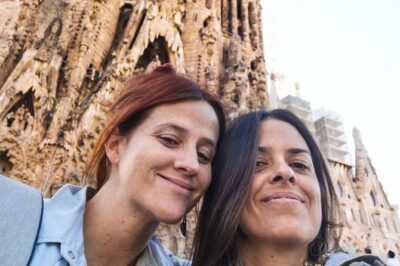
Sagrada Familia & Gaudi Tour Private or Small Group with Tickets
Read our review →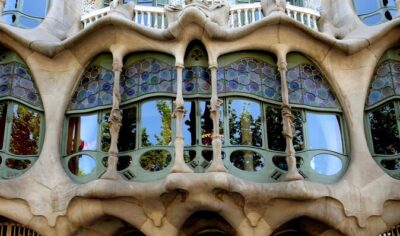
Complete Gaudi Tour: Casa Batllo, Park Guell & Sagrada Familia
Read our review →
Park Güell: Guided Tour with Optional Gaudí Experience Entry
Read our review →
Barcelona e-Bike Tour: Gaudí & Old Town Small Group
Read our review →