
Review · BOLIVIA
La Paz: Andean Architecture Tour in El Alto
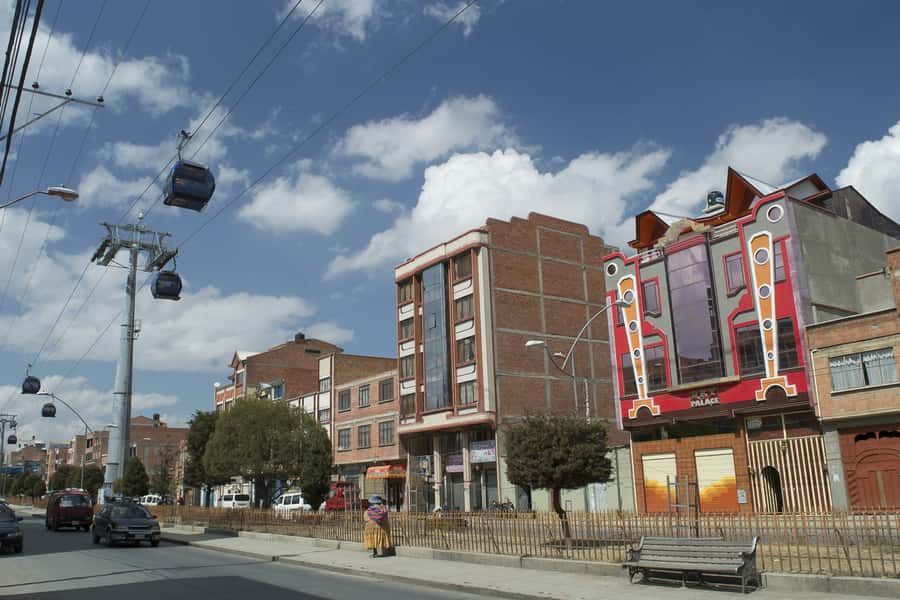
El Alto’s cholets look like someone handed Andean symbols, bright textiles, futuristic towers, and a very large building budget to an architect and said, Go for it. This three-hour tour takes you beyond La Paz’s usual sights to see these unusual mansions up close, then brings you inside one to show how the bold design continues indoors.
I like the cable-car ride, which gives you a practical way to reach El Alto while opening up broad views of La Paz and its high-altitude setting. I also like the chance to enter a cholet, since the outside alone cannot explain how these buildings work as homes, businesses, party spaces, and displays of social success.
The main drawback is the walking at high altitude. You need comfortable shoes, weather-ready clothing, and patience with your breathing. There is no hotel pickup, and meeting at the purple cable-car station takes some planning.
Key points to know before you go
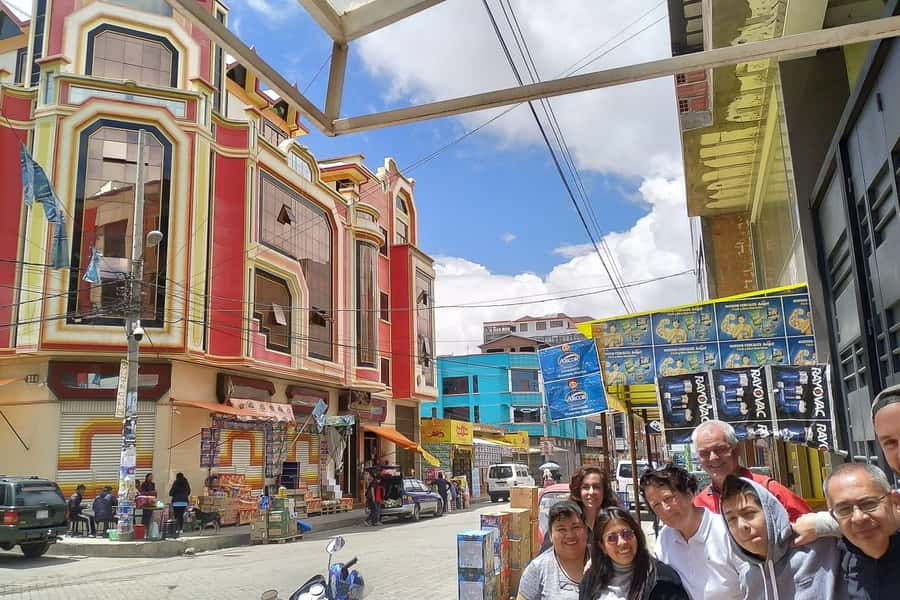
- Cholets turn family success into architecture: These colorful mansions combine Andean ideas, modern materials, and spaces for lavish parties.
- The purple cable car is part of the experience: You ride up from central La Paz toward El Alto while seeing several parts of the city.
- You enter one of the mansions: The interior matters as much as the façade, with the same bold design language continuing inside.
- Guides add the meaning: Amara, Jose, Denise, Chris, Remberto, and Daniel have led tours praised for clear explanations and strong local insight.
- This is a real walking outing: The route is not recommended for people with limited mobility, and you should tell the guide if you need a pause.
- The price is modest for a focused tour: At $25 per person, transportation, guiding, and local snacks are included, but hotel transfers are not.
Why El Alto’s cholets are worth your morning
The most interesting part of this outing is not simply seeing strange buildings. It is learning why they exist.
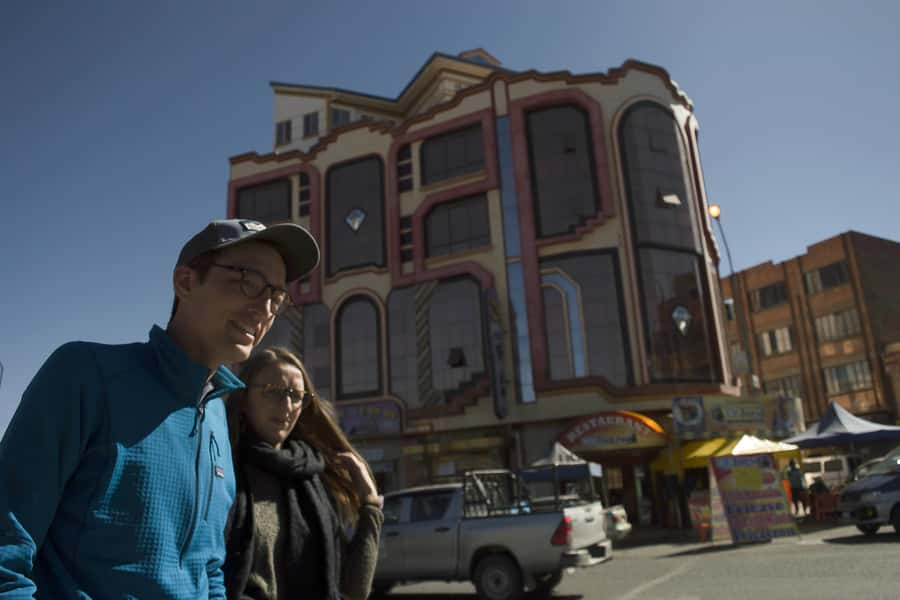
A cholet is a type of Andean mansion associated with newly prosperous families in El Alto. The buildings show wealth in a very public way, but they also express cultural identity. Their designs draw on older Andean civilization, geometric forms, colorful textiles, and symbols that remain important in local life.
The result can look playful, excessive, and proudly unconventional. Some façades use strong colors and unusual shapes. Others suggest futuristic towers or giant pieces of modern art. This is not architecture designed to blend into the background.
Your guide helps explain the social side. These buildings are linked to bourgeois residents who use their success to create impressive homes and spaces for lavish parties. That makes the cholets more than photo stops. They are statements about changing fortunes, family ambition, and the way modern El Alto presents itself.
I especially like that the tour does not stop at the street. A façade can be admired in a few minutes, but entering one of the buildings helps you understand the idea more fully. You get to see how the same strong design continues through the interior.
More Architecture Tours around the world:
- Chicago Architecture River Cruise
★ 5.0 · 15,756 reviews - Chicago River 90-Minute Architecture Tour
★ 4.5 · 9,629 reviews - Chicago River: 1.5-Hour Guided Architecture Cruise
★ 4.8 · 8,046 reviews
Meeting at the purple cable-car station
The tour begins at the doors of Michelline cafe, beside the entrance to the purple cable-car station in central La Paz. Look for the guide wearing a red cap.
This meeting point is simple once you know it, but do not treat it as an afterthought. The tour does not include hotel pickup, so you are responsible for reaching the station on time. If your hotel is in central La Paz, allow enough time to find the cafe and the correct cable-car entrance.
The group then uses transportation included in the tour. The cable car is not just a ride between two points. It is one of the best ways to understand the relationship between La Paz and El Alto, especially as the city changes around you during the journey.
You will see different areas from above while the guide explains what you are looking at. One practical benefit is that you avoid treating El Alto as a distant place reached only by road. The cable car makes the connection visible and gives the outing a clear sense of movement.
Riding above La Paz and up toward El Alto
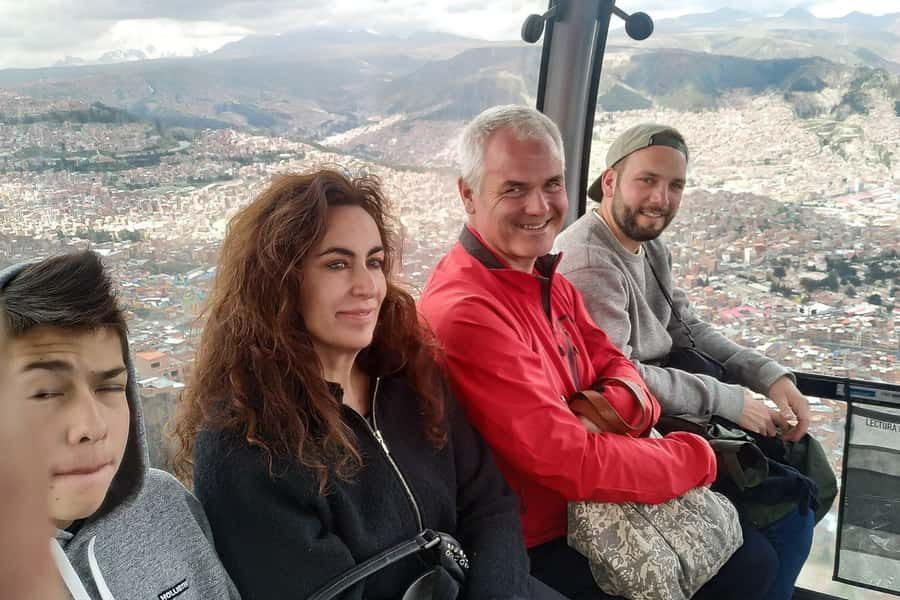
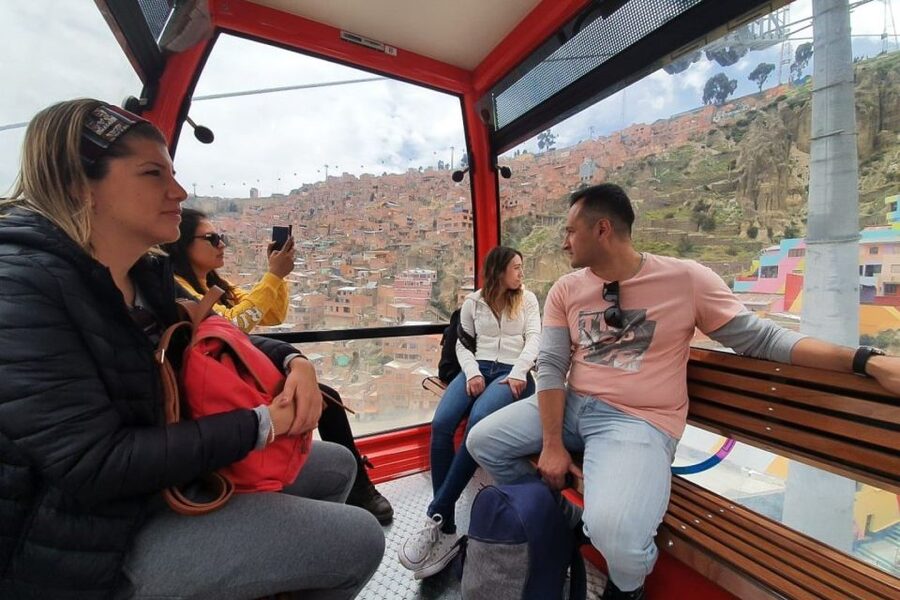
For many people, the cable-car ride is a highlight in its own right. You rise through the city and see how La Paz occupies its steep setting before reaching the high plateau around El Alto.
The views help put the architecture into context. From ground level, a cholet can seem like an isolated oddity. From above, you get a better sense of the size and spread of the urban area, and why El Alto deserves to be treated as a city with its own character rather than as a quick extension of La Paz.
The route also gives you a break from walking. That matters at this altitude, though you should not mistake a cable-car ride for an easy day. You still spend part of the tour on foot, and the elevation can make even ordinary streets feel demanding.
Take your time as you move between stops. If you need to rest, tell the guide. The activity information specifically warns that this is a walking tour at high altitude. That advice is worth taking seriously, especially if you have just arrived in Bolivia or are still adjusting to La Paz.
Seeing El Alto beyond the usual tourist path
El Alto is not generally where short La Paz visits begin. That is precisely why this tour can add something useful to your trip.
You are not being led only to a famous church or a polished historic square. Instead, you visit an area that many tourists skip and learn about the people who built its distinctive visual identity. The outing gives you a closer look at everyday urban life, local ambition, and the traditions behind the city’s most unusual buildings.
The guide is important here. A good explanation turns a walk through unfamiliar streets into a readable story. Guides who have led this experience include Amara, Jose, Denise, Chris, Remberto, and Daniel. Denise has been praised for handling detailed questions about architecture and urban planning, while Remberto has explained the work of Freddy Mamani, the architect often associated with the first cholet designs.
That last point is useful if you already have an interest in architecture. You are not limited to taking colorful photographs. You can ask how the buildings relate to Andean culture, why the designs became popular, and what they say about the people who commission them.
English and Spanish tours are available. Several guides have been singled out for clear English, including Denise. Still, guide assignments can vary, so you should think of the names as examples of the standard you can hope for, not a promise that one particular guide will lead your departure.
Same streets, read through a different style:
- Barcelona: Park Güell and Gaudí House Museum Entry Ticket
★ 4.5 · 6,326 reviews - Chicago Architecture Center River Cruise aboard First Lady
★ 5.0 · 5,536 reviews - Barcelona: Gaudi’s Casa Vicens Skip-the-Line Entrance Ticket
★ 4.7 · 4,541 reviews - Barcelona: Gaudí’s Park Güell Tour with Fast-Track Ticket
★ 4.8 · 4,512 reviews
The cholet interior is the essential stop
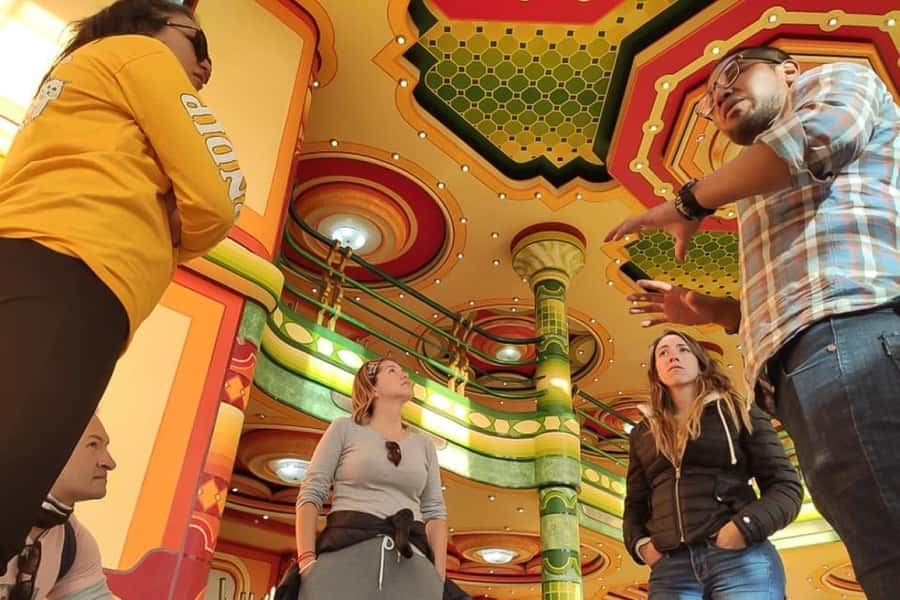
The outside of a cholet gets your attention quickly. The inside explains the building.
During the tour, you have the chance to enter one of these mansions and see the design continue through the interior. That changes the experience from an architecture walk into a closer look at how the buildings are used.
The cholet represents a mix of private life, business, and celebration. The mansions are connected to wealthy families and luxurious parties, so their interiors are part of the public display. The colors and forms do not simply stop at the front door.
I would consider this the most important inclusion in the whole outing. You can find photographs of cholet exteriors on your own, but access to an interior gives the guide more to explain and gives you a better sense of scale. It also helps you understand why these buildings are meaningful to their owners rather than treating them as amusing curiosities.
Keep your expectations sensible. The information provided does not promise access to several cholets or a long private visit inside. The experience includes entering one building. That is enough to add real value, but the tour is not a full architectural survey of every major mansion in El Alto.
What the guide adds to the buildings
The cholets are visually strong, but you could easily misunderstand them without context. They may look like pure decoration if you do not know about the older Andean references, the role of textiles, or the connection between architecture and social status.
The guide helps connect those pieces. You learn about traditions represented in the designs, the people who commission the buildings, and the cultural meaning behind the mixture of ancient forms and modern materials.
The strongest guide comments are likely to come through conversation. Jose, for example, has led groups through fascinating places while explaining El Alto and local culture. Chris has answered broader questions about La Paz and Bolivia. Those details matter because the tour can become more than a fixed script when the guide responds to your interests.
If architecture is your main reason for booking, say so early. Denise has handled detailed questions from people interested in urban planning, so the tour can offer more substance than its colorful subject might suggest. If you are more interested in daily life and local traditions, the guide can place the buildings in that wider setting.
Snacks, walking, and the practical rhythm
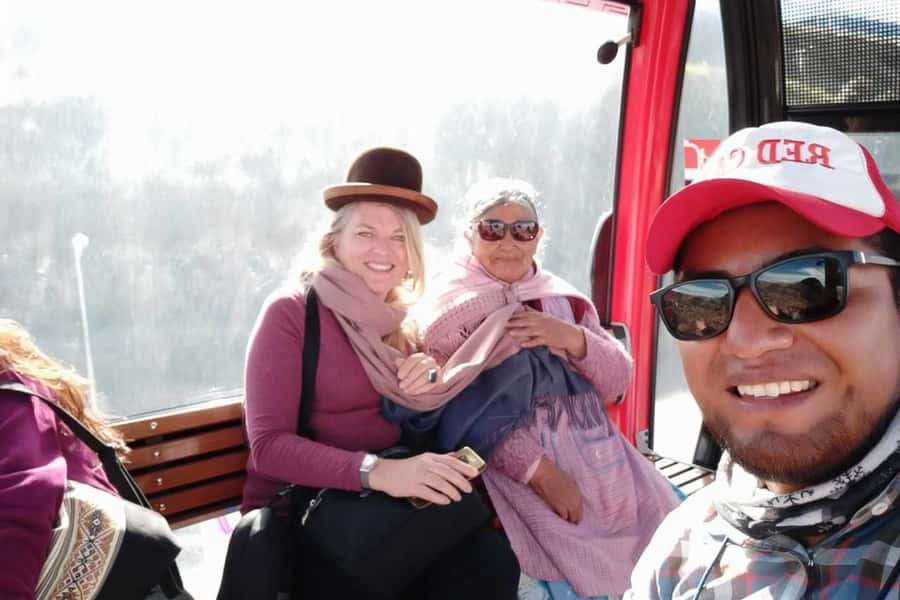
Local snacks are included, along with transportation and a bilingual guide. The snacks are a small detail, but useful during a three-hour outing, especially when you are walking at altitude.
Wear comfortable shoes. You may encounter ordinary city walking rather than a smooth museum route, and the activity is not suitable for people with mobility impairments. Large bags and luggage are not allowed, so bring only what you need for a few hours.
La Paz weather can change quickly. A rainjacket is a smart choice even if the morning begins clear. Wear layers so you can adjust as conditions change.
The three-hour length is well judged for this subject. It gives you time for the cable car, neighborhood walking, explanations, and the interior visit without requiring a full day. Still, the pace may feel tiring if you are not acclimatized. The guide can adjust the rhythm if you speak up, but you should not plan a demanding afternoon immediately afterward.
Is $25 a fair price?
At $25 per person, this is a reasonably priced specialty tour. You are paying for a bilingual guide, transportation, cable-car travel, local snacks, and access to a part of El Alto that would be difficult to interpret on your own.
The value is strongest if you care about architecture, city life, or cultural context. You are not simply paying to look at colorful buildings. The guide explains the reasons behind the designs and takes you inside one of them.
The price may feel less attractive if you happen to be the only person booked. One outing had a single participant who still found the guide and discussion worthwhile, but felt the cost was high for a private-style experience. That is a fair consideration. A small group can bring more personal attention, yet some people expect a lower price when attendance is light.
There is no hotel pickup or drop-off, so include your own transport to and from the meeting point when comparing costs. The reservation can be made with payment later, and cancellation is available up to 24 hours before the tour for a full refund. Those policies make it easier to fit the outing into a changing Bolivia itinerary.
Who should book this El Alto tour?
I would choose this tour if you have already seen some of central La Paz and want a different side of the region. It is particularly suitable for:
- People who enjoy unusual architecture and city planning
- Visitors curious about modern Andean identity
- Anyone who wants to ride the cable car as part of a guided outing
- Photographers looking for striking buildings and city views
- Visitors who prefer local neighborhoods to standard sightseeing routes
- People comfortable walking at high altitude
I would hesitate if you have serious mobility limits, dislike walking, or are still struggling with the altitude. The tour is not designed as a vehicle-based sightseeing loop, and there is no suggestion that you can avoid the walking.
Families and older visitors should judge the outing by fitness rather than age. The key question is whether you can manage a three-hour high-altitude walk with pauses as needed.
Should you book the cholet architecture tour?
Book it if you want to understand why El Alto’s architecture looks the way it does. The combination of cable-car travel, neighborhood walking, guide explanation, and entry into a cholet gives you more than a quick photo stop.
I would be especially inclined to book if you can join a small group and make use of the guide’s local knowledge. Ask questions about Freddy Mamani, Andean symbols, the owners of the buildings, and how the spaces are used. That is where the $25 becomes worthwhile.
Skip it if you need step-free sightseeing or want a relaxed ride with little walking. For everyone else, this is a focused and affordable way to see a side of the La Paz area that many short visits miss.
FAQ
How long does the Andean architecture tour last?
The tour lasts three hours.
How much does the tour cost?
The price is $25 per person.
Where does the tour meet?
Meet at the doors of Michelline cafe, next to the entrance to the purple cable-car station in central La Paz. The station is called Estacion Teleferico Morado.
How do I identify the guide?
The guide will be wearing a red cap.
Is hotel pickup included?
No. Hotel pickup and drop-off are not included.
What languages are available?
The tour is offered in English and Spanish with a live guide.
Does the tour include entering a cholet?
Yes. You have the opportunity to enter one cholet and see how its design continues inside.
Is the tour suitable for people with limited mobility?
No. The tour is not recommended for people with mobility impairments because it includes walking at high altitude. You should tell the guide if you need to rest.
New to the itinerary around the world
- Washington, DC: Georgetown Architecture Walking Tour★ 5.0 · 8 reviews
- Wilmington History and Architecture Tour★ 4.8 · 18 reviews
- Walk & Discover KL’s Architectural and Heritage Gems★ 5.0 · 7 reviews
- Washington DC: Dupont Circle & Embassy Row Architecture Tour★ 5.0 · 6 reviews
- New Orleans : Garden District Architecture Walking tour★ 4.8 · 5 reviews
- Unveiling Brno: History, Culture & Architectural Delights★ 5.0 · 2 reviews
- Vicenza: Palladian Architecture Private Walking Tour★ 3.3 · 3 reviews
- Private Colonial Williamsburg Architectural Tour★ 5.0 · 5 reviews