
Review · MADRID
Architecture Tour: Old Historic Madrid with an architect
Madrid’s story comes into focus on this walk because you follow its physical remains, not just a string of dates. An architect leads you from the old Arab fortress area through the Habsburg heart of town, pointing out how royal decisions, walls, churches, markets, and squares shaped the city.
I like the clear architectural focus and the route’s variety. You see the Royal Theater, Royal Palace area, Almudena Cathedral, Arab Wall, Cava Baja, San Miguel Market, and Plaza Mayor. I also like the chance to ask a private guide about urban planning and politics rather than hearing only a standard royal-family story. If Emilio leads, you can expect strong historical explanations based on his past tour work.
The main drawback is focus. This is a detailed, walking-heavy history and architecture tour, not a relaxed sightseeing stroll. You won’t enter the Royal Palace, drinks and snacks cost extra, and the route is not suitable for wheelchair users.
Key points at a glance
- Follow Madrid from Arab fortress to Bourbon palace: The tour links the city’s ninth-century beginnings with Felipe II’s capital and Felipe V’s Royal Palace.
- Study buildings as political evidence: Your guide explains how royal power, religion, defense, trade, and city planning appear in Madrid’s streets.
- See the Habsburg core on foot: Plaza de la Villa, Cava Baja, San Miguel Market, and Plaza Mayor reveal the city’s older daily life.
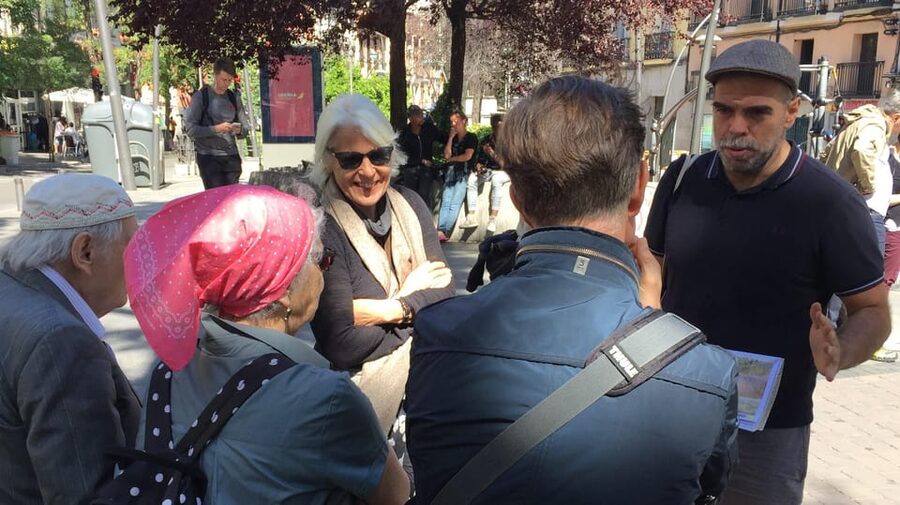
- Enjoy a private 3.5-hour format: A private group gives you room to ask questions and set the pace within the planned route.
- Expect outdoor sightseeing, not palace touring: The Royal Palace is viewed from outside, while church entry is included.
- Prepare for Madrid’s weather: Bring warm layers in winter, and sun protection, a hat, sunglasses, and cold water in summer.
Why this Madrid walk feels different
Many city tours treat Madrid as a royal capital that appeared fully formed around the Royal Palace. This one starts earlier, with the Arab foundation of the settlement at the end of the ninth century, then tracks the Christian conquest under Alfonso VI of Castile in the eleventh century.
That long view matters. You begin to see Madrid as a city built in layers. Defensive walls came first. Royal power later fixed Madrid as Spain’s capital under Felipe II. The Habsburg period gave the old center its grand public spaces and courtly identity. The Bourbons then reshaped the royal district and ordered the palace you recognize today.
You’ll spend about three and a half hours outside, moving between major sites and smaller remains. The route is not just a checklist of famous buildings. Its real purpose is to show how architecture reflects political choices. A square can reveal social order. A wall can show where the city once ended. A market can explain how commerce survived beside royal and religious institutions.
That makes the walk a good match for you if buildings are easier to understand when someone explains their purpose and setting. It also suits history fans who want more than dates and royal names.
More History Walks around Spain:
- Historical and Modernist Bike Tour Barcelona
★ 5.0 · 262 reviews - Bike Tour in Barcelona: History, Architecture and Culture
★ 3.5 · 29 reviews - Madrid Historic with an architect : Arabs, Austrias and Bourbons
★ 5.0 · 21 reviews
Starting beside the Teatro Real
The meeting point is outside the Starbucks at one corner of the Royal Theater on Plaza de Isabel II. This is a practical place to meet because the theater is easy to identify, but give yourself enough time to locate the correct corner before the start.
The Teatro Real is the first formal stop, with about 15 minutes for a visit, photo stop, and guided explanation. Here, the tour sets up the connection between performance, monarchy, and public life in Madrid. The building also gives you an early lesson in how the old center mixes grand institutions with narrow streets and busy public routes.
You should not expect an extended interior theater tour. The stated program centers on the exterior setting and the historical role of the site. Still, it is a useful opening because the theater leads naturally toward the royal district and Plaza de Oriente.
Plaza de Oriente and the Royal Palace setting
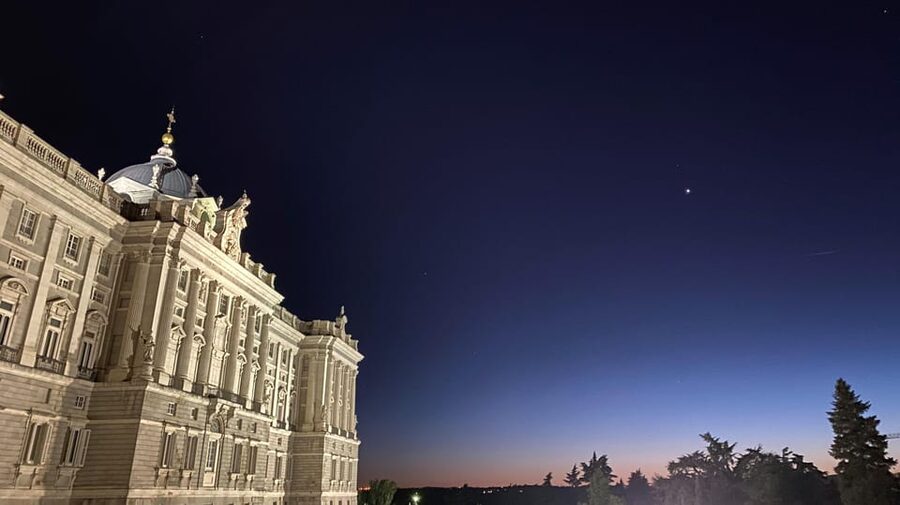
The walk continues to Plaza de Oriente for roughly 15 minutes. This open space frames the Royal Palace area and gives your guide room to explain how the royal center was organized.
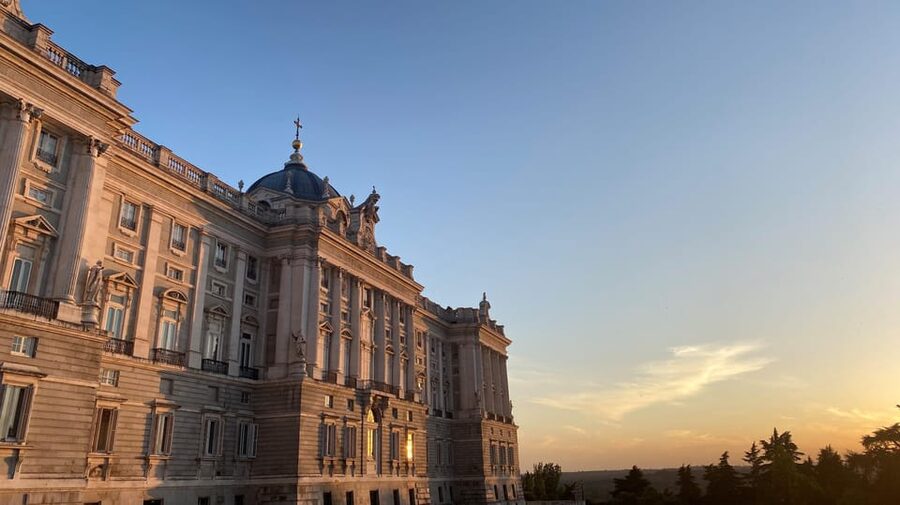
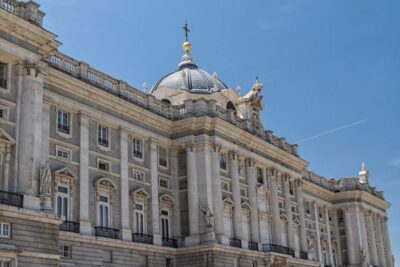
The Royal Palace follows, with about 20 minutes of guided sightseeing. This is an important distinction: the interior is not visited. You’ll study the palace from the outside and hear how the present building connects to earlier royal occupation, the Arab Alcázar, and the Bourbon decision to construct a new palace after Felipe V came to power.
For some people, the lack of an interior visit will be the tour’s biggest limitation. If rooms, paintings, royal apartments, and formal collections are your main reason for visiting Madrid, you need a separate palace ticket and visit. On this walk, the value comes from context. You learn why the palace sits where it does and how a change in dynasty altered the city’s architectural center.
The route then passes Iglesia de San Nicolás. The stop lasts around 10 minutes, and the church helps keep the focus on the older fabric of Madrid rather than only its monumental royal buildings. Its place in the route also reminds you that Madrid’s past survives in smaller religious structures as much as in palaces and official squares.
Almudena Cathedral and the city’s changing identity
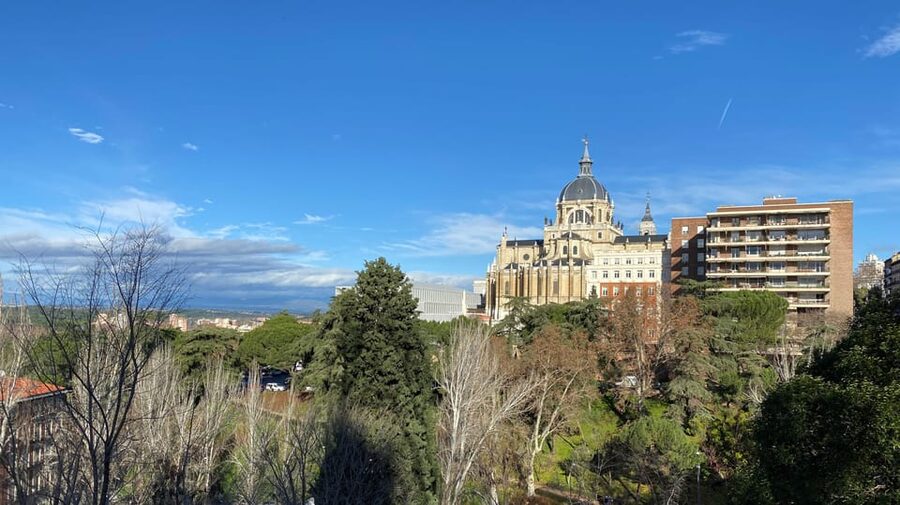
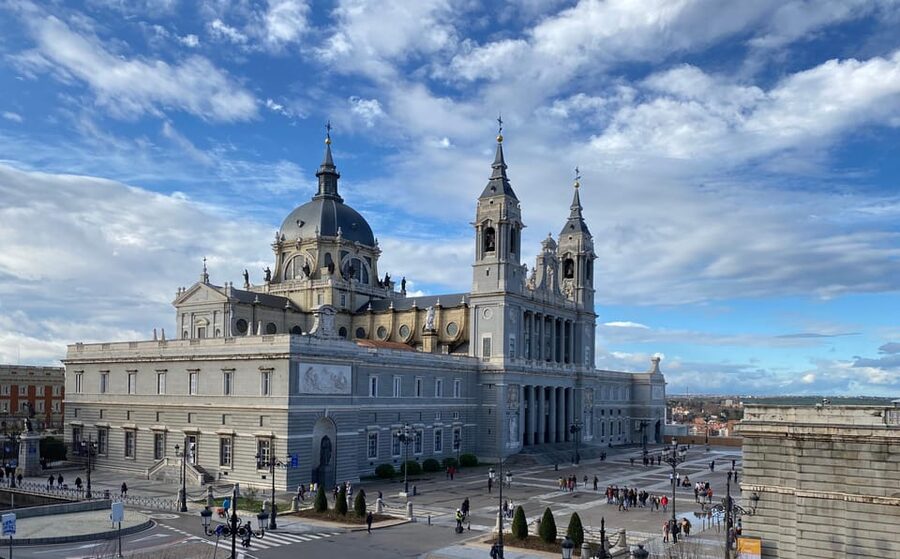
At Almudena Cathedral, the guided visit takes about 15 minutes. The cathedral gives you another angle on Madrid’s identity, linking the city’s Christian period with its modern capital status.
This is a short stop, so do not plan on an extensive examination of every chapel or decorative feature. Instead, expect your architect guide to use the cathedral as part of the larger urban story. Its location beside the Royal Palace makes the relationship between religion and royal authority especially clear.
Church entry is included in the tour. That is useful because you do not need to arrange separate admission for the churches included in the route. The experience remains focused on interpretation rather than long indoor visits, so wear comfortable shoes and be ready to continue walking after each stop.
More Architecture Tours around Spain:
- Barcelona: Park Güell and Gaudí House Museum Entry Ticket
★ 4.5 · 6,326 reviews - Barcelona: Gaudi’s Casa Vicens Skip-the-Line Entrance Ticket
★ 4.7 · 4,541 reviews - Barcelona: Gaudí’s Park Güell Tour with Fast-Track Ticket
★ 4.8 · 4,512 reviews - Barcelona: Sant Pau Recinte Modernista Entry Ticket
★ 4.6 · 2,567 reviews
Reading the Arab Wall
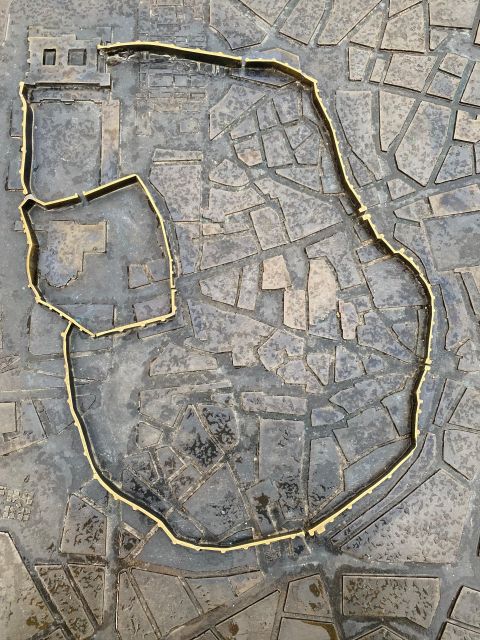
The Arab Wall is one of the most meaningful points on the route. You’ll spend about 15 minutes sightseeing at the remains, where the city’s earliest known foundation becomes visible in a physical way.
Madrid began as an Arab settlement built around a fortified site. The wall helps explain why the original city occupied this particular location and how defense shaped its first form. Rather than treating the wall as an isolated ruin, your guide connects it with the later Christian expansion and the growth of the capital.
This is the kind of stop that benefits from an architect’s eye. You might otherwise walk past the remains and see only old stone. With context, you can consider the wall as the first boundary of Madrid, a marker of where the early settlement ended and later urban growth began.
The site also gives the tour a welcome change of scale. The Royal Palace and cathedral represent power on a monumental scale. The Arab Wall is more direct and defensive, showing the practical needs of the city before royal display became its main public image.
Plaza de la Villa and the old civic center
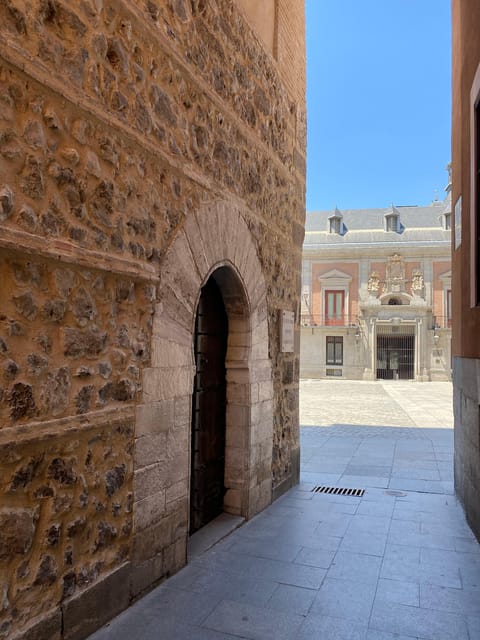
From the wall, the route heads toward Plaza de la Villa for around 15 minutes of walking. This square was the setting of the old Town Hall and remains one of the clearest places to discuss Madrid’s civic government.
Here, you can look at the relationship between municipal power, noble residences, and the street plan of the old center. The square is smaller and more intimate than Plaza Mayor, which makes it easier to imagine how local government once operated within a compact medieval city.
The stop is especially useful if you want to understand the difference between royal Madrid and municipal Madrid. The palace represented the crown. Plaza de la Villa represented the city’s own administration. That contrast adds political depth to the walk.
Because this is an outdoor walking route, the experience depends on your guide’s explanation. The architecture itself does not come with a long printed label at every corner. Ask questions if you want to connect a building to a period, a ruler, or a change in the city plan.
Cava Baja and Madrid’s old tavern culture
The walk continues through Cava Baja, an old street lined with taverns. It is one of the route’s more human-scale sections, moving away from palaces and official buildings into a street associated with food, drink, and everyday social life.
The Cava Baja stop is not listed as a timed formal visit, but it is part of the transition toward San Miguel Market and Plaza Mayor. Its presence keeps the tour from becoming too formal. Madrid’s past was not lived only in royal halls and council rooms. Taverns, trade, and ordinary meeting places also shaped the city.
You might find this section more enjoyable if you like seeing how historic streets still function as part of modern city life. At the same time, remember that the tour does not include food or drinks. If you want to pause for a snack, that is a personal expense and may affect the pace of the walk.
San Miguel Market and a sensible pause
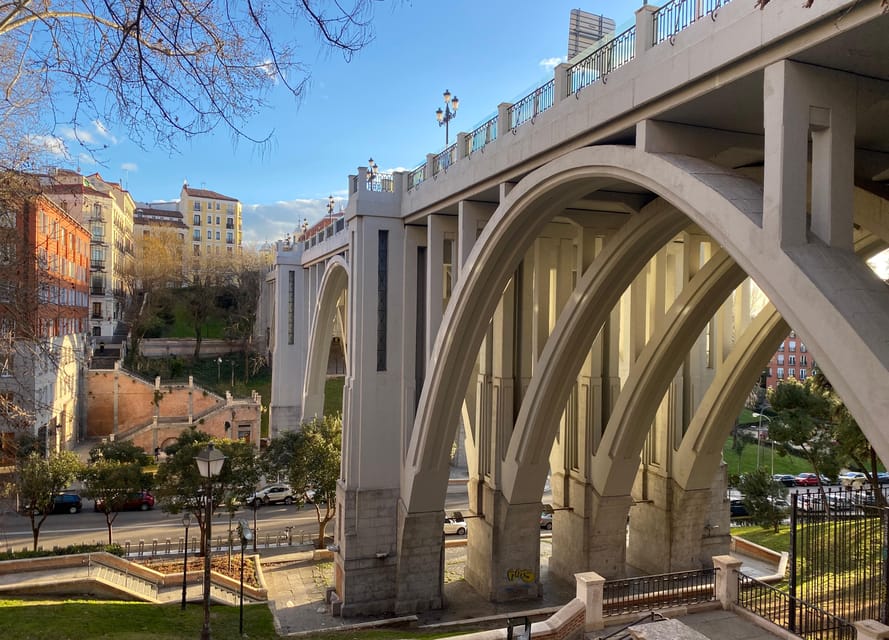
The guided stop at San Miguel Market lasts about 10 minutes. The market is a natural place to discuss the connection between food, trade, and public life in the old center.
You may have time to look around or arrange a drink, but refreshments are not included. The market can be tempting, so plan your expectations carefully. This is a short guided stop, not a dedicated food tour or a sit-down tasting.
I like the market’s place in the route because it breaks up the historical sequence. After walls, churches, and civic buildings, you reach a place tied to daily consumption and social activity. It also gives you a practical chance to decide if you want to buy something before the final stop.
Plaza Mayor and the Habsburg center
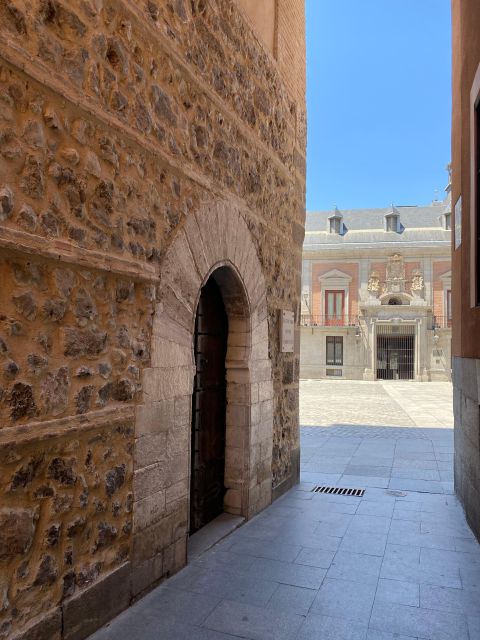
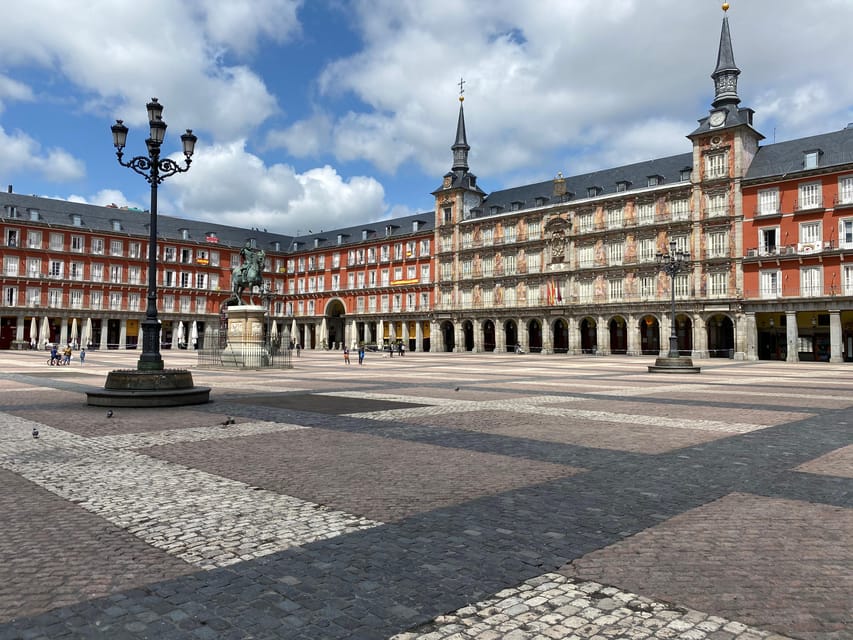
The walk finishes at Plaza Mayor, with roughly 15 minutes of guided explanation. This is the grand public square at the center of old Madrid and one of the clearest expressions of the city’s Habsburg period.
The square has served as a social and commercial center, so your guide can connect architecture with public life. Its scale differs sharply from Plaza de la Villa. Here, the city presents a more controlled and ceremonial face, one suited to a growing capital and a powerful dynasty.
Plaza Mayor is also a good endpoint because the tour’s themes meet here. You have seen the defensive beginnings of Madrid, the royal district, civic government, church authority, trade streets, and the market. The square brings those threads together as a public stage.
The tour ends here rather than returning to the Royal Theater. That is convenient if you plan to continue exploring on foot, but you’ll need to arrange your own way back if your next stop is near Plaza de Isabel II.
What the private format and price mean
The listed price is $387 per group of up to one person. That is a high cost for a three-and-a-half-hour walk if you are comparing it with a large group city tour.
The value improves if you want a private, specialist-led experience and plan to ask detailed questions about architecture, urban planning, history, and politics. A private format can make the tour more useful for an architect, architecture student, historian, or serious enthusiast. It may also suit you if you dislike being part of a large group and want a more direct exchange with the guide.
The price includes the guide fee and entry to churches. It does not include drinks, snacks, personal purchases, or Royal Palace admission, because the interior palace visit is not part of the route.
For a solo visitor, the cost is hard to justify unless architectural interpretation is a major priority. For a group, check the exact booking terms carefully, because the supplied price is stated for a group of up to one person. Do not assume the amount automatically covers several people.
Walking conditions and seasonal advice
The route covers old streets, public squares, and historic areas on foot. Wheelchair users cannot take this tour, so accessibility is a decisive concern.
Madrid can be cold in winter, and the tour provider specifically advises warm clothing. In summer, bring sun protection, sunglasses, a cap or hat, and cold water. These are simple precautions, but they matter during three and a half hours outside.
Comfortable walking shoes are sensible, even though that is not listed as a formal requirement. The route includes several stops and transitions between them, and the old center is best experienced at a steady pace rather than rushed.
The tour is offered in English or Spanish. If Emilio is your guide, his background and strong historical explanations should suit you if you want the political story behind the buildings. You can confirm the guide at booking if having a particular language or guide matters to you.
Who should book this architecture tour
I would choose this experience if you want Madrid explained through buildings, walls, and street plans rather than through a broad list of attractions. It is especially well suited to architecture lovers, people with a professional interest in design, and history fans who want to connect the Arab foundation, Christian conquest, Habsburg rule, and Bourbon rebuilding.
It is also a good choice if you have already seen Madrid’s major sights and now want help making sense of the old center. The route includes many famous places, but the guide’s interpretation is the main product.
I would look elsewhere if you mainly want to enter the Royal Palace, sample Madrid’s food, or take a slow, easy stroll. The tour is detailed and architecture-focused, and one past rating specifically described it as best for people who are sure that is what they want.
Cancellation is free up to 24 hours before the start, and you can reserve while paying later. That gives you some planning flexibility, but it does not change the tour’s central tradeoff: you pay a premium for a private specialist walk and receive an outdoor architectural reading of old Madrid, not a full interior sightseeing package.
Should you book it?
Book it if Madrid’s old streets make you curious and you want to know why the city grew as it did. The Arab Wall, Plaza de la Villa, Cava Baja, and Plaza Mayor give the route real variety, while the architect guide adds structure to the history.
Skip it if the Royal Palace interior is essential, if you want food included, or if a long walking tour would be uncomfortable. For the right audience, this is a focused and thoughtful way to understand Madrid’s old center. For everyone else, the price may be better spent on a standard city walk plus separate palace admission.
FAQ
Where does the tour start?
It starts at the entrance of the Starbucks located on one corner of the Royal Theater, at Plaza de Isabel II, 4.
Where does the tour finish?
The tour finishes at Plaza Mayor.
How long does the tour last?
The tour lasts three and a half hours.
Is the Royal Palace interior included?
No. The route includes guided sightseeing around the Royal Palace, but it does not visit the interior.
Is entry to any churches included?
Yes. Entrance to churches included in the tour is covered by the activity.
Is food or drink included?
No. Drinks, snacks, and any personal food or drink purchases are not included.
What languages are available?
The live tour guide is available in English or Spanish.
Is this a private tour?
Yes. It is offered as a private group experience.
Is the tour suitable for wheelchair users?
No. The activity is not suitable for wheelchair users.
New to the itinerary around Spain
- Gaudí and Modernist Art: Guided Tour in Palma de Mallorca★ 4.5 · 3 reviews
- Roman & Gotic & Gaudi in Barcelona: private walking tour★ 4.5 · 2 reviews
- Visit to the Modernist houses of the Americans★ 5.0 · 2 reviews
- Barcelona Gaudi Tour: Sagrada Familia, Casa Batllo & Casa Mila★ 5.0 · 4 reviews
- Barcelona Street Escape: Gaudi and the Hidden Treasure★ 5.0 · 17 reviews
- Gaudí & Catalan Modernism Private Walking Tour★ 5.0 · 11 reviews
- Self-Guided Audio Tour-The Surrealist Barcelona of Dalí and Gaudí★ 3.5 · 8 reviews
- Gaudí and Barcelona Legends – Private Tour★ 5.0 · 4 reviews
Madrid Architecture Tours, compared.
Architecture tour Gran Vía from its best rooftops 20thC
Read our review →
Madrid Historic with an architect : Arabs, Austrias and Bourbons
Read our review →
Architour through Lavapiés and Rastro with an architect
Read our review →
Other lists with this tour