
Review · CHICAGO
Chicago: History and Architecture Guided Kayak Tour
Chicago’s river tells the city’s story better than many museums do. From a kayak, you look up at the downtown towers, pass below moving iron bridges, and hear how engineers changed the river’s direction to protect the city’s water supply. The reverse-flowing Chicago River is the main character here.
I like the small six-person group, which gives the guide room to talk with you instead of shouting over a large flotilla. I also like the mix of city history, bridge engineering, wildlife, and skyline views. The main drawback is practical: this is not suitable for non-swimmers or people with mobility impairments, and paddling for two hours requires some physical effort.
Key points
- Chicago’s river flows backward: Learn why engineers reversed its direction and how that shaped the city.
- Downtown from water level: See the Riverwalk, towers, bridges, and shoreline activity from a different angle.
- Articulated iron bridges overhead: Paddle beneath part of the world’s second-largest operating drawbridge system.
- Small group of six or fewer: The limited group size should make questions and conversation easier.
- Wildlife in the urban center: Keep watch for animals that have returned to this downtown stretch of river.
- Clear limits to consider: Single kayaks hold about 275 pounds, while doubles hold about 500 pounds.
Why Chicago’s river is the real tour guide
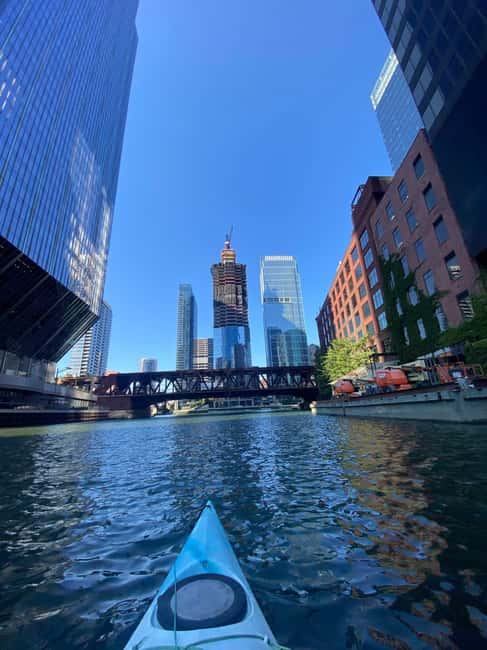
Chicago can feel like a city of streets, trains, and tall buildings. The river gives you another way to understand it. From the water, the downtown core becomes a narrow urban canyon, with buildings rising on both banks and bridges marking the route ahead.
The guide connects the scenery to Chicago’s growth. You learn about the river’s early role, the people who helped shape the city, and the engineering projects that made modern Chicago possible. The story is not just about architecture. It is about trade, sanitation, transportation, and the practical problem of building a major city around a river that once carried polluted water toward Lake Michigan.
The most memorable fact is likely the river’s reversed flow. Engineers changed its direction so water would move away from Lake Michigan rather than toward it. That single project changed the relationship between the city, its drinking water, and its river.
I like tours that explain why a place looks the way it does. This one gives you that context while you are moving through the middle of the city, rather than asking you to absorb it from a display or a lecture hall.
More History Walks around Chicago:
- Chicago in a Day: Food, History & Architecture Walking Tour
★ 5.0 · 1,153 reviews - Historical and Architectural Chicago Fireboat River & Lake Cruise
★ 5.0 · 246 reviews - Chicago: Food, History and Architecture Tour
★ 4.8 · 104 reviews
From the kayak launch to the downtown canyon
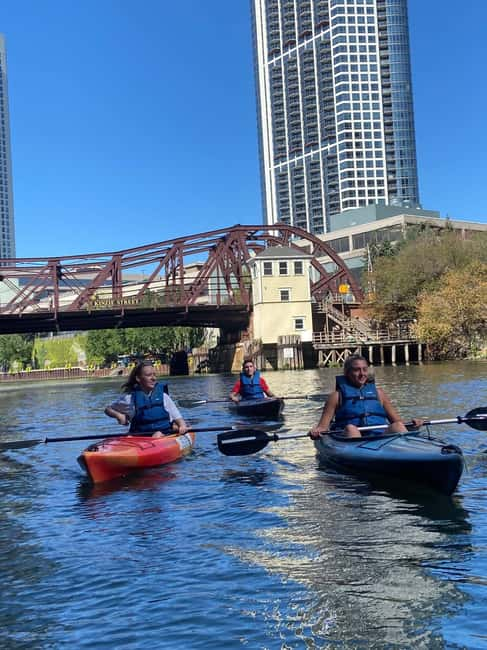
The experience lasts two hours, so the pace should feel focused rather than rushed. You receive a kayak and the needed equipment, then head onto the river with an English-speaking guide. The exact starting time depends on availability, and transportation to the start is not included, so you need to plan your way there separately.
Once you are on the water, the city changes scale. Streets and sidewalks sit above you, while the river narrows your view into a long corridor lined by buildings. This perspective makes the downtown architecture easier to read. You see how towers meet the water, where the Riverwalk runs beside the channel, and how bridges divide the trip into short visual chapters.
The small group matters here. With no more than six people, the guide can keep the group together and explain what you are seeing without competing with a large crowd. You should still expect to paddle and pay attention to directions. This is a guided kayak tour, not a passive boat ride.
The trip uses single kayaks and double kayaks. The stated approximate weight limit is 275 pounds for a single and 500 pounds for a double. If that detail affects your choice, check it before booking rather than assuming a different boat will be available.
The Riverwalk from water level
The renovated Riverwalk is one of the central sights along the route. From the river, you see the promenade from below and across the channel, with people moving along the shoreline and downtown buildings forming the backdrop.
This section gives you a good sense of how Chicago has reclaimed the river as a public space. The water is no longer treated only as an industrial channel. Restaurants, walkways, and recreational activity now share the edges, and a kayak lets you see that change from the middle of it all.
I would not book this trip only for a quiet nature outing. The river sits in the heart of downtown, and the city remains the main attraction. You may see wildlife, but the experience is primarily urban, with traffic, buildings, bridges, and people close by.
That mix is part of the appeal. You can watch shoreline activity, look up at the skyline, and still notice signs of nature along the water. The return of wildlife to this downtown section adds a useful reminder that a heavily built city can make room for more than concrete.
The iron bridges overhead
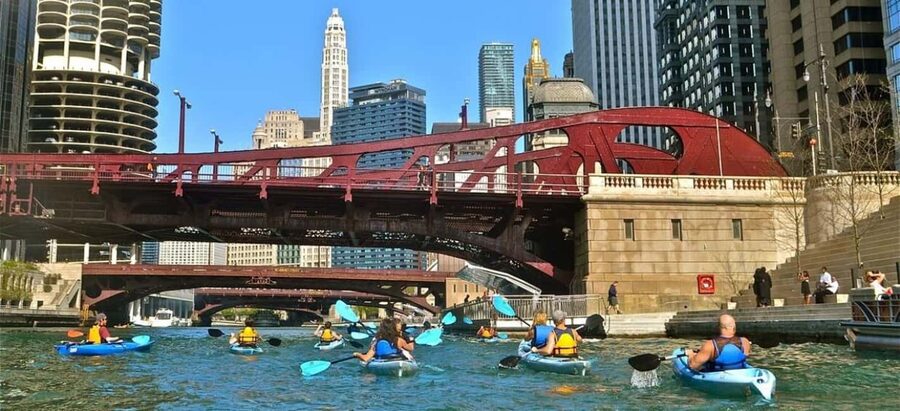
The bridges are more than convenient crossings. Several have distinctive ironwork, and the tour takes you beneath them so you can appreciate their size and mechanics from an unusual position.
Chicago has one of the largest active drawbridge systems in the world, described here as the second largest operational system. From street level, a drawbridge can look like an ordinary piece of infrastructure. From a kayak, you are close to the underside, the supports, and the moving parts that allow boats and vehicles to share the same corridor.
The bridges also help pace the trip. Each one creates a new frame for the skyline. You may pass from a broad view of towers into a shaded section beneath the structure, then come out with another line of sight along the river.
Bridge activity is not guaranteed during your exact outing, but the engineering remains interesting even when the spans are still. The tour’s value comes from explaining how the system works and why Chicago needed it, not from waiting around for a bridge to move.
More Guided Tours around Chicago:
- Chicago River: 1.5-Hour Guided Architecture Cruise
★ 4.8 · 8,046 reviews - Chicago River: Guided Sunset Cocktail & Architecture Tour
★ 4.6 · 203 reviews - Chicago River: 1.5-Hour Guided Architecture Riverboat Tour
★ 4.7 · 93 reviews - Chicago: Guided Tour with Architecture River Cruise
★ 4.5 · 20 reviews
Architecture seen from below
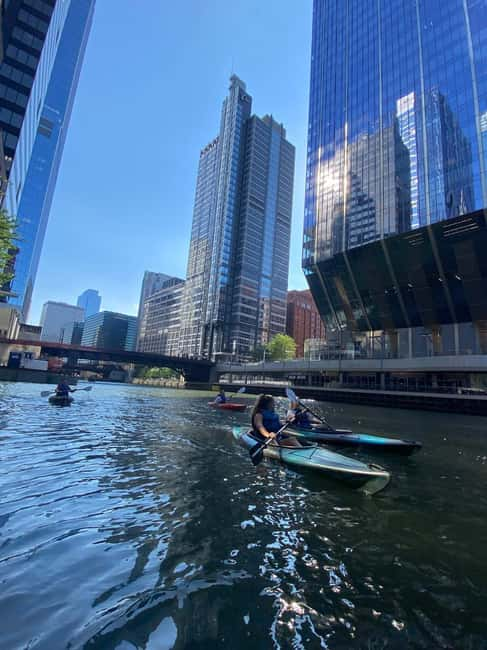
A walking tour tends to direct your eyes toward facades, entrances, and street-level details. A kayak changes that habit. You look upward from the water, where the height of the buildings becomes more apparent and the relationship between old infrastructure and newer construction is easier to notice.
The tour focuses on Chicago’s development and skyline, so you get more than a list of building names. The guide explains how the river helped the city grow and how major figures influenced that process. Specific names of guides are not provided, but the format allows for live questions in English during the trip.
The river also gives you a clean line through downtown. Instead of crossing streets or stopping at corners, you move along one central route. That makes the tour a useful introduction to Chicago’s core, especially if you are still getting oriented.
Still, you should not expect a full architectural survey. Two hours is enough for a focused river journey, not every major building in central Chicago. If you want detailed information about individual towers, add a dedicated architecture walk or river cruise later.
What the history adds to the paddle
Paddling can sometimes feel like an activity placed beside sightseeing. Here, the history gives every section a reason. The river was central to Chicago’s development, and the tour uses that fact to connect the water, bridges, shoreline, and buildings.
You learn about the city’s early years and the role the river played as Chicago expanded. You also hear about engineering projects that changed the river’s course and helped solve major urban problems. These are the kinds of details that make a skyline easier to remember because you understand what forced the city to develop in this particular way.
I especially like the cause-and-effect structure. The river did not simply sit beside the city. It helped create the city, caused serious problems, and then became the focus of major engineering work. The kayak route turns that story into something you can see around you.
The tour is best for you if you enjoy history in manageable portions. The guide talks while you paddle, so you are not standing still for long lectures. If you want a high-energy kayaking workout, the historical commentary may slow the pace. If you want a purely scenic ride, the city history may be more detail than you expected.
Wildlife in the middle of downtown
The possibility of wildlife adds a welcome change of rhythm. Watch the riverbanks and water as you move through the central section. Animals have returned to this part of the river, and seeing them gives the trip a small nature component without leaving downtown.
Wildlife sightings are never guaranteed, so I would treat them as a bonus rather than the reason to book. The main sights remain the bridges, Riverwalk, skyline, and city infrastructure.
That balance suits Chicago. You are not paddling through a remote wetland. You are moving through a major downtown corridor, where urban activity remains close on both sides. The surprise is finding signs of nature in that setting.
Is $64 a fair price?
At $64 per person, the tour sits in a reasonable range for a two-hour guided activity in central Chicago. The price includes the live guide, kayak, and equipment, which means you are paying for both the rental and the interpretation.
The value is strongest if you want several experiences in one outing: a guided paddle, skyline views, bridge engineering, Chicago history, and a look at the Riverwalk from the water. Booking a kayak rental alone might give you freedom, but it would not provide the same historical explanation or route structure.
The small group also helps justify the price. A maximum of six participants is a much more personal setup than a large commercial group. You have a better chance to hear the guide clearly and ask a question when something catches your attention.
Food and transportation are not included. That is easy to handle in downtown Chicago, but you should allow extra time and budget to reach the starting point and arrange a meal before or after. The tour ends at a central location, so you can continue exploring downtown without making a separate trip across the city.
Free cancellation is available up to 24 hours before the start for a full refund. You can also reserve now and pay later, which is useful if your schedule is still changing.
Who should book this kayak tour?
This experience suits you best if you:
- Want a different view of downtown Chicago
- Enjoy history explained through real places
- Like a small, guided group
- Can swim and manage two hours of kayaking
- Are comfortable in an urban setting rather than a remote natural area
- Want to combine sightseeing with a light outdoor activity
It is not suitable for non-swimmers or people with mobility impairments. The boat weight limits also matter. A single kayak has an approximate limit of 275 pounds, while a double kayak has an approximate combined limit of 500 pounds.
You should also consider the weather and your comfort with being on the water, though no specific weather policy is provided here. Wear clothing suited to an outdoor activity and be ready to paddle for much of the two-hour period.
The one available verified rating, dated July 28, 2025, describes the experience as excellent. That is encouraging, but it is a very small sample, so I would place more weight on the clear itinerary, group size, and suitability details than on the rating alone.
Should you book the Chicago River kayak tour?
Book it if you want Chicago’s history to make sense while you are looking at the places where it happened. The reverse-flowing river, iron bridges, Riverwalk, wildlife, and skyline create a strong two-hour route, and the six-person limit should keep the experience personal.
Skip it if you cannot swim, have mobility limitations, or want a completely relaxed sightseeing ride with no paddling. For most active visitors who want an unusual downtown view and practical city history, $64 is a fair price for the combination.
FAQ
How long is the Chicago history and architecture kayak tour?
The tour lasts two hours.
How much does the tour cost?
The listed price is $64 per person.
What does the price include?
The price includes a live English-speaking guide, a kayak, and equipment.
Is transportation to the starting point included?
No. You are responsible for getting to the starting point.
Is food included?
No. Food is not included in the tour price.
How large is the group?
The tour is limited to six participants.
What language is the tour conducted in?
The live tour guide conducts the experience in English.
Can non-swimmers join?
No. The tour is not suitable for non-swimmers.
What are the kayak weight limits?
The approximate limit is 275 pounds for a single kayak and 500 pounds for a double kayak.
Can I cancel for a refund?
Yes. You can cancel up to 24 hours in advance for a full refund.
Can I reserve now and pay later?
Yes. The booking option allows you to reserve your place and pay later.
New to the itinerary around Chicago
- Private Chicago Architecture Tour★ 5.0 · 5 reviews
- Private Frank Lloyd Wright Architectural Tour by Luxury Vehicle★ 3.5 · 7 reviews
- Chicago Luxury Minibus City Tour and Architecture River Cruise★ 4.5 · 8 reviews
- Private Chicago Architecture Walking Tour★ 5.0 · 6 reviews
- Chicago History and Architecture Walking Tour with Boat Cruise★ 4.5 · 10 reviews
- Small Group History And Architecture Walking Tour of Chicago★ 4.5 · 8 reviews
- Chicago Walking Tour: See Inside Art Deco Masterpieces★ 4.9 · 8 reviews
- Chicago History and Architecture Walking Tour★ 4.6 · 13 reviews
Chicago Architecture Tours, compared.
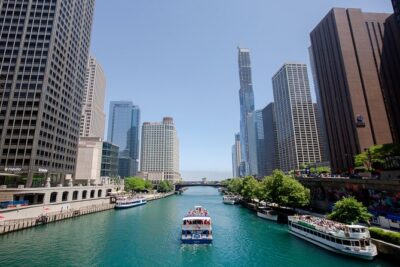
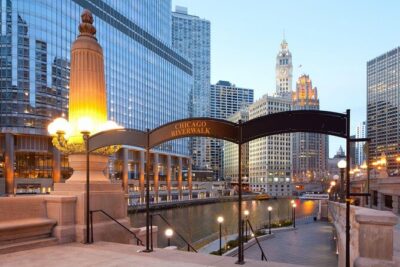
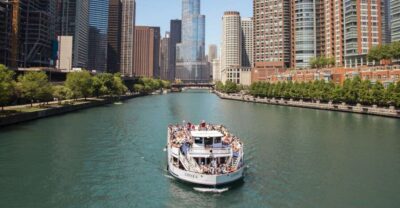
Chicago River: 1.5-Hour Guided Architecture Cruise
Read our review →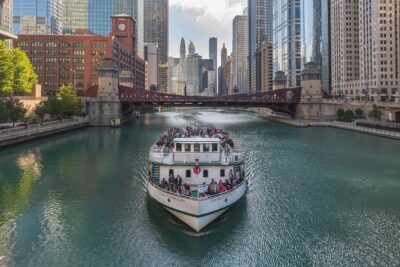
Chicago Architecture Center River Cruise aboard First Lady
Read our review →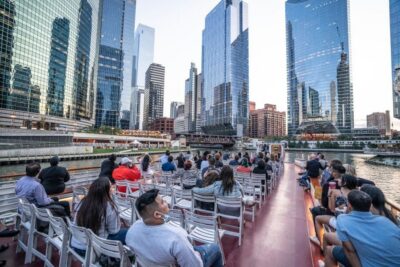
Architecture River Cruise Skip-the-Ticket Line
Read our review →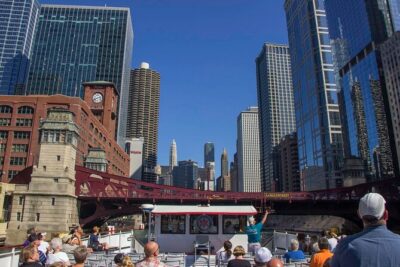
Chicago River 45-Minute Architecture Tour from Magnificent Mile
Read our review →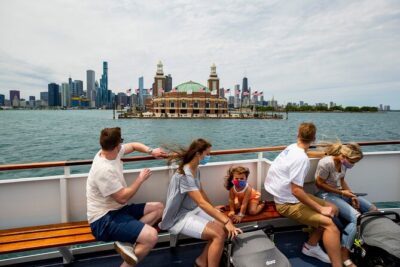
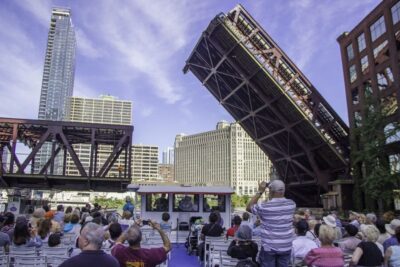
45-Minute Family-Friendly Architecture River Cruise
Read our review →Other lists with this tour