
Review · CHICAGO
Chicago: Prohibition-Era Culture & Architectural Treasures
Chicago’s Prohibition story comes alive here not through dusty dates, but through the streets, towers, bridges, and grand interiors that grew around it. This 2.5-hour walk links crime, journalism, city growth, and design from the Chicago Theatre to the Bean, giving you a useful first look at the city center.
I like the mix of famous sights and less obvious details, especially the Chicago Cultural Center and its fine interior spaces. I also like the small-group format, capped at 16 people, with a usual maximum of 12 for the advertised small-group tour. The main drawback is the distance: about 4.8 kilometers, or 3 miles, which can feel long if you are tired or caught in bad weather.
Key Points
- Chicago Theatre start: Meet beneath the marquee at 175 N. State Street, an easy central landmark.
- Prohibition meets architecture: Learn how crime, business, journalism, and city growth shaped downtown.
- Riverwalk viewpoints: See Marina Towers, Willis Tower, the Jewelers Building, London House, and Du Sable Bridge.
- Cultural Center interior: Step inside one of the city’s most striking public buildings and sample Chicago-style popcorn.
- Bean finish: End at Millennium Park, with time for photos and advice on lunch and nearby sights.
- Flexible small-group format: English-speaking guides lead the walk, with private groups available.
Chicago’s Prohibition Story Begins Beneath the Theatre Marquee
Meet your guide beneath the Chicago Theatre marquee at 175 N. State Street. This is a practical meeting point in the heart of downtown, and the famous sign makes it hard to miss.
From here, the tour sets up the city’s Prohibition-era story. Chicago is often reduced to gangsters and speakeasies, but this walk places that period inside a larger story about money, power, newspapers, architecture, and rapid city growth. That broader view is useful. You do not just hear about crime as an isolated subject. You see how the city’s public face and private dealings developed side by side.
Guides can vary by departure. Dash has led many of the strongest outings, while Kevin, Rich, Bash, and Wallach have also guided this route. The best quality shared by these guides is a clear love of Chicago and an ability to connect facts with the buildings around you. Dash, in particular, is praised for smooth storytelling and for watching the group’s needs, including breaks, snacks, and restroom stops.
Expect a live tour in English. The company can arrange a private group, but the regular small-group option is the better value for most people who want personal attention without paying for an entirely private outing.
More Architecture Tours around Chicago:
- Chicago Architecture River Cruise
★ 5.0 · 15,756 reviews - Chicago River 90-Minute Architecture Tour
★ 4.5 · 9,629 reviews - Chicago River: 1.5-Hour Guided Architecture Cruise
★ 4.8 · 8,046 reviews
The Riverwalk Puts Chicago’s Growth at Street Level
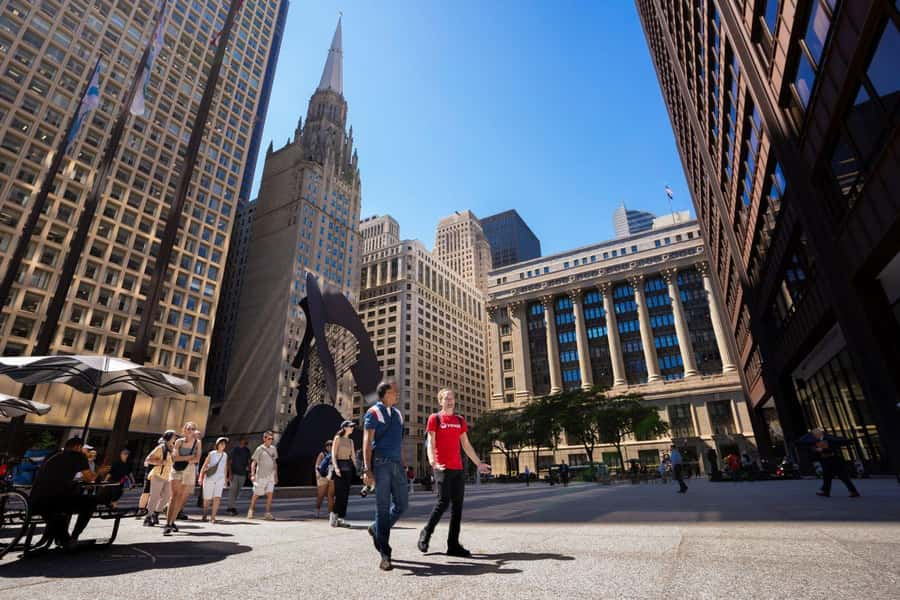
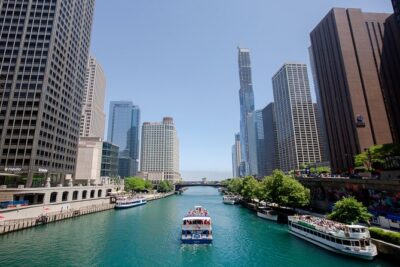
The route heads toward the Chicago River and its Riverwalk. This section gives you a changing view of the city. Instead of seeing Chicago only from a boat or from a high observation deck, you walk through its public spaces and look up at the buildings from close range.
The Riverwalk is especially useful for understanding scale. Chicago’s towers can feel abstract when viewed from a distance. On foot, you notice how older buildings, newer structures, bridges, and riverfront paths occupy the same tight urban space.
Your guide discusses landmarks such as Marina Towers, Willis Tower, and the Jewelers Building. Each points to a different side of Chicago. Marina Towers brings a bold, sculptural form to the river. Willis Tower represents the city’s push toward height and modern business. The Jewelers Building connects downtown architecture with trade and commerce.
You will also learn about the London House and Du Sable Bridge, including Art Deco design and the details built into the bridge area. This is where the tour earns its price for architecture fans. You are not simply ticking off famous names. You are encouraged to notice lines, materials, decoration, and the way buildings face the river.
The route covers a lot of ground, so comfortable shoes matter. The tour is suitable for all ages and fitness levels according to the activity details, but that does not mean it is effortless. Three miles of city walking can feel substantial, especially if you have spent the morning sightseeing or are visiting during snow, rain, or summer heat.
Look Up at London House and Du Sable Bridge
The section around London House and Du Sable Bridge gives the tour some of its best visual variety. Art Deco design is easy to miss when you are rushing through downtown. A guide helps you stop and look at the decorative choices that turn an ordinary walk into a lesson in city design.
Du Sable Bridge is also a good place to connect Chicago’s past with its present. Bridges are not just ways across the river. They shape how people move through downtown and how buildings relate to the water. The tour uses these structures to explain the city rather than treating them as quick photo stops.
You should keep your expectations realistic. This is a walking tour, not a formal architecture class, and the itinerary includes many subjects beyond design. If you want detailed information about every architect, structural system, or interior feature, an architecture cruise may suit you better. If you want a readable introduction that joins architecture with politics, crime, and city life, this route is more varied.
The Chicago Cultural Center Adds an Indoor Pause
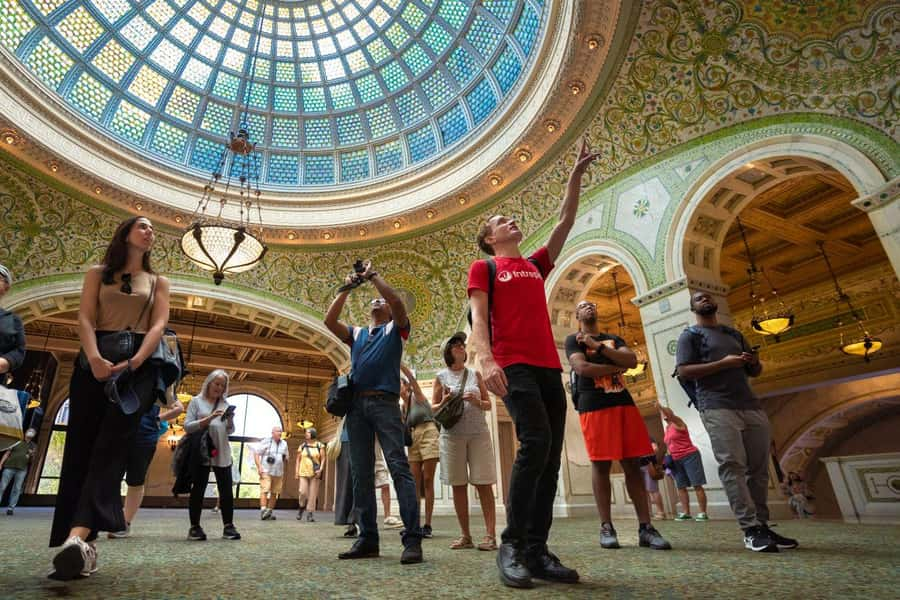
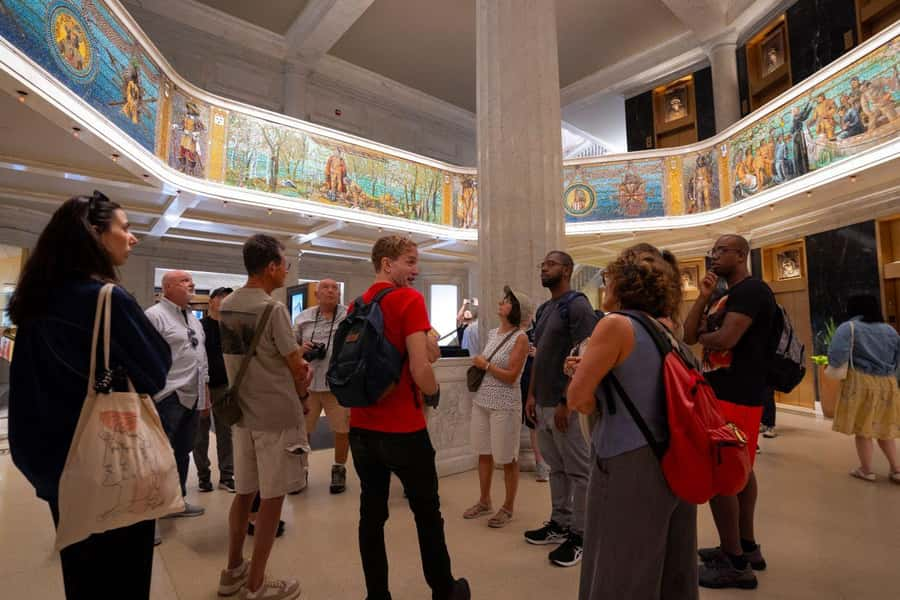
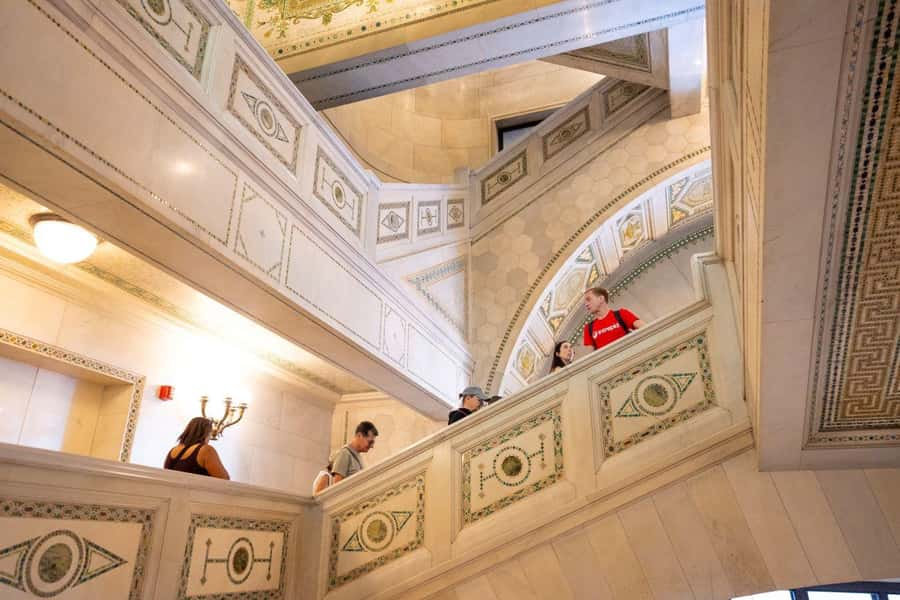
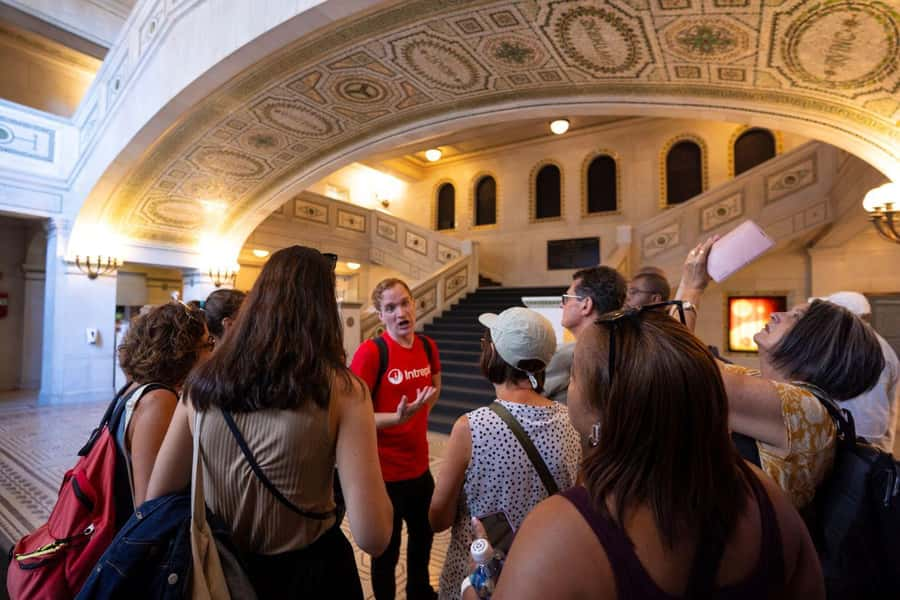
The Chicago Cultural Center is one of the most valuable stops because it lets you step indoors and see the city’s public architecture at close range. The building offers a change of pace after the Riverwalk and gives you a chance to study decorative details without standing beside a busy street.
The visit also helps balance the Prohibition theme. Chicago’s story is not only about wrongdoing and private deals. It is also about civic ambition, public art, culture, and the effort to create impressive shared spaces.
The exact rhythm of the stop depends on the guide and the group. Some groups may linger over the building’s interiors, while others may keep moving to stay on schedule. Guides such as Dash are especially attentive to the group’s energy, so you can expect a sensible pace rather than a nonstop march.
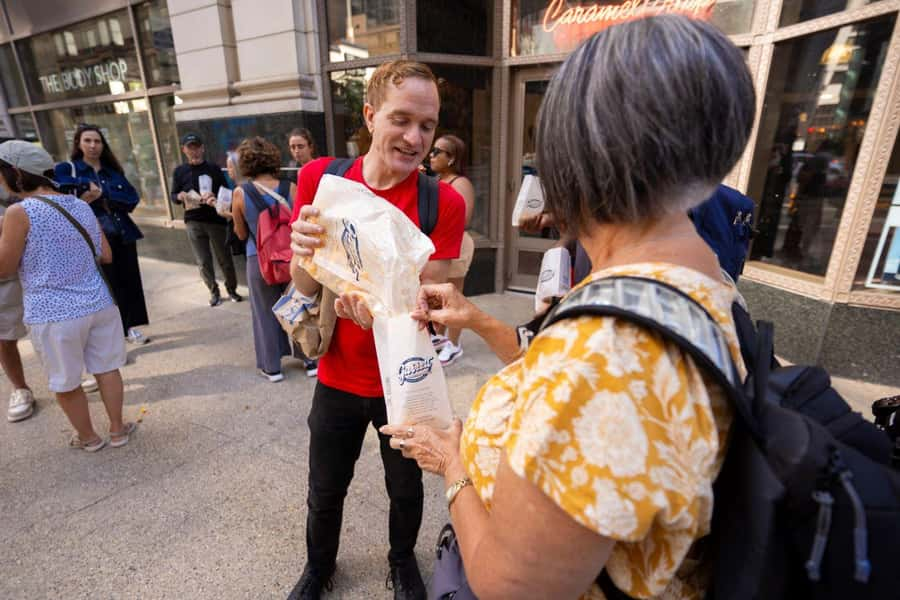
A small Chicago-style popcorn tasting is included. It is a modest extra, but it adds a local flavor to the walk and gives you a quick snack along the way. Vegetarian options can be accommodated if you notify the company in advance. Other food allergies and dietary preferences cannot be accommodated, so you should plan around that limitation.
Same streets, read through a different style:
- Chicago Architecture Center River Cruise aboard First Lady
★ 5.0 · 5,536 reviews - Chicago: Architecture River Cruise Skip-the-Ticket Line
★ 4.8 · 4,325 reviews - Chicago River 45-Minute Architecture Tour from Magnificent Mile
★ 4.5 · 2,924 reviews - Chicago Lake and River Architecture Tour
★ 4.5 · 2,308 reviews
Wrigley Building and Tribune Tower Tell a Different Story
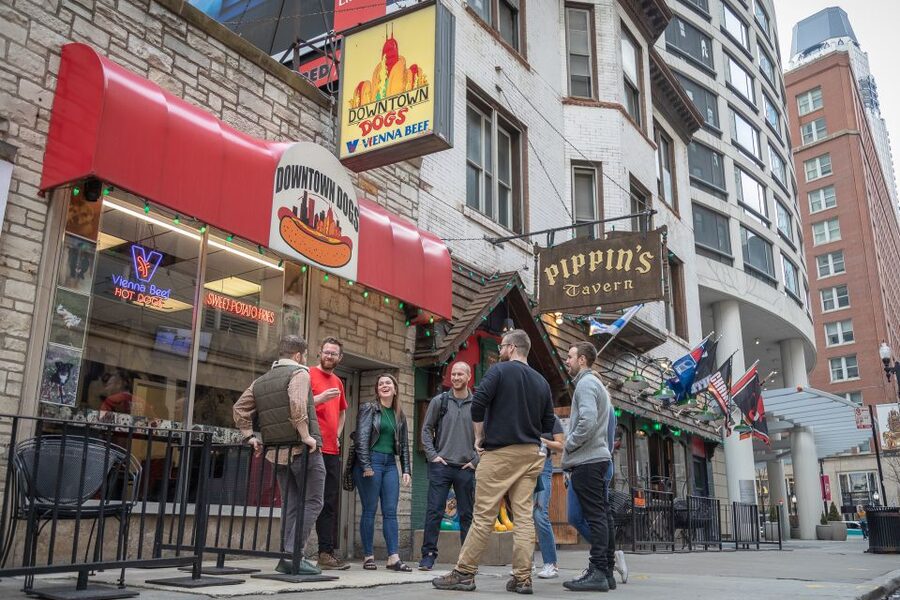
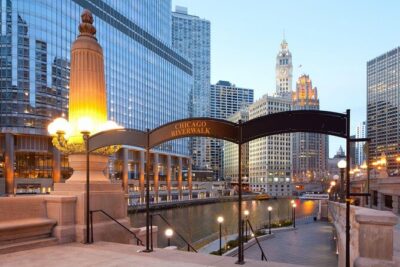
The next part turns toward the Wrigley Building and Tribune Tower. These landmarks open a window onto Chicago’s newspaper and business culture, which fits the tour’s interest in how the city shaped its own identity.
The Tribune Tower is especially useful for discussing journalism. Chicago newspapers helped define public life, political debate, and the way the city told stories about itself. The Wrigley Building adds another layer, showing how commercial ambition became part of the downtown skyline.
This section works well if you like cities as social documents. Buildings are not just backdrops here. They reflect who had money, who controlled information, and what kind of future city leaders wanted to display.
The guide’s delivery matters. Several guides on this route have been praised for making facts easy to follow, patient, and personal. That is important because downtown architecture can quickly turn into a list of dates and names. A strong guide keeps the information connected to what you are seeing right now.
You may also find that this part makes the tour appealing even if Prohibition is not your main interest. The crime theme gets you started, but the walk expands into journalism, design, local culture, and the people who helped shape Chicago.
Millennium Park and the Bean Make an Easy Finish
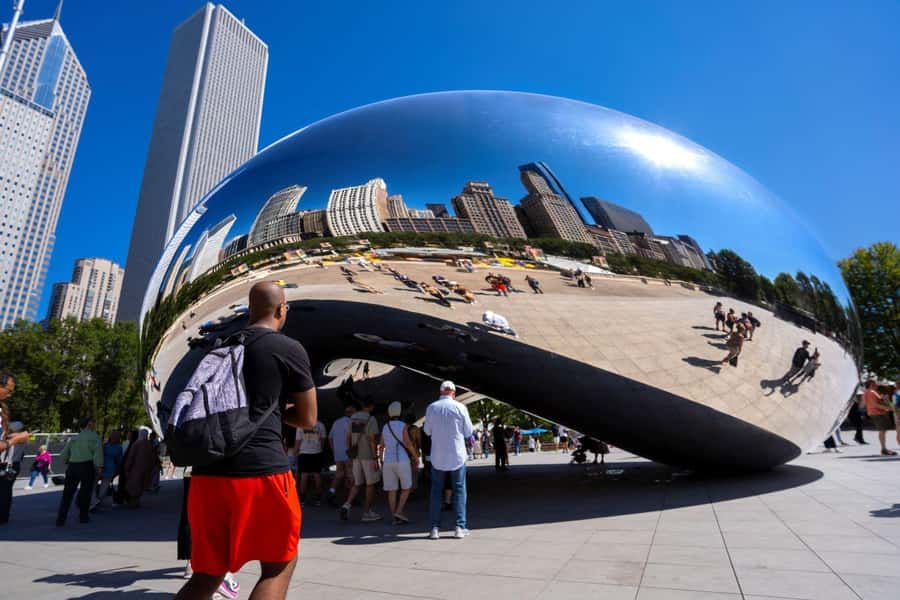
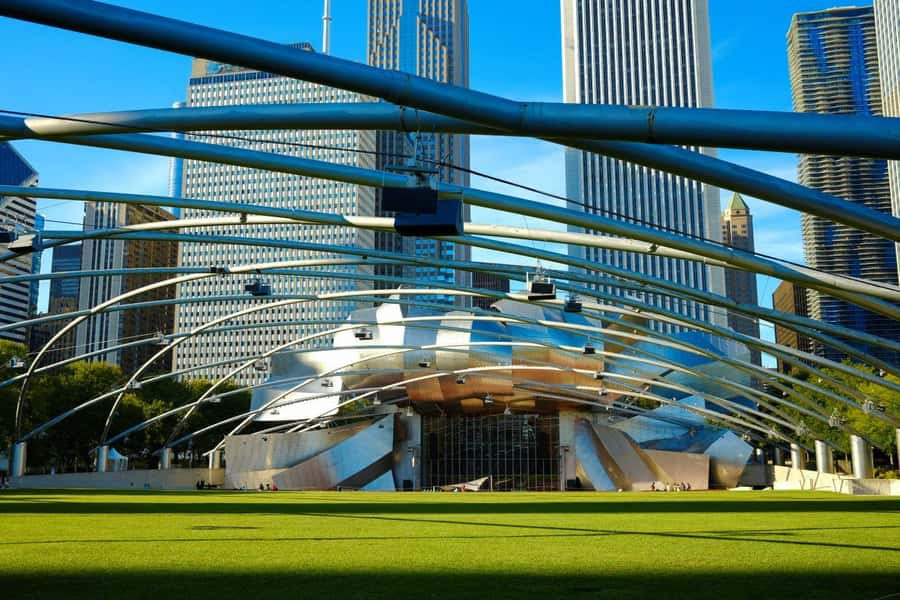
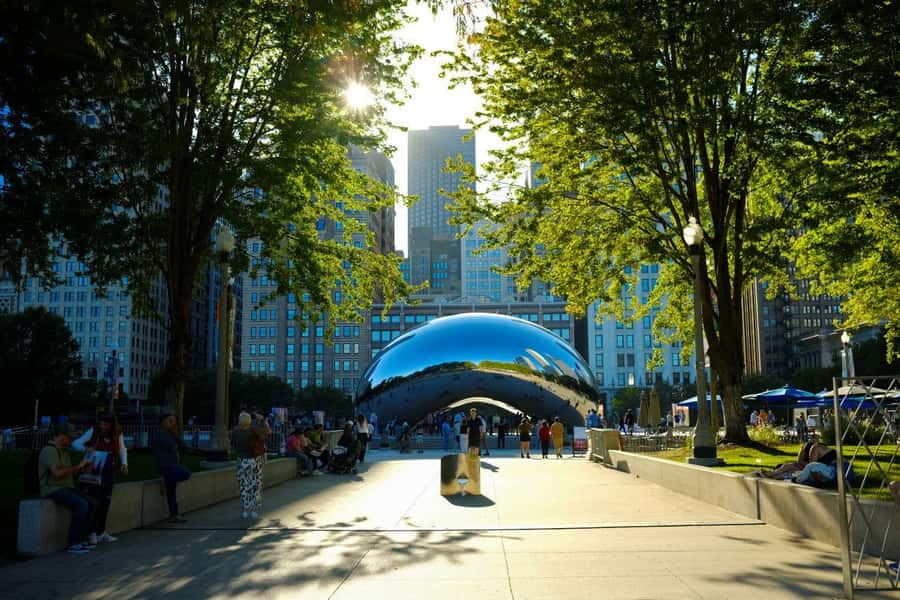
The walk ends at Millennium Park, beside the famous Bean sculpture. This is a smart finishing point because it places you near several other central attractions and gives you a natural spot for photographs.
Your guide can also suggest lunch options and further sights. That advice may be one of the most useful parts of the final stop, especially if you are new to Chicago and want to plan the rest of your day. The tour does not include lunch, admission to extra attractions, or transport after the finish, so use the ending as a chance to shape your next few hours.
The Bean is familiar from photographs, but arriving there after walking through the city gives it more context. You have just seen older commercial buildings, bridges, riverfront design, civic interiors, and newspaper landmarks. Millennium Park then shows a newer public face of Chicago.
The finish also makes this a good first-day activity. You can use the route to get your bearings, then return to the buildings or neighborhoods that caught your attention. If you already know downtown well, the guide’s stories and interior stops may still reveal details you have missed.
Is $49 a Fair Price for 2.5 Hours?
At $49 per person, this tour sits in a reasonable range for a guided city walk, provided you value interpretation rather than simply collecting photos. The price includes the walking tour, a local English-speaking guide, and the popcorn tasting. It does not include meals, transport, or admission to separate paid attractions.
The small-group size improves the value. A maximum of 16 people is stated for the small group, with the usual advertised group size limited to 12. That gives you a better chance to hear the guide and ask questions than on a large coach tour. It also allows the guide to adjust the pace for breaks and group needs.
The tour is particularly good value for a first visit. In one outing, you cover the Chicago Theatre, Riverwalk, Marina Towers, Willis Tower, Jewelers Building, London House, Du Sable Bridge, Chicago Cultural Center, Wrigley Building, Tribune Tower, Millennium Park, and the Bean. You will not explore every building in detail, but you receive a strong city-center framework.
For a repeat visitor, the value depends on your guide and your interests. The route can still work if you want more context for places you have walked past before. If you mainly want a long list of gangster addresses, a crime-focused tour may be a closer match.
Who Will Enjoy This Walk Most?
I would recommend this tour to first-time visitors who want history and architecture in the same package. It gives you a practical introduction to downtown without requiring a full day, and it ends near places you can explore on your own.
It also suits visitors who prefer walking to riding. You get close to the buildings and see how the river, bridges, streets, and public spaces fit together. That physical connection is something a bus tour cannot provide.
Families can join, and children under six are free. Still, parents should consider the three-mile distance and variable weather. There is no promise of sunshine: the tour operates in rain, snow, and other conditions, so bring weather-appropriate clothing and shoes with good support.
Architecture fans may want to pair this with a river architecture cruise. The cruise offers a different view and helps you understand the skyline from the water, while this tour gives you closer contact with streets and interiors. A crime bus tour or gangsters-and-ghosts walk would be a better match if crime stories are your only priority.
The tour is carbon neutral and operated by a B Corp certified company. That will not change the buildings you see, but it may matter if responsible tourism is part of your booking decision.
Practical Tips Before You Go
Wear comfortable shoes. This is the most important preparation, since the route covers roughly three miles and includes outdoor walking in all weather.
Dress in layers and check the forecast before leaving. Rain, snow, and cold can change how enjoyable the Riverwalk feels, while summer sun may make the distance more tiring.
Arrive at the Chicago Theatre beneath the marquee. The address is 175 N. State Street, Chicago, Illinois 60601.
If you need vegetarian food, notify the company in advance. Other allergies and dietary preferences cannot be accommodated, so do not rely on the included tasting for a full meal.
You can cancel up to 24 hours before the start for a full refund, and the reserve-now, pay-later option keeps your plans flexible. Morning and afternoon departures are usually available, so choose a time that leaves room for rest before or after the walk.
Should You Book Chicago’s Prohibition and Architecture Walk?
Book it if you want a friendly, wide-ranging introduction to downtown Chicago, especially on your first visit. The strongest parts are the guide-led connections between Prohibition, architecture, journalism, and city growth, along with the Cultural Center interior and small-group attention.
Think twice if you dislike walking three miles, need a food tour that handles several allergies, or want a tightly focused account of organized crime. For everyone else, $49 buys a useful orientation, plenty of major sights, and the chance to notice details you might otherwise pass without seeing.
FAQ
How long is the Chicago Prohibition and architecture tour?
The tour lasts 2.5 hours and covers about 4.8 kilometers, or 3 miles, on foot.
Where does the tour begin?
It begins beneath the marquee of the Chicago Theatre at 175 N. State Street, Chicago, Illinois 60601.
Where does the tour end?
The tour ends at Millennium Park, near the Bean sculpture.
What language is the tour conducted in?
The live tour is conducted in English.
What is included in the price?
The $49 price includes the walking tour, an English-speaking local guide, and a Chicago-style popcorn tasting.
How many people are in the small group?
The small-group tour usually has no more than 12 participants, while the stated maximum is 16 passengers.
Is the tour suitable for children?
Yes. It is described as child-friendly, and children under six can join free of charge. The full route covers about three miles, so consider your child’s walking ability.
What happens if it rains or snows?
The tour operates in rain, sunshine, and snow. Bring comfortable shoes and clothing suited to the weather.
New to the itinerary around Chicago
- Private Chicago Architecture Tour★ 5.0 · 5 reviews
- Chicago Luxury Minibus City Tour and Architecture River Cruise★ 4.5 · 8 reviews
- Private Frank Lloyd Wright Architectural Tour by Luxury Vehicle★ 3.5 · 7 reviews
- Private Chicago Architecture Walking Tour★ 5.0 · 6 reviews
- Chicago History and Architecture Walking Tour with Boat Cruise★ 4.5 · 10 reviews
- Small Group History And Architecture Walking Tour of Chicago★ 4.5 · 8 reviews
- Chicago: History and Architecture Guided Kayak Tour★ 5.0 · 3 reviews
- Chicago Walking Tour: See Inside Art Deco Masterpieces★ 4.9 · 8 reviews
Chicago Architecture Tours, compared.
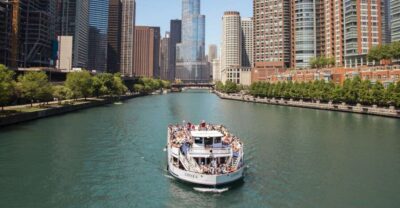
Chicago River: 1.5-Hour Guided Architecture Cruise
Read our review →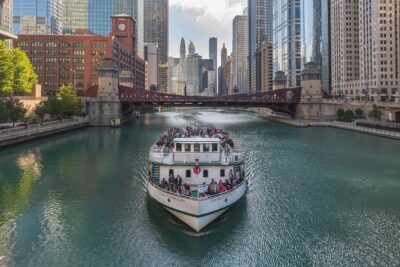
Chicago Architecture Center River Cruise aboard First Lady
Read our review →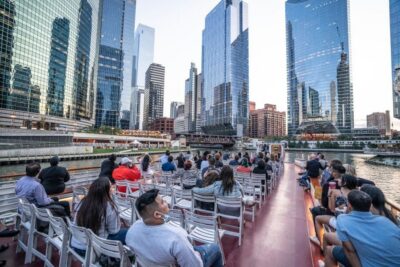
Architecture River Cruise Skip-the-Ticket Line
Read our review →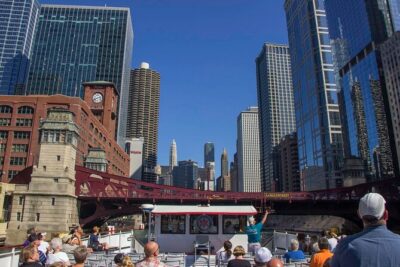
Chicago River 45-Minute Architecture Tour from Magnificent Mile
Read our review →
45-Minute Family-Friendly Architecture River Cruise
Read our review →Other lists with this tour