
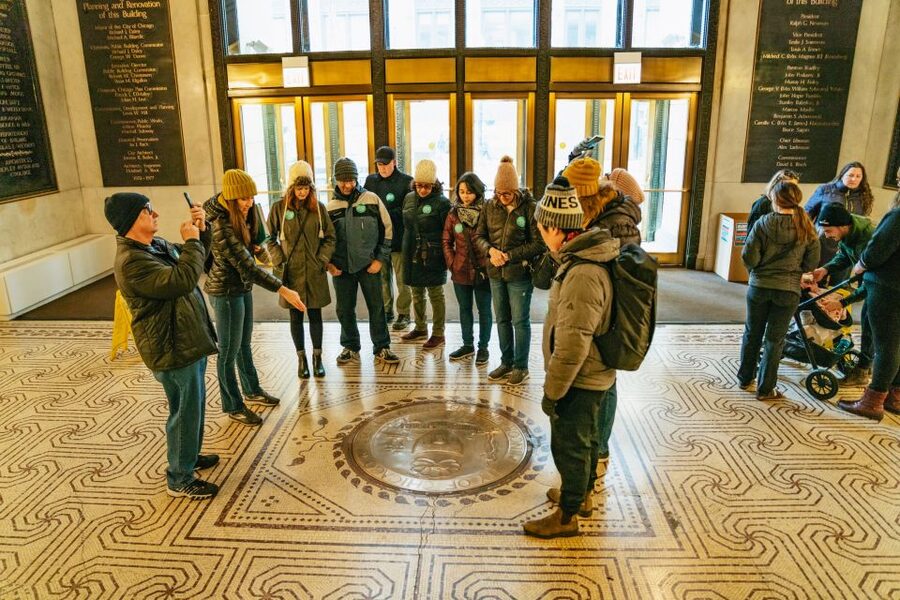
Review · CHICAGO
Chicago’s Original Dazzling Architectural Interiors Tour
Chicago’s best architectural surprises are often indoors. This two-hour walk takes you from Roaring ’20s Art Deco style to an 1880s downtown landmark, then on to Moorish details and the world’s largest Tiffany stained-glass dome. Many of these spaces sit in plain sight, passed by every day.
I like the way this tour links several eras instead of stopping at one famous building. I also like the way guides such as Spencer, Henry, and Kaylee bring different strengths, from local Chicago history to formal architectural training. The main consideration is pace: two hours covers several interiors, so you should expect a focused look rather than a slow, exhaustive tour of each site.
Key points to know before you book

- The Tiffany dome is the grand finale: You finish beneath the world’s largest Tiffany stained-glass dome, close to Millennium Park and Cloud Gate, better known as The Bean.
- The route crosses four design periods: You see Roaring ’20s Art Deco, 1880s architecture, Frank Lloyd Wright-related renovations, and a Postmodern interior with Moorish details.
- The tour begins at 425 S. Financial Place: Meet in the plaza beside the metal horse sculpture.
- The guides add real personality: Spencer is a Chicago native, Henry is an architect by training, and Kaylee has been praised for her professionalism and friendly manner.
- The $35 fee includes entry costs: That makes the price easier to justify, though gratuities are not included.
- Good shoes still matter indoors: You will walk between buildings, and weather-appropriate clothing is useful even though much of the experience takes place inside.
Why Chicago’s interiors deserve a separate tour
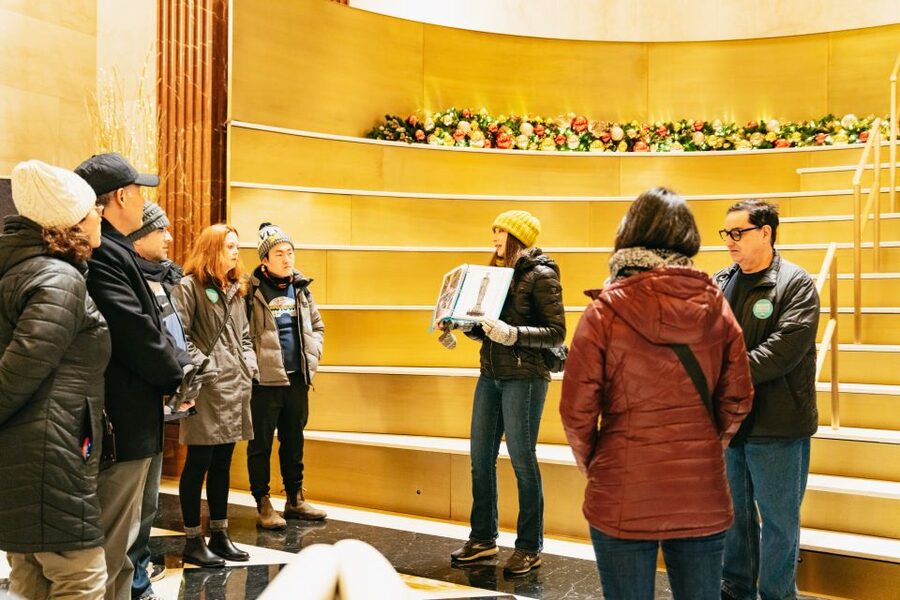
Chicago is famous for its skyline, but the city’s public interiors often tell a more intimate story. Outside, you see towers, façades, and street grids. Inside, you notice ceilings, tilework, glass, metal, ornament, and the ambitions of the people who built the city.
This tour is built around that change in viewpoint. You are not simply looking at another tall building from the sidewalk. You are asked to look up at a ceiling, notice a decorative pattern, or consider how an older room was altered for a later age.
That approach works especially well in downtown Chicago, where a quick walk can carry you across decades of architectural taste. The itinerary moves from the confident decoration of the 1920s to the weight and ornament of the 1880s, then to a later interior shaped by Postmodern design. The effect is a compact lesson in how Chicago changed over time.
I would not book this as a substitute for a large exterior architecture cruise or a full architectural survey. It has a narrower aim. You are here for details that can be easy to miss, and the tour makes those details the main event.
More Architecture Tours around Chicago:
- Chicago Architecture River Cruise
★ 5.0 · 15,756 reviews - Chicago River 90-Minute Architecture Tour
★ 4.5 · 9,629 reviews - Chicago River: 1.5-Hour Guided Architecture Cruise
★ 4.8 · 8,046 reviews
Starting beside the horse sculpture
The meeting point is the plaza in front of 425 S. Financial Place, next to a metal horse sculpture. That is a useful landmark in a downtown area where street addresses can blur together, but give yourself enough time to find the plaza without rushing.
The tour is in English and lasts two hours. Since starting times vary, you will need to check availability for the day you want. The experience is listed as wheelchair accessible, which is important for anyone who needs step-free access to the route and its interiors.
Wear comfortable shoes. This is not a long day of walking, but it is still a walking tour, with movement between buildings and stops. Bring clothing suited to Chicago weather, particularly in colder or wet seasons. A face mask or protective covering is also listed among the items to bring.
First stop: Art Deco confidence from the Roaring ’20s
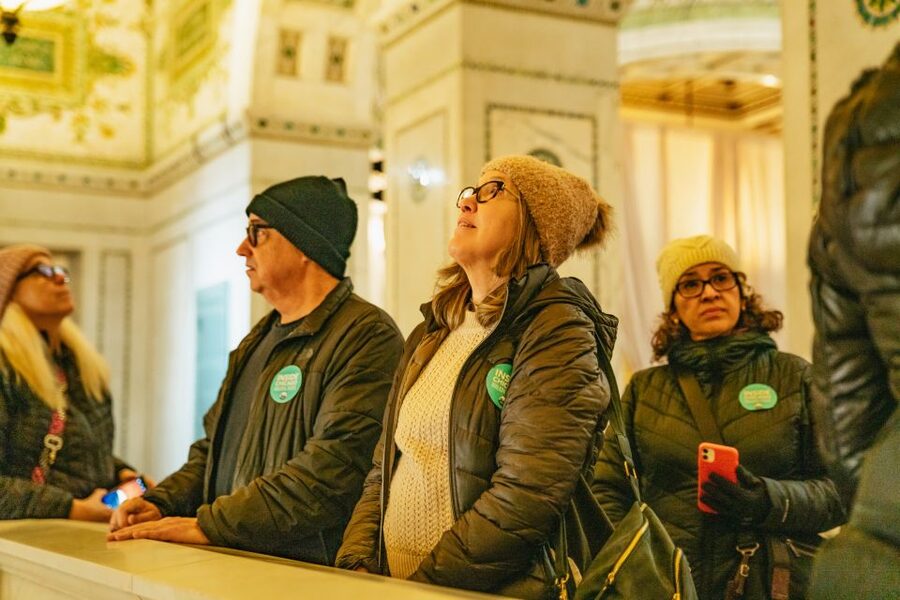
The tour begins with the polished world of the Roaring ’20s. This part of the experience focuses on a classic Art Deco interior, where geometry, symmetry, and decorative polish replace the rougher visual language of earlier Chicago buildings.
Art Deco works well as an opening because it makes an immediate impression. You get the sense of an era that wanted its interiors to look modern, expensive, and optimistic. Look for the broad visual order of the room rather than waiting for one single object to explain everything. The appeal is in the combination of lines, materials, and repeated forms.
This is also where the tour’s focus on interiors becomes clear. From the street, you may see little more than an entrance. Inside, the scale and finish can be entirely different. The guide helps you understand why a room was designed to impress people before they ever reached an office or upper floor.
The experience also connects this period with turn-of-the-century interiors renovated by Frank Lloyd Wright. That detail gives the route added depth. Wright is often treated as an architect of houses and dramatic modern forms, but his influence also appears in the way older interiors were rethought and refined.
You should expect interpretation rather than a simple photo stop. The goal is to understand how design choices reflect the time in which a room was created or changed. Henry, one of the guides, is an architect by training, and that background can be particularly useful when the group is looking at proportion, structure, or decorative decisions.
Stepping back to Chicago in the 1880s
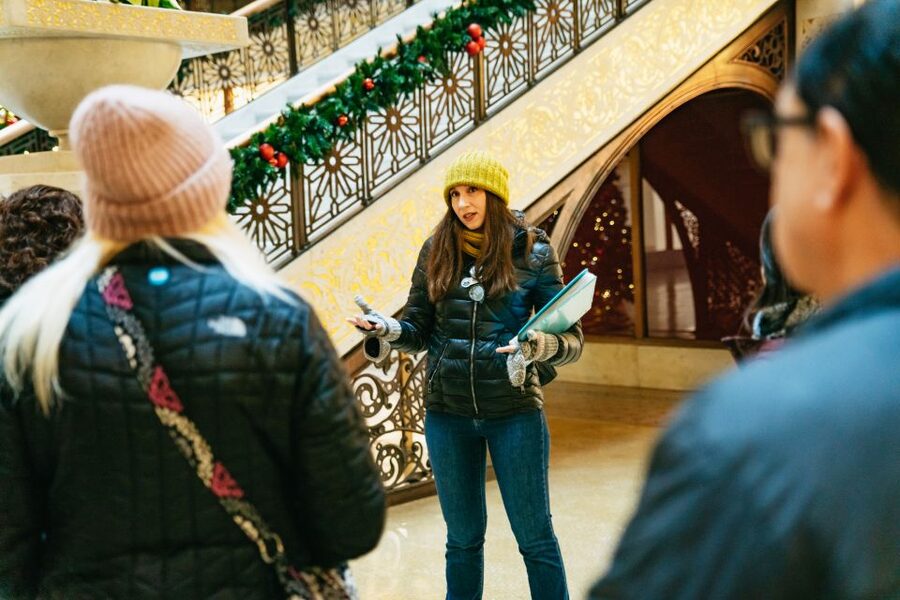
The route then moves roughly 50 years earlier, to one of downtown Chicago’s oldest and most famous buildings. This shift is one of the tour’s strongest ideas. Instead of treating the city as one uninterrupted architectural style, you feel the contrast between the confident decoration of the 1920s and the heavier, more historic character of an 1880s interior.
The age of the building matters because Chicago was still developing its modern identity during this period. The interior offers a chance to consider how designers worked before Art Deco simplified and sharpened many decorative ideas.
I like this part of the route because it asks you to compare rather than simply collect sights. The guide can point out how materials, structure, and ornament differ from the first stop. Details that might look like background decoration on your own become clues to the building’s age and purpose.
There is a practical limit here. The supplied information does not promise an exhaustive tour of every room or a full architectural lecture about the building. You are getting a carefully selected interior and an explanation of why it matters. That is enough for most visitors, but anyone seeking a technical study of Chicago architecture may want a longer specialist tour as well.
Same streets, read through a different style:
- Chicago Architecture Center River Cruise aboard First Lady
★ 5.0 · 5,536 reviews - Chicago: Architecture River Cruise Skip-the-Ticket Line
★ 4.8 · 4,325 reviews - Chicago River 45-Minute Architecture Tour from Magnificent Mile
★ 4.5 · 2,924 reviews - Chicago Lake and River Architecture Tour
★ 4.5 · 2,308 reviews
Frank Lloyd Wright’s mark on older rooms
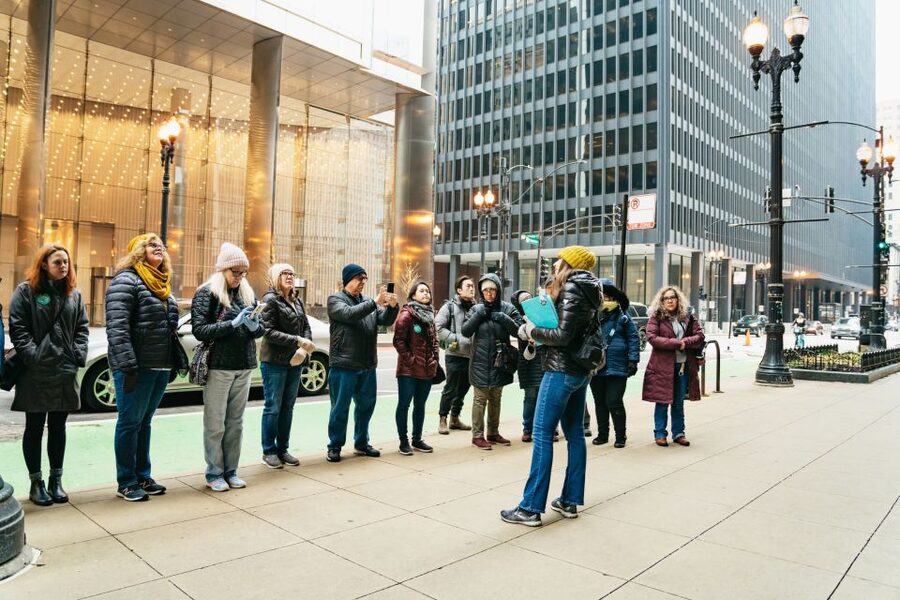
The Frank Lloyd Wright connection adds an important layer to the itinerary. You see turn-of-the-century spaces that were renovated by Wright, which means the story is not only about original construction. It is also about how buildings can be altered, updated, and given a new design direction.
That is valuable for you because historic architecture is often presented as frozen in time. In reality, many important interiors have passed through several phases. A room may preserve old materials while carrying the mark of a later architect. Seeing that mix makes the city’s architectural story more honest.
The tour does not require you to be a Wright specialist. You can enjoy the visual changes first, then use the guide’s explanation to place them in context. If you already know Wright’s work, you may appreciate the chance to consider his approach in a downtown interior rather than only in a famous standalone house.
This is one reason I would recommend the experience to repeat visitors. You do not need to spend your time at the most obvious Chicago landmarks. The route gives you a different way to read buildings you may already have passed.
The Moorish details and Postmodern surprise
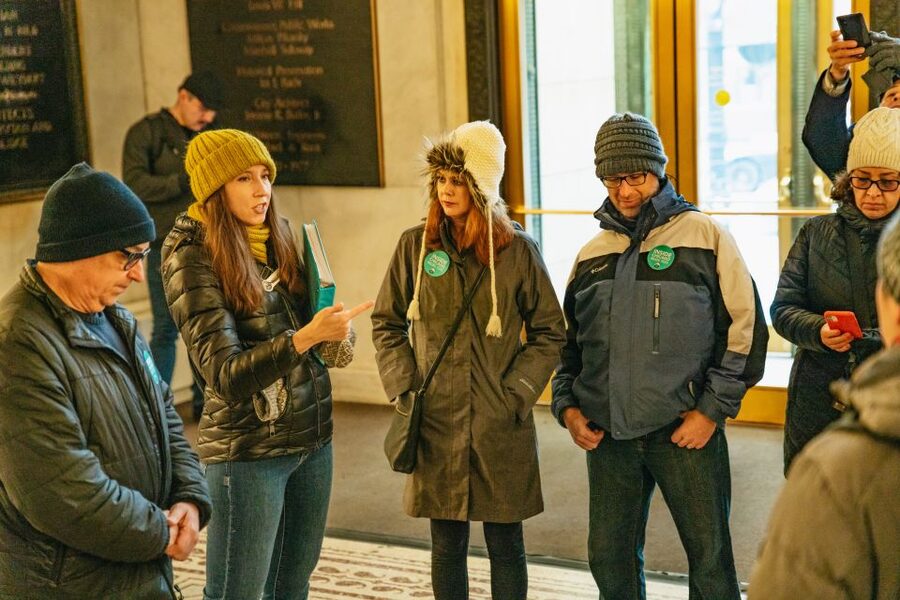
Later, the tour enters a Postmodern interior with a vaulted ceiling and Moorish details. This is a sharp change from both the 1880s building and the Art Deco stop.
Postmodern design often plays with older visual references instead of rejecting them. Here, the vaulted ceiling and Moorish elements create a room that feels deliberately layered. The design is not trying to look like a plain modern office. It uses historical forms and decorative references to make the interior memorable.
This stop helps prevent the tour from becoming a march through only famous early Chicago architecture. You see that interior design continued to change long after the city’s best-known historic buildings were completed.
For you, the value is in the comparison. The room may prompt questions about how architects borrow from earlier traditions, how decoration makes a space feel grand, and why some late-20th-century interiors can be harder to recognize as historically important. The guide’s job is to give that room a place in the larger story.
The itinerary describes extra beautiful interiors appearing as surprises along the way. Exact stops can vary, so I would not book this expecting a fixed list of every room. Instead, treat the added spaces as part of the tour’s appeal. The core route gives you several clear periods, while the extra interiors reward close attention.
Finishing beneath the Tiffany stained-glass dome

The final stop is the visual high point: the world’s largest Tiffany stained-glass dome. You finish by looking upward beneath a large canopy of colored glass, with Millennium Park and The Bean close by.
Ending here is smart. The dome gives the tour a memorable finish and a strong sense of place. After seeing several interiors that may be easy to miss from the street, you arrive at a ceiling that demands attention.
Allow yourself a moment to look beyond the overall size. Tiffany glass is valued for color, pattern, and the way light changes its appearance. The dome works as both architecture and artwork, so you do not need specialist knowledge to appreciate it. The guide can add the facts and context, while you take in the scale.
Its location near Millennium Park also makes the tour easy to fit into a wider day downtown. You can continue toward The Bean after the walk, though the tour itself finishes at the dome area. If you already plan to visit Millennium Park, this experience gives you another reason to spend time nearby without treating the park as the entire Chicago experience.
What the guides add to the two hours
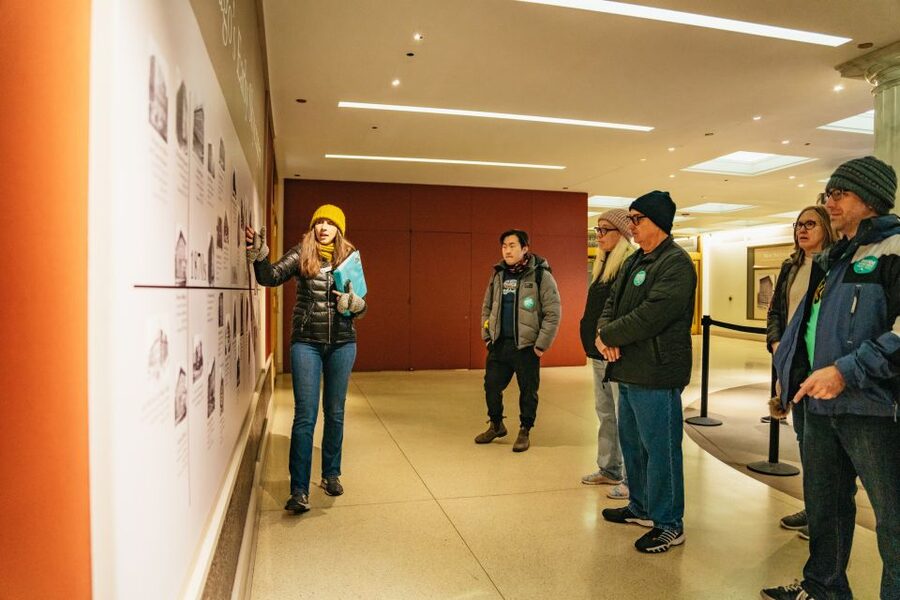
The strongest praise for this experience centers on the guides’ command of Chicago history, architecture, and small visual details. Spencer is described as a true Chicagoan with a strong grasp of local stories. Henry is an architect by training and brings an enthusiastic command of his subject. Kaylee has been singled out for being professional, friendly, and reassuring, even during a rainy day.
Those details matter because an interiors tour can easily become a list of ceilings and dates. A good guide turns each room into a piece of the city’s story. You should expect explanations that connect design with Chicago’s past, rather than a walk that only points out attractive decoration.
The guide also helps you notice things you might normally miss. The route is designed around spaces that many people walk past every day, so the quality of the commentary matters as much as the buildings themselves.
The tour is offered in English, and the guide is live rather than prerecorded. If your interest is mainly in architecture, history, and urban design, that format should suit you well. If you prefer a self-guided walk at your own speed, the fixed two-hour structure may feel less flexible.
Is $35 a fair price?
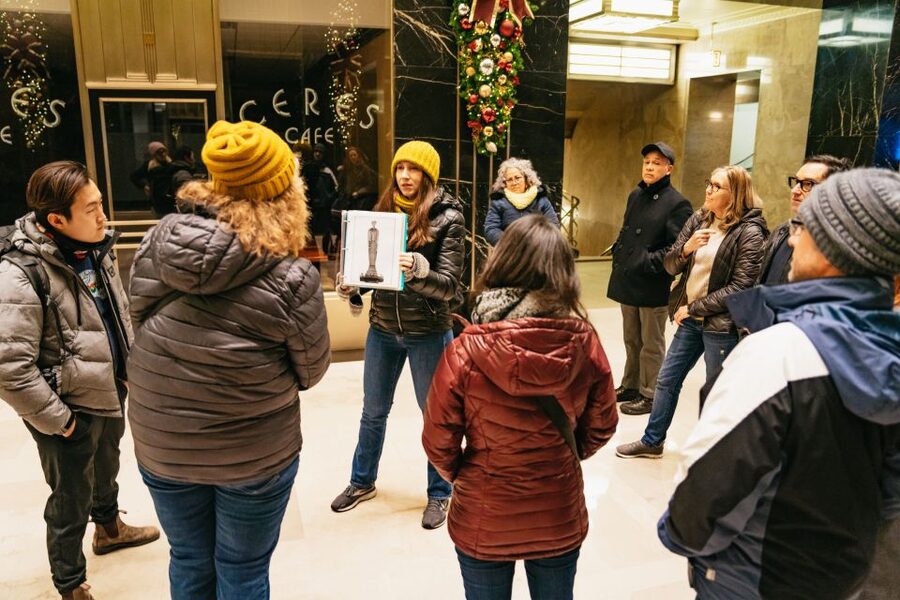
At $35 per person, this is a reasonable price for a two-hour guided experience in downtown Chicago, especially because necessary entrance fees are included. You are paying for access, a planned route, and interpretation that helps you understand interiors you might not find on your own.
The value is strongest if you care about architecture or have limited time in the city. In two hours, you see several design periods and finish at a major Chicago landmark. That is a useful amount of coverage for one afternoon or morning.
The fee does not include gratuities, so plan for that extra cost if you feel the guide has added real value. The tour also offers reserve now and pay later booking, plus free cancellation up to 24 hours before the start time. Those policies give you some flexibility when arranging a Chicago schedule, though you should still check the exact starting time before booking.
Who will enjoy this tour most?
I would choose this tour if you like architecture but do not want a highly technical lecture. It suits first-time visitors who want more than exterior photographs, as well as repeat visitors looking for rooms they may have missed on earlier trips.
It is also a good fit for people who enjoy design details. You will get more from the experience if you are willing to look up, compare materials, and notice how decorative styles change from one stop to the next.
Families with older children may enjoy the visual variety, though the tour’s appeal depends on interest in buildings and history. The two-hour length is manageable, but younger children may not care about the distinctions between Art Deco, 1880s architecture, and Postmodern design.
The tour is listed as wheelchair accessible, making it a practical choice for many visitors who need an accessible option. If weather is poor, much of the experience takes place indoors, but you still need suitable clothing for the outdoor portions between buildings.
My recommendation for booking
Book this tour if you want Chicago’s architectural story told through ceilings, ornament, and overlooked interiors rather than only through famous façades. The combination of Art Deco, 1880s architecture, Frank Lloyd Wright-related renovations, Moorish Postmodern design, and the Tiffany dome gives you plenty of visual contrast in two hours.
I would skip it only if you want a long, technical study of a single building or a broad tour focused mainly on Chicago’s skyline. For everyone else, $35 is a fair price for a focused walk with included entrance fees, strong guide personalities, and a memorable finish near Millennium Park.
FAQ
How long is the Chicago’s Original Dazzling Architectural Interiors Tour?
The tour lasts two hours.
How much does the tour cost?
The listed price is $35 per person.
What does the price include?
All necessary entrance fees are included. Gratuities are not included.
Where does the tour meet?
Meet in the plaza in front of 425 S. Financial Place, next to the metal horse sculpture.
What language is the tour offered in?
The tour is conducted in English with a live guide.
Is the tour wheelchair accessible?
Yes, the activity is listed as wheelchair accessible.
What should I bring?
Bring comfortable shoes, weather-appropriate clothing, and a face mask or protective covering.
New to the itinerary around Chicago
- Private Chicago Architecture Tour★ 5.0 · 5 reviews
- Private Frank Lloyd Wright Architectural Tour by Luxury Vehicle★ 3.5 · 7 reviews
- Chicago Luxury Minibus City Tour and Architecture River Cruise★ 4.5 · 8 reviews
- Chicago History and Architecture Walking Tour with Boat Cruise★ 4.5 · 10 reviews
- Private Chicago Architecture Walking Tour★ 5.0 · 6 reviews
- Small Group History And Architecture Walking Tour of Chicago★ 4.5 · 8 reviews
- Chicago Walking Tour: See Inside Art Deco Masterpieces★ 4.9 · 8 reviews
- Chicago: History and Architecture Guided Kayak Tour★ 5.0 · 3 reviews
Chicago Architecture Tours, compared.
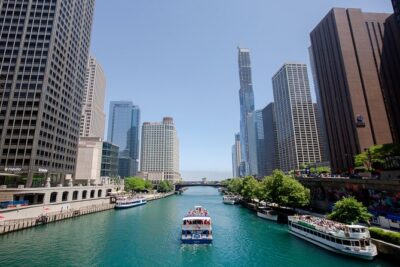
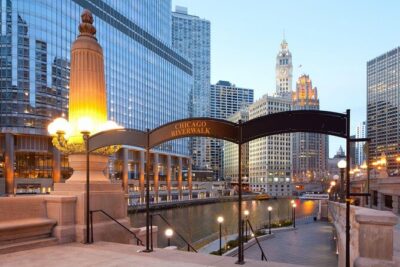

Chicago River: 1.5-Hour Guided Architecture Cruise
Read our review →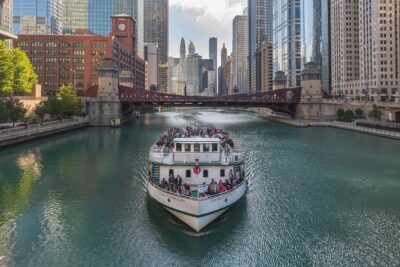
Chicago Architecture Center River Cruise aboard First Lady
Read our review →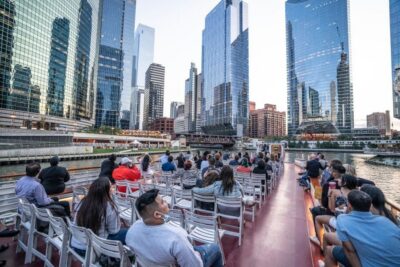
Architecture River Cruise Skip-the-Ticket Line
Read our review →
Chicago River 45-Minute Architecture Tour from Magnificent Mile
Read our review →
45-Minute Family-Friendly Architecture River Cruise
Read our review →Other lists with this tour