
Review · CHICAGO
Chicago: Architecture Center Exhibit Admission
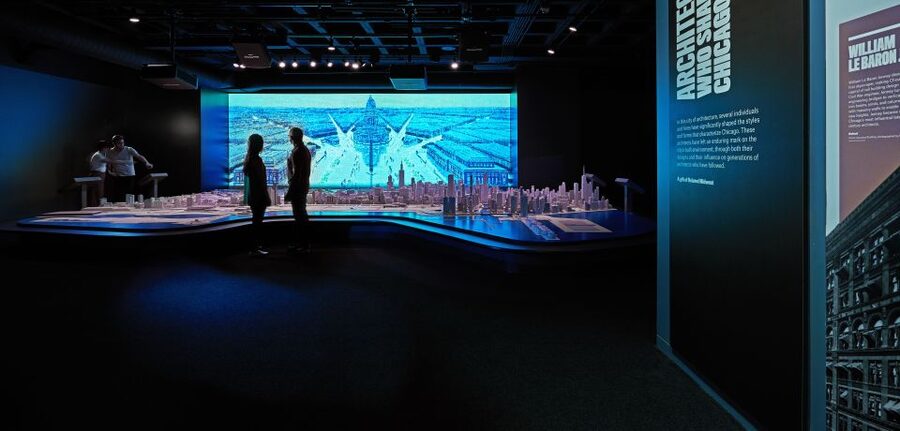
Chicago’s best architectural story is told in miniature at the Chicago City Model Experience, where more than 4,200 buildings fill one dramatic room. A film and light show trace the city’s growth, the Great Chicago Fire, the first skyscrapers, and the modern towers reshaping the skyline.
I like the center’s excellent location beside the river and its wall of glass facing Tribune Tower, the Wrigley Building, and the Apple Store. I also like the skyscraper gallery, which connects Chicago’s early building experiments with supertall projects such as Jeddah Tower in Saudi Arabia.
The main drawback is size. The museum is compact, and the admission does not include a guide or walking tour. If you want a full neighborhood stroll, you will need to book a separate Chicago Architecture Center tour.
Key points to know before you go
- 4,200-plus buildings: The expanded Chicago Model gives you a fast, visual introduction to the city’s neighborhoods and skyline.
- Jeddah Tower model: See a supersized model of the planned Saudi Arabian tower, designed by Chicago architects.
- Film and light show: Watch Chicago’s history unfold across the city model, from the Great Chicago Fire to modern development.
- Interactive screens: Search buildings by architect or style, orient yourself to the city, and find walking routes.
- Prime riverfront setting: The center is at 111 E Upper Wacker Drive, above the dock for the Chicago Architecture Foundation River Cruise.
- Self-guided visit: Your ticket covers the exhibits, but not a docent-led tour, food, drinks, or storage.
Why the Chicago Architecture Center is worth your time
Chicago can be hard to read at street level. A canyon of steel and glass tells you little about why the buildings are there, how neighborhoods developed, or which ideas changed the world. The Chicago Architecture Center gives you that larger picture before you head back outside.
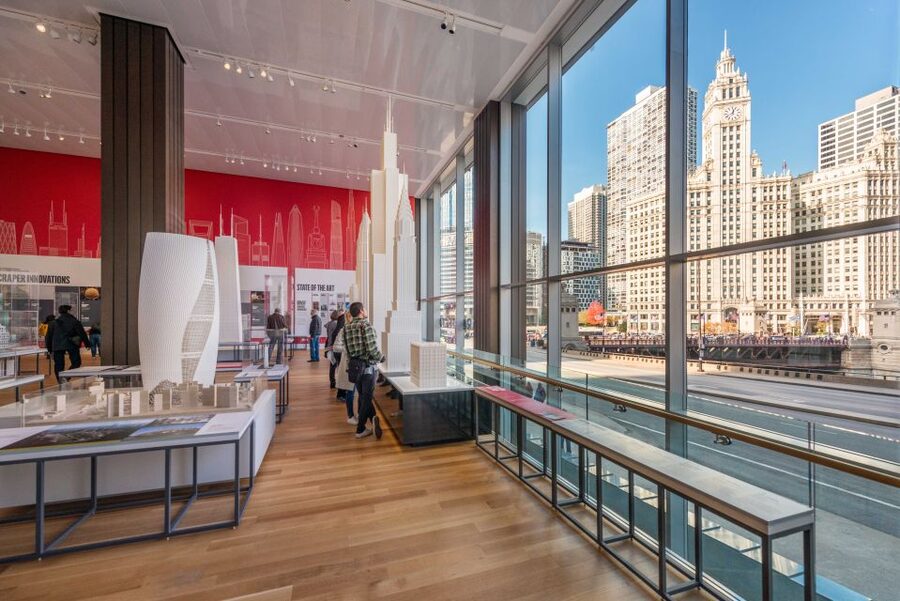
I like this place because it is not just a collection of old photographs and plaques. You can see scale models, touch interactive displays, watch a film, and then look through a 40-foot wall of glass at the actual buildings outside. That connection between model and city is the center’s strongest feature.
The visit is also easy to fit into a day downtown. The center sits at 111 E Upper Wacker Drive, only steps from Michigan Avenue and beside the Chicago River. If you are already walking the Magnificent Mile, visiting Millennium Park, or considering the architecture river cruise, this is a sensible stop.
Your admission is valid for one day, and the listed price is $15 for one person. That is a fair price if you enjoy buildings, city planning, or visual exhibits. It is less compelling if you want a large museum with hours of galleries or a guided explanation at every display.
More Architecture Tours around Chicago:
- Chicago Architecture River Cruise
★ 5.0 · 15,756 reviews - Chicago River 90-Minute Architecture Tour
★ 4.5 · 9,629 reviews - Chicago River: 1.5-Hour Guided Architecture Cruise
★ 4.8 · 8,046 reviews
Entering a building designed for architecture
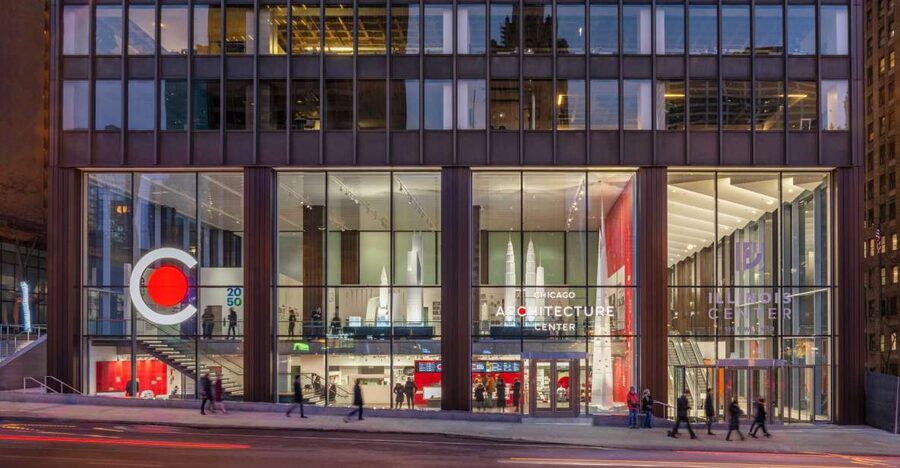
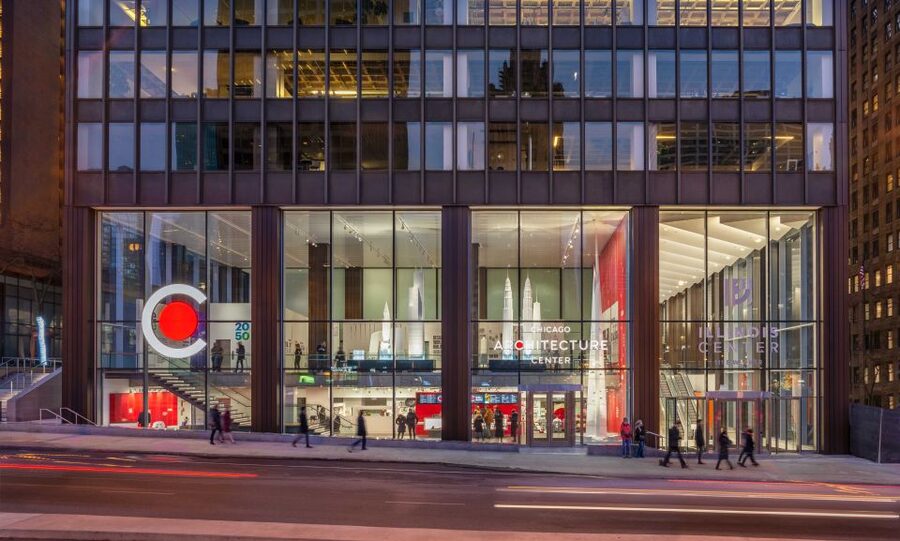
The center occupies a 20,000-square-foot space designed by Adrian Smith + Gordon Gill Architecture. The building itself is part of the experience, although the exhibit content is the main reason to enter.
The center is housed in a building by the Office of Mies van der Rohe, a key figure in mid-century modernism. You do not need to know anything about Mies to appreciate the clean modern setting. The architecture gives the exhibits room to breathe, and the tall glass wall frames some of the city’s most recognizable buildings.
Look outside before you begin. Tribune Tower, the Wrigley Building, and the flagship Apple Store are all part of the view. This is useful context: you can study the real buildings first, then see how the center explains their place in Chicago’s larger story.
The setting also makes this a practical rainy-day stop. There is no need to cross the city or commit to a long indoor program. You can spend a focused hour here, or stay longer if the models and interactive screens catch your attention.
The Chicago Model and the story of a growing city
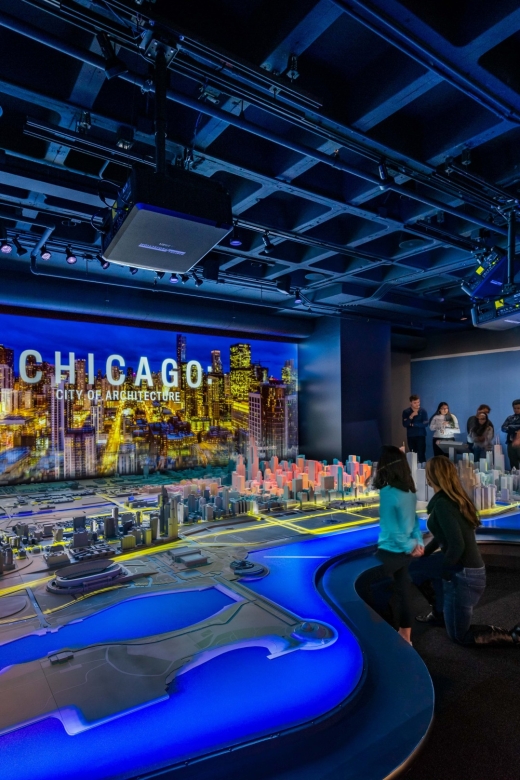
The Chicago Model is the center’s main attraction. It includes more than 4,200 buildings, expanded from an earlier model of about 1,300. That increase matters because Chicago is not just a downtown skyline. Its identity comes from the relationship between the central towers, residential neighborhoods, industrial areas, and changing edges of the city.
A film and light show illuminate the model and tell the story of Chicago’s development. You see the city’s early growth, its rebuilding after the Great Chicago Fire, the arrival of the first skyscrapers, and the spread of modernist steel-and-glass design.
This presentation helps you understand why Chicago became known as a city of architecture. The city was not shaped by one style or one generation. Its buildings show experiments in engineering, changing ideas about housing, rising land values, new neighborhoods, and the pressure to build higher.
The model is especially useful if you plan to explore Chicago on foot. Before you head out, you can get a sense of how the central area fits together. You can also use the exhibit to spot buildings you want to see in person.
I would give this section the most time. The building count can seem overwhelming at first, but the film and lighting give the model a clear storyline. Afterward, the smaller details become easier to notice.
Touch screens that turn looking into planning
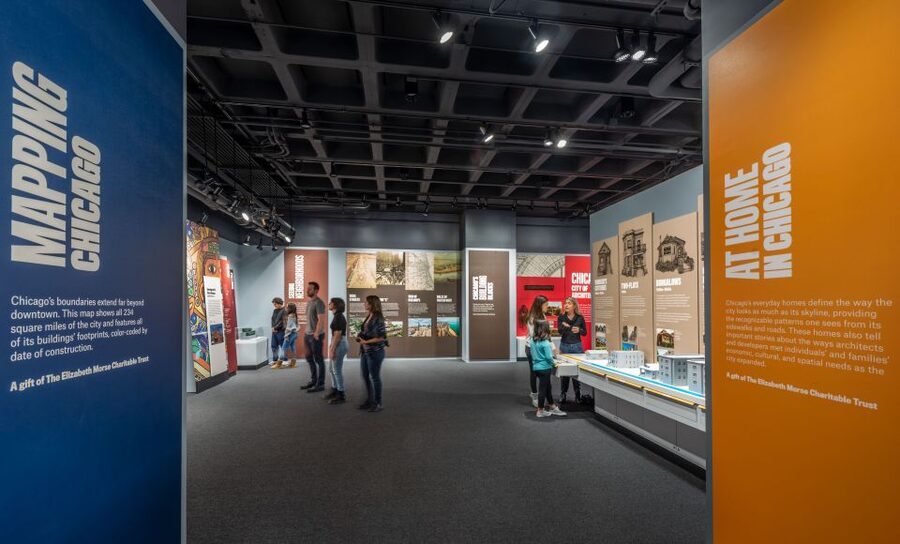
Interactive touch screens let you search for buildings by architect or architectural style. You can also find walking tour routes and use the model to follow how Chicago changed over time.
This is where the center moves beyond simple sightseeing. If you already have a favorite architect, you can search for related work. If you know only that you like Art Deco, modernism, or early skyscrapers, the displays can help you identify buildings to seek out.
You can also examine proposed projects and changes that may alter the skyline. The center connects architecture with data, planning, and city growth, so the city model is not frozen in the past. It shows Chicago as a place that continues to change.
The touch screens are a good feature for independent visitors because there is no required route through the gallery. You can spend a few minutes learning the basics, then focus on the buildings or neighborhoods that interest you.
One limitation is that a self-guided screen cannot replace a human guide. If you want personal questions answered or architectural details explained in conversation, choose one of the center’s separate docent-led programs instead. Admission here covers the exhibits only.
Same streets, read through a different style:
- Chicago Architecture Center River Cruise aboard First Lady
★ 5.0 · 5,536 reviews - Chicago: Architecture River Cruise Skip-the-Ticket Line
★ 4.8 · 4,325 reviews - Chicago River 45-Minute Architecture Tour from Magnificent Mile
★ 4.5 · 2,924 reviews - Chicago Lake and River Architecture Tour
★ 4.5 · 2,308 reviews
Building Tall, from Chicago’s first skyscraper to Jeddah Tower
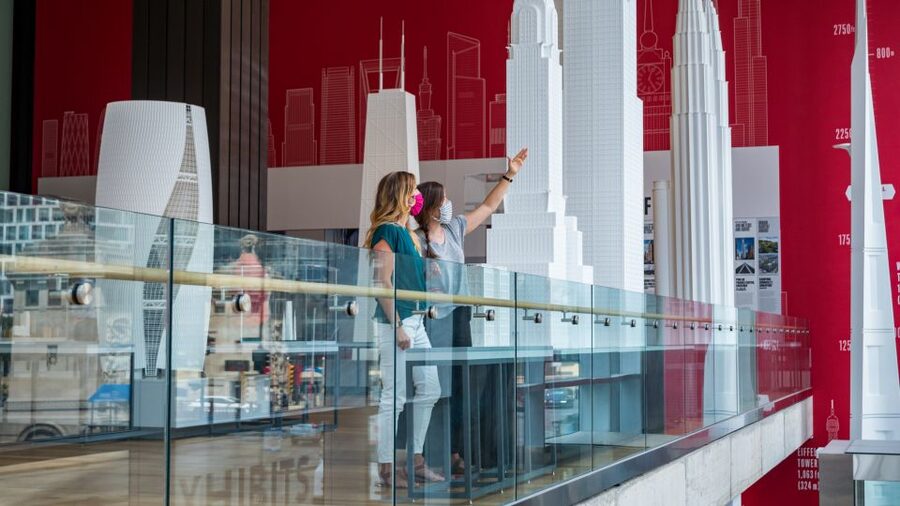
The Drake Family Skyscraper Gallery focuses on height. Its Building Tall exhibit examines how architects and engineers have pushed buildings higher, from Chicago’s earliest skyscraper experiments to supertall towers around the world.
The models are large enough to make the engineering challenge easy to grasp. A building that looks simple in a photograph can feel astonishing when you see its height in relation to familiar structures. The exhibit shows how new structural ideas and design methods helped create the race upward.
The story begins with the Home Insurance Building in Chicago, often identified as the world’s first skyscraper. From there, the display moves to the Willis Tower, formerly known as the Sears Tower, which held the title of world’s tallest building for nearly 25 years.
The exhibit then reaches beyond Chicago. You can see a model of Jeddah Tower in Saudi Arabia, designed by Chicago architects and planned to become the tallest building in the world. Since the project is presented as a future supertall building, the model also raises a useful question: how do architects design for a height that has never been reached before?
I like this gallery because it gives Chicago’s architectural reputation a global setting. The city is not simply proud of its old skyscrapers. Chicago firms continue to shape major towers far beyond Illinois.
If your interest is mainly historic interiors, housing, or decorative detail, this section may feel too focused on engineering and height. For anyone fascinated by skylines, structural design, or record-breaking buildings, it is likely to be the highlight.
Chicago’s neighborhoods and housing styles
The center is not limited to downtown towers. Its exhibits also explain how Chicago’s neighborhoods formed and how different housing styles fit into the city’s growth.
That wider view is important. A city of architecture is not made only of signature skyscrapers. It also includes apartment buildings, homes, commercial streets, and the patterns that connect them. The center helps you see those ordinary structures as part of the city’s design story.
Use the model and touch screens to compare neighborhoods and find routes for further exploration. You may not leave with a complete guide to every residential district, but you should have a clearer sense of how Chicago expanded and how its boundaries changed.
This part may be especially useful before a longer architecture walk. The center can give you vocabulary and context, while the streets provide the full scale, materials, and daily life that a model cannot show.
One visitor found the museum small and wished for a short walking tour to go with it. That is a fair point. The center works best as an introduction or companion to outdoor sightseeing, not as a substitute for seeing Chicago’s buildings from the sidewalk.
The views from the 40-foot glass wall
Do not rush past the window wall. The 40-foot-tall glass front looks directly toward several famous buildings, including Tribune Tower and the Wrigley Building.
This view gives the center a useful advantage over a standard museum. You are not studying architecture in isolation. You can compare a model, an image, or an explanation with the real structure across the river.
The view also helps first-time visitors get oriented. You can recognize the buildings later as you move around downtown, and the riverfront setting makes it easier to understand the relationship between the central towers and the water.
The center is above the dock for the Chicago Architecture Foundation River Cruise aboard Chicago’s First Lady Cruises. That makes it a natural pairing with the cruise, although the exhibit ticket does not include the boat ride. You can visit before the cruise to learn what to watch for, or afterward to put the buildings into context.
How long should you plan?
The ticket is valid for one day, but the practical visit is likely to be a focused stop rather than an all-day museum outing. The center has nearly 10,000 square feet of gallery space, with the Chicago Model and skyscraper gallery as the main draws.
Give yourself enough time to watch the city-model presentation, examine the tall-building models, use the touch screens, and look through the glass wall. If you enjoy architecture or want to plan a walking route, you may want to linger longer.
The compact size is both a strength and a weakness. You can see the main exhibits without wearing yourself out, and the visit fits neatly between other downtown plans. On the other hand, someone expecting a vast museum may find the experience over quickly.
There is no guided exhibit tour included, so your pace is your own. That suits independent visitors who prefer to stop where they like. Families and groups should know that the experience depends on looking, reading, watching, and using the interactive displays rather than on a scheduled performance led by a guide.
Price, practical rules, and access
Admission is listed at $15 for one person and includes all Chicago Architecture Center exhibits. I consider that reasonable if you will use the Chicago Model and skyscraper gallery as preparation for further sightseeing.
Your ticket also supports the center’s nonprofit education work, including Girls Build!, Teen Fellows, and the Newhouse Architecture + Design Competition. It helps keep programs such as Open House Chicago free. That does not change what you see inside, but it adds value for visitors who like their admission to support local education and community projects.
The center is wheelchair accessible. You should not bring pets, although service animals are welcome. Food and drinks are not allowed, and flash photography is prohibited.
Plan carefully if you are carrying luggage, a large bag, a stroller, or a coat you do not want to hold. The center cannot provide secure storage for these items. There is no hotel pickup or drop-off, so you make your own way to the downtown address.
A face mask or protective covering is listed among the items to bring. Policies can change, so check the current requirements before setting out.
Who should book this experience?
I would recommend the center to first-time visitors who want a clear introduction to Chicago’s architecture. It also suits people who enjoy design, engineering, city planning, skyscrapers, or visual exhibits.
Families may like the large model and interactive displays, especially if children respond better to buttons, screens, and scale models than to long text panels. The compact format can also work well for a short downtown break.
Architecture students and serious building fans may find the center useful as a starting point, especially because the touch screens connect buildings with architects, styles, and walking routes. Still, you should pair the visit with time outdoors if you want to understand the buildings at street level.
I would be less likely to recommend it as your only architecture activity in Chicago. The center does not include a guided walk, and one visitor’s disappointment with the exhibition suggests that expectations matter. Think of it as a smart orientation center and visual museum, not a full replacement for the river cruise or an outdoor tour.
Should you book the Chicago Architecture Center?
Book it if you want to understand Chicago before exploring it. The 4,200-building model, film and light show, skyscraper models, and glass-wall views pack a lot of useful context into a central location.
Skip it if you want a long, guide-led route or a large museum with many rooms. In that case, spend your money on a walking tour or river cruise instead, then consider the center only if you have time.
For most visitors interested in Chicago’s built environment, the $15 admission is a sensible addition to a downtown day. It gives you a better map of the city in your head, and it may change what you notice when you step back onto the street.
FAQ
Where is the Chicago Architecture Center?
It is located at 111 E Upper Wacker Drive in Chicago, Illinois, near Michigan Avenue and above the dock for the Chicago Architecture Foundation River Cruise aboard Chicago’s First Lady Cruises.
What does admission include?
Admission includes access to all Chicago Architecture Center exhibits, including the Chicago Model and Building Tall gallery.
Is a guided tour included?
No. Admission is for the exhibits only. Guided tours of the exhibits are not included.
How long is the ticket valid?
The ticket is valid for one day. Check availability for the available starting times.
How much does admission cost?
The listed price is $15 for one person.
Is the center wheelchair accessible?
Yes. The Chicago Architecture Center is wheelchair accessible.
Can I bring luggage or a stroller?
The center cannot provide secure storage for luggage, large bags, coats, or strollers. Plan to visit without items you cannot keep with you.
Are pets allowed?
Pets are not allowed, but service animals are welcome.
Can I bring food or drinks?
No. Food and drinks are not allowed inside the center.
Can I take photographs?
Photography rules prohibit flash photography. A face mask or protective covering is also listed among the items to bring.
New to the itinerary around Chicago
- Private Chicago Architecture Tour★ 5.0 · 5 reviews
- Private Frank Lloyd Wright Architectural Tour by Luxury Vehicle★ 3.5 · 7 reviews
- Chicago Luxury Minibus City Tour and Architecture River Cruise★ 4.5 · 8 reviews
- Private Chicago Architecture Walking Tour★ 5.0 · 6 reviews
- Chicago History and Architecture Walking Tour with Boat Cruise★ 4.5 · 10 reviews
- Small Group History And Architecture Walking Tour of Chicago★ 4.5 · 8 reviews
- Chicago Walking Tour: See Inside Art Deco Masterpieces★ 4.9 · 8 reviews
- Chicago: History and Architecture Guided Kayak Tour★ 5.0 · 3 reviews
Chicago Architecture Tours, compared.
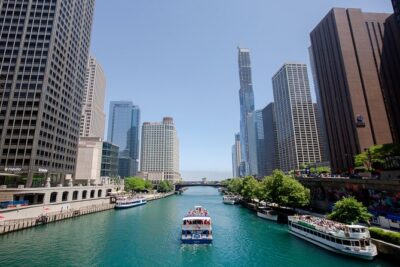
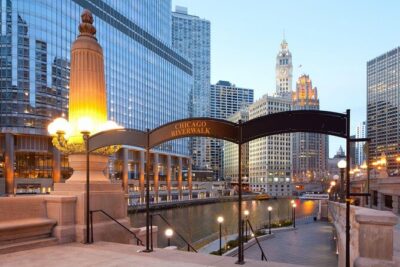

Chicago River: 1.5-Hour Guided Architecture Cruise
Read our review →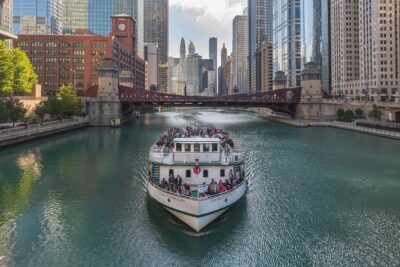
Chicago Architecture Center River Cruise aboard First Lady
Read our review →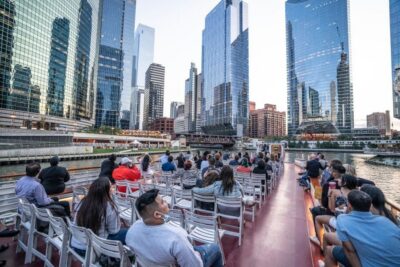
Architecture River Cruise Skip-the-Ticket Line
Read our review →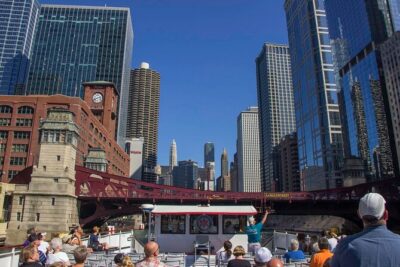
Chicago River 45-Minute Architecture Tour from Magnificent Mile
Read our review →
45-Minute Family-Friendly Architecture River Cruise
Read our review →Other lists with this tour