
Review · BILBAO
Bilbao: Historical and Architectural Walking Tour
Bilbao’s grandest story is told through its buildings. This two-hour walk follows the city’s 19th-century expansion from Plaza Moyua along the Gran Vía, where industrial wealth produced palaces, banks, gardens, and broad streets modeled partly on Paris and London. I like the small-group format and the chance to enter several emblematic buildings rather than simply admire their fronts.
I also like the pintxo-pote finish, which gives the tour a local food stop instead of ending with the last monument. Guide Javier, often called Javi, earns especially strong praise for explaining architecture and connecting Bilbao’s past with the wider story of the Basque Country. The main caution is reliability: a few bookings have suffered from guide or scheduling problems, so confirm the meeting details close to the date.
Key points
- Bilbao’s Ensanche explained: See how industrial growth pushed the city across the river into a new, orderly district.
- Interior access included: Enter Chavarri Palace, the historic train station, and the Old Alhóndiga.
- Javier or Javi may guide the walk: He is praised for clear explanations, good local advice, and an engaging style.
- Pintxo-pote completes the tour: Finish with local snacks and a drink rather than a simple farewell.
- Two hours on foot: The route is compact, but comfortable shoes still matter.
- Check the booking details: The published information gives both a 24-hour cancellation option and a nonrefundable warning, so clarify the terms before paying.
Bilbao’s grand expansion begins at Plaza Moyua
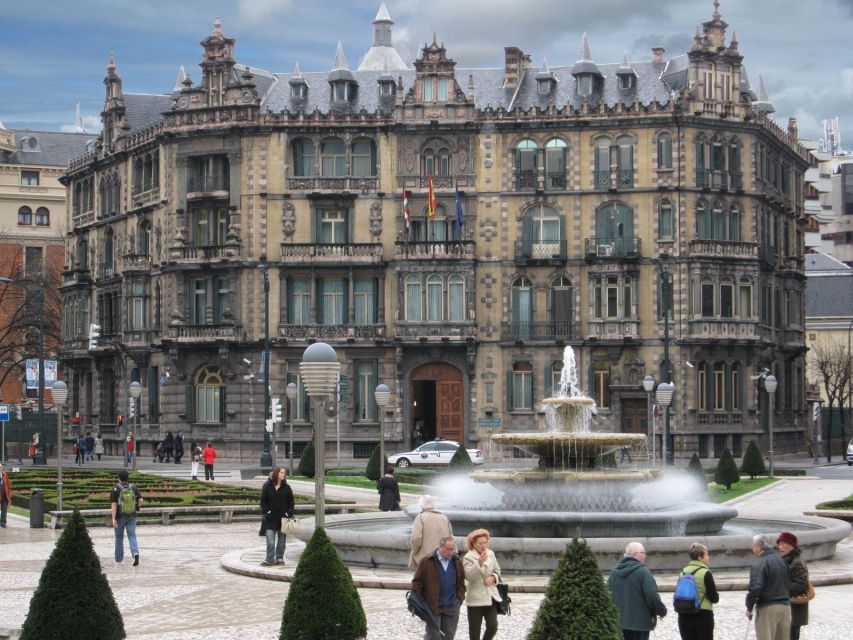
Meet at Plaza Moyua, beside the fountain in central Bilbao. This is a useful starting point because you are already in the heart of the Ensanche, the planned expansion that changed Bilbao during the 19th century.
The old town grew from the medieval settlement founded in 1300 by Don Diego Lopez de Haro, Lord of Bizkaia. But the city you see around Plaza Moyua belongs to a later chapter. As industry brought money and population, Bilbao needed room to grow. The new district was designed to feel modern, bright, and orderly, with broad avenues and substantial buildings for banks, businesses, and wealthy families.
That shift is the central idea of the walk. You are not simply checking off buildings. You are watching Bilbao move from a medieval town into an industrial commercial center. The guide uses streets and facades as evidence, showing how the city’s social and economic changes appeared in stone, iron, glass, and urban planning.
The route is particularly useful if you have just arrived in Bilbao. Plaza Moyua gives you a clear sense of the city’s business core, and the walk helps you understand why the broad streets around the Gran Vía feel so different from the older lanes near the river.
More Walking Tours in Spain
- Ramblas, Old Town, Gothic and Gaudi Architecture Walking Tour
★ 5.0 · 723 reviews - Barcelona 1.5h Private Old Town, Gothic & Ramblas Walking Tour
★ 5.0 · 318 reviews - Barcelona: Ramblas, Old Town & Gaudí Houses Walking Tour
★ 4.9 · 239 reviews
The Gran Vía and the families behind the facades
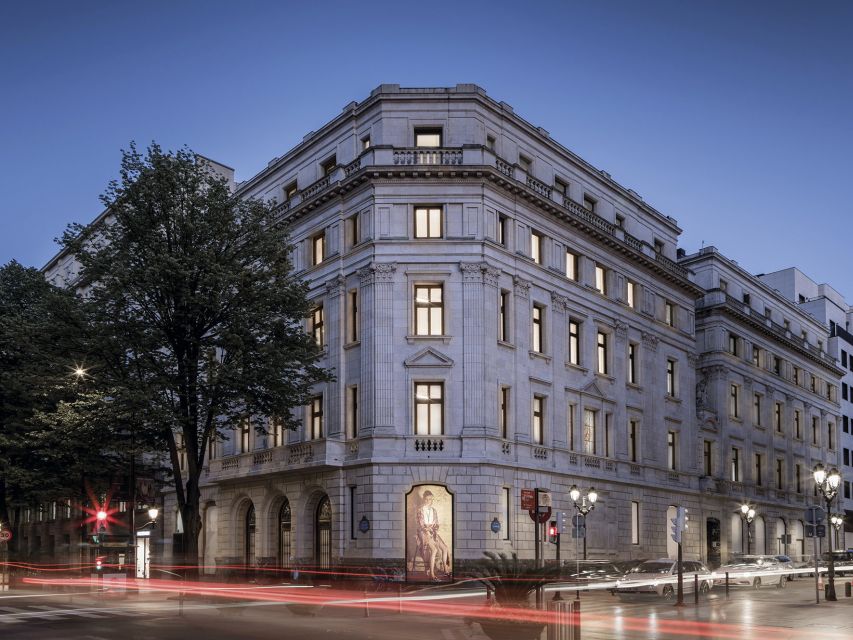
The Gran Vía is the visual centerpiece of the walk. Lime trees shade the avenue and add a pleasant scent, while shops and formal facades give it an easy walking rhythm. You can look upward here and see how much attention Bilbao’s wealthy families paid to their homes and offices.
The focus on families who lived in the palaces adds a human side to the architecture. Grand facades can feel remote when you only know their dates and styles. A guide who explains who commissioned these buildings, how industrial fortunes shaped the city, and how the bourgeoisie wanted to copy models from Paris and London gives the street a clearer purpose.
I would pay attention to the contrast between the public and private sides of the district. Banks and government buildings projected power to everyone passing by. Palaces showed status on a more personal scale. The tour links those two roles, helping you read the Gran Vía as a record of Bilbao’s business ambitions and social hierarchy.
The walk also includes the city’s most important banks. These are not random stops. Banking was central to the new commercial Bilbao, and the buildings made that importance visible. You will get more from this part if you enjoy architecture with a social explanation, rather than expecting a museum-style presentation of artworks.
Chavarri Palace and the city’s public face
Chavarri Palace is one of the main interior visits. Going inside matters because Bilbao’s architecture can look impressive from the pavement while hiding the details that make it memorable. The palace offers a chance to see the kind of setting associated with the city’s wealthy industrial families.
The palace is also a good example of how the tour moves between private wealth and public power. After considering the homes of the elite, the route turns toward institutions that helped run the province and its economy. That change keeps the two-hour walk from becoming a simple parade of impressive residences.
You should expect interpretation rather than a long indoor visit. The activity lasts only two hours and includes several stops, so the guide needs to keep the pace moving. If you want extended time inside every building, this will feel brief. If you want a well-organized introduction to Bilbao’s central architecture, the shorter format works better.
Train station details that tell Bilbao’s story
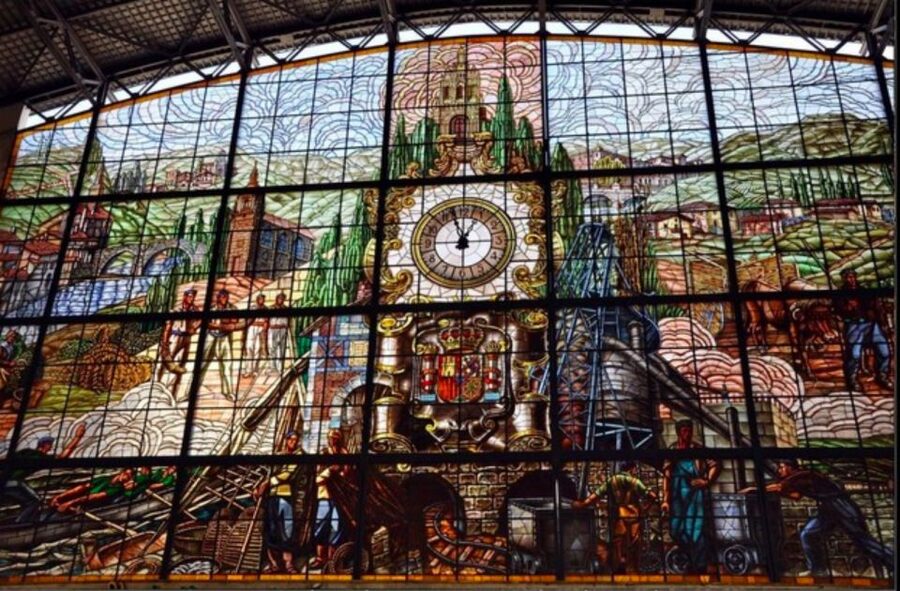
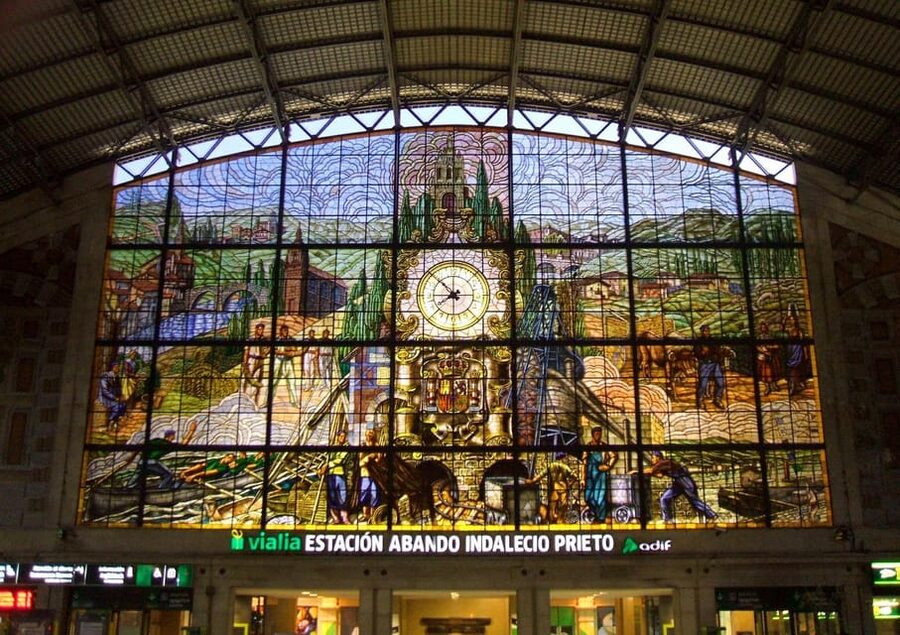
The train station is another interior stop. It includes a representation of Bilbao’s history, making it more than a place to admire transport architecture or pass through on the way to somewhere else.
Railways and industry belong together in Bilbao’s modern story. The station represents the city’s connection to commerce, movement, and growth. On this tour, it helps explain how Bilbao operated as an industrial center rather than an isolated old town.
This stop should appeal to you if you like details built into ordinary city spaces. The station is part of daily urban life, yet its historic decoration and displays give it another layer. A guide can point out what you might miss while rushing for a train.
The practical advantage is that you do not need to arrange separate entry or plan another visit. The access is built into the walking route. That saves time, especially during a short stay in Bilbao.
Same streets, read through a different style:
- Barcelona: Park Güell and Gaudí House Museum Entry Ticket
★ 4.5 · 6,326 reviews - Barcelona: Gaudi’s Casa Vicens Skip-the-Line Entrance Ticket
★ 4.7 · 4,541 reviews - Barcelona: Gaudí’s Park Güell Tour with Fast-Track Ticket
★ 4.8 · 4,512 reviews - Barcelona: Sant Pau Recinte Modernista Entry Ticket
★ 4.6 · 2,567 reviews
Gardens, banks, and the Provincial Council
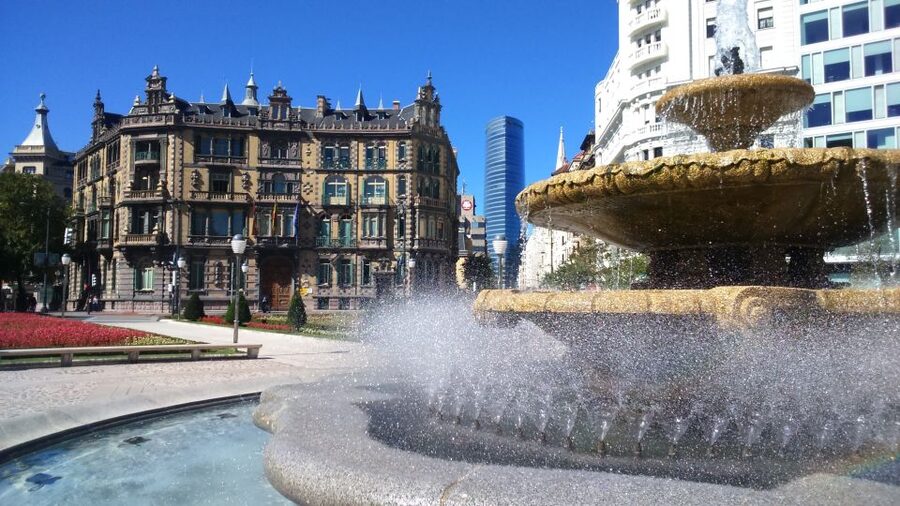
The route passes gardens and the Provincial Council of Bizkaia, bringing a civic dimension to the walk. Gardens soften the formal streets and give you a change of pace after the larger commercial buildings.
The Provincial Council helps explain how local government fits into the city’s story. Bilbao’s expansion was not only about private families making money. It also required public institutions, administration, planning, and investment in a city that was growing quickly.
This part of the walk is less about one single spectacular building and more about seeing how the district works as a whole. You move through streets where homes, banks, government offices, gardens, and shops share the same urban plan. That broad view is one of the tour’s strongest features.
If you prefer a tightly focused architecture tour, the number of different subjects may feel a little scattered. I see that variety as useful for a first visit, though. In two hours, you get a working picture of the Ensanche rather than a lecture on one palace.
Bilbao’s metro and the modern city below street level
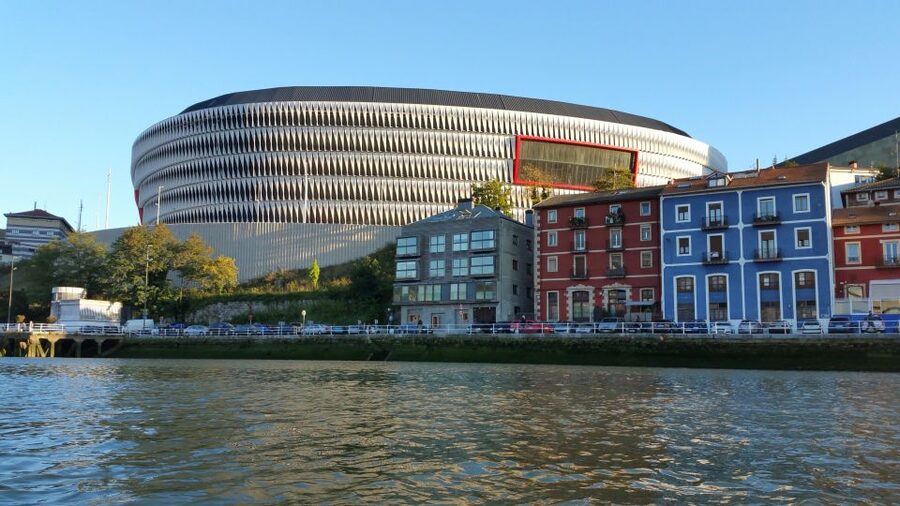
The itinerary includes the interior of the Bilbao metro. This is an unexpected addition to a tour centered on 19th-century buildings, and it gives the walk a more modern turn.
The metro shows that Bilbao continued adapting long after the Gran Vía and its palaces were built. Moving from historic institutions into contemporary public transport lets you compare different periods of city planning and design.
The metro stop may appeal most to people who enjoy how a city functions. It is not included as a separate transport ride to another attraction. It is part of the walking route and is presented as an architectural or urban detail.
Because the exact time spent at each place is not specified, do not expect a long underground visit. Think of it as one piece of the city’s changing design story, placed alongside older buildings to give the tour a wider time span.
The Old Alhóndiga brings the walk into another era
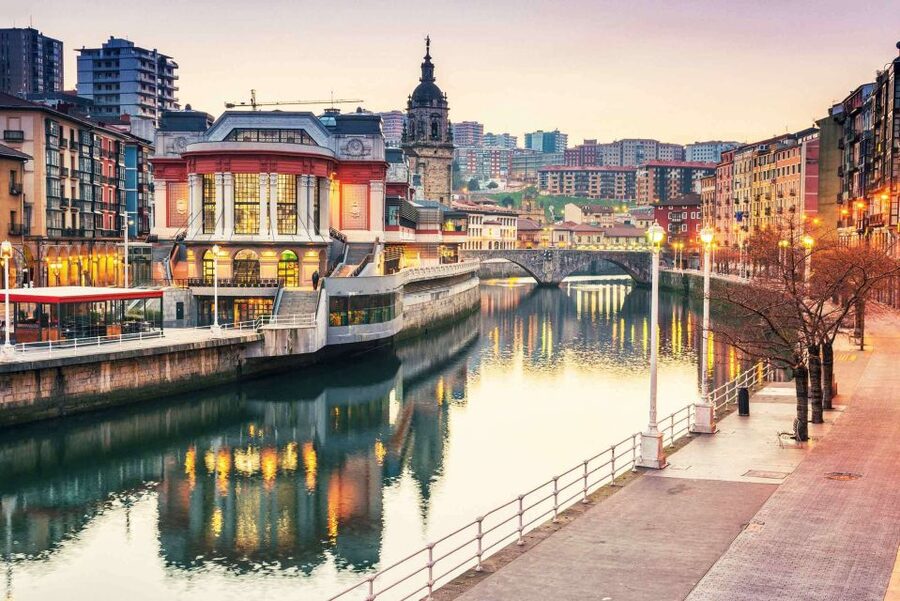
The route ends at a building known as the Alhóndiga, also called the Old Alhóndiga in the tour details. Entry is included, and it provides another look at Bilbao’s changing urban character.
The building helps round out the route. You begin with the planned expansion and the wealth of the industrial era, then see civic and commercial landmarks before reaching a building associated with another stage of Bilbao’s development.
I like having this stop near the end because it prevents the tour from treating Bilbao as a city frozen in the age of grand families. The walk starts with the 19th-century transformation, but it also shows that the city kept adapting.
As with the other interiors, the main value is the guide’s explanation. Javier or Javi has been especially well received for describing architectural details and placing them in the larger history of Bilbao and the Basque Country. If he leads your tour, ask him for suggestions for other activities around Bilbao. He has been noted for offering useful local advice beyond the scheduled route.
Pintxo-pote gives the tour a local finish
After the sightseeing, you go for pintxos with pintxo-pote included. The package specifies local snacks and a drink, with beer, coffee, or tea listed among the possible refreshments.
This final stop changes the mood. You have spent the first part of the tour looking at banks, palaces, stations, and government buildings. Pintxo-pote brings you back to the everyday social life of the city.
The stop is not presented as a full meal, so plan accordingly if you are hungry. It is better understood as a small local tasting and drink at the end of the walk. That makes it a nice introduction to Bilbao’s food culture, but you may still want a separate pintxos evening if you hope to sample a wider range of dishes.
I particularly like this format for first-time visitors. A guide can help you understand how to approach pintxos and point you toward later food stops, while the included snack gives you a taste without requiring another reservation.
Is $94 a fair price for two hours?
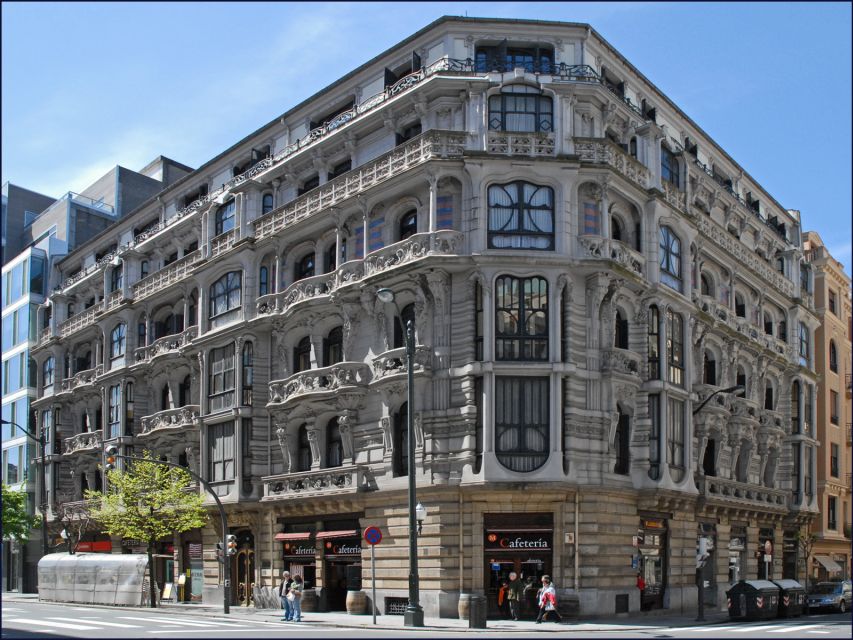
At $94 per person, this is not a bargain-priced orientation walk. The value depends on how much you care about interior access, a small group, and the food finish.
You are paying for a professional guide, a two-hour route, entry to Chavarri Palace, the train station, and the Old Alhóndiga, plus pintxo-pote. You also get a focused explanation of the Ensanche rather than a general city walk that only passes the main sights.
The price makes more sense if you are interested in architecture, urban history, or the families and institutions behind Bilbao’s development. It is less compelling if you mainly want a quick introduction to the old town or a longer food tour.
A small group can also improve the value. You have more opportunity to hear the guide and ask questions than you would on a large group outing. The strongest comments about Javi focus on his clear explanations, friendly approach, and ability to make the buildings and historical periods interesting.
The overall published score is 3.6 from 17 ratings, which calls for a careful booking decision rather than blind confidence. Several bookings received very positive assessments, but there have also been serious complaints about a guide not arriving and a date being changed because of special city events. Those problems appear important enough that I would confirm the time, meeting place, and guide shortly before the tour.
Timing, walking, and practical details
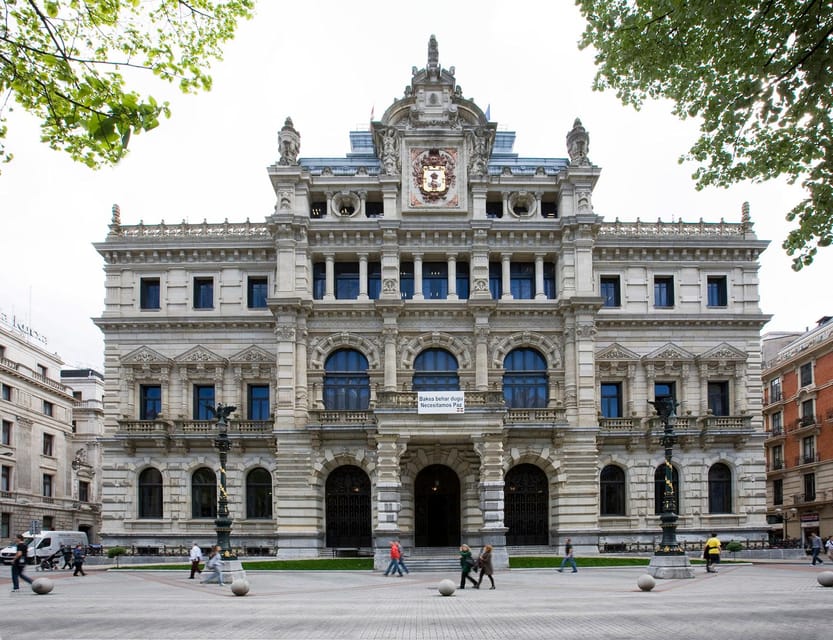
The tour lasts two hours and begins at Plaza Moyua, beside the fountain. It ends at Kalea Esperanza 22A or returns to Plaza Moyua, according to the stated drop-off points.
No transportation to or from the attractions is included. That is not a major issue because the route is designed as a walking tour, but you should allow time to reach the plaza on your own.
Wear comfortable shoes. The route includes streets, gardens, interiors, and city transport spaces, and the activity is on foot from beginning to end.
English, Spanish, and French are available. The activity is listed as wheelchair accessible, though you should still confirm any specific access needs before booking because the route enters several older buildings.
The booking information says you can cancel up to 24 hours before the start for a full refund, but it also includes a warning that the tour is nonrefundable. That contradiction should be cleared up directly before you commit. A reserve-now, pay-later option is also shown, which may help if your plans are still changing.
Who should book this Bilbao walk?
I would choose this tour if you want to understand Bilbao’s central expansion quickly and prefer buildings with a story behind them. It suits first-time visitors, architecture fans, and anyone who likes seeing how business, government, and private wealth shaped a city.
It is also a good pick if you want a guide who can help with the rest of your stay. Javi has been praised for offering advice about other activities in and around Bilbao, not just reciting facts along the route.
You may want something else if you prefer a relaxed food crawl, a longer old-town visit, or plenty of time inside each building. The two-hour schedule covers a lot, so the pace will be purposeful.
Should you book it?
Book it if the Ensanche, industrial Bilbao, and architectural interiors sound more appealing than a standard old-town walk. The combination of Chavarri Palace, the train station, the Old Alhóndiga, the metro, and pintxo-pote gives you a useful cross-section of the city.
Before paying, confirm the date, guide, cancellation terms, and meeting point. That extra check matters because the strong tours led by Javi are balanced by a few serious scheduling complaints. With those details settled, this can be a worthwhile introduction to the Bilbao most visitors see but do not always understand.
FAQ
Where does the tour begin?
It begins at Plaza Moyua, beside the fountain in central Bilbao.
How long does the walking tour last?
The tour lasts two hours.
Which buildings can I enter?
Entry is included for Chavarri Palace, the train station, and the Old Alhóndiga.
Is food included?
Yes. Pintxo-pote is included, with local snacks and a drink. Beer, coffee, and tea are listed among the possible refreshments.
Which languages are available?
The tour is offered in English, Spanish, and French.
Can I cancel the booking?
The activity information says you can cancel up to 24 hours in advance for a full refund, but it also says the tour is nonrefundable. Confirm the applicable cancellation terms before booking.
More History Walks around Spain
- Historical and Modernist Bike Tour Barcelona
★ 5.0 · 262 reviews - Bike Tour in Barcelona: History, Architecture and Culture
★ 3.5 · 29 reviews - Madrid Historic with an architect : Arabs, Austrias and Bourbons
★ 5.0 · 21 reviews - Alhambra Surroundings: History, Architecture and Legends
★ 4.5 · 10 reviews
New to the itinerary around Spain
- Gaudí and Modernist Art: Guided Tour in Palma de Mallorca★ 4.5 · 3 reviews
- Roman & Gotic & Gaudi in Barcelona: private walking tour★ 4.5 · 2 reviews
- Visit to the Modernist houses of the Americans★ 5.0 · 2 reviews
- Barcelona Gaudi Tour: Sagrada Familia, Casa Batllo & Casa Mila★ 5.0 · 4 reviews
- Barcelona Street Escape: Gaudi and the Hidden Treasure★ 5.0 · 17 reviews
- Gaudí & Catalan Modernism Private Walking Tour★ 5.0 · 11 reviews
- Self-Guided Audio Tour-The Surrealist Barcelona of Dalí and Gaudí★ 3.5 · 8 reviews
- Gaudí and Barcelona Legends – Private Tour★ 5.0 · 4 reviews
Bilbao Architecture Tours, compared.

Architectural Rioja Small Group Wine Tour with Lunch from Bilbao
Read our review →
Marques de Riscal and Ysios Rioja Wine Tour w/ Lunch from Bilbao
Read our review →Other lists with this tour