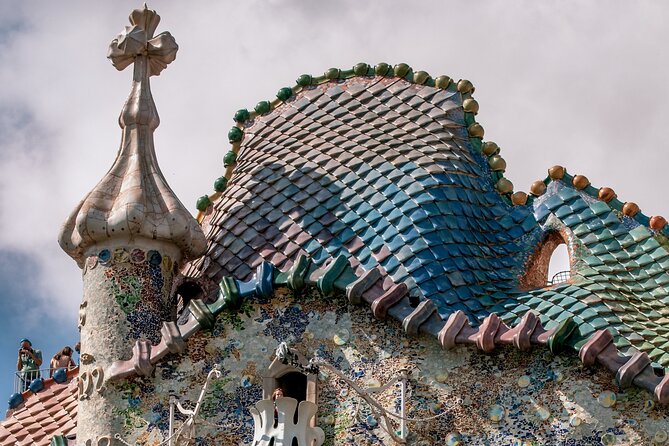
Review · BARCELONA
Gaudí & Catalan Modernism Private Walking Tour
Barcelona’s Modernist story is bigger than Gaudí, and this private walk makes that clear. You move through the Eixample and along Passeig de Gràcia, where Casa Batlló, Casa Milà, and the Illa de la Discòrdia turn an ordinary city block into an open-air architecture lesson. The guide explains what you are seeing instead of simply pointing at famous façades.
I like the private format, which gives you room to ask questions and set the pace. I also like the wider view: Casa Lléo Morera, Casa Amatller, and Hospital de Sant Pau help you understand the other architects and ideas behind Catalan Modernism. The main limitation is simple: every monument is viewed from outside, so this is not the tour for you if interior access is your priority.
- A 3-kilometer route through Eixample and Passeig de Gràcia, taken at a slow pace
- Gaudí explained alongside other Modernist architects, rather than treated as Barcelona’s only creative force
- Exterior visits to Casa Batlló, Casa Milà, Sagrada Família, and Hospital de Sant Pau
- A private group of up to 10 people, with time for questions and personal explanations
- Transport from Passeig de Gràcia to Sagrada Família included in the three-hour experience
- Guide Alessandro received especially strong praise for his clear history, friendly manner, and well-judged pace, when available
Why This Walk Helps You Read Barcelona
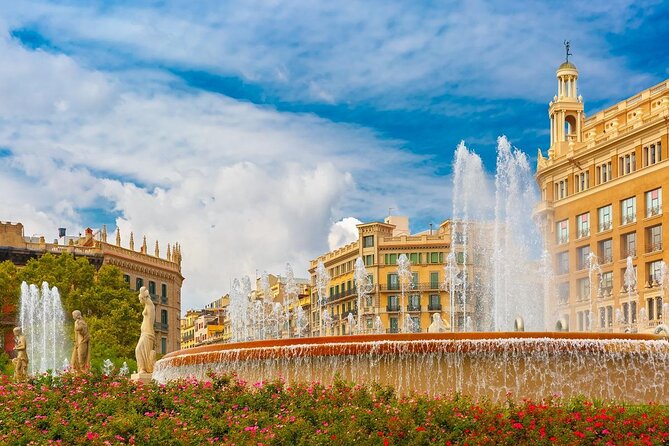
Gaudí’s buildings can be enjoyed without explanation. Their curves, color, stonework, and odd little details grab your eye right away. But without context, you may leave thinking of them as a series of strange and beautiful façades, disconnected from the city around them.
This tour gives you a better frame. It places Gaudí within Catalan Modernism, a movement tied to architecture, local identity, social change, and the growth of Barcelona. You will also see how other architects used the same period’s appetite for new forms in very different ways.
That context matters most on Passeig de Gràcia. Here, wealthy families commissioned grand homes from leading architects, and each architect tried to make a public statement. A private guide can point out those competing ideas in a way a self-guided stroll usually cannot.
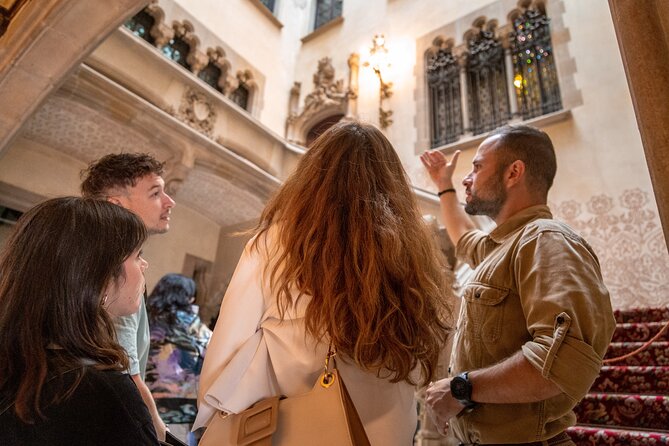
The tour is designed for travelers who want interpretation rather than entry tickets. You will spend time looking, listening, comparing, and asking questions. Since the group is private and capped at 10 people, the guide can respond to your interests instead of delivering one fixed speech to a large crowd.
Starting at Passeig de Gràcia, 2

The meeting point is on the doorstep of Farggi Café at Passeig de Gràcia, 2, in front of the Apple Store and El Corte Inglés department store. That is a useful landmark in a busy part of central Barcelona, but give yourself enough time to find the exact café entrance.
This opening location puts you in the right setting from the start. Passeig de Gràcia is not simply a shopping avenue. It is one of the best places in Barcelona to see how Modernist architecture became part of daily city life, with elaborate homes facing a major urban boulevard.
Your guide begins with the Eixample district, the planned expansion that helped Barcelona grow beyond its older medieval center. The tour uses this urban setting to explain why the buildings appear where they do and how the city’s expansion created new opportunities for ambitious architecture.
I like this beginning because it avoids treating each building as an isolated object. You first get a sense of the district, then begin reading its façades with more purpose.
More Private Architecture Tours in Barcelona
- Sagrada Familia & Gaudi Tour Private or Small Group with Tickets
★ 4.5 · 1,188 reviews - Barcelona 1.5h Private Old Town, Gothic & Ramblas Walking Tour
★ 5.0 · 318 reviews - Treasures of Barcelona: Private Gaudi Walking Tour
★ 5.0 · 128 reviews
The Illa de la Discòrdia and Passeig de Gràcia
The Illa de la Discòrdia, or Block of Discord, is one of the route’s best stops. Several striking Modernist buildings sit close together, making comparison easy. Instead of seeing one architect’s work and then walking several blocks before the next example, you can look at different approaches almost side by side.
This is where the wider focus of the tour pays off. Gaudí is the biggest name, but Catalan Modernism also includes architects such as Lluís Domènech i Montaner and Josep Puig i Cadafalch. Their buildings help you see that the movement was not one single style with one single master.
You can expect the guide to discuss the cultural and social forces that shaped the period, along with the connection between architecture and Catalan identity. The supplied tour details do not promise a technical lecture, and that is probably for the best. The point is to understand the buildings clearly, not to memorize a list of dates and labels.
At this point, look up. Passeig de Gràcia is full of ground-level shops and traffic, so it is easy to miss the upper façades. The best details are often above eye level. Comfortable shoes are important, and a small amount of weather protection is sensible because the walk operates in all conditions.
Casa Batlló from the Street
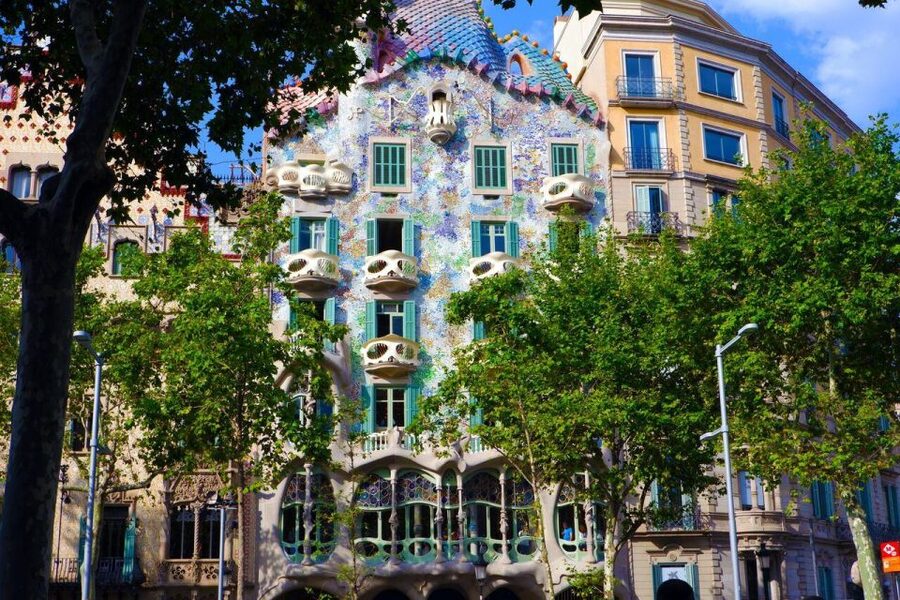
Casa Batlló is likely the stop that most clearly shows Gaudí’s playful side. From outside, you can study the building’s unusual façade, organic lines, and decorative details while the guide explains how to look at them.
The tour does not include entrance to Casa Batlló. That limitation should shape your expectations. You will not see the interior rooms, roof terrace, or the full inside experience, but you will have more time to compare the exterior with the nearby buildings rather than spending the morning inside one attraction.
For a first visit to Barcelona, the outside explanation can still be valuable. The façade is visually busy, and a guide helps you separate structural ideas from decoration. You can also ask direct questions about details that catch your eye, which is one of the benefits of a private walk.
I would especially value this stop early in the route, because it gives you a strong example of Gaudí before the tour places him beside other architects. You begin with the famous work, then gain a wider point of view.
Casa Lléo Morera and Casa Amatller
Casa Lléo Morera and Casa Amatller keep the walk from becoming a Gaudí-only tour. These buildings are important because they let you compare different architects, clients, materials, and visual choices within the same Modernist period.
Casa Amatller is part of the Illa de la Discòrdia, and its appearance differs sharply from Casa Batlló. That contrast is exactly what makes the stop useful. You can look from one façade to the next and see that Catalan Modernism had room for several moods and design languages.
Casa Lléo Morera adds another name to the conversation. The tour’s value here is not just in identifying another handsome building. It is in understanding that Barcelona’s architectural character was shaped by a group of ambitious designers, not just by the one whose name appears most often in guidebooks.
These stops may appeal most to repeat visitors and architecture fans, but first-time visitors benefit too. If you only see Gaudí, you may leave with a narrow picture of the period. These buildings widen it without adding a separate museum visit or a long detour.
More Private Architecture Tours in Spain
- Sagrada Familia & Gaudi Guided Tour Private or Small Groups
★ 4.7 · 106 reviews - Private Barcelona Modernism and Gaudí Walking Tour
★ 4.7 · 54 reviews - Wonders of Gaudi: Park Guell & Sagrada Familia Private Tour
★ 5.0 · 46 reviews - Park Guell and Sagrada Familia, Gaudí’s Masterpieces Private Tour
★ 5.0 · 46 reviews
Casa Milà and the Shape of Gaudí’s Ideas
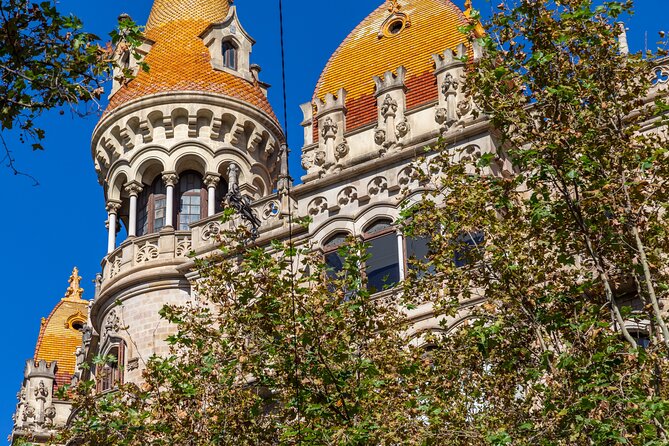
Casa Milà, often called La Pedrera, brings you back to Gaudí, but with a different mood from Casa Batlló. Its exterior is less like a colorful fairy tale and more like a study in stone, movement, and unconventional structure.
Again, you see it from outside. A guide can help you focus on the building’s broad form and the way its façade departs from ordinary apartment-house design. You may also find it useful to compare Casa Milà with Casa Batlló rather than judging either one alone.
The route gives you a chance to ask the questions that often get lost in a large group: Why does this building look so different from its neighbors? Which parts are decorative, and which parts serve a practical purpose? How did a private home become a public symbol of Barcelona?
The three-hour schedule does not allow unlimited time at each façade. That is a fair trade for seeing several major works in one outing. If you want a long architectural study of Casa Milà alone, book an interior visit separately. If you want to understand its place in the city, this stop works well.
Moving to Sagrada Família
Transportation from Passeig de Gràcia to Sagrada Família is included. That matters because the route covers two different parts of Barcelona, and walking the entire distance would use up time better spent looking at buildings and discussing them.
The tour finishes at Sagrada Família, but the basilica is explored externally. You should not expect admission, interior viewing, or access to the towers. The payoff is a focused explanation of Gaudí’s most famous project within the larger story you have already been building.
By the time you arrive, you will have seen Gaudí beside several other Modernist architects. That makes Sagrada Família more interesting than it might be as a stand-alone photo stop. You can consider how the project developed from the ideas seen earlier and why it became such a major part of Barcelona’s public identity.
The exterior is large and visually demanding. A guide can help you take it in without trying to process every detail at once. This is also a good place to ask final questions, since the walk ends nearby.
Hospital de Sant Pau and the Wider Modernist Picture
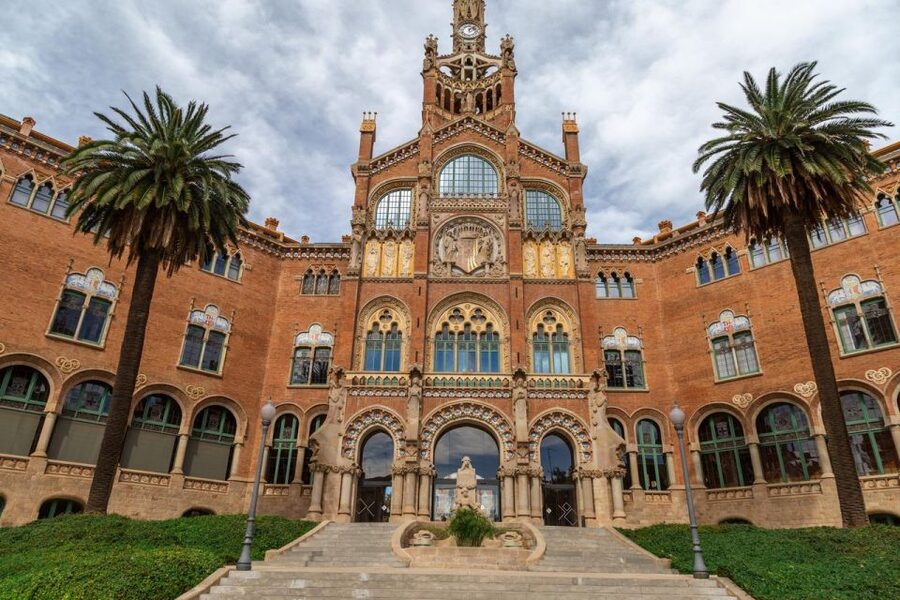
Hospital de Sant Pau adds one of the route’s most useful reminders: Modernist design was not limited to private mansions. Public buildings could also carry strong architectural ambition and cultural meaning.
The stop helps move the story beyond wealthy homes on Passeig de Gràcia. You see how the period’s ideas could shape a major civic complex, not just a family residence. The tour presents it as part of the same broader movement that produced Gaudí’s famous works.
The exact order of the final Sagrada Família and Hospital de Sant Pau visits may depend on how the guide manages the route, but both are included as exterior sightseeing stops, and the tour finishes at La Sagrada Família. Either way, the pairing gives you a useful contrast between a religious landmark and a large public institution.
I consider this one of the tour’s strongest choices. Many short Gaudí walks stop after Casa Milà or Sagrada Família. Adding Sant Pau gives you a fuller sense of Barcelona’s Modernist city rather than a collection of postcard buildings.
What the Private Format Changes
A private tour is worth more than a large group tour only when the guide uses the format well. Here, the maximum is 10 participants, and the design of the experience favors questions and conversation.
The strongest praise attached to this tour focuses on the guide’s clear historical background, friendly manner, helpful answers, and sensible pace. Alessandro was singled out by name for those qualities. If he is available, you can request him, though guide assignment is not guaranteed by the information provided.
The three-hour length is also well judged for this route. You cover roughly 3 kilometers at a slow pace, with time to stop at several buildings. It is not a strenuous hike, but you will be on your feet, so wear comfortable shoes.
The tour is wheelchair accessible, though the experience still takes place outdoors and includes city walking. If rain, wind, or strong sun arrives, the tour continues, so dress for the forecast and bring whatever protection you need.
Is $199 Per Person a Fair Price?
At $199 per person, this is not a budget sightseeing walk. The value depends heavily on how much you want from the guide and how many people are in your private group.
For one or two people, the price is a serious splurge. For a family or small group of up to 10, the private format can make more sense, especially if you want your own pace and the ability to ask detailed questions. The included transport to Sagrada Família also saves time between the two main parts of the route.
You are paying for interpretation, not admission. Since no attraction tickets are included, you should budget separately if you want to enter Sagrada Família, Casa Batlló, Casa Milà, or another monument after the walk.
I would choose this tour if you see architecture as a major part of your Barcelona visit and want a guide to connect the pieces. I would skip it if you mainly want to go inside Gaudí’s buildings or prefer to explore at your own speed with an audio guide.
Who Will Get the Most From This Walk?
This experience suits you if you want a clear introduction to Catalan Modernism without spending a full day in museums. It is also a good fit for repeat visitors who have seen Gaudí before but want to understand the architects around him.
Families and small groups may appreciate the private structure, since the guide can keep the pace comfortable and explain things in a way that suits the group. The slow pace and short distance make it manageable for many people, though you should still be comfortable walking outdoors for three hours.
Architecture students, design fans, and visitors interested in Catalan identity will find plenty to discuss. The route connects buildings, city planning, and cultural forces instead of treating the façades as mere decoration.
The tour is less suitable if you need extensive interior access, dislike fixed routes, or want a fast checklist of Barcelona sights. Its purpose is explanation and comparison. You spend time looking closely rather than racing from one photo stop to the next.
Should You Book the Gaudí and Catalan Modernism Walk?
Book it if you want Gaudí placed in context, not presented as an isolated genius. The combination of Casa Batlló, Casa Amatller, Casa Lléo Morera, Casa Milà, Sagrada Família, and Hospital de Sant Pau gives you a useful cross-section of Barcelona’s Modernist architecture.
The private format, small maximum group, slow pace, and local guide are the main reasons to pay the premium. Ask about Alessandro if you would like the guide praised for a particularly strong mix of history, answers, and friendly delivery.
Do not book it expecting monument interiors. This is an exterior-focused walk, and admission tickets are not included. But if you want to understand why these buildings look the way they do, how they relate to one another, and how Catalan Modernism shaped Barcelona, this is a thoughtful three-hour use of your time.
FAQ
How long is the Gaudí and Catalan Modernism private tour?
The tour lasts three hours. It covers approximately 3 kilometers, or 1.8 miles, at a slow pace.
What buildings are visited on the tour?
The route includes the Eixample district, Illa de la Discòrdia, Casa Batlló, Casa Lléo Morera, Casa Amatller, Casa Milà, Sagrada Família, and Hospital de Sant Pau.
Can I enter Casa Batlló, Casa Milà, or Sagrada Família?
No. All monuments are explored from the outside, with commentary from the guide. Attraction tickets are not included.
Where does the tour meet and finish?
Meet the guide at the doorstep of Farggi Café at Passeig de Gràcia, 2, in front of the Apple Store and El Corte Inglés. The tour finishes at La Sagrada Família.
Is transportation included?
Yes. Transportation from Passeig de Gràcia to Sagrada Família is included.
What languages are available, and how large is the group?
The tour is available in English, Spanish, and Greek. It is a private experience for a maximum of 10 participants and is wheelchair accessible.
More Walking Tours in Spain
- Gaudi’s Modernist Legacy: Small Group Walking Tour
★ 4.5 · 43 reviews - The Story of Gaudi and Modernism Private Walking Tour
★ 5.0 · 36 reviews - Life of Gaudi and Architectural | Walking Tour | 2h
★ 5.0 · 35 reviews - Barcelona: Evening Walking Tour in the Gaudi Area with Tapas
★ 3.9 · 35 reviews
More Walking Tours in Barcelona
- Ramblas, Old Town, Gothic and Gaudi Architecture Walking Tour
★ 5.0 · 723 reviews - Barcelona: Ramblas, Old Town & Gaudí Houses Walking Tour
★ 4.9 · 239 reviews - Barcelona Architecture Walking Tour With Casa Batlló Upgrade
★ 5.0 · 137 reviews - Night Tapas Walking Tour in Barcelona Modernist Area with Small Group and Dinner
★ 4.5 · 56 reviews
New to the itinerary around Barcelona
- Roman & Gotic & Gaudi in Barcelona: private walking tour★ 4.5 · 2 reviews
- Visit to the Modernist houses of the Americans★ 5.0 · 2 reviews
- Barcelona Gaudi Tour: Sagrada Familia, Casa Batllo & Casa Mila★ 5.0 · 4 reviews
- Barcelona Street Escape: Gaudi and the Hidden Treasure★ 5.0 · 17 reviews
- Gaudí & Catalan Modernism Private Walking Tour★ 5.0 · 11 reviews
- Self-Guided Audio Tour-The Surrealist Barcelona of Dalí and Gaudí★ 3.5 · 8 reviews
- Gaudi’s Casa Batlló and La Pedrera with Chocolate Tasting★ 5.0 · 5 reviews
- Gaudí and Barcelona Legends – Private Tour★ 5.0 · 4 reviews
Gaudí Tours, compared.
Park Güell and Gaudí House Museum Entry Ticket
Read our review →
Gaudi’s Casa Vicens Skip-the-Line Entrance Ticket
Read our review →
Gaudí’s Park Güell Tour with Fast-Track Ticket
Read our review →
Sagrada Familia & Gaudi Tour Private or Small Group with Tickets
Read our review →
Complete Gaudi Tour: Casa Batllo, Park Guell & Sagrada Familia
Read our review →
Park Güell: Guided Tour with Optional Gaudí Experience Entry
Read our review →
Barcelona e-Bike Tour: Gaudí & Old Town Small Group
Read our review →